How Hard Water Damages Hair Fibres: Mechanisms, Signs, and Solutions
9 min read ·
Discover how hard water damages hair fibres through mineral build-up, cuticle disruption, and breakage, plus evidence-based steps to restore fibre health.
Quick answer: Understanding how hard water damages hair fibres centres on mineral accumulation, primarily calcium and magnesium, along the cuticle layers. These dissolved minerals bind to the hair shaft, creating an insoluble film that blocks moisture, disrupts the cuticle's protective shingles, and increases inter-fibre friction. While hard water significantly weakens the fibre matrix and accelerates mechanical breakage, scientific evidence confirms it does not shut down follicles or cause biological alopecia. The damage remains strictly structural and cosmetic along the shaft.
Key takeaways
- Hard water contains high concentrations of multivalent mineral ions, particularly calcium ($Ca^{2+}$) and magnesium ($Mg^{2+}$).
- Mineral deposits crystallise on and within the hair cuticle, causing microscopic roughness, stiffness, and increased combing friction.
- Hard water does not cause genetic hair loss, hormonal thinning, or biological alopecia; it causes structural hair breakage.
- Surfactants in shampoos react with calcium ions to form insoluble residues (soap scum) that dull the hair and prevent conditioning agents from penetrating.
- Clarifying treatments, chelating agents such as EDTA or citric acid, and acidic rinses can reverse mineral build-up and restore fibre flexibility.
How Hard Water Damages Hair Fibres: what the evidence shows
When analysing how hard water damages hair fibres, scientific literature focuses on mineral uptake and surface mechanics. Hair fibres are naturally porous and possess a slight negative electrical charge, especially when damaged or chemically processed. Calcium and magnesium ions carry positive charges ($Ca^{2+}$ and $Mg^{2+}$). This electrostatic attraction draws dissolved minerals out of the wash water and binds them directly onto the hair shaft.
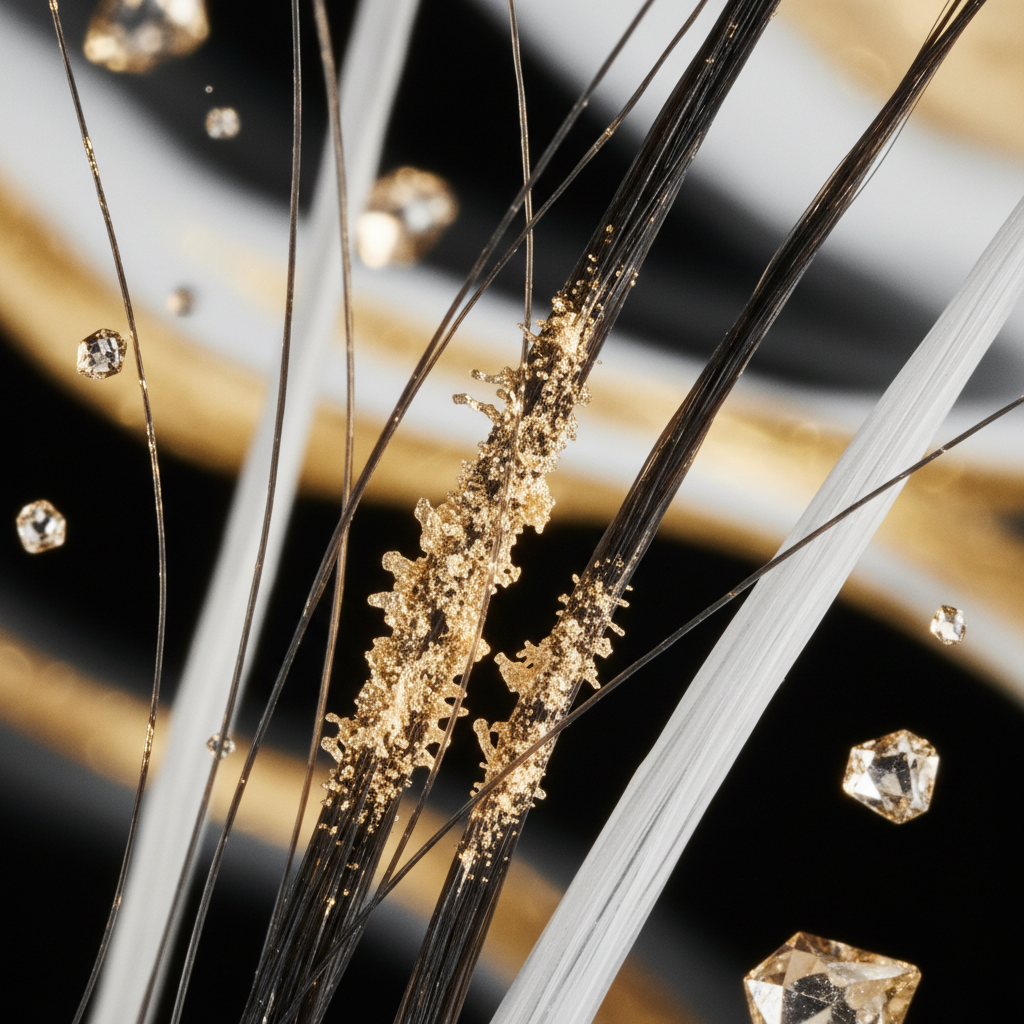
Research published in the International Journal of Trichology and studies evaluated by the Society of Cosmetic Chemists demonstrate that hard water alters the physical properties of the hair strand. As hard water evaporates after washing, these minerals crystallise. The crystals wedge under the outer cuticle scales, propping them open rather than allowing them to lie flat against the cortex.
This propped-open cuticle state causes three primary physical problems:
- Frictional increase: Cuticles can no longer slide smoothly against adjacent strands, dramatically increasing combing force and causing mid-shaft snapping.
- Moisture barrier disruption: The natural lipid layer (18-methyleicosanoic acid) becomes overwhelmed by mineral salts, hindering moisture retention and making hair feel brittle.
- Tensile degradation: While short-term exposure does not instantly rupture the inner cortex, long-term mineral encrustation combined with repeated styling causes rapid mechanical breakdown.
What the evidence does not show: breakage versus hair loss
It is critical to distinguish between hair shedding, hair loss, and hair breakage. Controlled dermatological studies show that hard water does not cause hair loss at the follicle level.
- Alopecia and shedding: Conditions like androgenetic alopecia, telogen effluvium, and alopecia areata occur beneath the scalp surface. Hormones, autoimmune reactions, nutritional deficiencies, and systemic stress regulate the follicular cycle. Hard water cannot penetrate into the dermal papilla to halt follicle cycling or trigger shedding.
- Breakage: What many people perceive as "hair falling out in the shower" when moving to a hard water area is actually broken hair fragments. When the cuticle is compromised by mineral crusts, ordinary brushing snaps the hair shaft. These broken pieces lack the tiny white keratin bulb seen on naturally shed telogen hairs.
Hard water may occasionally irritate the scalp skin, compounding conditions like seborrhoeic dermatitis due to mineral residue reacting with sebum. However, the water itself does not kill the hair root.
The biochemical mechanism: calcium, magnesium, and surfactants
Water hardness is measured by the concentration of calcium carbonate ($CaCO_3$) equivalents, typically expressed in milligrams per litre (mg/L) or parts per million (ppm). Water above 120 mg/L is classified as hard, while levels exceeding 180 mg/L are very hard.
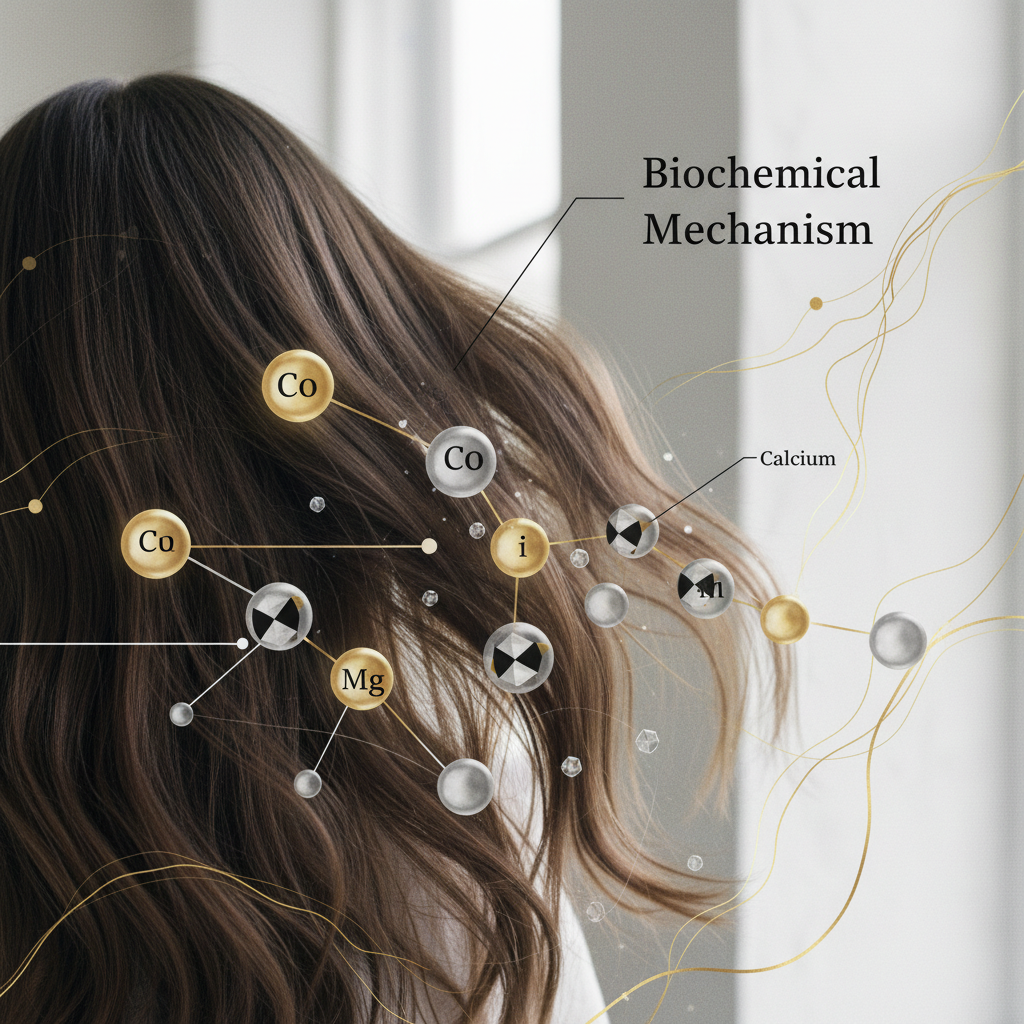
Ca²⁺ (aq) + 2 R-COO⁻ (soap/surfactant) -> Ca(R-COO)₂ (insoluble precipitate)
When you lather shampoo in hard water, calcium and magnesium ions compete with the surfactant molecules. Instead of creating a clean, water-soluble micelle that rinses away down the drain, the minerals bond with fatty acids to form an insoluble precipitate, colloquially known as soap scum or curd.
This precipitate deposits directly on the hair fibre. Furthermore, calcium ions penetrate beyond the epicuticle into the outer cortex, particularly in hair that has already suffered oxidative damage from bleaching or heat styling. Inside the fibre, calcium can cross-link with keratin proteins, reducing the hair's natural elasticity. The hair loses its flexibility, becoming rigid, glassy, and prone to transverse fracture when bent.
Comparing hair fibre characteristics: soft water versus hard water
The following table summarises how untreated hard water compares to soft water across key fibre parameters.
| Fibre Parameter | Soft Water (<60 mg/L $CaCO_3$) | Hard Water (>180 mg/L $CaCO_3$) |
|---|---|---|
| Cuticle Position | Lies flat, tightly overlapping | Lifted, propped open by mineral crystals |
| Surface Texture | Smooth, uniform slip | Rough, raspy, irregular |
| Combing Friction | Low; low detangling force | High; fibres catch and tangle easily |
| Elasticity | Normal; stretches and recovers | Decreased; rigid, snaps under tension |
| Product Efficacy | Conditioners deposit evenly | Silicones and oils bind unevenly to scum |
| Colour Retention | Standard fade timeline | Accelerated fading; brassy tone shifts |
| Light Reflectance | High natural shine | Dull, matte, light scattering |
Signs of hard water damage to watch for
If your household supply carries high mineral counts, hair fibres show distinct visual and tactile symptoms over a period of weeks:
- Persistent dryness despite deep conditioning: Conditioners sit on top of the mineral layer rather than conditioning the cortex, leaving the strand feeling parched hours after washing.
- Dullness and lack of shine: A flat cuticle reflects light uniformly like a mirror. A mineral-crusted, raised cuticle scatters light in all directions, making the hair look faded.
- Tangling at the nape and ends: Increased friction causes adjacent fibres to interlock, leading to dense knots that resist wide-tooth combs.
- Discolouration in light or dyed hair: Trace minerals like iron, copper, and manganese, which often accompany calcium in hard supplies, oxidise on the fibre. This turns blonde hair brassy or greenish and causes brunette shades to look muddy.
- A film-like coating: Wet hair feels slimy or coated during rinsing, but once dry, feels rough, straw-like, and stiff.
How to protect hair fibres from hard water
Managing mineral exposure involves neutralising ions, breaking down deposits, and restoring the cuticle seal.
1. Incorporate chelating shampoos
Chelating agents are compounds that physically bind to metal ions, forming a ring structure that renders them water-soluble so they can be rinsed away. Look for ingredients such as:
- Tetrasodium EDTA or Disodium EDTA
- Citric acid (which acts as a mild, natural chelator)
- Sodium phytate
Use a dedicated chelating wash once every 7 to 14 days. Daily use is unnecessary and may strip beneficial surface lipids.
2. Balance the pH
Hair fibres have an isoelectric point around pH 3.67, and the hair and scalp prefer a mildly acidic environment between pH 4.5 and 5.5. Hard water is consistently alkaline, often sitting between pH 7.5 and 8.5. This alkalinity swells the hair shaft and forces the cuticle open. Finishing your wash with a mild acidic rinse (such as diluted apple cider vinegar or a pH-balanced leave-in tonic) lowers the surface pH, encouraging cuticles to lie smooth.
3. Install physical and ionic water filters
Shower filters containing KDF (Kinetic Degradation Fluxion) media help reduce free chlorine and some dissolved heavy metals, though standard shower heads cannot completely soften water (which requires sodium-exchange resin systems). For whole-home protection, a salt-based water softener replaces calcium and magnesium with sodium ions, stopping build-up before the water exits the tap.
4. Support fibre resilience with Watermans
When environmental stressors like hard water leave fibres brittle, using products designed to strengthen the strand helps prevent breakage. The Watermans Grow Me range focuses on reinforcing strand density, supporting the scalp surface, and delivering nutrients without leaving heavy, insoluble films. Using targeted topical conditioning helps smooth the outer cuticle scales that hard water minerals disrupt, reducing mechanical snagging during styling.
When fibre damage is caused by something else
Before attributing all hair issues to plumbing, rule out internal and mechanical factors that mimic hard water damage:
- Protein-moisture imbalance: Overusing intensive keratin treatments can make hair just as stiff and brittle as mineral encrustation.
- Heat degradation: Blow-dryers, straighteners, and curling wands operated above 185°C denature hair keratins and crack the cuticle through thermal shock.
- Chemical over-processing: Bleaching, relaxers, and perm solutions dissolve disulfide bonds within the cortex, causing identical snapping and tangling issues.
- Nutritional deficiencies: Inadequate dietary intake of iron, zinc, essential fatty acids, or protein weakens the hair fibre as it is produced in the follicle, leading to structurally fragile strands regardless of water quality.
If you experience diffuse thinning, distinct patchy bald spots, or persistent scalp redness and scaling, consult a GP or a registered trichologist. These symptoms indicate physiological conditions requiring medical evaluation rather than simple cosmetic adjustments.
Frequently asked questions about How Hard Water Damages Hair Fibres
Can hard water cause permanent baldness?
No. Research into how hard water damages hair fibres confirms that minerals act strictly on the external, non-living hair shaft. Calcium and magnesium do not enter the bloodstream through the scalp or destroy the follicular stem cells responsible for producing new hair. Any perceived volume reduction comes from hair fibre breakage, not true follicular hair loss.
How quickly does hard water damage hair?
Noticeable mineral accumulation typically occurs within 5 to 15 washes, depending on water hardness levels. If your water exceeds 200 mg/L of calcium carbonate, you may feel surface stiffness and reduced lather within the first week. Structural fibre breakage generally takes several weeks of friction and styling to become evident.
Does boiling hard water make it safe for hair?
Boiling only eliminates temporary hardness (calcium bicarbonate), which precipitates out as limescale on the kettle wall. It does not remove permanent hardness caused by calcium and magnesium sulphates or chlorides. Boiling can actually concentrate these remaining minerals through evaporation, meaning it does not reliably protect hair fibres.
Can a shower head filter completely solve hard water issues?
Most compact screw-on shower filters remove chlorine and sediment, but they cannot truly soften water. True softening requires an ion-exchange process with salt tanks. However, shower filters that use KDF media or polyphosphates can reduce mineral adhesion and oxidising metals, significantly mitigating fibre stiffness.
Restoring fibre integrity against hard water
Understanding how hard water damages hair fibres allows you to protect your hair without unnecessary worry about permanent hair loss. Hard water minerals act as physical disruptors: they latch onto the cuticle, increase friction, block hydration, and leave fibres susceptible to snapping. By using chelating washes, balancing post-wash pH, and strengthening the hair shaft against mechanical breakage, you can keep your hair resilient, glossy, and soft, no matter how hard your domestic water supply happens to be.
Sources and references
- International Journal of Trichology, "Evaluation of the Effect of Hard Water on Hair: A Study on Tensile Strength and Surface Morphology", 2013.
- Society of Cosmetic Chemists, "The Absorption and Effect of Minerals on Human Hair Properties", Journal of Cosmetic Science, 2011.
- World Health Organization (WHO), "Water Sanitation and Health: Hardness in Drinking-water", Guidelines for Drinking-water Quality, 2011.
- British Association of Dermatologists, "Hair Breakage and Cuticle Weathering: Diagnostic Protocols", Clinical Guidelines, 2020.
Find these ingredients in Watermans products
- Zinc: you will find this ingredient in our Hair Vitamins.