Causes of Hair Miniaturisation: Science, Signals, and Solutions
9 min read ·
Explore the primary causes of hair miniaturisation, from DHT and genetic sensitivity to micro-inflammation, and discover clinical ways to protect your follicles.
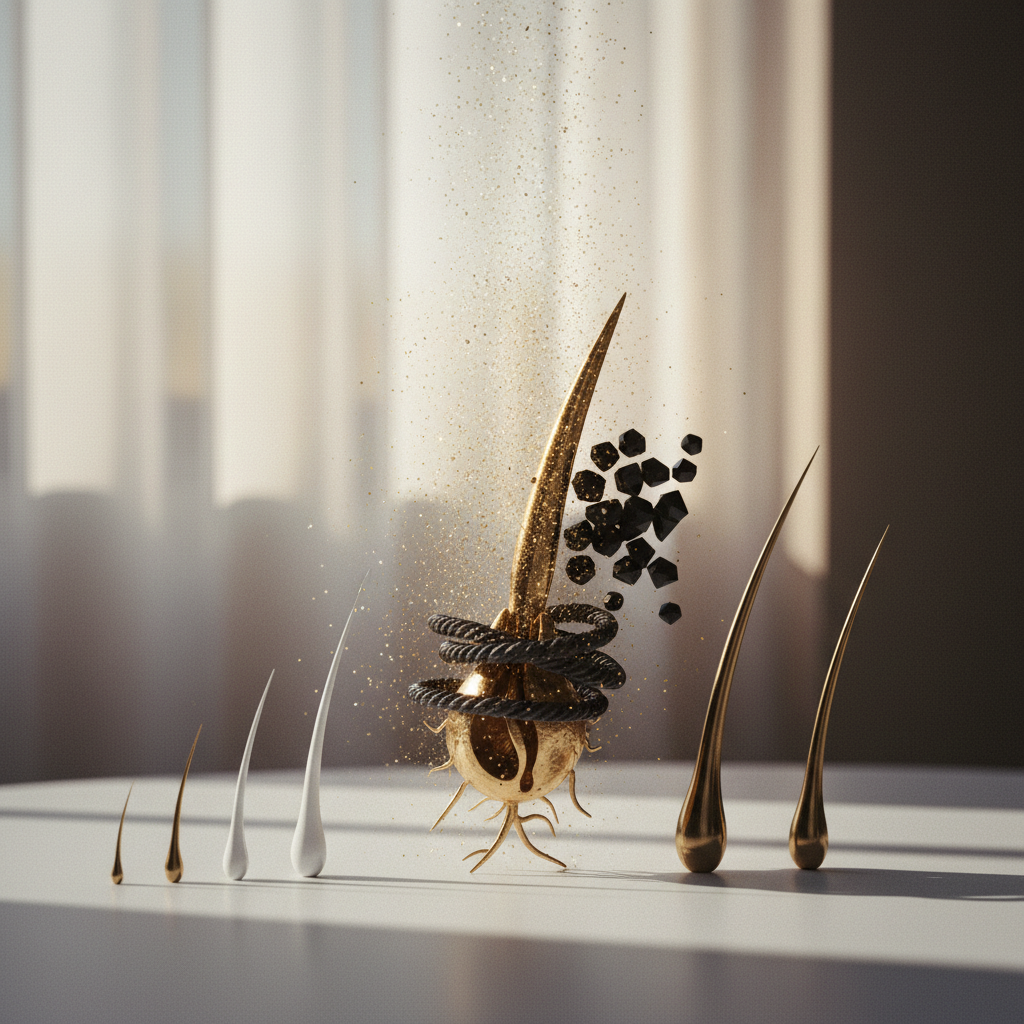
Quick answer: The primary causes of hair miniaturisation centre on genetic sensitivity to dihydrotestosterone (DHT), chronic micro-inflammation around the hair follicle, and age-related vascular decline. In androgenetic alopecia, DHT binds to androgen receptors in genetically susceptible follicles, shortening the anagen growth phase and progressively shrinking terminal hair follicles into fine, unpigmented vellus-like hairs. However, hair miniaturisation is a progressive biological process, and severe, long-standing follicular fibrosis represents a point where standard cosmetic or medical therapies cannot fully restore the original terminal calibre.
Key takeaways
- Hair miniaturisation is the progressive reduction of hair follicle diameter and depth, transforming thick terminal hairs into thin vellus-like fibres.
- Androgen sensitivity, specifically the conversion of testosterone to dihydrotestosterone (DHT) by 5-alpha reductase, remains the leading biological driver.
- Secondary contributors include perifollicular micro-inflammation, oxidative stress, and diminished microvascular circulation to the dermal papilla.
- Miniaturisation is distinct from diffuse shedding (telogen effluvium) and mechanical fibre breakage, requiring targeted follicular evaluation.
- Early detection using dermoscopy (trichoscopy) allows for intervention before the dermal papilla undergoes permanent fibrosis.
Causes of hair miniaturisation: what the evidence shows
The biological causes of hair miniaturisation involve an interplay between endocrine signalling, genetic receptor density, and the local scalp microenvironment. At its core, miniaturisation is the hallmark physical feature of androgenetic alopecia (pattern hair loss in both men and women).
The primary driver is the systemic and local production of dihydrotestosterone (DHT). The enzyme 5-alpha reductase, predominantly type II within the dermal papilla of the follicle, metabolises testosterone into DHT. In individuals with a genetic predisposition, the androgen receptors located within the dermal papilla exhibit heightened sensitivity to this hormone. When DHT binds to these receptors, it alters cellular transcription, upregulating inhibitory signalling proteins such as transforming growth factor beta (TGF-beta) and Dickkopf-1 (DKK-1). These proteins suppress the normal proliferation of matrix keratinocytes.
As a consequence, the hair growth cycle changes fundamentally:
- The anagen (active growth) phase progressively shortens from a normal span of 2 to 7 years down to mere months or weeks.
- The telogen (resting) and kenogen (empty follicle) phases lengthen, leaving the follicle vacant for longer periods.
- Each successive hair cycle produces a hair shaft that is thinner in diameter (calibre), shorter in total length, and lacking deep pigmentation.
Beyond systemic androgens, peer-reviewed clinical studies point to chronic perifollicular micro-inflammation as an accelerating cofactor. Biopsies of scalps undergoing miniaturisation frequently show inflammatory infiltrates around the infundibulum and upper follicle. Pro-inflammatory cytokines, lipid peroxides from sebum oxidation, and an unbalanced scalp microbiome trigger localised tissue stress. Over repeated cycles, this persistent low-grade inflammation causes connective tissue sheath remodelling, gradually replacing functional follicular cells with non-functional perifollicular fibrosis.
What the evidence does not show
There is no credible scientific evidence that everyday cosmetic habits cause hair miniaturisation. Mechanical tension causes traction alopecia, and harsh heat or chemical processing causes cuticle degradation and shaft breakage, but neither process causes true androgen-mediated miniaturisation.
Similarly, wearing hats, infrequent shampooing, or minor nutritional variations do not trigger follicular miniaturisation. While severe iron deficiency or thyroid dysfunction disrupts hair cycling and sparks diffuse shedding (telogen effluvium), these systemic stressors do not systematically shrink the follicular unit into the characteristic vellus-like state seen in pattern loss.
The mechanism of follicular shrinkage
The physical transformation of the follicle occurs in the dermal papilla and dermal sheath. The dermal papilla acts as the control centre of the hair follicle, orchestrating the supply of nutrients, signalling molecules, and volume to the matrix cells that build the hair fibre.
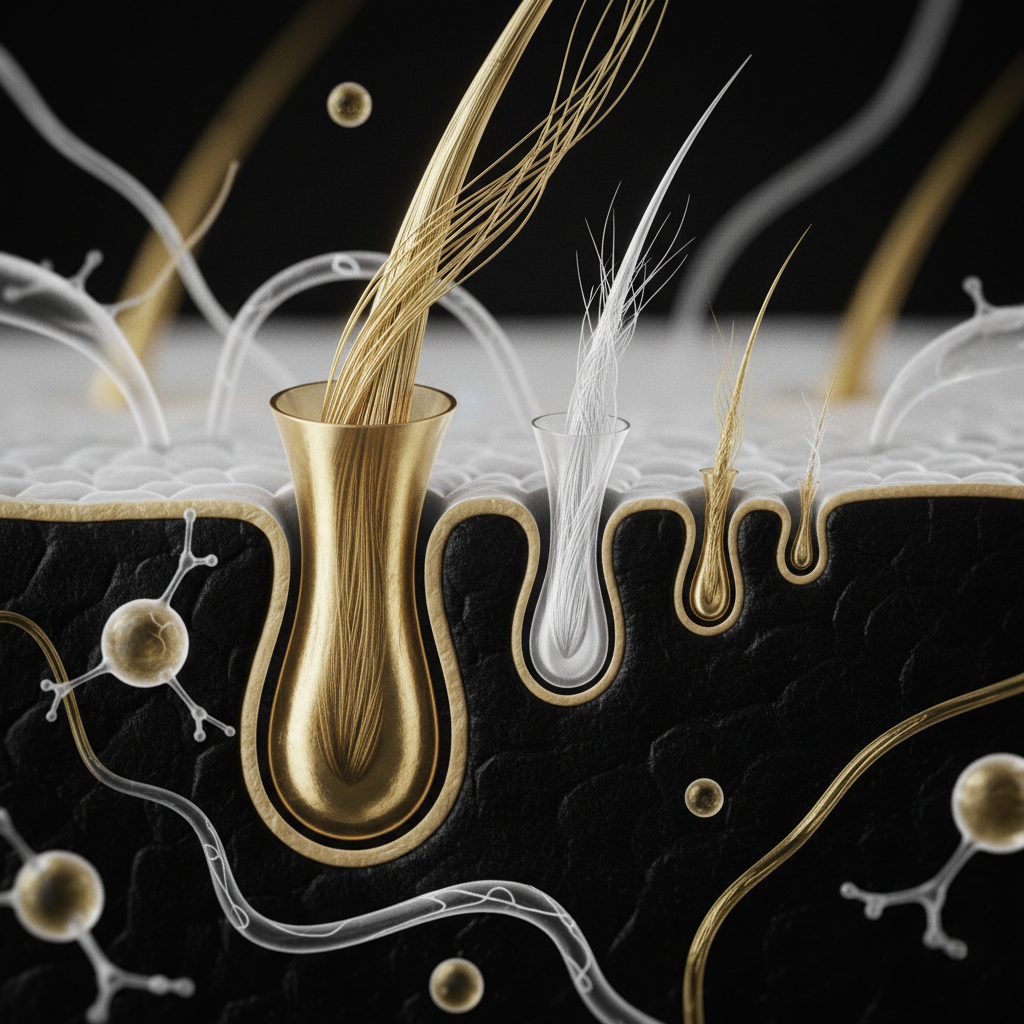
DHT binding to Androgen Receptors -> Upregulation of TGF-beta & DKK-1 -> Suppression of Matrix Proliferation -> Shortened Anagen Phase -> Reduced Dermal Papilla Volume -> Progressive Calibre Loss
During normal hair cycling, the dermal papilla maintains a critical volume of specialised mesenchymal cells. In miniaturising follicles, the number of cells within the dermal papilla steadily declines with each cycle. Because hair shaft diameter is directly proportional to the volume of the dermal papilla and the number of active matrix keratinocytes, the resulting hair fibre emerges with a smaller cross-sectional area. A healthy terminal hair measures between 0.06 mm and 0.09 mm in diameter; miniaturised hairs often drop below 0.03 mm.
Identifying the signs of miniaturised follicles
Miniaturisation rarely happens overnight. It typically progresses over years and exhibits specific patterns across the scalp. Stylists and trichologists use polarised light dermoscopy (trichoscopy) to identify early indicators:
- Hair diameter diversity (anisotrichosis): The presence of more than 20 percent variation in hair diameter across a single visual field in the frontotemporal or crown areas.
- Single-hair follicular units: Healthy scalps feature follicular units housing two to four terminal hairs. Miniaturisation reduces these units to single, spindly hairs.
- Peripilar signs: Subtle brown or pigmented halos around follicular openings, which often correlate with active perifollicular inflammation.
- Loss of cosmetic volume: Ponytails feel thinner at the base, or the scalp becomes visible under direct overhead lighting despite minimal daily shedding.
| Feature | Hair Miniaturisation | Telogen Effluvium (Shedding) | Hair Breakage |
|---|---|---|---|
| Primary Mechanism | Progressive follicle shrinkage | Premature shift into resting phase | Fracture of the keratin shaft |
| Hair Calibre | Variable, increasingly thin | Uniformly thick, normal calibre | Variable length, ragged ends |
| Root Present | Yes (when shedding occurs) | Yes (characterised by white bulb) | No |
| Primary Drivers | DHT, genetics, micro-inflammation | High fever, stress, illness, deficiency | Heat tools, chemical bleach, friction |
| Scalp Distribution | Patterned (crown, temples, vertex) | Diffuse across the entire scalp | Localised to treated or stressed zones |
| Reversibility | Difficult; early intervention vital | High; self-resolving in 3 to 6 months | High; managed by trims and conditioning |
What you can do to support follicular health
Halting or slowing miniaturisation requires a dual strategy: medical or evidence-based biological management alongside proactive scalp care.
Clinical interventions
For persistent androgenetic thinning, consulting a GP or registered trichologist is the essential first step. Clinically approved interventions include topical minoxidil (which widens follicular microcirculation and prolongs anagen) and oral 5-alpha reductase inhibitors such as finasteride or dutasteride for men, or anti-androgen therapies like spironolactone for women. Low-level laser therapy (LLLT) has also demonstrated efficacy in clinical trials by stimulating mitochondrial activity in the dermal papilla.
Scalp hygiene and microenvironment care
Supporting the scalp surface does not alter internal genetics, but it mitigates the inflammatory cascade that speeds up miniaturisation.
- Cleanse frequently with gentle, pH-balanced formulas (pH 5.0 to 5.5) to clear oxidised sebum, micro-pollutants, and microbial overgrowth.
- Incorporate topical stimulants and antioxidants, such as caffeine, niacinamide, and rosemary extract, which preliminary clinical trials suggest help counter local oxidative stress and support microcirculation.
- Practice gentle scalp massage to promote capillary blood flow and relieve local tissue tension without causing mechanical friction on fragile strands.
The role of Watermans in cosmetic hair support
While medical conditions require medical treatments, topical cosmetic formulations can significantly improve the environment in which fragile hairs grow. Watermans designs haircare products focused directly on the hair and scalp ecosystem. Products like Watermans Grow Me shampoo incorporate key cosmetic ingredients including caffeine, biotin, rosemary extract, niacinamide, and argan oil.
These ingredients work together topically to wash away sebum buildups that house surface DHT residues, improve scalp hygiene, and deliver antioxidants to the upper epidermal layer. For hair weakened by the early stages of thinning, such botanical and nutrient-rich formulas strengthen the feel of existing fibres, reduce surface breakage, and help create the ideal cosmetic conditions for healthier-looking, fuller hair.
When the cause may be something else
Miniaturisation is not the explanation for every type of thinning. Diffuse, rapid-onset hair shedding following a major physical illness, surgery, childbirth, or severe psychological distress is characteristic of acute telogen effluvium.
Patchy, completely smooth areas of loss indicate alopecia areata, an autoimmune disorder where T-lymphocytes target the hair bulb. Furthermore, burning, itching, or scarring around disappearing follicles signals cicatricial (scarring) alopecia, such as frontal fibrosing alopecia or lichen planopilaris. These conditions represent distinct medical emergencies that require immediate specialist dermatological intervention to prevent permanent scarring.
When to seek professional advice
You should consult a GP, dermatologist, or qualified trichologist if:
- You notice widening part lines or visible scalp exposure that worsens steadily over 6 to 12 months.
- Thinning is accompanied by persistent scalp pain, itching, burning, scaling, or redness.
- You experience sudden, widespread shedding across your entire scalp rather than gradual thinning.
- You are unsure whether your hair is shedding from the root or snapping along the mid-lengths.
Frequently asked questions about causes of hair miniaturisation
Can hair miniaturisation be reversed completely?
Reversibility depends entirely on the timing of intervention. If caught in its early stages while the dermal papilla remains viable, treatments such as minoxidil, 5-alpha reductase inhibitors, and scalp optimisation can restore substantial hair calibre. However, once a follicle undergoes complete fibrosis and has remained inactive for several years, full reversal is generally biologically impossible.
What are the main causes of hair miniaturisation in women?
In women, the causes of hair miniaturisation include female pattern hair loss, which involves local androgen receptor sensitivity, altered oestrogen-to-androgen ratios (frequently observed during menopause or in conditions like polycystic ovary syndrome), chronic micro-inflammation, and microvascular reduction around the upper follicular infundibulum.
Does washing hair too often cause hair miniaturisation?
No. Washing your hair frequently does not cause follicular miniaturisation. Miniaturisation is driven by internal genetics, hormones, and deep follicular biology. Regular washing with a gentle, balanced shampoo cleanses sebum, environmental particulates, and dead skin cells, which actually helps reduce the surface micro-inflammation that can exacerbate thinning.
Is hair miniaturisation the same as hair breakage?
No, miniaturisation and breakage are completely separate issues. Miniaturisation occurs deep beneath the scalp surface within the follicle, causing it to produce thinner, weaker strands over time. Breakage is structural damage occurring along the external hair fibre, caused by excessive heat styling, bleaching, or harsh handling, leaving the follicle entirely unaffected.
Proactive care for thinning follicles
Understanding the causes of hair miniaturisation allows you to separate biological realities from persistent haircare myths. Because this condition stems from systemic androgens, genetic vulnerability, and chronic tissue stress, successful management relies on early identification and proactive intervention.
By combining validated medical therapies with a supportive scalp care routine that keeps the epidermal barrier calm, clean, and nourished, you can protect follicular vitality and maintain hair density for the long term.
Sources and references
- British Association of Dermatologists. Androgenetic Alopecia Guidelines and Patient Information. 2021.
- National Institute for Health and Care Excellence (NICE). Alopecia, androgenetic - Clinical Knowledge Summaries. 2023.
- Journal of Investigative Dermatology. "The Pathogenesis of Androgenetic Alopecia." 2018; 138(7): 1501-1510.
- Trüeb, R. M. "Oxidative Stress in Ageing of Hair." International Journal of Trichology. 2009; 1(1): 6-14.
- Inui, S., & Itami, S. "Molecular basis of androgenetic alopecia: From androgen to hair loss." Journal of Dermatological Science. 2011; 61(1): 1-6.
- Whiting, D. A. "Diagnostic and predictive value of horizontal sections of scalp biopsy specimens in male pattern androgenetic alopecia." Journal of the American Academy of Dermatology. 1993; 28(5): 755-763.
Find these ingredients in Watermans products
- Niacinamide: you will find this ingredient in our Hair Mask.