How Hard Water Affects Hair and Scalp: Evidence and Solutions
10 min read ·
Discover how hard water affects hair and scalp health, the science of mineral build-up, and practical ways to prevent dryness, breakage, and irritation.
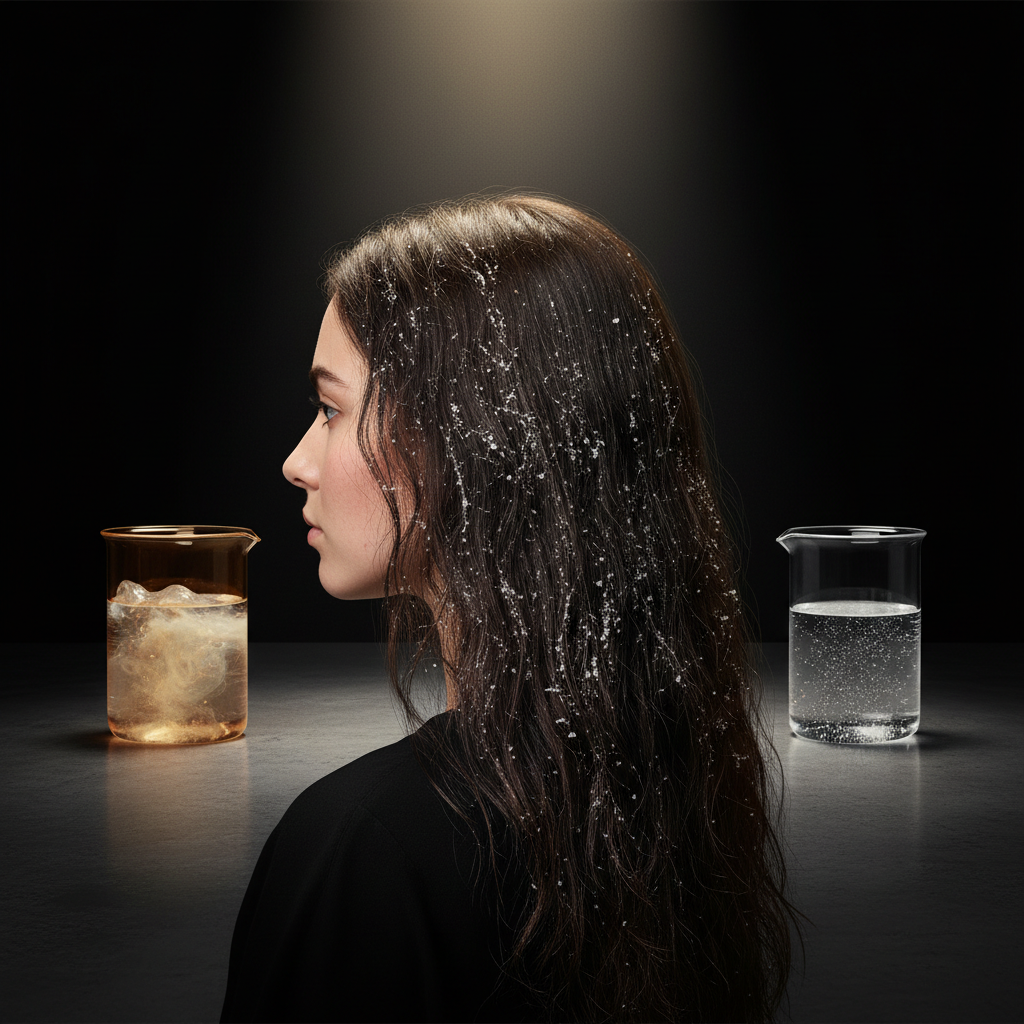
Quick answer: Understanding How Hard Water Affects Hair and Scalp centres on mineral deposition rather than permanent follicular destruction. Hard water contains high concentrations of dissolved calcium and magnesium. These minerals react with wash products to form an insoluble film on the hair shaft and skin surface. This coating disrupts the hair cuticle, increases surface friction, and can irritate the skin barrier. While hard water increases mechanical fibre breakage and leaves hair feeling dry and brittle, clinical evidence confirms it does not cause androgenetic alopecia or permanent root-level hair loss.
Key takeaways
- Hard water contains high levels of dissolved calcium and magnesium ions (typically exceeding 120 mg/L as calcium carbonate).
- Minerals bond to negatively charged sites on the hair fibre, raising the cuticle scales and increasing mechanical friction and breakage.
- Mineral scum forms when calcium binds with surfactants, leaving a residue that can dry out the scalp barrier and worsen flaking.
- Controlled research demonstrates that hard water does not reduce the tensile strength of the interior cortex, nor does it cause medical alopecia.
- Clarifying shampoos, chelating treatments, and shower filters are effective interventions to manage mineral build-up.
How Hard Water Affects Hair and Scalp: what the evidence shows
Research into How Hard Water Affects Hair and Scalp shows that the primary impact occurs on the external surface of the hair shaft and the stratum corneum of the scalp. Hair fibres carry a natural negative electrical charge, especially when wet or chemically treated. Hard water contains positively charged multivalent cations, primarily calcium ($Ca^{2+}$) and magnesium ($Mg^{2+}$). Because opposite charges attract, these minerals readily adhere to the hair surface.
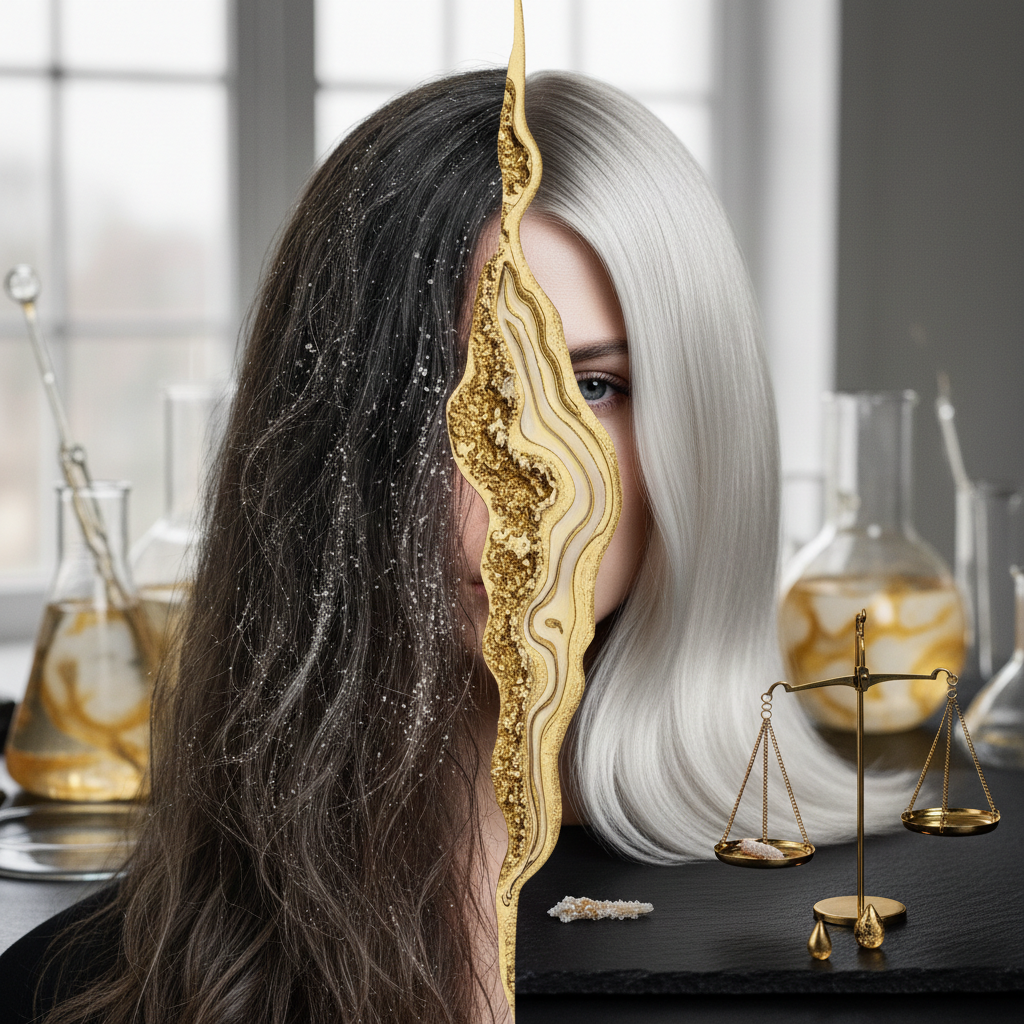
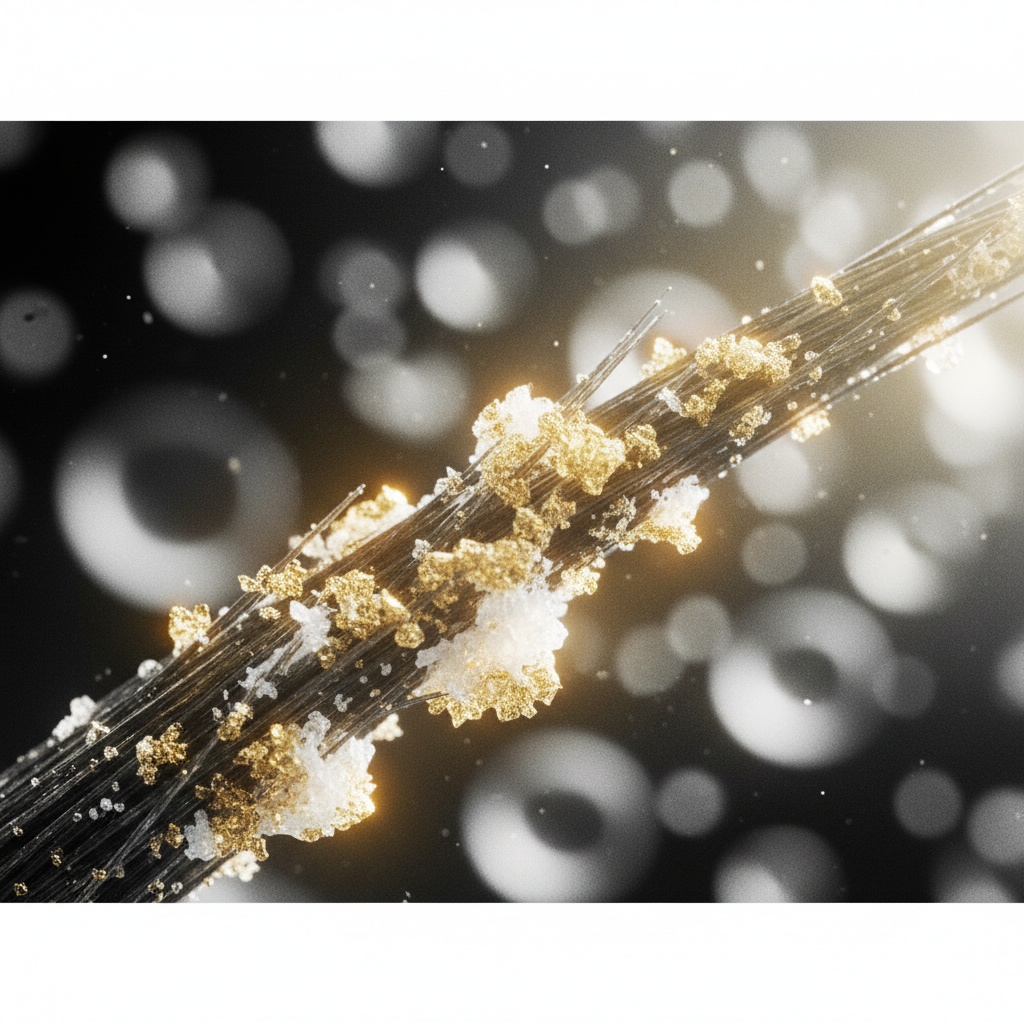
Laboratory analyses, including scanning electron microscopy studies, show that mineral deposits crystallise on the hair surface. As water evaporates after washing, these crystals leave the cuticle scales propped open and rough. This irregular surface prevents light from reflecting evenly, which explains why hair washed repeatedly in hard water looks dull, matte, and lacklustre.
On the scalp, calcium ions react with common fatty acids and anionic surfactants found in traditional soaps and some shampoos. This reaction creates an insoluble salt curd, commonly called soap scum. This residue settles across the scalp, where it can compromise the epidermal barrier. For people predisposed to atopic eczema, seborrhoeic dermatitis, or dry scalp conditions, this persistent film impedes normal sebum flow and provokes irritation, redness, and itching.
What the evidence does not show: hair loss versus breakage
A common misconception is that hard water causes hair loss at the follicle. It is vital to separate hair breakage from true follicular hair loss.
Clinical research has investigated whether hard water reduces the internal tensile strength of hair. A landmark 2013 study published in the International Journal of Trichology tested hair fibres submerged in hard water (130 mg/L mineral content) versus distilled water over a 30-day period. The researchers found no statistically significant difference in the tensile strength or elasticity of the fibres. A subsequent 2018 study confirmed that while mineral deposition increases surface roughness, it does not degrade the interior keratin matrix.
Therefore, hard water does not:
- Miniaturise hair follicles or cause androgenetic alopecia (pattern baldness).
- Trigger telogen effluvium (acute shedding from the root).
- Dissolve or weaken the inner cortex of virgin hair.
When people report shedding after moving to a hard-water area, the culprit is almost always increased mechanical breakage. The mineral coating increases inter-fibre friction by up to 40 percent. When you drag a brush through rough, tangled strands, the hair snaps along the shaft. While the bathroom plughole collects snapped pieces, the root inside your scalp remains intact.
The physical mechanisms: cuticle lift and surfactant interference
The chemical behaviour of hard water disrupts both the product you apply and the biological substrate of the hair.
1. Surfactant interference
Hard water usually has an alkaline pH, often between 7.5 and 8.5, compared to the scalp's natural acidic mantle of pH 4.5 to 5.5. In an alkaline, mineral-dense environment, standard cleansing agents lather poorly. People instinctively compensate by using larger volumes of shampoo or scrubbing more vigorously. This creates a double penalty: the harsh mechanical action frays the cuticle, while the surfactants fail to rinse clean, leaving both product residue and mineral salts behind.
2. Cuticle stiffness and weathering
The cuticle layer consists of overlapping cells that protect the delicate inner cortex. When calcium and magnesium bind to the keratin proteins, they form a rigid, brittle shell. The hair loses its natural slip and flexibility. Each wash cycle deposits progressive layers of minerals. Over time, hair becomes porous, tangles easily, and feels like straw.
Comparing water types: hard water versus soft water
Water hardness is measured by the concentration of dissolved calcium carbonate ($CaCO_3$) in milligrams per litre (mg/L) or parts per million (ppm).
| Characteristic | Soft Water (0 to 60 mg/L) | Hard Water (121 to 180 mg/L) | Very Hard Water (Over 180 mg/L) |
|---|---|---|---|
| Mineral Content | Low calcium and magnesium | High calcium and magnesium | Very high calcium and magnesium |
| Lathering Ability | Rich, dense lather with little product | Weak lather; requires more product | Very poor lather; curdles soap |
| Feel on Hair | Slippery, smooth, light | Coarse, rough, slightly coated | Brittle, tangles easily, matte finish |
| Scalp Impact | Preserves acid mantle | Potential dryness, mild irritation | Prone to flaking, barrier disruption |
| Colour Retention | Standard fade rate | Accelerated fading and brassiness | Rapid fading; mineral discolouration |
| Primary Risk | Product may feel hard to rinse out | Mechanical breakage during styling | Severe mid-shaft snapping |
Visible signs of hard water build-up
You can generally identify mineral build-up through clear sensory and visual changes:
- Persistent dryness: Hair feels parched regardless of how much standard conditioner you apply.
- Dull appearance: A chalky or matte finish that replaces natural shine.
- Tangled, unmanageable texture: Strands snag against one another, creating chronic matting at the nape of the neck.
- Colour distortion: Blonde and lightened hair takes on a brassy, greenish, or muddy tone due to copper and iron traces binding alongside calcium.
- Scalp flakiness and tightness: An itchy, tight sensation shortly after washing, accompanied by small white flakes caused by barrier dehydration.
How to manage hard water exposure
You do not need to move house to protect your hair from mineral damage. Practical steps can neutralise deposits and restore cuticle integrity.
Install filtration or softening systems
The most permanent solution is an ion-exchange water softener installed at your mains supply. This replaces calcium and magnesium ions with sodium ions. If that is impractical, multi-stage showerhead filters containing KDF (Kinetic Degradation Fluxion) media can reduce chlorine, heavy metals, and some scale formation, though they do not fully soften water in the way an ion-exchange system does.
Use chelating agents and clarifying washes
Chelating shampoos contain active agents such as disodium EDTA, tetrasodium EDTA, or citric acid. These molecules bond with mineral ions on the hair shaft, pulling them into solution so they rinse cleanly away. Use a dedicated chelating wash once every one to two weeks, followed by an intensive conditioning treatment.
Acidify the rinse cycle
Rinsing with a mild acidic solution helps flatten the hair cuticle and dissolves superficial mineral salts. Diluted apple cider vinegar (one tablespoon mixed into 500 ml of filtered water) mimics the natural pH of the hair fibre (pH 4.5 to 5.0). Pour it over the lengths after conditioning, leave for one minute, and rinse with cold or tepid water.
Focus on barrier repair for the scalp
If your scalp feels tight or flaky, avoid aggressive physical scrubs that scratch the irritated skin. Look for leave-on scalp serums containing humectants like glycerin or panthenol, and skin-identical lipids like ceramides to rebuild the moisture barrier.
The Watermans approach to hair and scalp health
When hard water leaves your scalp compromised and your hair prone to snapping, maintaining follicle vitality is essential. Watermans focuses on topical formulas designed to support the scalp environment and strengthen fragile lengths against daily mechanical wear.
Using products formulated to wash cleanly without leaving heavy wax residues helps keep the hair clean and free from excess weight. When combined with targeted scalp tonics that deliver caffeine, biotin, and rosemary extract directly to the surface, you provide the scalp with an optimal foundation to support thicker, fuller-looking hair despite environmental challenges like hard tap water.
When the cause may be something else
If you notice significant shedding where hairs come out with a small white bulb at the base, hard water is not the root cause. Diffuse thinning across the crown, widening partings, or sudden handfuls of hair falling out during gentle washing point to systemic or physiological triggers.
Common alternative causes include:
- Telogen effluvium: Triggered by high stress, illness, rapid weight loss, or hormonal shifts.
- Nutritional deficiencies: Low ferritin (iron stores), vitamin D, or zinc levels.
- Thyroid disorders: Both hypothyroidism and hyperthyroidism disrupt normal hair cycling.
- Androgenetic alopecia: Genetic sensitivity to dihydrotestosterone (DHT), leading to progressive follicular miniaturisation.
When to get professional advice
Consult a GP, dermatologist, or registered trichologist if you experience:
- Sudden, patchy, or rapid hair shedding.
- Persistent scalp scaling, burning, redness, or painful pustules that do not respond to clarifying washes.
- Visible thinning that continues for more than three months.
A medical professional can perform trichoscopy, order blood panels, and diagnose underlying conditions that environmental changes cannot explain.
Frequently asked questions about How Hard Water Affects Hair and Scalp
Can hard water cause permanent baldness?
No. Research into How Hard Water Affects Hair and Scalp confirms that mineral deposits do not destroy hair follicles or cause androgenetic alopecia. Hard water affects the exposed hair shaft, causing surface roughness and friction. This friction leads to fibre breakage, which looks like hair loss but leaves the follicle healthy and capable of growing new hair.
How often should I use a chelating shampoo for hard water?
Most people should use a chelating or clarifying shampoo once every seven to fourteen days. Using chelating products too frequently can strip away the natural lipids that protect your hair fibre. Always follow a chelating wash with a rich, moisturising conditioner to restore softness and flexibility to the cuticle.
Does boiling water make it soft enough to wash hair safely?
Boiling water only removes temporary hardness caused by calcium bicarbonate, which precipitates out as limescale. It does not remove permanent hardness caused by calcium sulphate or magnesium compounds. Boiling large amounts of water to wash hair is inefficient; using a chelating treatment or installing a shower filter is far more practical.
Can hard water trigger dandruff or seborrhoeic dermatitis?
Hard water does not directly cause the yeast overgrowth behind dandruff, but it can worsen symptoms. The high mineral content reacts with sebum and cleansers to form an irritating residue that disrupts the scalp's epidermal barrier. This leads to dryness, micro-inflammation, and heightened itching in individuals already prone to scalp conditions.
Supporting hair health in hard-water areas
Recognising How Hard Water Affects Hair and Scalp allows you to separate cosmetic mineral build-up from internal hair health concerns. Hard water undoubtedly challenges the hair fibre, causing stiffness, dullness, and snapping, while stressing the skin barrier of your scalp. However, it does not attack your follicles or halt growth. By adopting clarifying washes, incorporating gentle chelating steps, and keeping your scalp barrier balanced, you can completely counteract the drying effects of mineral-heavy water.
Sources and references
- Srinivasan, G., et al. (2013). "Evaluation of the Impact of Hard Water on Hair: A Preliminary Study." International Journal of Trichology, 5(3), 137 to 139.
- Luqman, M., et al. (2018). "Effect of Hard Water on the Tensile Strength of Hair." International Journal of Trichology, 10(4), 150 to 153.
- World Health Organization. (2011). Hardness in Drinking-water: Background document for development of WHO Guidelines for Drinking-water Quality. WHO/SDE/WSH/03.04/06.
- British Association of Dermatologists. (2020). Eczema and Water Hardness. Clinical Guidelines Database.
- Robbins, C. R. (2012). Chemical and Physical Behavior of Human Hair (5th ed.). Springer-Verlag.
- Danby, S. G., et al. (2018). "The effect of water hardness on the skin barrier." Journal of Investigative Dermatology, 138(3), 568 to 577.
Find these ingredients in Watermans products
- Zinc: you will find this ingredient in our Hair Vitamins.
- Panthenol (Provitamin B5): you will find this ingredient in our Heat Protection Spray.