Understanding Hair Breakage versus Shedding: The Complete Diagnostic Guide
9 min read ·
Learn the real difference between hair breakage and shedding. Explore biological causes, hair shaft mechanics, visual tests, and targeted care routines.
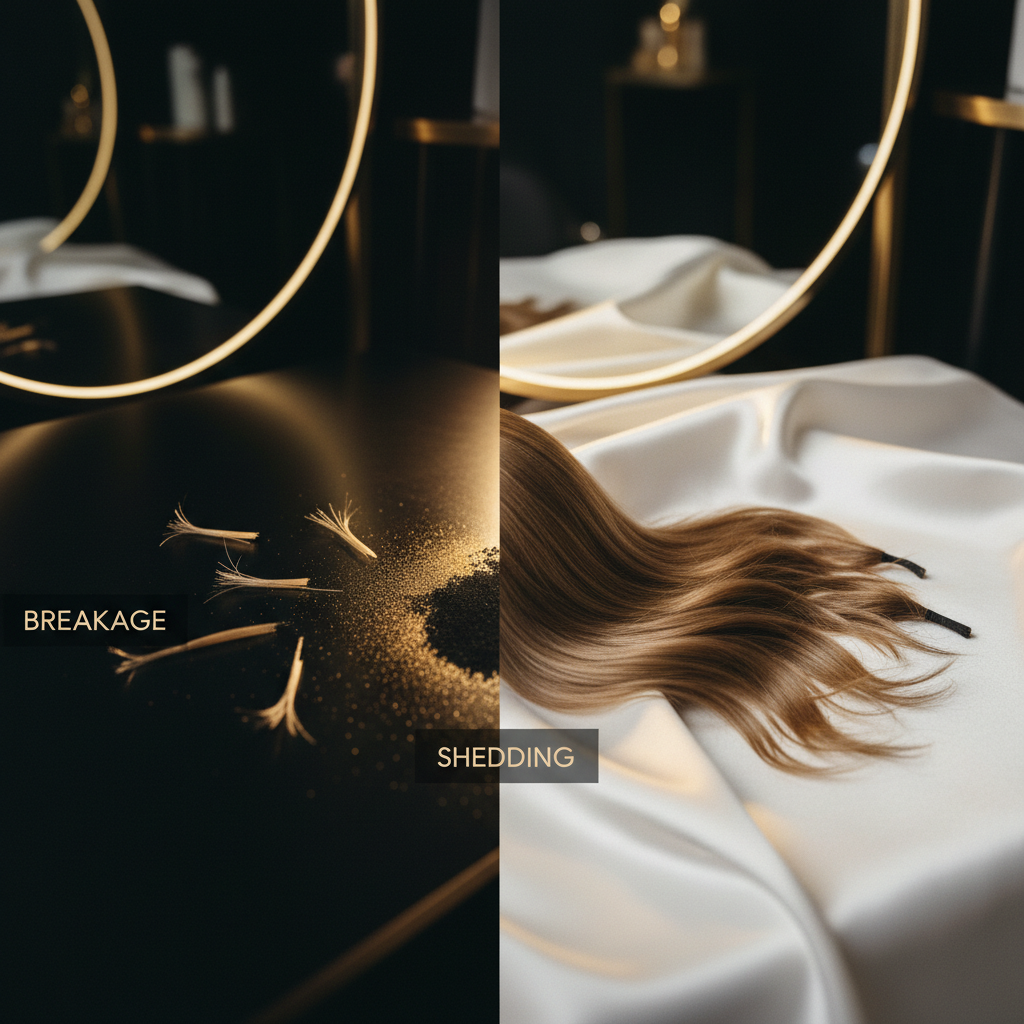
Quick answer: Understanding hair breakage versus shedding begins with identifying where the hair strand separates. Shedding is a natural biological process where an entire strand releases from the follicle, complete with a tiny white bulb at its root. Breakage, by contrast, occurs when structural damage causes the hair fibre to snap along the shaft, leaving fractured, uneven fragments without a root bulb. The main limitation in self-diagnosis is that both issues frequently happen at the same time, requiring distinct approaches to resolve.
Key takeaways
- Shedding originates in the scalp follicle as part of the natural hair growth cycle, releasing full-length hairs with an intact bulb.
- Breakage is purely mechanical, thermal, or chemical damage along the hair shaft that creates shorter, snapped fragments without a root.
- Losing 50 to 100 telogen hairs per day is physiologically normal for most healthy adults.
- Elevated shedding suggests systemic triggers like illness, hormones, or nutritional deficiencies, while breakage points to cuticle degradation and physical trauma.
- Cosmetic conditioning products reduce breakage by lubricating the cuticle, but they cannot stop biological shedding at the follicle level.
Understanding hair breakage versus shedding: what the evidence shows
Understanding hair breakage versus shedding requires separating internal follicular physiology from external fibre mechanics. Clinical trichology defines hair shedding as the natural conclusion of the telogen (resting) phase of the hair growth cycle. In a healthy scalp, roughly 85 to 90 percent of hairs are in the active growing (anagen) phase, 1 to 2 percent are transitioning (catagen), and 9 to 14 percent sit in the telogen phase. At the end of telogen, the hair detaches from the dermal papilla and is pushed out during the exogen phase. Because humans possess an asynchronous growth cycle, people naturally shed between 50 and 100 telogen hairs each day without any reduction in total hair density.
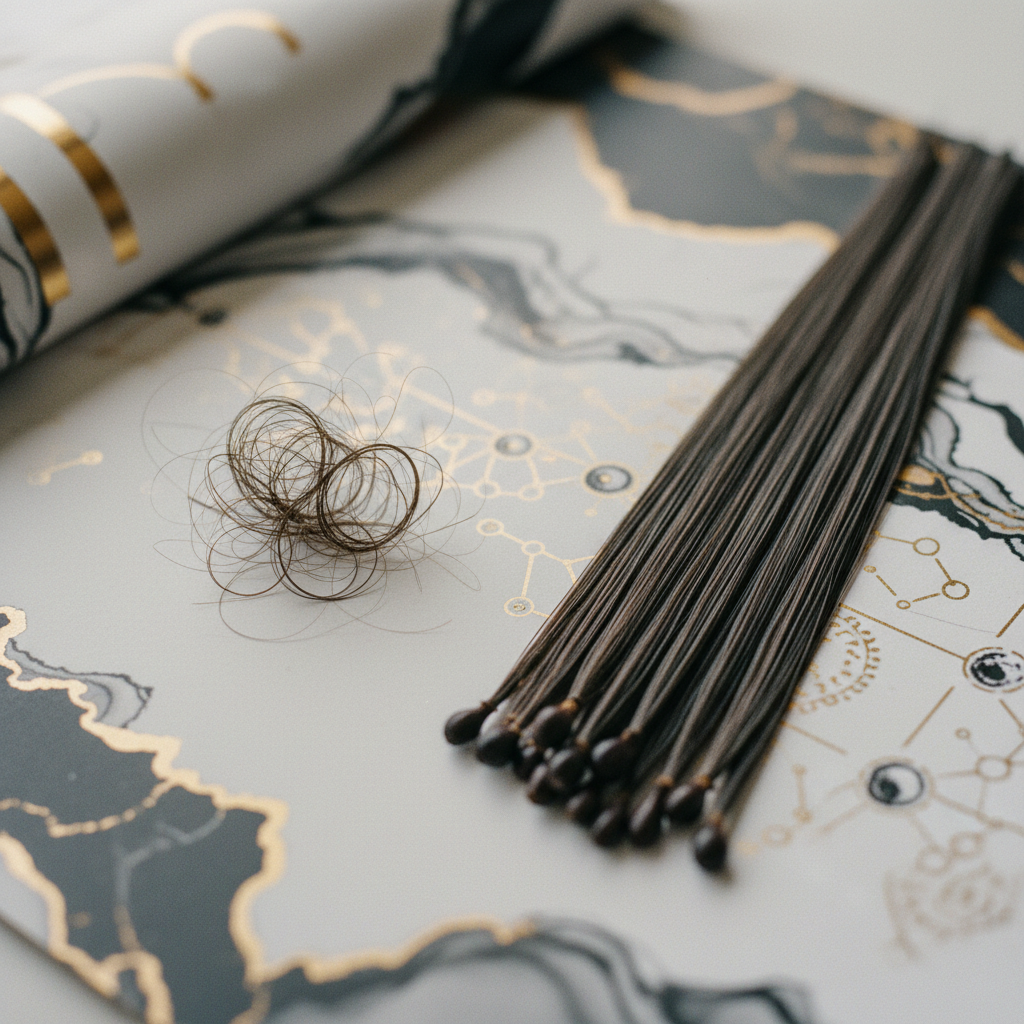
Breakage, conversely, is an external physical fracture of the keratin fibre. The hair shaft consists of an inner cortex protected by an outer cuticle made of overlapping scales. When the cuticle suffers erosion from heat, chemical treatments (such as bleaching or relaxers), or mechanical friction, the cortex loses structural hydration and protein integrity. Once tensile stress exceeds the fibre's elastic threshold, the strand snaps. Breakage can occur at any point along the hair shaft, producing variable lengths and frayed ends.
| Feature | Hair Shedding | Hair Breakage |
|---|---|---|
| Origin point | Follicle inside the scalp | Anywhere along the hair fibre |
| Appearance of strand | Full length of your hair | Shorter, variable lengths |
| Root bulb present? | Yes, small white or clear bulb | No, blunt or split ends |
| Primary mechanisms | Follicular cycling, stress, hormones | Heat styling, bleach, tension, friction |
| Typical daily rate | 50 to 100 hairs per day | None under ideal care routines |
| Effective solutions | Systemic health, diet, scalp support | Protein, deep conditioning, gentle styling |
The biological and physical mechanisms
The mechanisms underlying shedding and breakage operate on entirely different systems: the scalp's cellular biology versus the hair shaft's material physics.
The biological mechanism of shedding
Hair growth is governed by cellular signalling in the dermal papilla. In telogen effluvium, an acute physical or psychological stressor triggers an abnormally high number of anagen follicles to shift prematurely into the telogen phase. Approximately two to three months after the trigger, these hairs release en masse. Common triggers include high fevers, childbirth, severe calorie restriction, thyroid disorders, and rapid weight loss. Because the follicle itself remains alive and undamaged, shedding usually stabilises once the underlying physiological trigger resolves.
The mechanical mechanism of breakage
The hair fibre relies on an intact cuticle layer and stable disulphide bonds within the cortical keratin matrix. Wet hair swells, stretching its diameter by up to 15 percent and weakening hydrogen bonds. If subjected to aggressive brushing while wet, or exposed to heat tools exceeding 180 degrees Celsius, the cuticle lifts, cracks, and chips away. Chemical processing like bleaching oxidises disulphide bonds into cysteic acid, stripping up to 50 percent of the fibre's tensile strength. Without the protective cuticle mantle, the hair loses its ability to retain moisture and snaps under ordinary brushing.
What the evidence does not show
Controlled dermatological research shows that cosmetic hair products cannot alter the biological timing of the follicular growth cycle. Shampoos, conditioners, and topical oils do not "stop" natural telogen shedding, because dead hairs resting in the exogen phase must inevitably leave the scalp.
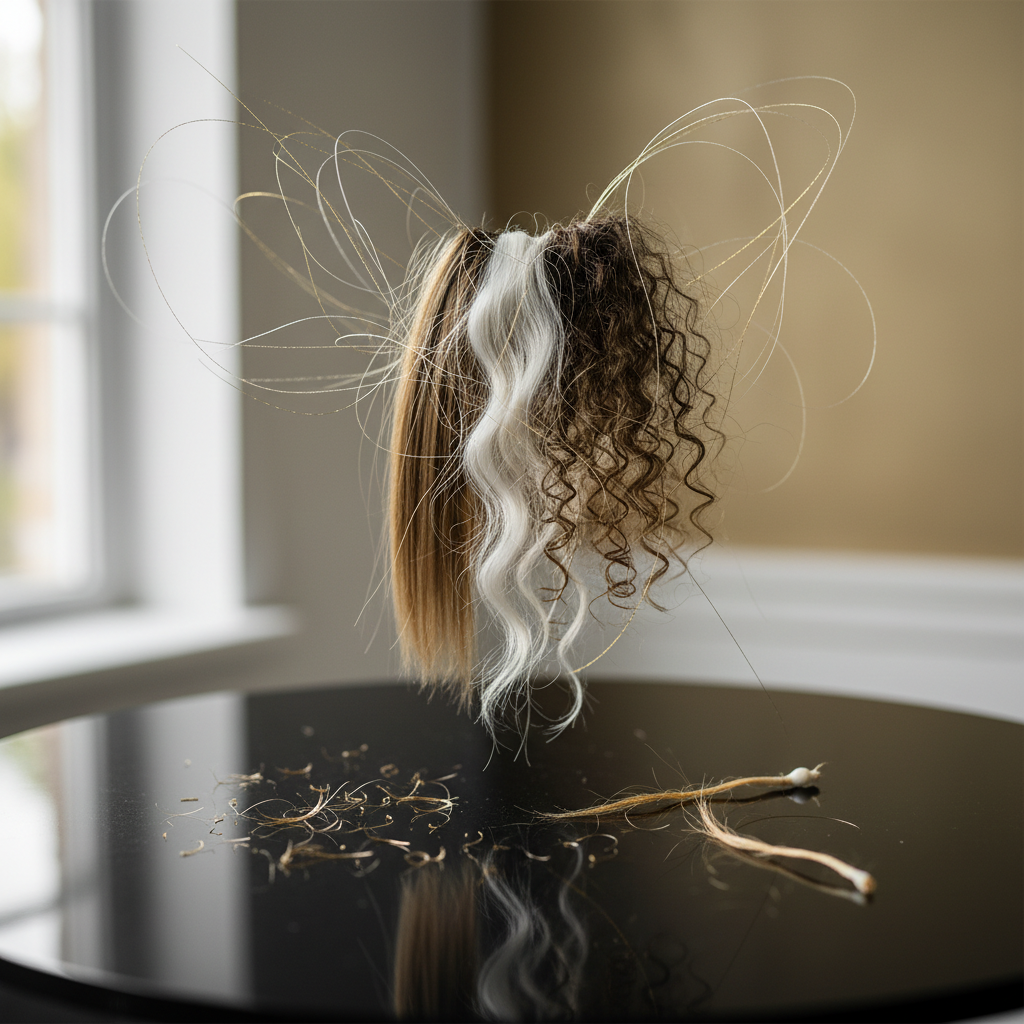
Similarly, the evidence does not support the popular myth that trimming hair makes it grow faster from the root. Trimming merely removes split, weakened ends, which halts progressive breakage up the hair shaft. While this preserves length and creates the appearance of fuller, healthier hair, it has zero impact on the rate of follicular proliferation beneath the scalp.
Signs to look for: how to tell them apart
A hands-on physical inspection provides the fastest way to diagnose your hair condition.
- Examine the ends of fallen hairs: Collect several fallen strands from your brush or shower drain. Inspect both tips under bright light. A shed hair features a small, hard, translucent white bulb at one end. A broken strand has no bulb, showing blunt, ragged, or split ends on both sides.
- Measure the length: Shed hairs match your current overall hair length. Breakage yields irregular pieces, ranging from tiny two-centimetre flecks to mid-length strands.
- Listen during styling: If you hear snapping, popping, or crackling sounds while detangling or brushing, you are experiencing active mechanical breakage.
- Inspect your clothing: Tiny, short fragments scattered across your shoulders, bathroom sink, or pillowcase almost always indicate breakage rather than shedding.
What you can do to manage both conditions
Because the root causes differ, resolving shedding and breakage demands separate strategies.
Addressing breakage along the shaft
- Reduce thermal stress: Keep heated tools below 180 degrees Celsius and always apply a thermal protectant. Heat tools strip surface lipids, accelerating fibre brittleness.
- Handle wet hair gently: Use a wide-tooth comb or flexible detangling brush, working upwards from the ends to the roots. Never vigorously rub wet hair with a standard cotton towel; use a microfibre towel or smooth cotton t-shirt to absorb moisture.
- Incorporate moisture and protein: Treat fragile hair with restorative conditioners featuring hydrolysed vegetable proteins and fatty alcohols to coat the cuticle and reduce friction.
- Eliminate high-tension styling: Avoid tight ponytails, braids, or extensions that create focal stress points along the shaft and at the follicle base.
Managing hair shedding from the scalp
- Assess nutritional intake: Ensure adequate levels of ferritin (iron stores), zinc, vitamin D, and essential amino acids. Follicular matrix cells divide rapidly and require consistent metabolic fuel.
- Manage systemic triggers: Review recent medical events, chronic stress, or medication changes that occurred 8 to 12 weeks prior to the onset of excess shedding.
- Support the scalp environment: Keep the scalp clean and free from sebum buildup using balancing, stimulating cleansers that create the best possible conditions for new growth.
Watermans approaches to healthy hair and scalp
Watermans products are formulated to support the scalp ecosystem while bolstering hair fibre resilience against mechanical stress. The Watermans Grow Me shampoo and Condition Me conditioner provide a dual approach. Grow Me cleanses the scalp surface, delivering key cosmetic ingredients like biotin, rosemary, caffeine, and niacinamide to invigorate the scalp environment and create ideal conditions for strong, healthy-looking hair.
Meanwhile, Condition Me works directly on the external hair fibre. Formulated with cholesterol, shea butter, and hydrolysed lupine protein, it coats damaged cuticles, restores slip, and protects weakened strands from physical friction. By improving manageability and fibre strength, it significantly reduces day-to-day breakage from combing and heat styling, helping you retain existing length while maintaining a refreshed, flake-free scalp.
When the cause may be something else
If hair loss does not fit the profile of diffuse telogen shedding or physical breakage, an underlying dermatological condition may be present.
- Androgenetic alopecia: Genetic pattern thinning involves the progressive miniaturisation of hair follicles, leading to finer, thinner strands over time rather than sudden, heavy shedding.
- Alopecia areata: This autoimmune disorder presents as smooth, well-defined, round circular patches of sudden hair loss on the scalp or body.
- Traction alopecia: Prolonged mechanical tension can pull hair out from the root while simultaneously snapping fibres, eventually scarring the follicle if left unchecked.
- Trichorrhexis nodosa: A specific structural defect characterised by small, bead-like swelling along the hair shaft where fibres readily snap under minor stress.
When to seek professional medical advice
Consult a GP, dermatologist, or registered trichologist if you notice any of the following symptoms:
- Sudden, diffuse shedding exceeding 100 to 150 hairs daily that persists for longer than three months.
- Distinct, patchy bald spots, an expanding central parting, or visible scalp inflammation, redness, scaling, or burning sensations.
- General systemic symptoms alongside hair loss, such as unexpected weight fluctuations, extreme fatigue, cold intolerance, or irregular menstrual cycles.
- Unexplained, widespread breakage occurring across virgin, unbleached hair, which may signal an underlying metabolic imbalance.
Frequently asked questions about Understanding Hair Breakage versus Shedding
How can I tell if I am shedding or breaking hair?
To determine whether you are experiencing shedding or breakage, examine the fallen strands. If the hair is full-length and has a tiny white bulb at the root, it has naturally shed from the follicle. If the strand is short, uneven, and lacks a bulb, it has broken off along the shaft due to physical or chemical damage.
Does normal brushing cause shedding or breakage?
Normal brushing primarily removes hairs that have already detached from the follicle during the natural exogen phase. However, vigorous brushing, tugging through knots, or brushing wet hair without proper slip can stretch fibres past their elastic limit, resulting in mechanical breakage rather than true biological shedding.
Can a conditioner stop hair shedding?
No, cosmetic conditioners cannot stop hair shedding. Shedding happens deep inside the follicle beneath the scalp surface. Conditioners operate entirely on the external hair shaft, smoothing the cuticle, reducing friction, and preventing breakage. While this keeps more hair intact, it does not stop the natural shedding cycle.
Why is understanding hair breakage versus shedding important for treatment?
Understanding hair breakage versus shedding is essential because the two issues require completely different solutions. Treating breakage requires modifying styling habits, reducing heat, and using restorative protein treatments. Addressing excess shedding requires evaluating internal health factors, managing stress, correcting nutritional deficiencies, and supporting overall scalp wellness.
How much daily hair fall is considered normal?
Losing roughly 50 to 100 shed hairs per day is completely normal for most adults. Because humans have roughly 100,000 hair follicles cycling independently, this daily loss represents ordinary biological turnover. If you wash your hair infrequently, you may notice larger clusters of shed hairs on wash days, which is simply accumulated natural shedding.
Summary
Accurate diagnosis is the foundation of effective hair care. Understanding hair breakage versus shedding empowers you to address the true root cause of hair fall rather than relying on ineffective remedies. By checking for the presence of a follicular bulb and assessing strand length, you can easily distinguish internal cycling from external fibre trauma. Protect your hair shafts with gentle handling, heat moderation, and targeted conditioning, while nurturing your scalp with balanced nutrition and mindful care to maintain strong, resilient hair from root to tip.
Sources and references
- British Association of Dermatologists. Telogen Effluvium: Patient Information Leaflet. 2021.
- American Academy of Dermatology Association. Hair Shedding vs. Hair Loss: What's the Difference? 2022.
- Robbins, C. R. Chemical and Physical Behavior of Human Hair. 5th Edition, Springer-Verlag, 2012.
- Trueb, R. M. The Impact of Oxidative Stress on Hair. International Journal of Cosmetic Science, 2015.
- Sinclair, R. Healthy Hair: What Is It? Journal of Investigative Dermatology Symposium Proceedings, 2007.
Find these ingredients in Watermans products
- Zinc: you will find this ingredient in our Hair Vitamins.
- Niacinamide: you will find this ingredient in our Hair Mask.
- Shea Butter: you will find this ingredient in our Curly Hair Conditioner.