How Hair Breakage Differs from Hair Loss: Evidence-Based Guide
9 min read ·
Learn how hair breakage differs from hair loss, how to spot the difference with the bulb test, and the exact steps to treat fibre damage versus follicular shedding.
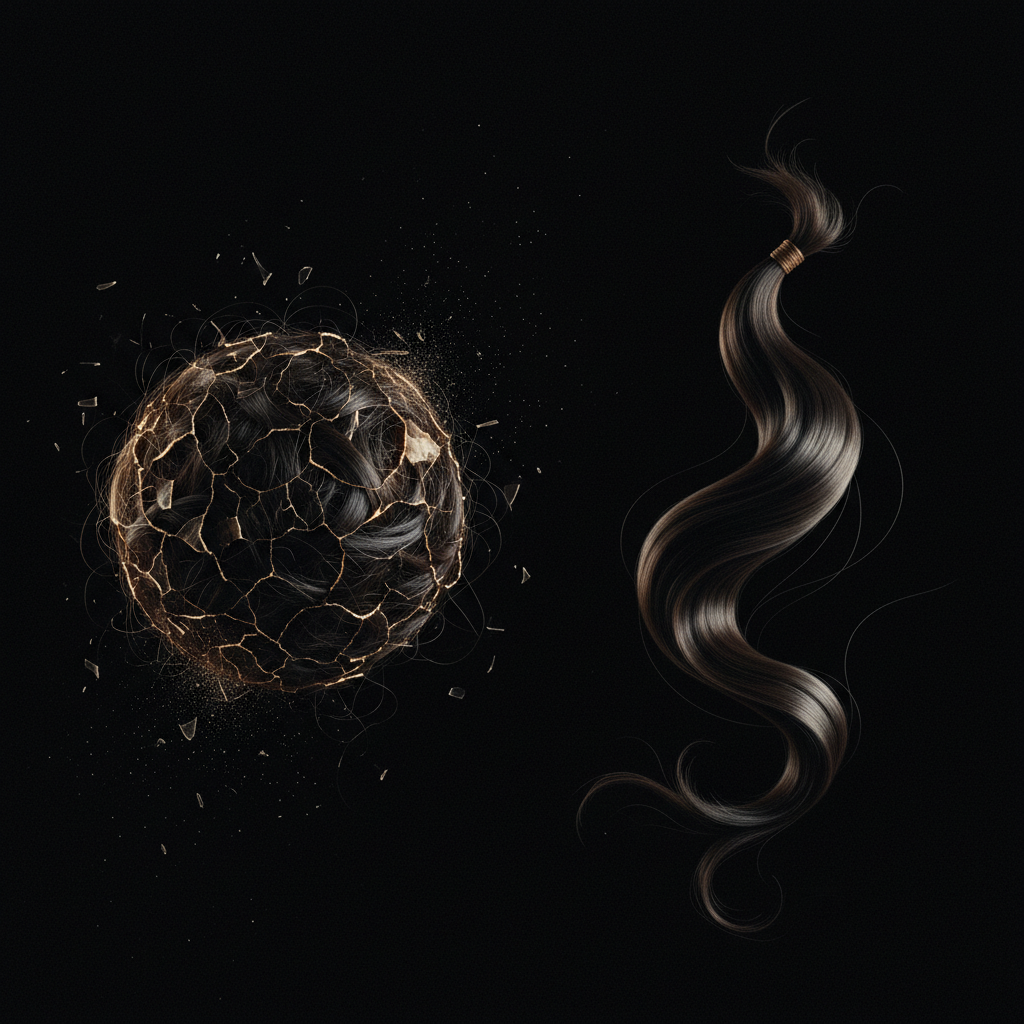
Quick answer: Understanding how hair breakage differs from hair loss comes down to anatomy: breakage is structural damage where the fibre snaps along the shaft, whereas true hair loss originates inside the follicle beneath the scalp. Breakage leaves short, jagged fragments without a root, whilst follicular shedding sheds full-length strands complete with a tiny white bulb. The main limitation is that both issues can occur at the same time, meaning you must inspect the shed fibres carefully to choose the correct approach.
Key takeaways
- Different root causes: Breakage stems from mechanical, thermal, or chemical trauma to the hair shaft; hair loss stems from follicular disruption, genetics, illness, or hormonal shifts.
- The bulb test: Shed hairs from normal telogen cycles or alopecia have a visible white keratin bulb at one end, whereas broken hairs have blunt, fractured, or frayed ends without a bulb.
- Fibre length: Hair loss produces full-length strands matching your overall hair length; breakage produces uneven, short pieces that drop onto clothes or bathroom sinks.
- Reversibility and treatment: Breakage responds quickly to cosmetic conditioning, protein balance, and gentler styling; true hair loss requires medical evaluation or dermatological scalp management.
- Scalp density: Pure breakage rarely causes sudden scalp widening or circular bald patches, though severe breakage close to the root can mimic thinning.
How Hair Breakage Differs from Hair Loss: what the evidence shows
Dermatological research makes a firm clinical distinction between shaft disorders and follicular disorders. Understanding how hair breakage differs from hair loss begins with how hair grows. The hair follicle sits roughly 4 mm beneath the scalp surface, cycling continuously through anagen (growth), catagen (regression), and telogen (rest).
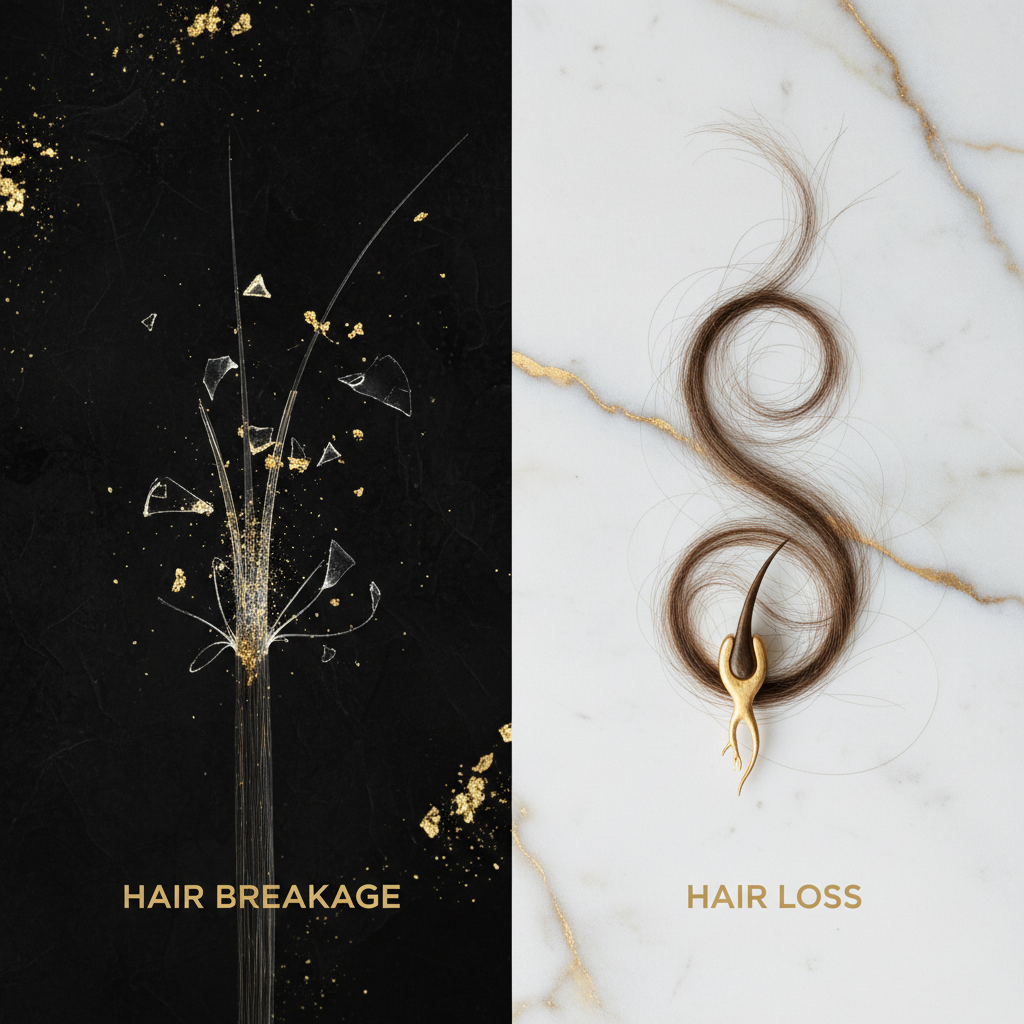
When a hair reaches the end of the telogen phase (often termed exogen), it naturally releases from the follicular base. Healthy adults shed between 50 and 100 of these club hairs daily. When systemic stress, hormonal imbalances (such as elevated dihydrotestosterone in androgenetic alopecia), or autoimmune triggers disrupt this cycle, shedding accelerates or follicles miniaturise. This is true hair loss or alopecia.
In contrast, hair breakage (trichorrhexis nodosa or general fibre fracture) has nothing to do with the follicular cycle. The hair follicle continues to produce healthy fibre, but physical friction, heat tools above 185°C, ultraviolet radiation, or chemical relaxers and bleaches strip the outer protective cuticle. Once the hydrophobic lipid layer (18-methyleicosanoic acid) and the shingle-like cuticle scales degrade, the inner cortex is exposed. The cortex consists of parallel keratin chains held together by disulphide bonds. When these bonds break from excessive tension or chemical oxidation, the fibre fractures and snaps.
| Diagnostic Factor | Hair Breakage (Fibre Fracture) | Hair Shedding & Loss (Follicular) |
|---|---|---|
| Origin point | Along the hair shaft (external) | Deep within the follicle (internal) |
| End appearance | Frayed, split, or jagged; no white bulb | Small, rounded white or translucent bulb |
| Strand length | Variable, typically short, irregular fragments | Uniform, full-length fibres |
| Scalp appearance | Normal scalp; short "frizz" or flyaways | Widening parting, receding hairline, or patchy spots |
| Primary causes | Heat, bleach, brushing, tight styling | Genetics, stress, thyroid, iron deficiency, hormones |
| Primary resolution | Protein/moisture balance, lower heat, trims | Scalp care, dietary review, medical therapies |
Biological mechanisms: the cuticle vs the follicle
To see why the treatments for these conditions cannot be swapped, you have to look at the underlying biology.
The mechanics of fibre breakage
Each human hair shaft consists of three zones: the protective outer cuticle, the structural cortex, and (in thicker fibres) the central medulla. The cuticle contains between 6 and 10 overlapping cellular layers that seal moisture inside and resist friction.
When you apply high heat, water inside the cortex rapidly expands, creating micro-cavities (often described as "bubble hair"). Chemical processing (bleaching or permanent waving) breaks the disulphide bonds that give the shaft its tensile strength. Repeated mechanical brushing stretches wet hair past its elastic limit of roughly 30 percent elongation. When stretched beyond this point, the cortex snaps. The follicle itself remains completely undisturbed and continues its normal growth rate of roughly 1 to 1.25 cm per month.
The mechanics of follicular loss
True hair loss originates at the dermal papilla. In androgenetic alopecia, genetically susceptible follicles shrink under the influence of dihydrotestosterone (DHT), producing progressively finer, shorter hairs until the follicle becomes dormant.
In telogen effluvium, an acute physiological shock (high fever, severe illness, childbirth, or sudden caloric restriction) forces a massive cohort of growing anagen hairs prematurely into the telogen resting phase. Roughly two to three months after the trigger, these hairs shed simultaneously. The fibre itself is usually structurally sound; it simply detached from the papilla before its time.
Signs to look for: how to tell them apart at home
You can identify whether you are dealing with shaft damage or follicular shedding using three simple tests:
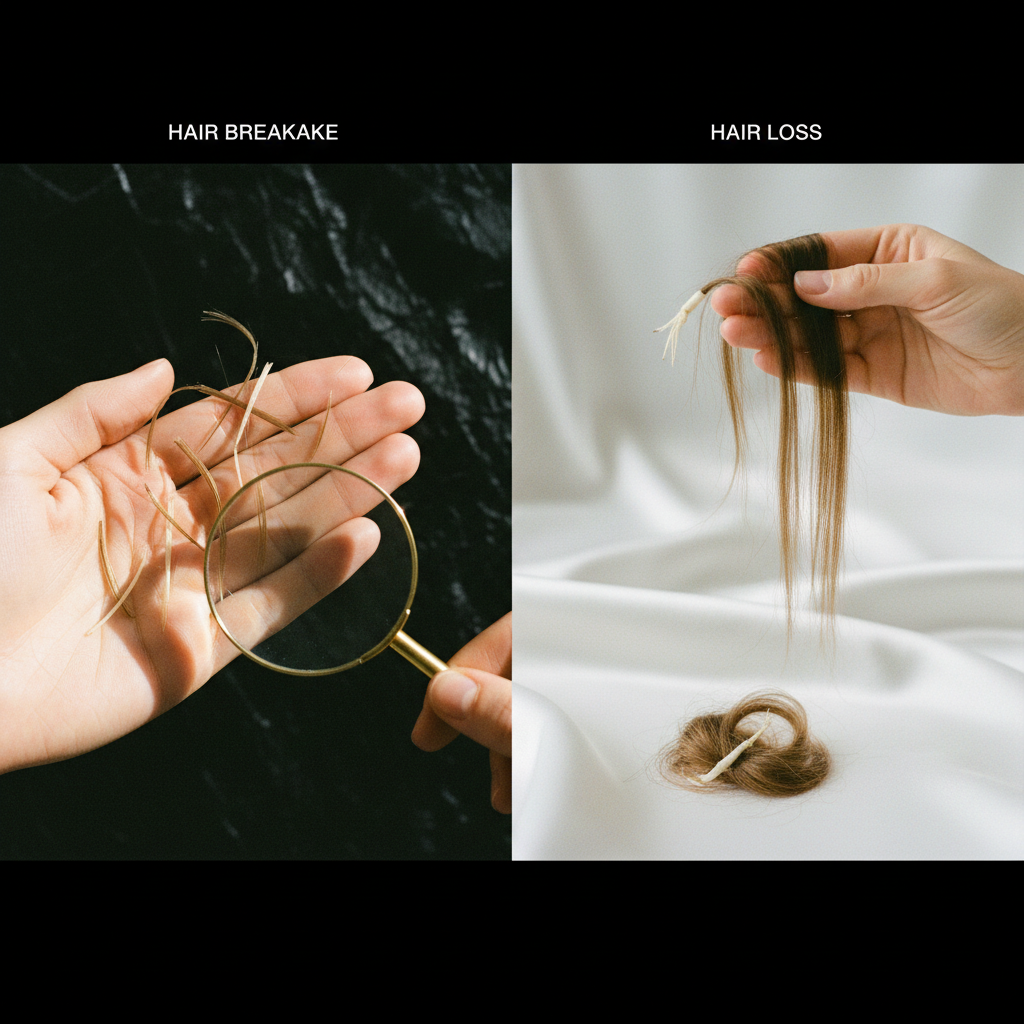
- The white bulb check: Collect several strands from your brush or shower drain. Inspect the ends under bright light or a magnifying glass. If you see a tiny, rounded white or off-white bead at one tip, that strand completed its follicular cycle and shed from the root. If both ends are straight, tapered, or split, the fibre snapped mid-shaft.
- The length comparison: Compare the shed pieces to the rest of your hair. Shedding produces long, full-length strands matching your overall cut. Breakage results in a shower of varied, tiny fragments (often 1 to 5 cm long) on your pillow, clothes, or bathroom counter.
- The density pattern: Part your hair down the centre and at the temples. If your parting line is visibly widening, or if your ponytail feels significantly thinner at the scalp base, you are likely experiencing follicular thinning or telogen effluvium. If your ponytail is thick at the base but becomes wispy, thin, and uneven towards the ends, your primary problem is shaft breakage.
What you can do to address breakage
Because breakage is an external physical problem, targeted cosmetic habits make a fast, measurable difference.
- Lower the heat: Never use heat styling tools above 185°C. Research shows keratin begins irreversible structural denaturation around 155 to 160°C in damp hair, and 190 to 200°C in dry hair. Always apply a silicone- or polymer-based thermal protectant beforehand.
- Manage wet-hair friction: Hair swells when wet, lifting the cuticle and dropping its tensile strength. Never brush wet hair with a fine-toothed comb or stiff-bristled brush. Use a wide-tooth comb or flexible detangling brush, starting gently at the ends and working upward toward the roots.
- Restore surface lipids: Bleached or weathered hair loses its protective 18-MEA layer. Use acidic conditioning treatments (pH 3.5 to 5.0) containing fatty alcohols, ceramides, or hydrolysed proteins. These smooth the cuticle, restore the surface isoelectric point, and reduce wet friction by up to 50 percent.
- Avoid tight traction: Tight ponytails, slicked buns, and heavy extensions exert continuous mechanical load. Over time, this causes both shaft fracture and traction alopecia (follicular damage from mechanical tension).
When the cause is follicular hair loss
If your inspection shows full-length fibres with intact white bulbs, treating the hair fibre with bond builders or deep conditioners will not stop the shedding.
Cosmetic products cannot alter internal systemic triggers. If shedding exceeds normal levels (finding dozens of full-length hairs on your pillow every morning, or clumps coming out during washing) for longer than six to eight weeks, look for internal factors:
- Nutritional status: Low ferritin (stored iron), vitamin D deficiency, or severe protein restriction can trigger diffuse shedding.
- Hormonal balance: Postpartum shifts, stopping oral contraceptives, thyroid disorders (hypo- or hyperthyroidism), and perimenopause alter follicular retention.
- Systemic stress: Major surgery, emotional bereavement, or systemic infections often precipitate acute telogen effluvium roughly 60 to 90 days after the event.
Supporting stronger growth: the Watermans approach
Maintaining a healthy scalp environment while protecting existing lengths helps address both challenges simultaneously. For external breakage, cosmetic conditioning that coats and lubricates the shaft is vital. For follicular health, keeping the scalp clean, clear of sebum build-up, and stimulated supports the hair's natural growth cycle.
Watermans GrowMe Shampoo delivers a carefully balanced formula containing biotin, rosemary, caffeine, niacinamide, and argan oil. Rather than promising unrealistic medical cures, it works cosmically: the caffeine and niacinamide invigorate and refresh the scalp surface, whilst the nourishing botanical oils smooth the cuticle to minimise everyday friction and breakage during washing. Paired with Watermans ConditionMe Conditioner, which incorporates hydrolysed lupin protein to fortify vulnerable strands, it provides the structural support needed to keep fragile fibres intact as they grow.
Frequently asked questions about How Hair Breakage Differs from Hair Loss
Does hair breakage mean my hair will stop growing?
No. Breakage has no effect on the hair follicle beneath your scalp. Your hair continues to grow from the root at its normal physiological pace of roughly 1 cm per month. However, if the rate of fibre breakage at the ends matches or exceeds the rate of new growth from the root, your hair will appear "stuck" at the same length.
Can split ends turn into permanent hair loss?
Split ends cannot turn into follicular hair loss. A split end is purely an external structural defect where the protective cuticle strips away and the cortex separates longitudinally. However, if left untrimmed, a split can travel upwards along the hair shaft toward the root, causing the entire fibre to break off close to the scalp.
How hair breakage differs from hair loss when looking at a brush?
Look closely at the strands caught in the bristles. Hair loss shows full-length strands that match your current haircut, complete with a tiny, white, pearlescent bulb at the root end. Hair breakage presents as uneven, shorter pieces without any bulb, often featuring frayed or snapped ends that feel rough to the touch.
Can tight hairstyles cause both breakage and hair loss?
Yes. Tight ponytails, braids, and extensions place heavy mechanical tension on the hair. In the short term, this tension causes fibres to snap along the shaft (breakage). If maintained over months or years, the constant physical pulling damages the follicular unit itself, causing a medical condition known as traction alopecia, which can become permanent if ignored.
Can a hair mask cure hair loss?
No. Conditioning hair masks, oils, and bond-building treatments work exclusively on the dead keratin fibres of the hair shaft. They can dramatically improve elasticity, reduce surface porosity, and stop breakage. However, they cannot reach or modify the dermal papilla beneath the scalp to stop genetic or telogen hair shedding.
Summary: protecting the shaft and the follicle
Recognising how hair breakage differs from hair loss ensures you invest your time and effort in the right solutions. Breakage is a structural problem requiring mechanical gentleness, lower heat, and lipid-rich conditioning to rebuild cuticle resilience. Hair loss is a follicular event driven by biology, genetics, and health. By checking the shed fibre for a root bulb and observing your overall hair density, you can choose the right balance of gentle styling, scalp care, and medical guidance to restore your hair's natural strength and fullness.
Sources and references
- British Association of Dermatologists. (2021). Telogen Effluvium: Patient Information Leaflet. BAD Guidelines.
- Robbins, C. R. (2012). Chemical and Physical Behavior of Human Hair (5th ed.). Springer-Verlag.
- Sinclair, R. D. (2004). Healthy hair: what is it and how is it achieved? Journal of the American Academy of Dermatology, 50(3), 44-50.
- Trueb, R. M. (2009). Oxidative stress in ageing of hair. International Journal of Trichology, 1(1), 6-14.
- National Institute for Health and Care Excellence (NICE). (2022). Alopecia androgenetica: Clinical Knowledge Summary. NICE.
Find these ingredients in Watermans products
- Vitamin D: you will find this ingredient in our Hair Vitamins.
- Niacinamide: you will find this ingredient in our Hair Mask.