How Chemical Bleaching Affects the Hair Shaft: The Evidence-Based Guide
9 min read ·
Explore how chemical bleaching affects the hair shaft, from cuticle stripping and 18-MEA loss to disulphide bond cleavage, porosity changes, and fibre breakage.
Quick answer: Understanding how chemical bleaching affects the hair shaft reveals a process of aggressive structural modification. Alkaline agents raise the protective cuticle scales, allowing persulphate oxidisers to penetrate the cortex and dissolve natural melanin pigments. While effective for lightening, this reaction strips the protective 18-methyleicosanoic acid lipid layer, cleaves structural disulphide bonds, and increases fibre porosity. The primary limitation is that lost structural proteins and broken covalent bonds cannot be genuinely regenerated, meaning post-bleach hair requires ongoing cosmetic management to mitigate breakage.
Key takeaways
- Cuticle degradation: Alkaline swelling lifts and chips protective cuticle scales, removing the hydrophobic 18-MEA lipid layer permanently.
- Cortex oxidation: Oxidative agents break cystine disulphide bonds, converting them into cysteic acid and reducing tensile strength by up to 20 to 50 percent depending on processing intensity.
- Permanent porosity shift: Bleached hair displays high porosity, absorbing environmental water rapidly but losing moisture just as quickly, leading to chronic frizz and brittleness.
- Breakage versus loss: Bleaching causes mechanical fibre breakage along the shaft; it does not cause follicular hair shedding or genetic alopecia unless direct chemical scalp burns occur.
- Cosmetic preservation: Bond builders, protein hydrolysates, and film-forming lipids reinforce the weakened fibre, reducing mechanical failure during everyday grooming.
How Chemical Bleaching Affects the Hair Shaft: what the evidence shows
Research published in cosmetic and dermatological literature demonstrates that chemical bleaching changes every morphological layer of the hair fibre. Virgin hair is an organised biological composite of keratin proteins held together by robust chemical bonds and protected by an external hydrophobic coating.
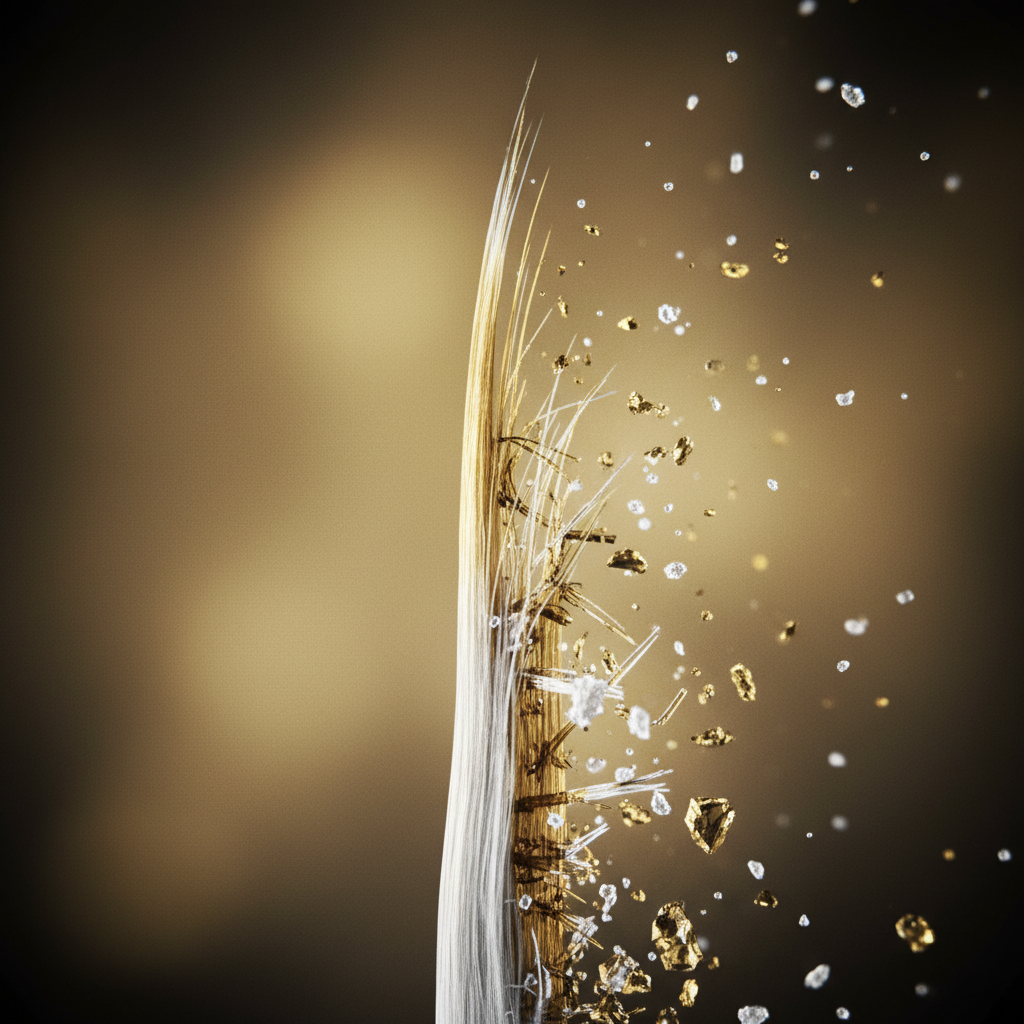
When an oxidative bleaching mixture (typically hydrogen peroxide combined with potassium, ammonium, or sodium persulphates) is applied at an alkaline pH of 9.0 to 11.0, the fibre undergoes immediate swelling. Electron microscopy shows that this alkaline swell forces the imbricated cuticle scales to flare open. This exposes the delicate interior, allowing free radicals to penetrate deep into the cortex.
Within the cortex, bleaching agents oxidise eumelanin and pheomelanin, turning them into colourless compounds. However, this reaction is not selective. The oxidiser indiscriminately attacks the amino acid matrix of the hair. Cystine, the sulphur-rich amino acid responsible for hair's rigidity and strength, is oxidised into cysteic acid. Published studies indicate that a single standard bleaching session can convert 15 to 25 percent of cystine into cysteic acid, while repeated bleaching can degrade more than 45 percent. The result is a dramatic decrease in the hair's wet and dry tensile elasticity.
The biochemical mechanism: cuticle, cortex, and lipids
To understand the full impact, one must analyse the three distinct structural components targeted during processing:
1. Removal of the F-Layer (18-MEA)
The outermost surface of a healthy hair shaft is coated with a mono-layer of fatty acids known as 18-methyleicosanoic acid (18-MEA), chemically bonded to the epicuticle. This gives healthy hair its water-repellent (hydrophobic) nature, allowing water to bead off and reducing grooming friction. Chemical bleaching cleaves the thioester bonds anchoring 18-MEA. Once this layer is gone, the hair shaft becomes intensely hydrophilic (water-attracting). It swells excessively when wet, causing hygral fatigue and leaving the inner cortex vulnerable to environmental weathering.
2. Cuticle scale erosion
Under normal conditions, six to eight overlapping cuticle layers protect the cortex. Bleaching raises these scales abruptly. Repeated chemical services or extended processing times erode the edges of these cells. Cuticle fragments break off, exposing the underlying endocuticle and cell membrane complex. With fewer intact layers, friction between adjacent hair strands increases by over 30 percent, multiplying mechanical tangles and combing breakage.
3. Disulphide cleavage in the cortex
The cortex makes up roughly 85 percent of the total hair shaft volume and provides structural rigidity through intermediate filament keratins. These keratins rely on covalent disulphide cross-links formed between pairs of cysteine residues. Bleaching agents break these sulphur bridges. The resulting increase in cysteic acid groups introduces negative charges inside the fibre. These like-charges repel each other, creating voids, increasing internal porosity, and substantially reducing the fibre's ability to stretch without snapping.
Structural comparison: virgin hair versus bleached hair
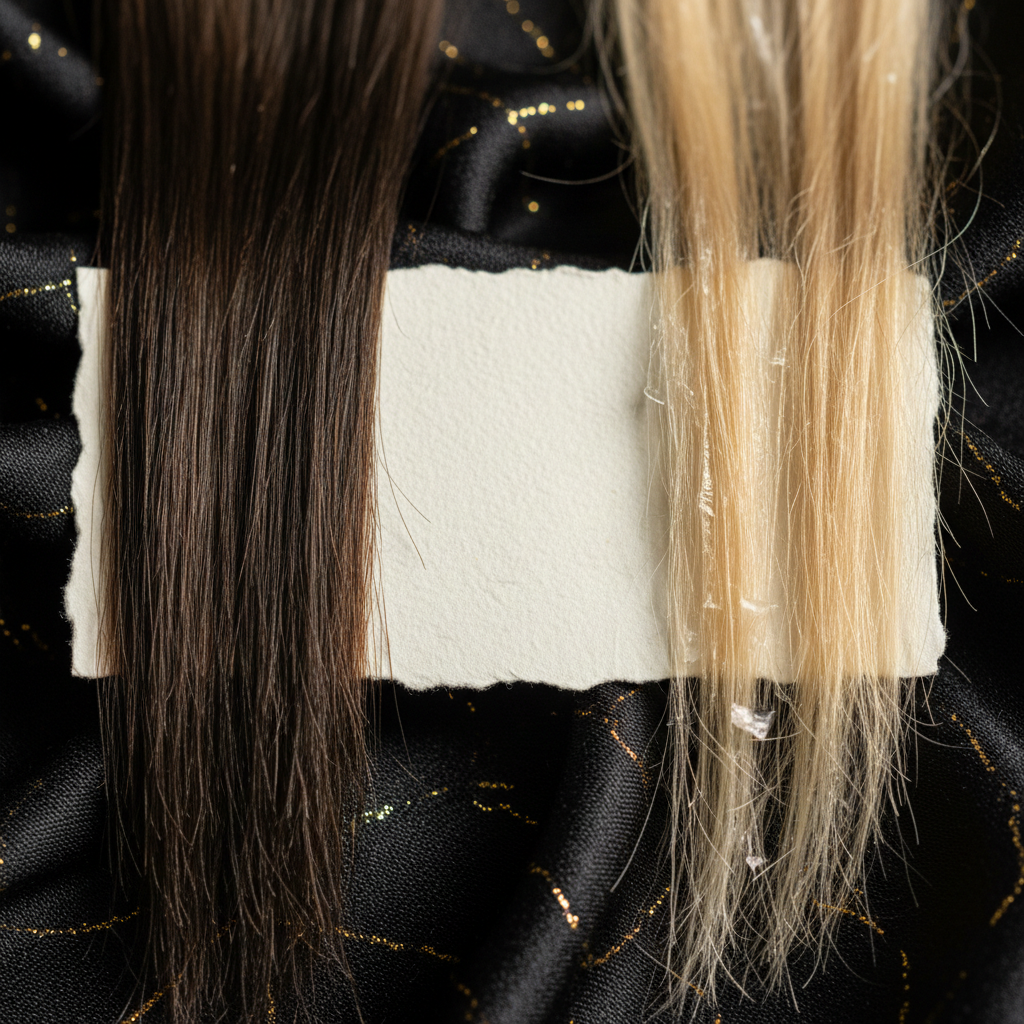
| Structural Property | Virgin Untreated Hair | Chemically Bleached Hair |
|---|---|---|
| Surface Nature | Strongly hydrophobic (repels water) | Strongly hydrophilic (absorbs water rapidly) |
| Cuticle Condition | Flat, tightly overlapping, intact 18-MEA | Lifted, frayed, or stripped of 18-MEA |
| Cysteic Acid Content | Low (typically under 1.5%) | High (often 5% to 15%+) |
| Cystine Disulphide Bonds | Intact, high structural cross-linking | Significantly reduced (cleaved into cysteic acid) |
| Wet Tensile Strength | High elasticity; recovers after 30% stretch | Low elasticity; deforms or snaps under light load |
| Combing Friction | Smooth surface; low mechanical resistance | Rough surface; high friction and tangling risk |
What the evidence does not show
There is no credible scientific evidence demonstrating that chemical bleaching can:
- Alter the hair follicle permanently from shaft exposure: Bleach applied correctly to the hair lengths affects only dead, cornified keratin tissue. It does not dictate future follicular growth cycles.
- Cause genetic hair loss (androgenetic alopecia): Bleach does not interact with androgen receptors, dihydrotestosterone (DHT), or dermal papilla biology.
- Be "cured" back to virgin status: While cosmetic products can temporarily bridge broken bonds or coat voids, they cannot biologically resurrect cleaved keratin matrices or reinstate the native 18-MEA lipid layer.
Signs of bleach-induced hair shaft damage
Recognising the physical symptoms of bleach damage helps differentiate between shaft degradation and genuine follicular shedding:
- Excessive wet elasticity (the "bubblegum" effect): Wet hair stretches abnormally far without bouncing back, indicating severe loss of cortical disulphide integrity.
- Mid-shaft snapping: Short hair fragments with blunt or split ends appearing on clothing, pillows, or styling tools, contrasting with full-length hairs shed from the root containing a white bulb.
- High porosity and rapid drying: Hair absorbs water instantly during washing, yet dries out into a straw-like state within minutes due to an inability to retain bound hydration.
- Loss of natural curl pattern: In wavy, curly, or coily hair textures, the structural cross-links that dictate curl geometry become disrupted, leading to irregular, slackened, or limp curl clusters.
What you can do: mitigating bleach damage
While damaged keratin cannot be biologically cured, targeted cosmetic intervention substantially reduces mechanical failure and improves the tactile feel of the fibre:
- Incorporate bond-multiplying technologies: Formulations containing dicarboxylic acids (such as maleic acid or bis-aminopropyl diglycol dimaleate) help cross-link broken bonds temporarily, restoring a portion of lost tensile stability.
- Use hydrolysed proteins: Small-molecular-weight proteins (wheat, soy, or keratin peptides under 1,000 Daltons) penetrate into the porous cortical gaps, temporarily reinforcing the internal matrix.
- Replenish surface lubricity: Fatty alcohols (cetyl, stearyl), silicones (amodimethicone, dimethicone), and lightweight plant oils form a secondary hydrophobic shield. This synthetic barrier mimics the lost 18-MEA, lowering combing resistance and preventing friction-induced snaps.
- Maintain an acidic pH balance: Finishing rinses or leave-in conditioners formulated at an acidic pH (between 3.5 and 5.0) help flatten lifted cuticle scales, locking in conditioning agents and boosting light reflectance for better shine.
When the cause may be something else
If you observe hair coming away from the head, identify whether the root is attached:
- Telogen effluvium: If full-length fibres showing a tiny white keratin bulb at the end are shedding across the scalp, this reflects a physiological cycle disturbance (such as stress, nutritional deficiency, thyroid changes, or illness) rather than bleach damage to the fibre.
- Traction alopecia: Snapping or thinning concentrated along the hairline may stem from excessive tension caused by tight hairstyles, extensions, or aggressive brushing, which acts as a secondary mechanical stressor on bleached fibres.
When to get professional advice
Consult a qualified trichologist or dermatologist if you experience chemical scalp burns, persistent redness, blistering, or oozing following a bleaching treatment. These symptoms indicate chemical irritation or allergic contact dermatitis of the scalp skin, which can compromise follicular health if left untreated. For cosmetic breakage, visit a skilled colourist who can perform a strand test and formulate a corrective, non-oxidative toning and conditioning protocol.
Supportive care: the Watermans approach
For individuals managing fibre weakness and fragile lengths, gentle hair care is essential to minimise mechanical friction. While chemical damage occurs along the shaft, maintaining optimal scalp hygiene supports new, robust regrowth.
Watermans focuses on non-invasive, strengthening cosmetic care designed to support a clean scalp environment while preserving fragile hair strands. Products formulated without harsh sulphates cleanse without aggravating the lifted cuticles of bleached hair, leaving the lengths softer, stronger-feeling, and less prone to daily styling breakage.
Frequently asked questions about How Chemical Bleaching Affects the Hair Shaft
Does bleach cause permanent damage to the hair shaft?
Yes. The chemical reactions that dissolve melanin also permanently oxidise cystine disulphide bonds and strip the surface 18-MEA lipid layer. Because the hair shaft is biologically non-living tissue, it cannot self-repair. The structural damage remains until the affected portion of the hair is cut away, though cosmetic treatments can temporarily improve strength and smoothness.
Can understanding how chemical bleaching affects the hair shaft prevent breakage?
Understanding how chemical bleaching affects the hair shaft helps you adjust grooming routines to avoid catastrophic breakage. Recognising that bleached fibres have low elasticity means handling hair gently when wet, using wide-tooth combs, avoiding high-heat tools, and applying protective leave-in conditioners to reduce friction.
Why does bleached hair feel rough like straw?
Bleached hair feels rough because the alkaline mixture forces the cuticle scales outward and dissolves the protective 18-MEA fatty acid film. The raised, jagged scale edges catch against one another rather than gliding smoothly, resulting in a coarse, dry texture and increased tangling.
Is hair breakage the same as hair loss?
No. Hair breakage occurs when the hair shaft snaps anywhere along its length due to physical or chemical trauma. Hair loss (alopecia or shedding) happens at the follicle level, where hairs detach from the scalp with the root bulb intact. Bleaching causes shaft breakage, not biological hair loss, unless severe chemical burns directly damage the follicles.
Can protein treatments fix over-bleached hair?
Protein treatments cannot permanently fix over-bleached hair, but they provide critical temporary reinforcement. Hydrolysed proteins deposit inside cortical gaps and coat the cuticle, filling structural voids and improving elasticity. However, these proteins wash away over time and must be reapplied regularly alongside moisturising emollients.
Summary
Analysing how chemical bleaching affects the hair shaft highlights the delicate balance between aesthetic lightening and structural degradation. While persulphates successfully strip melanin pigments, they inevitably break disulphide bonds, erode cuticle integrity, and remove the fibre's natural hydrophobic shield. Bleach-damaged hair cannot biologically regenerate, making cautious chemical processing, acidic maintenance, and protective grooming routines vital for preserving fibre integrity and preventing mid-shaft breakage.
Sources and references
- Journal of Cosmetic Science: Chemical and Physical Changes in Bleached Human Hair, 2008.
- International Journal of Cosmetic Science: The Surface Chemistry and Physics of Human Hair, 2012.
- Robbins, C. R.: Chemical and Physical Behavior of Human Hair, 5th Edition, Springer, 2012.
- Society of Cosmetic Chemists: Structure and Properties of Bleached Human Hair Keratin Fibres, 2015.
Where Watermans fits
If you want a routine built around the science above, these are the products from the range that apply here: