Hair Breakage versus Hair Shedding: How to Spot the Difference
10 min read ·
Learn the real differences in Hair Breakage versus Hair Shedding, how to identify root bulbs versus snapped fibres, and the right steps to treat each condition.
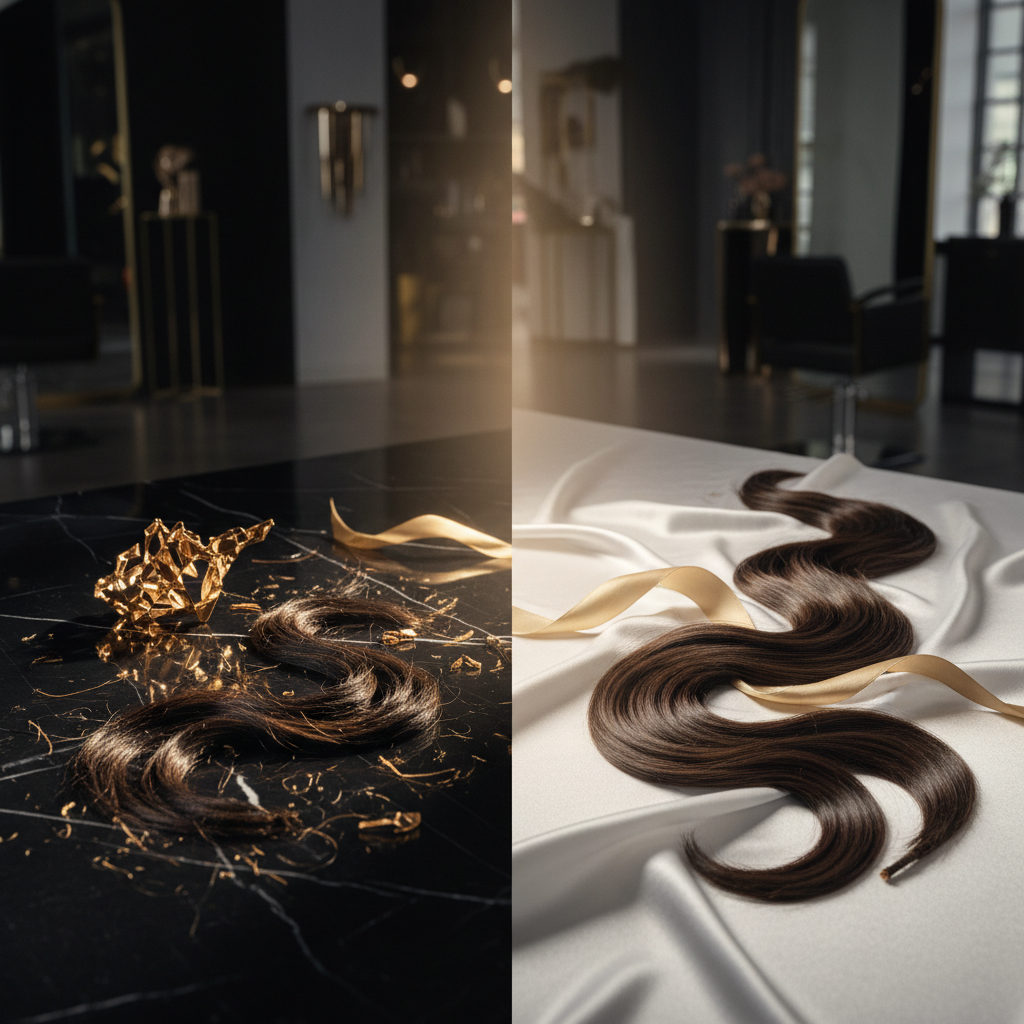
Quick answer: Hair Breakage versus Hair Shedding comes down to where the hair detaches. Shedding is a biological process where an entire strand falls naturally from the follicle, complete with a tiny white bulb at its root. Breakage is structural failure where the hair shaft snaps due to mechanical, thermal, or chemical trauma, leaving irregular, jagged fragments without bulbs. While shedding is governed by internal cycles, breakage stems from external cuticle degradation, meaning treatments for one will not fix the other.
Key takeaways
- Shedding originates inside the hair follicle, whereas breakage represents physical damage along the exposed hair shaft.
- A naturally shed hair displays a tiny, white keratinous bulb at the root; a broken hair has blunt, split, or frayed ends without a bulb.
- Losing 50 to 100 telogen hairs per day is physiologically normal for adults.
- Breakage results in uneven lengths, frizz, and short fragments on your clothing or sink basin.
- Scalp treatments and dietary adjustments target shedding, while conditioning agents, protein balancing, and gentle handling resolve breakage.
- Sudden, profuse shedding requires medical evaluation, whereas breakage requires structural hair care adjustments.
Hair Breakage versus Hair Shedding: what the evidence shows
Understanding Hair Breakage versus Hair Shedding begins with trichology and hair biology. Every human scalp hosts roughly 100,000 to 150,000 hair follicles. Each follicle operates on an independent biological rhythm: the anagen (growth) phase lasting two to seven years, the catagen (regression) phase lasting two to three weeks, and the telogen (resting) phase lasting roughly three months. At the conclusion of this cycle, during the exogen phase, the hair fibre detaches from the follicular base and falls away. Because human hair cycling is asynchronous, shedding 50 to 100 hairs daily is completely normal.
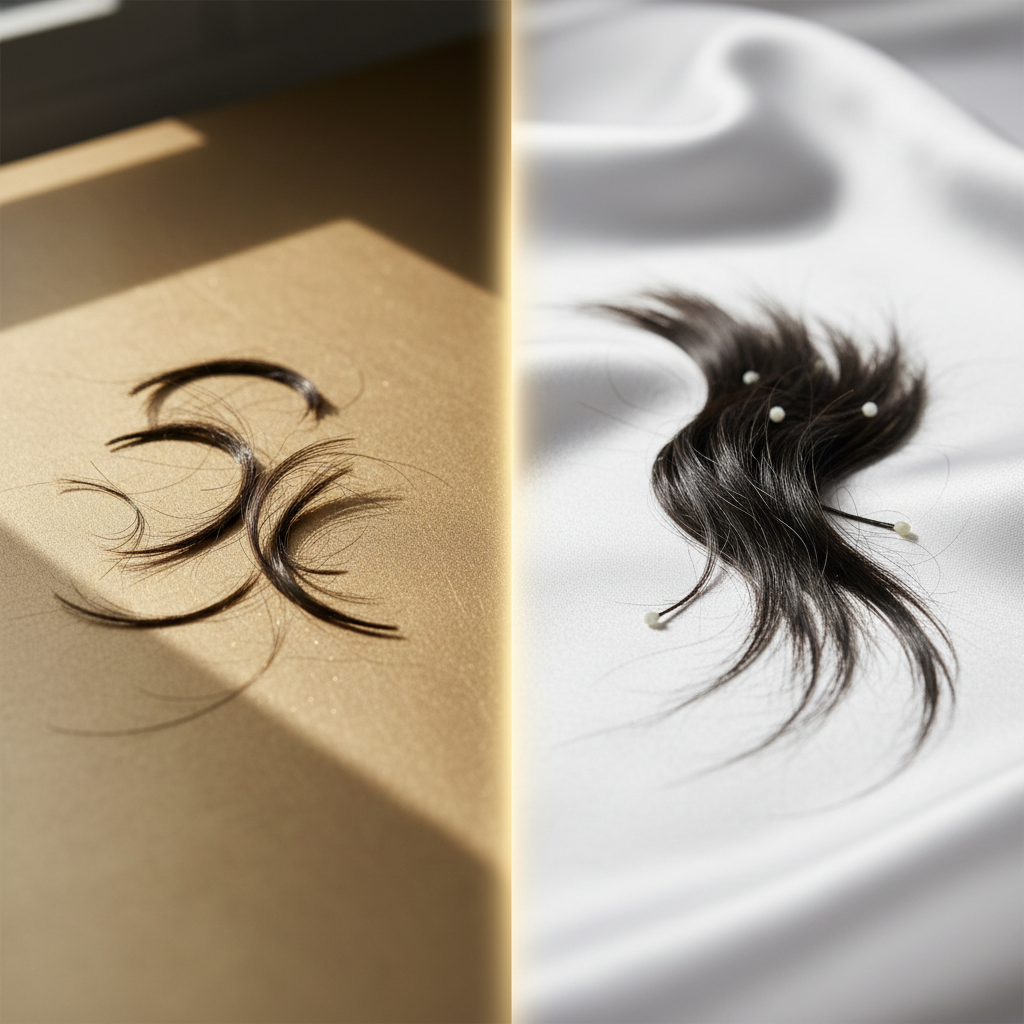
Breakage, by contrast, is not governed by cellular clocks. It occurs when mechanical tension, chemical breakdown, or thermal degradation exceeds the tensile strength of the hair shaft. Hair fibre consists of three anatomical layers: the external protective cuticle, the structural cortex rich in keratin and disulfide bonds, and the central medulla. When external forces strip the cuticle scales away, the cortex is exposed. Without its protective outer barrier, the cortical keratin degrades, moisture balance fails, and the fibre fractures under ordinary tension such as brushing or washing.
Distinguishing between these two conditions is essential. If you apply heavy protein treatments to your lengths to treat telogen shedding, your hair will gain stiffness without resolving the root cause. Conversely, taking systemic vitamins will not repair a shattered cuticle layer broken by bleaching or excessive heat styling.
| Feature | Hair Shedding (Telogen Exogen) | Hair Breakage (Fibre Fracture) |
|---|---|---|
| Origin point | Follicle inside the scalp skin | Anywhere along the hair shaft |
| Physical appearance | Full-length hair with a tiny white root bulb | Short, irregular pieces with blunt or split ends |
| Primary driver | Hormonal shifts, stress, normal hair cycle | Heat tools, chemical processing, friction |
| Daily normal rate | 50 to 100 strands per day | Ideally minimal to none |
| Hair length impact | Overall density thins; length remains uniform | Uneven hems, flyaways, thinning ends |
| Primary intervention | Scalp health, medical review, time | Conditioning, reduced heat, gentle detangling |
The mechanisms: biological shedding versus physical fracturing
The biological mechanism of shedding involves the dermal papilla. As anagen transitions to catagen, cell division in the hair matrix ceases. The base of the hair keratinises into a hard, club-shaped structure known as a club hair. During exogen, enzymatic action releases the club hair from the follicle wall, allowing it to drop out so a new anagen strand can emerge. If systemic stress, fever, hormonal changes, or nutritional deficiencies alter this timeline, a large cohort of follicles can prematurely enter telogen simultaneously, leading to acute telogen effluvium.
The physical mechanism of breakage relies on polymer chemistry and structural physics. Healthy hair has an intact cuticle: six to ten overlapping layers of flattened, keratinised cells bound by a lipid-rich cell membrane complex. 18-methyleicosanoic acid (18-MEA) coats this outer layer, giving hair natural hydrophobicity and low surface friction.
When you apply alkaline chemical treatments such as permanent hair colour (pH 9.0 to 10.5) or chemical relaxers (pH 12.0 to 14.0), you strip 18-MEA and force the cuticle scales to flare open. Repeated thermal exposure from straighteners above 185°C denatures alpha-keratin proteins into disordered beta-keratin. The cortex loses its tensile elasticity. Under physical strain, such as detangling wet hair (which naturally stretches up to 30% more easily than dry hair), the compromised cortex fractures transversely or splits longitudinally (trichoptilosis).
Signs to look for: how to diagnose your hair fall
You can identify whether you are dealing with breakage, shedding, or a combination of both by running a simple physical audit at home or in the salon.
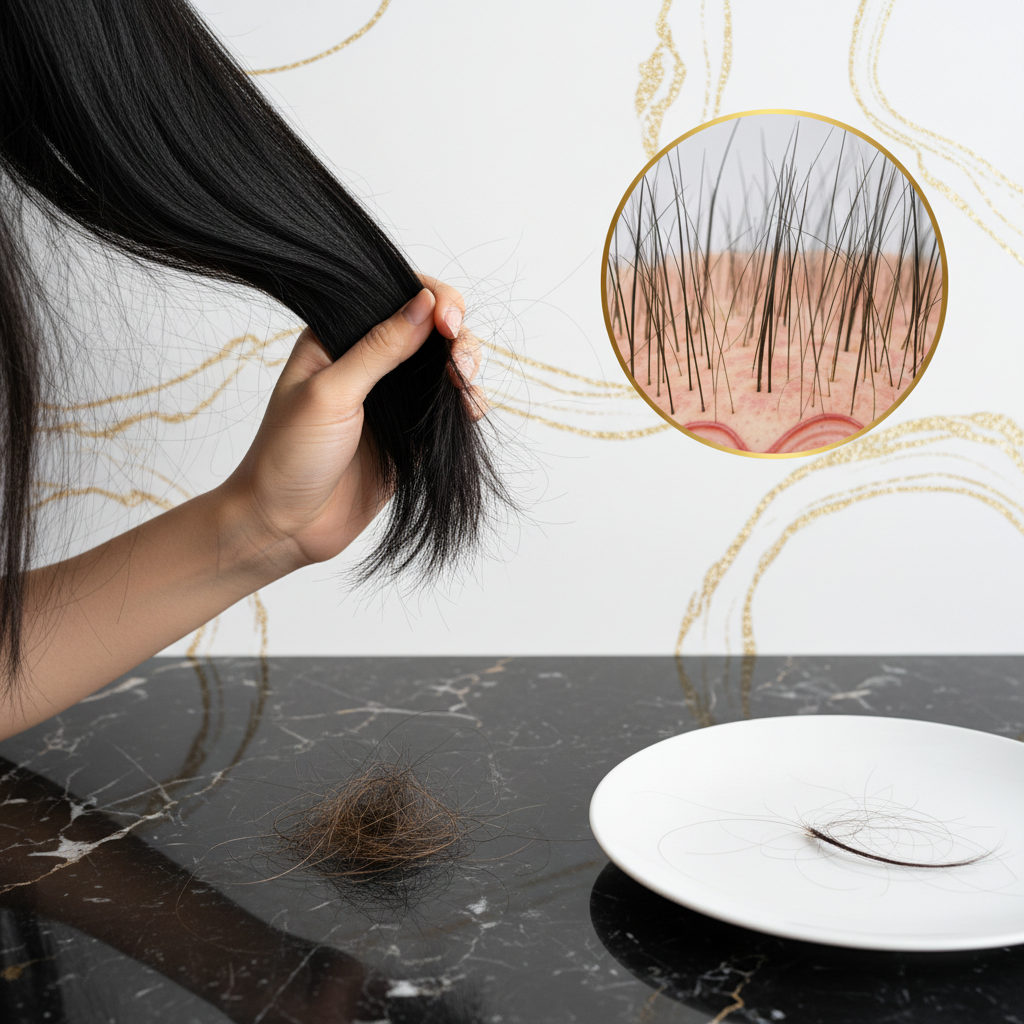
Inspect the fallen strands
Pick up several strands from your brush, shower drain, or clothing and lay them on a contrasting flat surface. Examine both ends carefully under good lighting:
- Presence of a bulb: If the strand spans your full hair length and features a small, white or translucent bead at one end, it is a shed hair.
- Absence of a bulb: If the strand is shorter than your typical length, lacks any bulb, and shows rough, tapered, or split ends, it is broken hair.
The gentle pull test
Take a small section of roughly 40 to 60 hairs between your thumb and forefinger near the scalp and pull gently but firmly as you slide down to the ends.
- If more than five or six full-length hairs slide out from the roots across multiple sections, you are likely experiencing elevated shedding.
- If no roots release, but tiny snapped fragments drop onto your shoulders during the movement, you are experiencing fibre breakage.
Assess the distribution of thinning
Shedding typically manifests as a diffuse, uniform loss of overall volume across the entire scalp, often noticeable as a thinner ponytail circumference or widened parting. Breakage usually presents as localised asymmetry: a "halo" of short, wispy hairs around the crown, thinning ends that never seem to gain length, or fractured strands around the front hairline where heat tools and tight styling exert the greatest force.
What you can do to address each condition
Because shedding and breakage operate through different mechanisms, your strategy must target the correct anatomical site.
Managing hair breakage along the fibre
To arrest breakage, focus entirely on reducing friction, restoring surface lubricity, and protecting the internal cortex:
- Balance cleansing pH: Use shampoos formulated near the scalp and hair fibre's natural acidic pH (4.5 to 5.5). Alkaline detergents swell the cuticle, leaving it vulnerable to mechanical chipping.
- Lower thermal impact: Keep styling tools below 185°C. Always use a dedicated thermal protectant containing polymers that distribute heat evenly and reduce thermal shock.
- Detangle with care: Never rip a fine-tooth comb through wet hair. Apply a leave-in conditioner to lower wet friction, and work from ends up to the roots with a wide-tooth comb or flexible-bristle brush.
- Shield against friction: Swap cotton pillowcases for silk or satin to reduce abrasive nighttime shearing forces against fragile ends.
Managing hair shedding at the follicle
To support normal shedding rates, you must cultivate a healthy scalp environment and biological equilibrium:
- Support the scalp barrier: Maintain a clean scalp free of excess sebum, styling residue, and fungal overgrowth (Malassezia), which can drive micro-inflammation around the follicular infundibulum.
- Review nutritional foundations: Ensure adequate intake of dietary protein, iron (ferritin levels ideally above 40 to 50 ug/L for optimal follicular function), zinc, and vitamin D, under clinical supervision.
- Monitor internal stressors: Major physiological stress, illness, rapid weight loss, or postpartum shifts often manifest as elevated shedding roughly two to three months after the triggering event. Allowing the biological cycle time to reset is key.
What the evidence does not show
There is no evidence that cosmetic products can halt genuine genetic hair loss or autoimmune alopecia. Standard conditioners cannot physically enter the dermal papilla to reactivate dormant follicles. Likewise, nutritional supplements will not fuse split ends back together or repair a hair shaft that has snapped from over-processing. Cuticle and cortex damage is permanent until trimmed away, as dead hair fibre cannot biologically regenerate or heal itself.
When the cause may be something else
If you are experiencing neither simple daily shedding nor standard breakage, your hair changes may indicate an underlying dermatological or systemic condition:
- Androgenetic alopecia: Pattern thinning at the crown and temples driven by dihydrotestosterone (DHT) sensitivity, which causes follicular miniaturisation rather than sudden shedding.
- Alopecia areata: An autoimmune disorder presenting as smooth, circular, coin-sized patches of complete hair loss.
- Traction alopecia: Persistent physical tension from tight braids, weaves, or ponytails that mechanically pulls the hair follicle out of the skin, eventually causing scarring and permanent follicular death.
- Trichorrhexis nodosa: A structural hair defect characterised by microscopic nodes along the shaft where the cortex has ruptured, causing spontaneous, severe breakage even under minimal touch.
Caring for your scalp and lengths with Watermans
When addressing Hair Breakage versus Hair Shedding, a comprehensive routine cares for both the scalp environment and the mechanical strength of the hair fibre.
Watermans Grow Me Shampoo and Conditioner are designed with this duality in mind. The formula delivers targeted scalp-supporting ingredients such as biotin, rosemary extract, caffeine, and niacinamide to nurture the follicular environment, helping your scalp feel invigorated and clean. At the same time, the conditioning formula works along the vulnerable hair shaft, smoothing lifted cuticles, restoring moisture, and significantly reducing combing friction. This dual action supports a balanced, healthy-feeling scalp while defending fragile lengths against everyday breakage.
When to seek professional advice
Consult a GP, dermatologist, or qualified trichologist if you notice any of the following signs:
- Sudden, heavy shedding that persists for more than three months without slowing down.
- Visible, patchy bald spots or an irregularly widening part line.
- Scalp symptoms including persistent redness, burning, itching, scaling, or tenderness.
- Broken hairs accompanied by visible white nodules or beads along the shaft.
- Unexplained shedding paired with fatigue, unexpected weight changes, or irregular menstrual cycles, which may indicate thyroid dysfunction or nutritional anaemia.
Frequently asked questions about Hair Breakage versus Hair Shedding
How can I immediately tell Hair Breakage versus Hair Shedding apart?
Look at the fallen strand on a plain surface. A shed hair contains a tiny white keratin bulb at the tip that once sat inside the follicle. A broken hair has no bulb; it is typically shorter than your other strands and features a blunt, split, or ragged edge where the structural shaft snapped.
Can hair breakage prevent my hair from growing longer?
Yes. Your follicles may produce hair at a normal rate of roughly 1 to 1.25 centimetres per month, but if your ends break at that same rate due to heat or chemical damage, you will not see any increase in length. The issue is retention along the lengths, not follicular growth.
Is it normal to see hair shedding every single day?
Yes. The average adult sheds between 50 and 100 hairs daily as part of the natural exogen cycle. Because each follicle operates independently, this steady loss ensures that hair volume remains relatively consistent without whole patches dropping out at once.
Can hot styling tools cause hair shedding?
Hot styling tools cause breakage, not direct shedding. Heat degrades the structural keratin proteins of the hair shaft, making the fibre snap. However, if a styling tool burns the scalp skin directly, it can damage the follicle and cause localised follicular trauma.
Does brushing wet hair cause breakage or shedding?
Brushing wet hair primarily causes breakage. When wet, the hair's hydrogen bonds temporarily break, increasing fibre elasticity while lowering tensile strength. Vigorous brushing stretches the weakened shaft beyond its elastic limit, causing it to snap. It can also pull loose telogen hairs prematurely, increasing apparent shedding.
Summary on Hair Breakage versus Hair Shedding
Navigating Hair Breakage versus Hair Shedding requires understanding where the separation occurs and why. Shedding is an internal, biological reset that happens at the follicular level inside your scalp, whereas breakage is an external, structural fracture occurring along the keratinised length of the hair shaft.
By closely examining your fallen strands for the presence of a white root bulb, checking your styling habits, and monitoring your scalp health, you can tailor your regimen precisely. Nourish the scalp to support normal natural cycling, protect your fibre lengths with gentle handling to prevent mechanical fractures, and seek professional clinical advice whenever unusual hair loss appears.
Sources and references
- British Association of Dermatologists. Telogen Effluvium: An Information Leaflet. 2021.
- National Health Service (NHS). Hair loss. 2023.
- Robbins, C. R. Chemical and Physical Behavior of Human Hair. 5th ed. Springer-Verlag, 2012.
- Sinclair, R. "Healthy hair: what is it?" Journal of Investigative Dermatology Symposium Proceedings, 2007.
- Dawber, R. "Hair: its structure and response to cosmetic preparations." Clinics in Dermatology, 1996.
- Gavazzoni Dias, M. F. "Hair cosmetics: an overview." International Journal of Trichology, 2015.
Find these ingredients in Watermans products
- Niacinamide: you will find this ingredient in our Hair Mask.