The Science of Heat Damage and Thermal Protection
10 min read ·
Understand the science of heat damage and thermal protection. Learn how high temperatures alter keratin, how protectants buffer heat, and how to preserve hair strength.
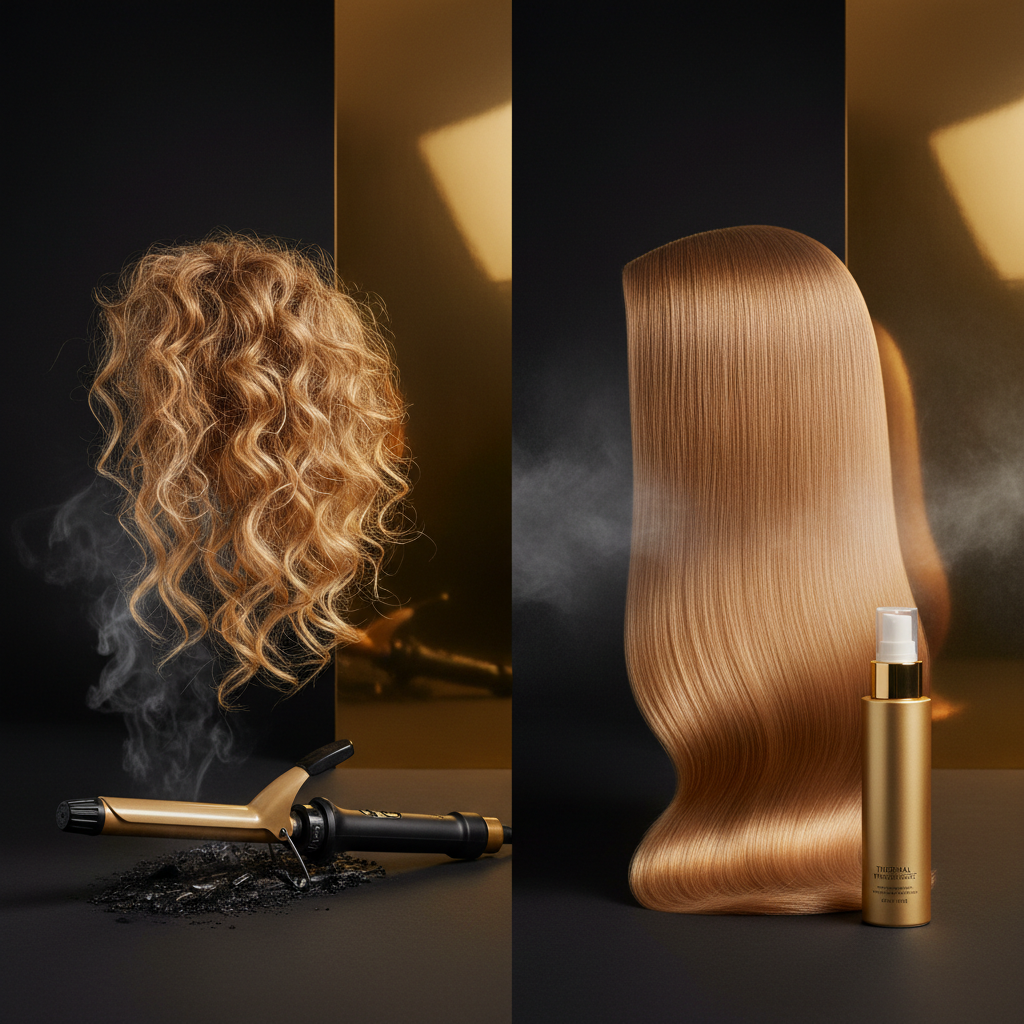
Quick answer: Heat damage occurs when temperatures above 140°C alter the structural proteins, lipids, and moisture levels of the hair shaft, causing cracking, bubble formation, and eventual fibre breakage. Using adequate thermal protectants creates a heat-dispersing barrier that significantly reduces cuticle erosion. However, understanding Heat Damage and Thermal Protection requires recognising their primary limitation: protectants merely buffer and slow down heat transfer to reduce structural degradation; they do not render hair completely immune to extreme temperatures or high-frequency styling.
Key takeaways
- Heat breaks temporary hydrogen bonds to reshape hair, but temperatures above 140°C begin irreversibly denaturing keratin proteins.
- Thermal protectants work by slowing thermal transfer, sealing the lipid layer, and distributing heat evenly across the fibre surface.
- Wet hair subjected to high heat can develop "bubble hair", where water vaporises instantly inside the cortex, causing hollow cavities and brittleness.
- Heat damage strictly causes fibre breakage along the shaft; it does not alter the living follicle or induce telogen effluvium unless the scalp itself suffers physical burns.
- Once keratin structures are denatured and cuticles are chipped away, cosmetic conditioning can only patch the damage temporarily until the hair is trimmed.
Heat Damage and Thermal Protection: what the evidence shows
Scientific evaluation of Heat Damage and Thermal Protection reveals that styling tools operate on a delicate boundary between cosmetic restyling and permanent structural injury. Hair is predominantly made of alpha-keratin fibres coiled in a protein matrix, surrounded by a protective cuticle layer rich in 18-methyleicosanoic acid (18-MEA).
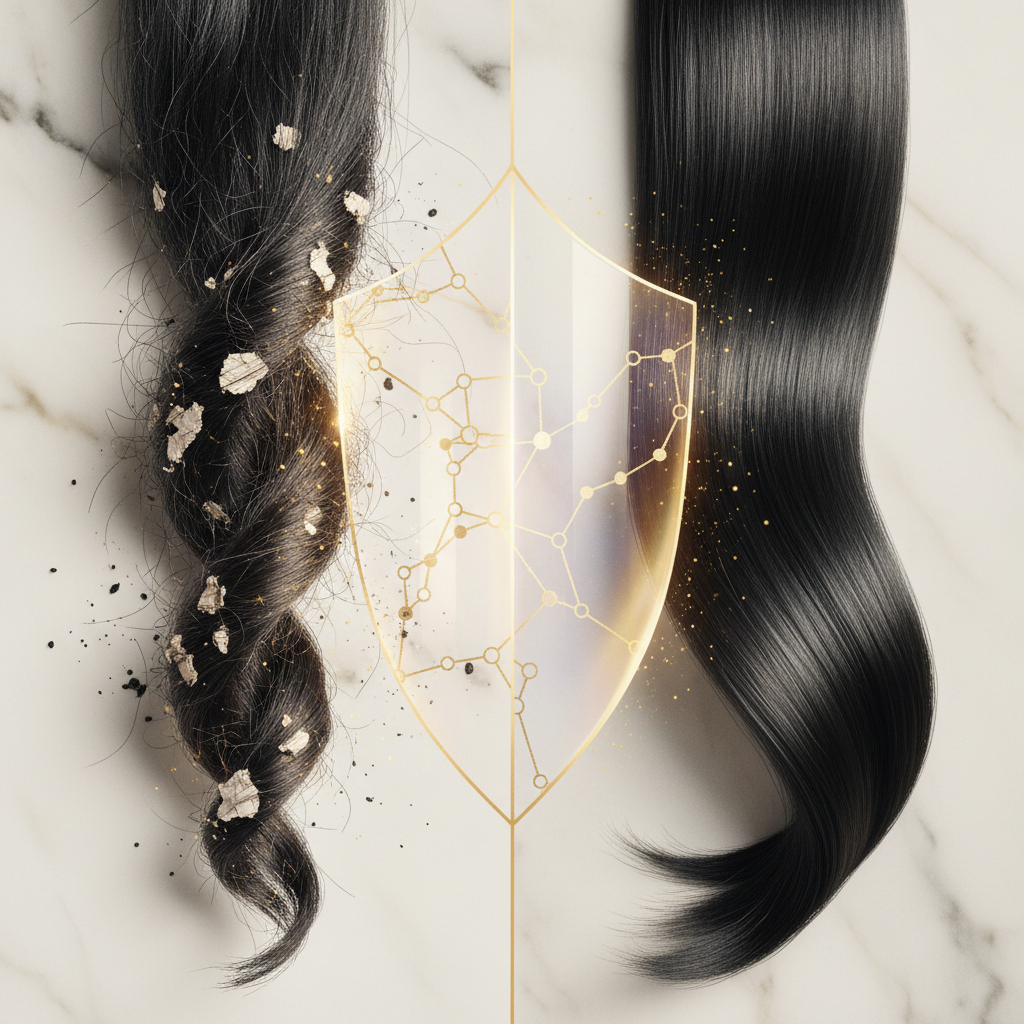
When you use heat styling tools, such as flat irons (often reaching 180°C to 230°C) or blow dryers (delivering 60°C to 100°C at the nozzle), the heat dissolves the hydrogen bonds holding the keratin coils in place. This allows the hair to be pulled straight or curled. As the hair cools, those hydrogen bonds reform into the new mechanical shape.
Problems arise when temperatures climb higher. Research in cosmetic trichology shows that dry hair protein starts undergoing thermal denaturation between 140°C and 160°C. Above 180°C, the protective fatty acid layer (18-MEA) is progressively stripped away, making the cuticle porous and hydrophilic. At 215°C to 235°C, alpha-keratin transitions irreversibly into disordered beta-sheet structures. The hair loses its natural elasticity, tensile strength collapses, and split ends rapidly form.
Thermal protection formulations alter this dynamic. Polymer-based protectants (including dimethicone, amodimethicone, polyquaternium compounds, and hydrolysed wheat proteins) coat the shaft with a film that has lower thermal conductivity than bare hair. This barrier acts as a thermal buffer, smoothing heat hotspots, reducing moisture loss from the inner cortex, and decreasing surface friction so styling tools glide without catching and ripping the cuticles. Studies measuring hair tensile strength show that hair treated with a silicone or polymer protectant retains substantially more elastic recovery after hot iron passes compared to untreated hair.
What the evidence does not show
Controlled research does not show that thermal protectants provide total immunity against high temperatures. No cosmetic spray or serum creates an impenetrable shield. If a flat iron set to 220°C is held on a single section of hair for several seconds, the hair will burn, regardless of how much protectant was applied.
Furthermore, evidence does not show that heat styling products repair denatured keratin back to its virgin biological state. Hair shafts are non-living tissue. While conditioning agents, amino acid complexes, and protein treatments can temporarily fill fissures and smooth lifted cuticles, they cannot crosslink severed polypeptide bonds back into native alpha-helices.
Crucially, the evidence does not show that thermal tools cause scalp-level hair loss or thinning at the root unless the hot plates make direct physical contact with the skin. Heat styling affects the hair fibre, causing breakage along the shaft, which must never be confused with follicular shedding.
| Factor | Healthy Hair Fibre | Heat-Damaged Fibre | Heat-Damaged Fibre with Thermal Protectant |
|---|---|---|---|
| Keratin Structure | Intact alpha-helical coils | Partially converted to denatured beta-keratin | Slowed rate of protein denaturation |
| Cuticle Condition | Flat, overlapping, hydrophobic scales | Lifted, buckled, cracked, or missing scales | Film-sealed, reduced friction, smoother surface |
| Tensile Strength | High elasticity (stretches up to 30% when dry) | Low elasticity, snaps under minimal tension | Moderately preserved tensile resilience |
| Moisture Absorption | Normal porosity, repels excess atmospheric water | High porosity, absorbs humidity rapidly and frizzes | Moderately hydrophobic, protected against ambient moisture |
| Common Symptoms | Natural shine, soft feel, resilient ends | Dullness, rough texture, split ends, white spots | Improved slip, glossier finish, reduced split ends |
The mechanisms of heat degradation
To understand how heat affects hair, we have to look at the three primary structural pathways that breakdown during styling:
1. Thermal denaturation of cortex proteins
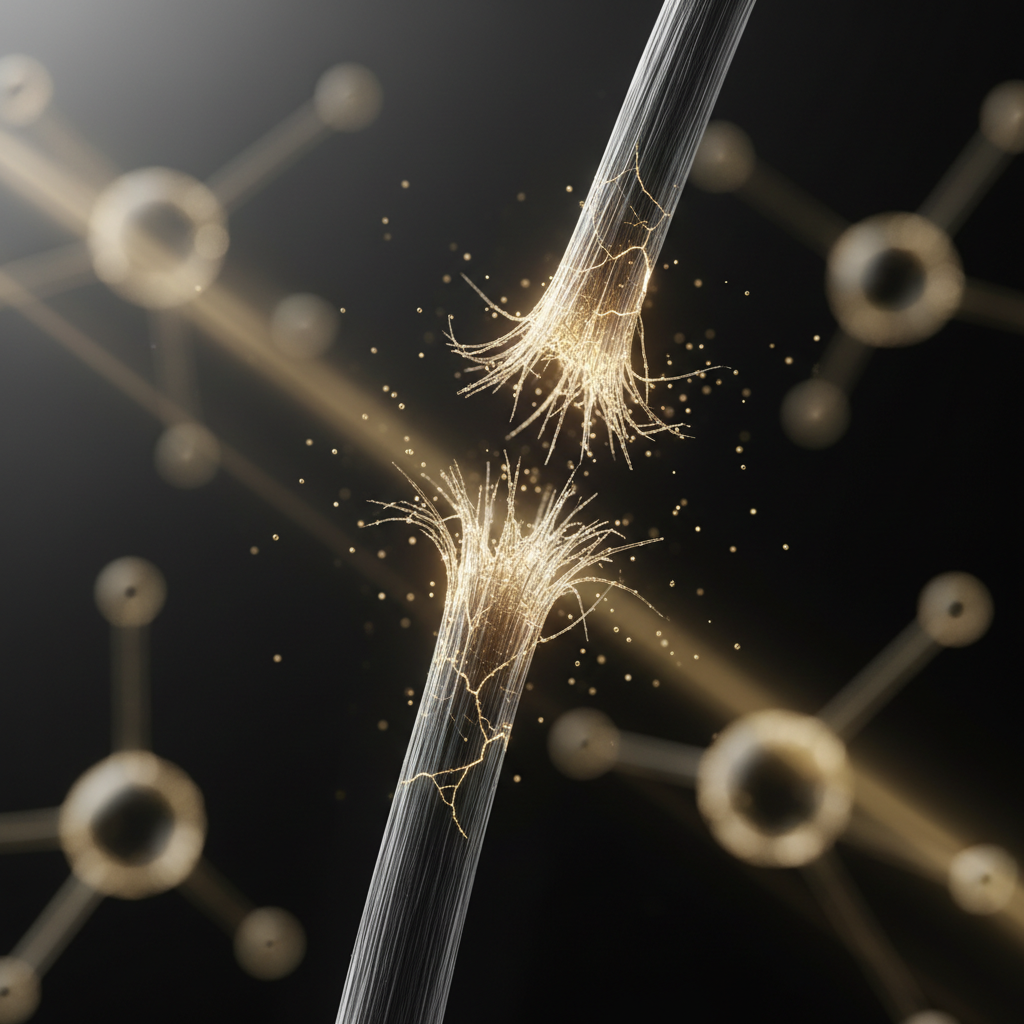
The cortex provides hair with its core strength and bounce. Within the cortex, intermediate filaments composed of low-sulfur keratin are embedded in a high-sulfur matrix. When iron temperatures exceed 155°C, thermal energy disrupts the disulfide bonds and destabilises the crystalline arrangement of the keratin. The fibre loses its springiness, becoming stiff, glassy, and prone to transverse fracture.
2. Lipid depletion and surface erosion
Every healthy hair fibre is protected by an ultrathin lipid layer, predominantly 18-MEA, covalently bonded to the outermost cuticle scales. This layer creates a naturally water-repellent surface. Thermal tools systematically oxidise and burn away this lipid membrane. Without it, the hair absorbs environmental moisture instantly, resulting in chronic frizz, lifted cuticle scales, and increased combing friction that accelerates mechanical breakage.
3. Bubble hair and steam expansion
Subjecting damp or wet hair to flat irons or high-heat curling wands triggers explosive boiling within the hair fibre. Water expands into steam at 100°C. If water trapped inside the cortex cannot escape gradually through normal evaporation, the expanding vapour forms microscopic cavities or "bubbles" within the shaft. Under a microscope, these look like tiny blisters along the fibre. Hair suffering from bubble hair becomes exceptionally fragile, snapping off whenever a comb passes through it.
Recognizing the signs of heat damage
Recognising thermal trauma early allows you to modify your routine before extensive fibre breakage sets in. Watch for these distinct indicators:
- Altered curl patterns: Naturally wavy, curly, or coily hair fails to spring back into its natural curl pattern after washing, remaining limp or straight in specific sections.
- Split ends and trichorrhexis nodosa: The ends split into multiple strands, or tiny white dots appear along the shaft where the cortex has frayed internally prior to snapping.
- Excessive tangling: Because the cuticle scales have melted, buckled, or stripped off, adjacent hair strands snag on one another like sandpaper, leading to persistent knots.
- Colour fading or brassiness: Heat oxidises both natural melanin and synthetic dye molecules, causing artificial colour to wash out faster and revealing unwanted warm, yellow, or red undertones.
- Dull, glassy appearance: Damaged cuticle scales scatter light unevenly rather than reflecting it, leaving the hair looking chalky and lifeless.
Evidence-based strategies for thermal protection
Mitigating heat damage requires a combined approach that blends proper product chemistry with correct mechanical technique.
Choose effective active protectants
Look for ingredients with demonstrated thermal buffering capacity. Silicones such as dimethicone and amodimethicone form an even hydrophobic film with low thermal conductivity. Hydrolysed vegetable proteins and wheat-derived amino acids penetrate slightly into minor surface defects, while polyquaternium polymers offer electrostatic shielding.
Respect the moisture threshold
Never use flat irons or curling tongs on damp or wet hair. Hair should be 100% dry before touching heated plates. When blow-drying, keep the nozzle at least 15 centimetres away from the hair fibre, keep the dryer moving, and point the airflow down the shaft to encourage the cuticles to lie flat.
Calibrate your temperature
Fine, bleached, or chemically treated hair has lower thermal resistance and should not be styled above 150°C to 170°C. Normal or resilient hair can tolerate 170°C to 190°C. Temperatures exceeding 200°C should be reserved exclusively for heavy professional smoothing treatments where specific chemical processing requires it, rather than everyday styling.
Reduce pass frequency and dwell time
Thermal damage is cumulative. Passing a 180°C flat iron down a section of hair once in a smooth, continuous glide causes far less structural denaturation than passing it four or five times over the same section. Never let a heated tool rest stationary on one spot.
When the cause may be something else
If your hair is breaking or shedding, heat may not be the sole culprit. It is essential to distinguish between different forms of structural damage and biological shedding:
- Chemical processing: Bleaching, relaxers, and permanent dyes disrupt the disulfide bonds chemically. If chemically compromised hair is then heated, the rate of breakage multiplies dramatically.
- Mechanical trauma: Vigorous brushing of wet hair, tight elastic bands, and harsh backcombing strip the cuticle mechanically without any heat involved.
- Telogen effluvium: If you notice hair falling out with a white bulb attached at the root, or large amounts gathering in the shower drain, this is biological shedding from the follicle. Heat styling does not cause telogen effluvium.
- Nutritional or endocrine deficiencies: Systemic issues like iron deficiency, thyroid dysfunction, or extreme protein restriction cause hair to emerge from the follicle with a weaker initial structure, making it break much more easily when heated.
Professional care and the Watermans approach
When thermal stress has compromised the condition of your hair, your home care routine should pivot toward structural fortification and gentle scalp maintenance. Regular trims are the only definitive way to remove split ends and prevent fractures from travelling up the shaft.
To support the resilience of hair fibres prone to styling stress, Watermans offers products formulated to revitalise the look and feel of fragile hair. Watermans Grow Me Shampoo and Condition Me Conditioner supply strengthening ingredients, including biotin, rosemary extract, hydrolysed lupin protein, and niacinamide. While no topical wash can reverse heat-denatured beta-keratin, using a nutrient-dense, sulphate-free routine helps moisturise the fibre, reduce friction during styling, and maintain an optimal environment for hair growth at the scalp.
Frequently asked questions about Heat Damage and Thermal Protection
Can thermal protection repair hair that is already split?
No. Thermal protectants are preventative, designed to minimise future structural denaturation. Split ends occur when the cuticle is completely stripped and the inner cortex frays apart. The only permanent resolution for split ends is trimming the damaged tips. Conditioning protectants can temporarily smooth the split together using polymers, but the fracture remains beneath the surface.
What is the maximum safe temperature when considering Heat Damage and Thermal Protection?
For most hair types, the maximum safe operating temperature is around 185°C. At this temperature, hydrogen bonds are broken efficiently without rapidly accelerating the irreversible denaturation of alpha-keratin. Fine or chemically lightened hair should be styled at lower settings, typically between 150°C and 165°C, always paired with a thermal protectant.
Do natural oils work as thermal protectants?
Most natural plant oils (such as coconut, argan, or olive oil) do not provide reliable thermal protection on their own. While they moisturise the fibre, their smoke points vary and they lack the specific thermal conductivity buffering provided by formulated polymers and silicones. In some instances, applying raw heavy oils before high-heat flat ironing can actually fry the outer cuticle.
Why does my hair smell burnt even after using a thermal spray?
A persistent burnt smell indicates that the temperature of your styling tool is too high, the hair was not fully dry, or product residue is scorching on the plates. Even with thermal protectants applied, exceeding the denaturation threshold of hair proteins will cause sulfurous structural breakdown, releasing the characteristic burnt keratin odour.
How often should I clarify my hair if I use heat protectants daily?
If you use heat protectants containing non-water-soluble silicones or heavy polymers every day, use a gentle clarifying shampoo once every two to three weeks. This removes polymer buildup that might otherwise prevent moisture from entering the fibre, without stripping away your hair's essential natural oils.
Final perspectives on thermal care
Mastering the balance of Heat Damage and Thermal Protection comes down to respecting the physical limits of the hair shaft. Hair is an extraordinary natural fibre, but its keratin structure cannot withstand repeated exposure to extreme temperatures without degrading over time. By incorporating effective thermal protectants, strictly avoiding heat on damp hair, and dialling back the temperature of your irons, you can enjoy styled hair while safeguarding its strength, elasticity, and long-term vitality.
Sources and references
- British Association of Dermatologists. Hair Breakage and Thermal Injury, Clinical Review, 2021.
- Journal of Cosmetic Dermatology. "Effects of Thermal Treatments on Hair Protein and Morphology", 2019.
- International Journal of Trichology. "The impact of heat styling tools on human hair fibres: An ultrastructural analysis", 2020.
- Robbins, C. R. Chemical and Physical Behavior of Human Hair, 5th Edition, Springer-Verlag, 2012.
- Society of Cosmetic Scientists. "Mechanisms of Heat Protection in Hair Formulations", Monograph Series, 2018.
Find these ingredients in Watermans products
- Biotin: you will find this ingredient in our Hair Growth Shampoo.
- Niacinamide: you will find this ingredient in our Hair Mask.