Managing Chemically Damaged Hair: The Complete Evidence-Based Guide
9 min read ·
Learn the science of managing chemically damaged hair. Discover how to rebuild strength, reduce breakage, and restore moisture to bleached and relaxed fibres.
Quick answer: Managing chemically damaged hair requires a targeted routine focused on restoring the fibre's lipid barrier, reducing porosity, and reinforcing internal protein cross-links. Bleaching, permanent colouring, relaxers, and perms break structural disulphide bonds and strip protective 18-methyleicosanoic acid (18-MEA). While cosmetic products cannot biologically regenerate dead hair fibres, managing chemically damaged hair with balanced protein conditioning, low-friction handling, and acidic pH formulations significantly reduces shaft breakage and improves tensile strength until new growth emerges.
Key takeaways
- Chemical processing alters hair architecture by breaking cystine disulphide bonds and stripping the hydrophobic fatty acid layer (18-MEA).
- Managing chemical damage is a cosmetic and mechanical preservation effort; split ends and snapped fibres cannot be fused back together permanently.
- Breakage along the hair shaft is often mistaken for hair loss, but it does not originate at the follicle.
- Maintaining a low-pH hair environment (around pH 4.5 to 5.5) helps close lifted cuticle scales and limits moisture absorption that causes hygral fatigue.
- A balance of hydrolysed proteins and occlusive emollients restores elasticity without leaving the hair brittle or over-hardened.
Managing Chemically Damaged Hair: what the evidence shows
Managing chemically damaged hair starts with understanding the structural impact of alkaline salon treatments. Healthy virgin hair has a protective, hydrophobic outer layer primarily made of 18-methyleicosanoic acid (18-MEA) bound to the cuticle. Beneath this sits the cortex, packed with keratin intermediate filaments held together by strong disulphide bonds.
When hair undergoes chemical treatments, this structure changes:
- Bleaching and high-lift tinting: Hydrogen peroxide and persulphate salts oxidise melanin pigments. In doing so, they also oxidise cystine into cysteic acid, stripping 18-MEA and leaving the hair hydrophilic, porous, and prone to rapid swelling in water.
- Chemical relaxers: Strong alkaline agents (sodium hydroxide, calcium hydroxide, or guanidine carbonate) with a pH between 12 and 14 break roughly 30% of disulphide bonds, converting cystine to lanthionine. This permanently relaxes curl patterns but substantially lowers tensile strength.
- Perms and thioglycolate treatments: Ammonium thioglycolate reduces disulphide bonds so hair can be reshaped. Although an oxidiser neutralises the process, up to 10 to 15% of the native cross-links remain broken.
Cosmetic science demonstrates that while you cannot reverse internal chemical cleavage, managing chemically damaged hair with hydrolysed proteins (such as wheat, silk, or keratin peptides) helps temporarily plug cortex voids. Simultaneously, conditioning agents like behentrimonium chloride deposit a protective, slippery film that replaces the missing 18-MEA layer. This drops combing friction by up to 80%, directly preventing mechanical breakage.
| Treatment Type | Primary Chemical Mechanism | Structural Impact | Key Management Priority |
|---|---|---|---|
| Bleaching / High-Lift Colour | Alkaline oxidation via persulphates and peroxide | Complete removal of 18-MEA; converts cystine to cysteic acid | Acidic pH restoration, lipid replenishment, bond support |
| Chemical Relaxers (Lye / No-Lye) | Hydroxide ions cleave disulphide bonds (lanthionisation) | Up to 30% reduction in tensile strength; permanent cortex alterations | Intense conditioning, lubricating emollients, zero tension |
| Permanent Waving (Perms) | Reduction via thioglycolates, followed by peroxide neutralisation | Incomplete bond reformation; 10 to 15% bond loss | Micro-protein reinforcement, light moisture, wide-tooth detangling |
| Semi / Demi-Permanent Colour | Low-ammonia or MEA swelling with low-volume developer | Mild cuticle lift; minimal cortical disruption | Cuticle smoothing, colour-safe mild surfactants |
What the evidence does not show
The cosmetic market frequently promises complete biological "reversal" or "cure" for processed strands. Controlled dermatological research does not support these claims. Hair is biologically non-living tissue once it exits the scalp follicle. It lacks cellular metabolic machinery, which means it cannot heal itself like skin or bone.
Furthermore, evidence does not show that chemical breakage equals alopecia. When chemically compromised hair snaps close to the scalp, individuals frequently believe their hair is falling out from the root. Trichoscopy readily differentiates the two: breakage reveals fractured, jagged ends with no follicular bulbs, whereas shedding presents intact roots with telogen bulbs. Treating breakage with anti-shedding follicle stimulants will not mend a fractured cortex.
The physical signs of chemical damage
Spotting the signs of chemical distress early helps you adapt your styling and washing routine before catastrophic breakage occurs. Look for:
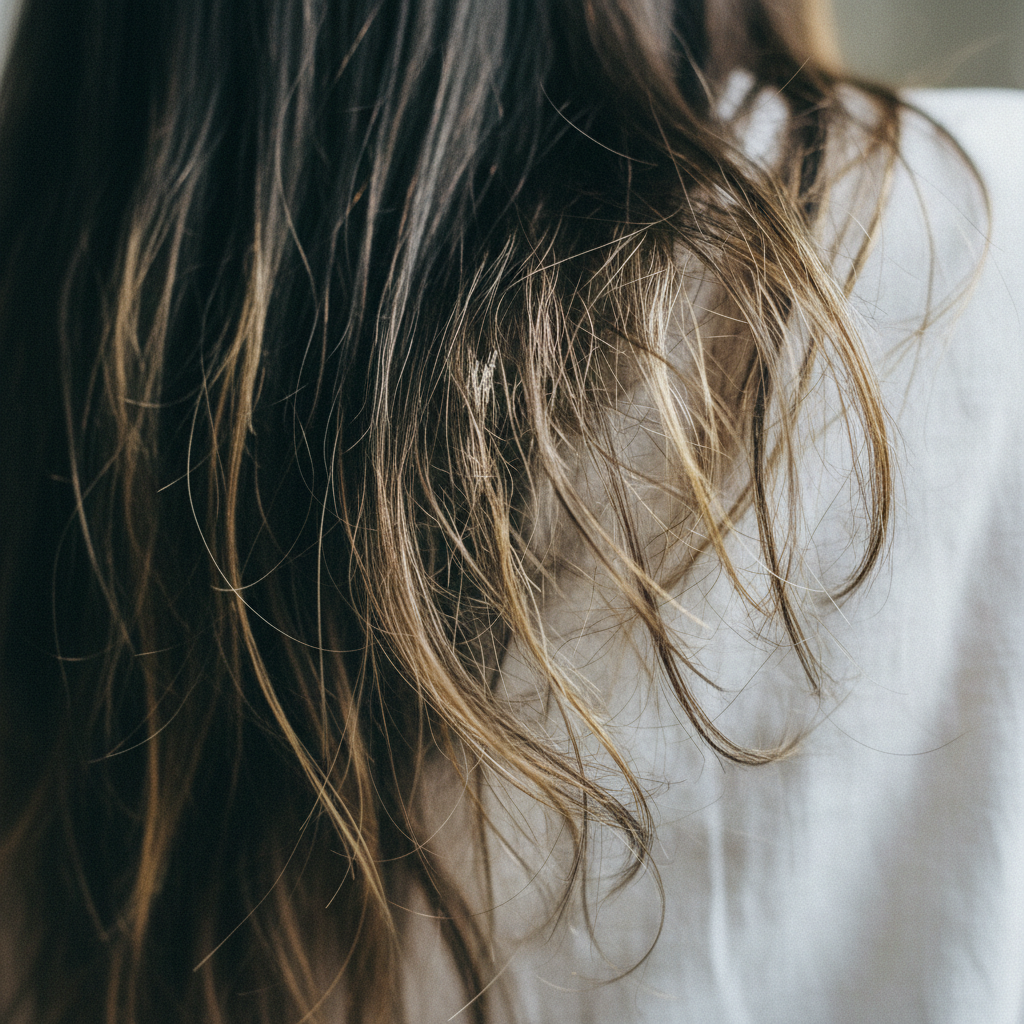
- High porosity and rapid saturation: The hair absorbs water instantly like a sponge, taking hours to dry because the compromised cuticle allows water to flood the inner cortex.
- Loss of wet elasticity: Healthy hair stretches up to 30% of its dry length and returns when wet. Chemically compromised hair either stretches endlessly like chewing gum without bouncing back, or snaps under minimal tension.
- Severe mechanical tangling: Without the hydrophobic 18-MEA layer, raised cuticle scales catch on adjacent strands, creating dense knots during washing.
- The presence of trichorrhexis nodosa: These are microscopic, brush-like swelling nodes along the hair shaft where the cortex has split, visible to the naked eye as tiny white dots that snap under brushing.
What you can do to manage compromised hair
1. Rebalance pH and manage cuticle swelling
Healthy hair and scalp have a natural, slightly acidic pH between 4.5 and 5.5. Alkaline processing inflates the hair fibre, causing cuticle scales to flare. Using shampoos and conditioners buffered to an acidic pH (between 4.0 and 5.0) contracts the cuticle cells, lays them flat against the shaft, and reduces surface friction.
2. Alternate protein and emollient conditioning
Chemically degraded hair requires both structural support and flexibility.
- Hydrolysed proteins: Look for low-molecular-weight proteins that can penetrate the cortex to temporarily reinforce weak zones.
- Emollients and fatty alcohols: Cetyl alcohol, stearyl alcohol, and natural oils coat the outside of the hair, mimicking lost surface lipids and locking in water without causing hygral fatigue.
- Be cautious with over-application: excessive, unbuffered protein without adequate slip can make fragile hair stiff and brittle.
3. Eliminate wet mechanical stress
Water weakens hydrogen bonds within the hair fibre. When hair is already chemically depleted of disulphide bonds, wet styling becomes a high-risk activity. Never brush chemically processed hair while soaking wet with a fine-toothed comb. Instead, apply a slippery leave-in conditioner and work through tangles gently using fingers or a wide-toothed, flexible detangling tool, starting at the ends and working upward.
4. Minimise heat and chemical overlapping
Applying direct heat above 185°C to chemically treated hair denatures remaining keratin proteins and accelerates colour fade. If heat styling is necessary, keep temperatures below 150°C and always apply a thermal protectant that uses dimethicone or specialised copolymers. Crucially, when touching up regrowth, ensure your stylist never overlaps bleach, colour, or relaxers onto previously processed lengths.
When the cause may be something else
If you are experiencing noticeable thinning, visible patches of scalp, or shedding from the root, chemical damage may not be the underlying factor. Telogen effluvium (generalised excessive shedding triggered by stress, illness, or hormonal shifts) and androgenetic alopecia (pattern hair loss) are driven by biological mechanisms at the follicle level.
Similarly, physical tension from tight weaves, braids, or extensions causes traction alopecia, which targets the dermal papilla directly. If you notice white bulb roots on shed strands, or if your scalp feels tender, inflamed, or itchy, the primary problem sits in the follicle, not in the chemical processing of the fibre.
When to seek professional advice
Consult a qualified trichologist or dermatologist if you observe:
- Hair falling out in distinct clumps from the root.
- Sores, burning sensations, redness, or crusting on the scalp following a chemical salon service, which indicates chemical contact dermatitis or chemical burns.
- Extensive mid-shaft breakage that does not slow down despite eliminating heat and following gentle handling practices for six to eight weeks.
For severe structural damage where hair is mushy when wet, visit a master colourist or salon professional. They can apply professional in-salon structural treatments and perform a trim to remove split ends before the fractures travel up the hair shaft.
Supporting hair vitality with Watermans
When managing chemically damaged hair, caring for the scalp creates the foundation for healthy new growth to replace compromised lengths. Watermans Grow Me Shampoo and Condition Me Conditioner provide an ideal environment for this recovery phase. Formulated with hydrolysed lupin protein, niacinamide, caffeine, and argan oil, the range delivers cosmetic conditioning to smooth raised cuticle scales, reduce surface friction, and soften brittle textures. By keeping the scalp clean, balanced, and invigorated while protecting fragile fibres against daily styling stress, it helps your hair feel thicker, stronger, and more resilient over time.
Frequently asked questions about Managing Chemically Damaged Hair
Can you ever permanently repair chemically damaged hair?
No cosmetic treatment can permanently repair chemically damaged hair. Hair fibre is biologically dead tissue without living cells. While bond-building products and hydrolysed proteins temporarily reinforce internal structural weak points and condition the cuticle, these treatments wash out over time. The only permanent resolution for structural chemical damage is trimming away fractured ends as new, untreated hair grows from the scalp.
What is the most effective routine for managing chemically damaged hair?
The most effective routine for managing chemically damaged hair balances gentle cleansing, deep conditioning, and low-friction styling. Wash your hair no more than two to three times weekly using an acidic, sulphate-free shampoo. Follow with a reconstructive conditioner containing both hydrolysed proteins and fatty acids. Always apply a heat protectant before styling, switch to a microfibre towel to dry, and avoid overlapping chemical treatments on previously processed sections.
How can I tell the difference between chemical breakage and hair shedding?
Inspect the hairs you find on your brush or clothing. If the strand has a tiny, white bulb at one end, it has shed naturally from the follicle. If the strand lacks a bulb, feels uneven, or is noticeably shorter than your total hair length with frayed or blunt ends, it is hair breakage caused by mechanical or chemical stress.
How long does it take to see results when rehabilitating processed hair?
Cosmetic improvements in slip, shine, and manageability appear immediately after using high-quality acidic conditioners and leave-in products. However, reducing breakage and restoring baseline tensile strength typically takes four to eight weeks of consistent, low-tension haircare. Full recovery of your hair's overall density requires patience while new, untreated growth replaces the chemically processed lengths.
A realistic approach to chemically compromised hair
Successfully managing chemically damaged hair comes down to patience, protective styling, and accepting the biological limits of the hair fibre. While salon chemicals can permanently compromise internal disulphide bonds and external lipids, you can protect the surviving fibre through pH-balanced care, structural protein treatments, and low-friction handling. Focus on preserving existing lengths, preventing further heat and chemical trauma, and supporting a healthy scalp environment so that incoming hair emerges resilient, vibrant, and strong.
Sources and references
- Journal of Cosmetic Science: "Chemical and physical changes in hair caused by bleaching and perming", 2008.
- International Journal of Trichology: "Hair cosmetics: An overview", 2015.
- British Association of Dermatologists: "Hair breakage and cosmetic damage guidelines", 2021.
- Clinical, Cosmetic and Investigational Dermatology: "Evaluating the physical and mechanical properties of human hair after chemical treatments", 2019.
- Society of Cosmetic Scientists: "Principles of Hair Science and Technology", 2018.
Find these ingredients in Watermans products
- Niacinamide: you will find this ingredient in our Hair Mask.