Hard Water Hair Damage and Chelating Treatments
9 min read ·
Learn how hard water minerals bind to your hair to cause breakage, and discover how targeted chelating treatments remove mineral scale to restore shine.
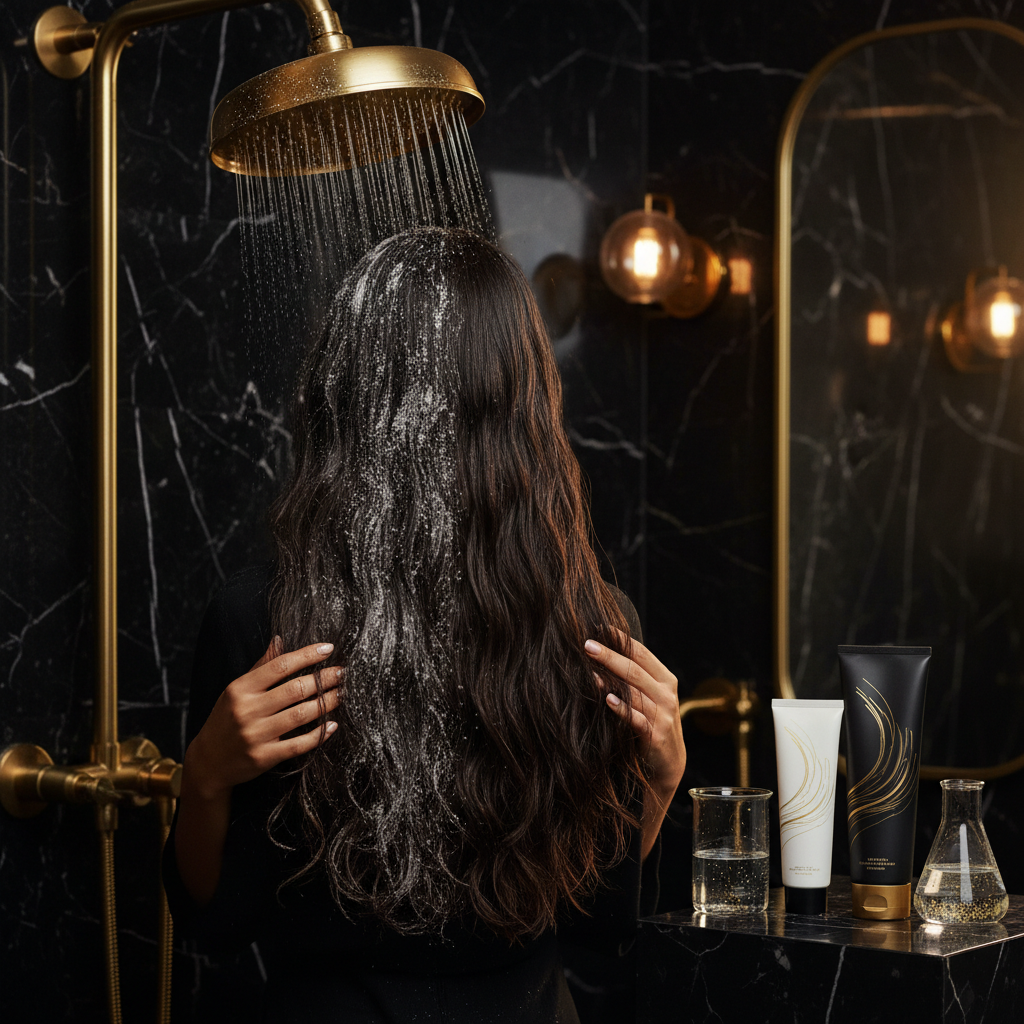
Quick answer: Understanding Hard Water Hair Damage and Chelating Treatments is essential if your hair feels chronically rough, dry, or discoloured despite conditioning. Hard water contains dissolved calcium and magnesium that bind to the hair shaft, forming a stiff mineral film that blocks moisture and accelerates fibre snapping. Chelating treatments use targeted bonding agents to dissolve and lift these stubborn mineral deposits. However, chelation only removes surface buildup on the existing fibre; it cannot repair split ends or reverse internal follicle disorders.
Key takeaways
- Hard water contains high concentrations of calcium (Ca2+) and magnesium (Mg2+) ions, often exceeding 180 mg/L (parts per million).
- Dissolved minerals bind electrostatically to the hair fibre, crystallising on the cuticle and leaving it brittle, dull, and prone to friction-induced snapping.
- Mineral buildup is hair breakage, not follicle hair loss; it does not stop the root from producing new hair.
- Chelating treatments use strong sequestering agents such as tetrasodium EDTA, disodium EDTA, and citric acid to break mineral-protein bonds.
- Standard clarifying shampoos clean away sebum and styling polymers, but you need a dedicated chelating formula to strip bound minerals.
Hard Water Hair Damage and Chelating Treatments: what the evidence shows
Research shows that mineral-rich wash water directly alters the tactile and physical properties of the hair shaft. When you wash your hair in hard water, calcium carbonate and magnesium salts do not simply rinse away. Because keratin fibres carry a net negative surface charge at typical shower pH levels, they attract positively charged multivalent metal cations.
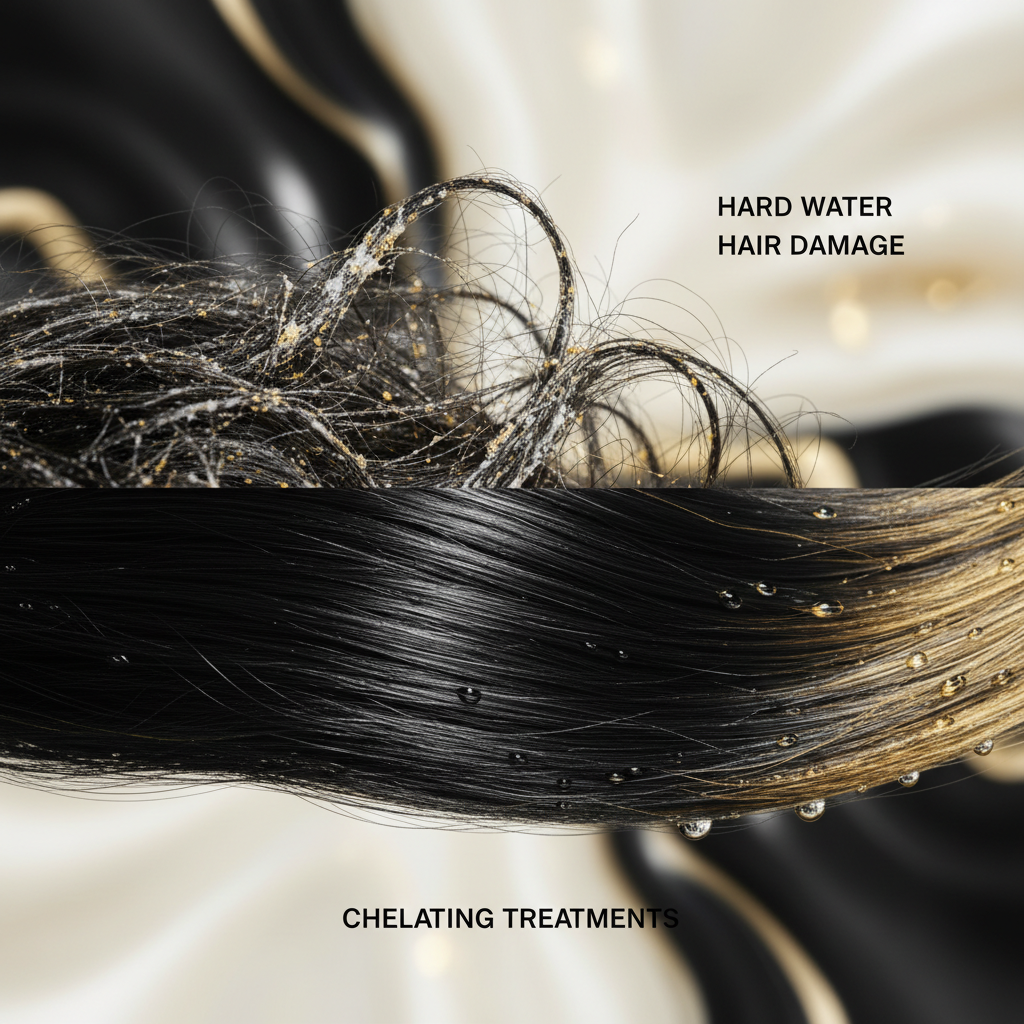
Studies investigating mineral deposition have found that hair washed repeatedly in hard water shows higher surface roughness and reduced elasticity compared to hair washed in soft water. The mineral crust props open the protective cuticle shingles. This misalignment increases inter-fibre friction during brushing and styling.
Over time, this mechanical friction breaks down the cuticle layer entirely. When the cuticle wears away, the inner cortex is exposed to atmospheric moisture changes, heat, and grooming stress, leading directly to mid-shaft breakage. Chelating treatments reverse this specific physical process by using chemical complexes that wrap around metal ions, neutralising their electrical charge and lifting them into solution so they rinse down the drain.
What the evidence does not show
It is critical to separate genuine mineral damage from physiological hair loss. There is currently no robust clinical evidence showing that hard water causes pattern baldness (androgenetic alopecia), alopecia areata, or telogen effluvium.
Water does not penetrate the scalp deeply enough to reach the dermal papilla or disrupt the cellular activity inside living hair follicles. When people report that hard water makes their hair fall out, they are almost always witnessing hair breakage along weakened, mineral-coated shafts, or noticing normal daily shedding hairs that were trapped by coarse friction and then released all at once during a shower. Chelating treatments cannot treat a medical scalp disorder or stimulate cellular division at the hair root.
The mechanism of mineral buildup and chelation
To understand why simple soap or gentle shampoos fail against hard water, you have to look at the chemistry of the hair surface and mineral ions.
How minerals coat the hair shaft
Hard water contains dissolved bicarbonates and sulphates of calcium and magnesium. During washing, the alkaline tendencies of hard water cause the hair shaft to swell slightly. Calcium ions penetrate the outer layers of the cuticle and bind strongly to oxidised anionic sites (cysteic acid residues).
As the hair dries, these ions precipitate out of solution as insoluble mineral salts. These salts form a rigid, microscopically jagged coating. This mineral film:
- Blocks conditioning agents, fatty alcohols, and cosmetic oils from reaching the cuticle.
- Inhibits water absorption, leaving hair structurally dehydrated yet feeling stiff and coated.
- Reacts with fatty acids in standard shampoos to form an insoluble residue (soap scum) that clings tenaciously to the fibre.
- Acts as a catalyst during salon colour or lightening services. Trace metals such as iron and copper generate free radicals when mixed with hydrogen peroxide, causing rapid chemical burns and uneven colour uptake.
How chelating agents strip mineral deposits
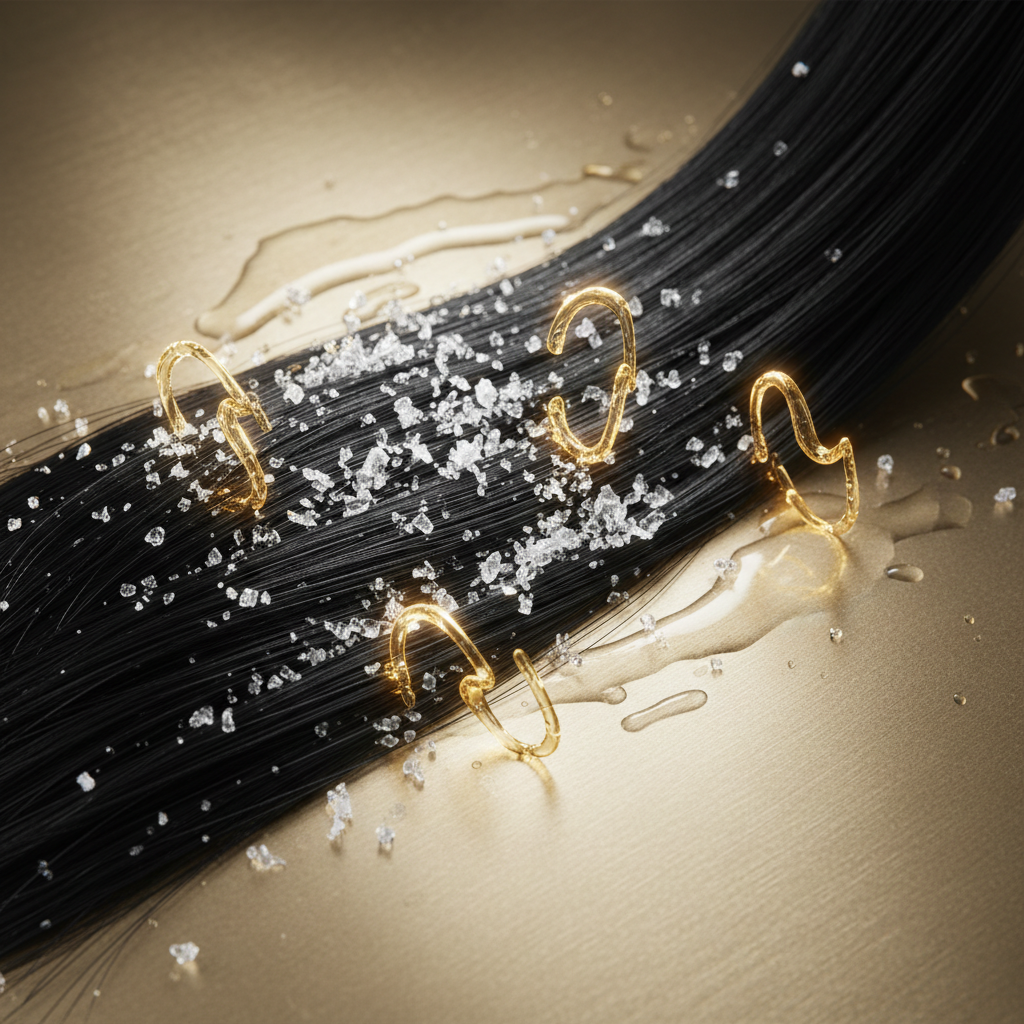
The word chelation comes from the Greek chele, meaning claw. Chelating agents are organic molecules with multiple bonding sites (ligands) capable of surrounding a metal ion and forming a stable, water-soluble ring structure.
When a chelating shampoo or treatment is applied:
- The chelating ligand approaches the bound calcium, magnesium, or copper ion on the hair shaft.
- The agent possesses a higher chemical affinity for the metal ion than the keratin protein does.
- The chelating molecule captures the metal ion, breaking its bond with the hair.
- The resulting coordinate complex remains dissolved in the lather and washes cleanly away in the rinse water.
Common and effective chelating ingredients include disodium EDTA, tetrasodium EDTA, sodium phytate, citric acid, and gluconolactone. While citric acid provides mild chelation, stronger synthetic chelators like EDTA are far more effective at sequestering stubborn alkaline earth metals.
| Feature | Clarifying Shampoos | Chelating Treatments |
|---|---|---|
| Primary Target | Styling polymers, silicones, sebum | Calcium, magnesium, copper, iron |
| Active Chemistry | High-strength anionic surfactants | Sequestering agents (e.g., EDTA, citric acid) |
| Frequency of Use | Once every 1 to 2 weeks | Once every 2 to 4 weeks (as needed) |
| Effect on Hair Colour | Can fade cosmetic dye over time | Prevents brassy or green mineral discolouration |
| Cuticle Impact | Strips surface lipids | Removes rigid mineral crystals |
| Action on Metals | Weak or negligible | High binding affinity for mineral cations |
Signs your hair is suffering from hard water
Recognising mineral accumulation allows you to intervene before cumulative breakage thins your hair ends. Common symptoms include:
- Persistent straw-like texture: Your hair feels rough and dry immediately after rinsing, even when using rich conditioning masks.
- Lack of lather: Your regular shampoo suddenly stops producing its customary lather, requiring double or triple the usual amount of product.
- Dullness and loss of shine: Light scatters irregularly off the rough, crystal-encrusted cuticle instead of bouncing cleanly off smooth, aligned scales.
- Unwanted colour shifts: Blonde and grey hair develops brassy, muddy orange, or greenish undertones (often caused by oxidized copper and iron traces in hard municipal supplies).
- Increased tangling and breakage: Strands catch on each other, producing small knots and snapped fragments on your clothing or comb.
Practical steps: treating and preventing mineral damage
Restoring hair health in a hard water area requires a two-step approach: removing existing mineral scale and reducing ongoing mechanical and thermal stress.
- Incorporate a monthly chelating wash: Use a dedicated chelating treatment once every two to four weeks depending on your local water hardness. Work the product through the mid-lengths and ends, allowing it to sit for two to three minutes before rinsing thoroughly.
- Follow with deep conditioning: Chelation strips away both minerals and the hair's surface lipid layer. Always follow chelation with a restorative hair mask rich in emollient fatty alcohols and hydrolysed proteins to rebuild suppleness.
- Consider a whole-house water softener: Showerhead filter attachments generally use KDF (Kinetic Degradation Fluxion) or carbon filters. While these reduce chlorine effectively, they do not soften water because they cannot remove dissolved calcium and magnesium ions under high shower flow rates. An ion-exchange water softener is the only definitive home solution.
- Use an acidic final rinse: Rinsing with diluted apple cider vinegar or a formulated acidic gloss (pH 3.5 to 4.5) helps contract and smooth the cuticle scales after cleansing, diminishing friction.
When the cause may be something else
If your hair remains fragile, weak, or brittle after thorough chelation and conditioning, the underlying issue may not be environmental mineral scale. Other common causes include:
- Excessive chemical processing: Bleaching, relaxers, and perms break the internal disulphide bonds within the cortex, mimicking the dryness of mineral buildup.
- Protein overload or deficiency: An imbalance between structural proteins and moisturising emollients in your haircare routine can cause rigidity and snapping.
- Systemic shedding: If you are seeing whole hairs shed from the root (with a visible white bulb attached) at rates exceeding 100 hairs per day, the issue is follicular shedding (such as telogen effluvium) or genetic thinning, not water quality.
Consult a trichologist or dermatologist if you experience unexplained patchy baldness, tender scalp burning, intense flaking, or rapid diffuse shedding across the entire scalp.
Supporting hair vitality with Watermans
When managing hair that has been weakened by external stressors like hard water, maintaining a clean scalp environment and supporting fibre strength is essential. Watermans Grow More Shampoo is formulated to thoroughly cleanse the hair and scalp while delivering revitalising nutrients such as biotin, rosemary extract, caffeine, and niacinamide. Paired with Watermans Condition Me Conditioner, which features cholesterol, shea butter, and hydrolysed lupin protein, it helps restore the soft feel, slip, and elasticity that hard water strips away. While Watermans formulations are designed to support cosmetic density, moisture balance, and fuller-looking hair, dedicated chelating washes should still be used periodically if you wash your hair in exceptionally hard municipal water.
Frequently asked questions about Hard Water Hair Damage and Chelating Treatments
What is the primary difference between Hard Water Hair Damage and Chelating Treatments versus standard clarifying?
Hard water coats the cuticle in inorganic mineral ions like calcium and magnesium, while everyday styling buildup consists of organic polymers, silicones, and sebum. Standard clarifying shampoos use strong surfactants to wash away organic grease and residue, but they lack the molecular bonding agents required to dislodge mineral crystals. Chelating treatments contain specialized chelators like EDTA that chemically bind and lift those dissolved minerals.
Can hard water damage cause permanent baldness?
No. Hard water minerals accumulate strictly on the exposed, non-living hair shaft. Calcium and magnesium do not enter or harm the living hair follicle beneath the scalp, meaning hard water cannot trigger follicular miniaturisation, pattern baldness, or permanent hair loss. The damage it causes is physical breakage along the strand, which can make hair look thinner at the ends.
How often should you use a chelating treatment on colour-treated hair?
Colour-treated hair should generally be chelated once every three to four weeks, ideally a few days before a salon colour service. Removing mineral buildup allows fresh colour molecules to penetrate evenly and prevents dangerous chemical reactions between bleach and trapped metals like copper. However, over-chelating can strip cosmetic moisture, so always follow up with a rich, moisturising conditioner.
Do showerhead filters stop hard water mineral damage?
Most standard screw-on showerhead filters use activated carbon or KDF media. While they successfully remove chlorine, heavy sediment, and chemical odours, they cannot meaningfully reduce dissolved calcium and magnesium ions at normal shower flow rates and temperatures. Only a whole-house ion-exchange water softener truly turns hard water into soft water.
Final thoughts on mineral protection
Navigating Hard Water Hair Damage and Chelating Treatments comes down to understanding the chemistry of your wash water and protecting your hair cuticle from physical stress. Hard water minerals form an invisible, rigid barrier that robs strands of shine, complicates salon colour services, and drives mechanical breakage. By incorporating a targeted chelating wash into your monthly regimen, replenishing lost moisture with high-performance conditioning, and treating the hair shaft gently, you can keep your hair resilient, soft, and vibrant regardless of your local water supply.
Sources and references
- International Journal of Trichology, "Evaluation of the Effect of Hard Water on Hair: A Study on Tensile Strength and Surface Properties", 2013.
- Journal of the Society of Cosmetic Chemists, "The Absorption of Calcium and Magnesium Ions by Human Hair from Hard Water and Its Influence on Properties", 1998.
- Journal of Cosmetic Science, "Investigation of Metal Ion Deposition on Human Hair and the Efficacy of Chelating Formulations", 2011.
- World Health Organization (WHO), "Hardness in Drinking-water: Background document for development of WHO Guidelines for Drinking-water Quality", 2011.
- British Association of Dermatologists, "Hair Breakage and Cuticle Damage: Clinical Overview", 2022.
Find these ingredients in Watermans products
- Copper: you will find this ingredient in our Hair Vitamins.
- Shea Butter: you will find this ingredient in our Curly Hair Conditioner.