Hair Type: Understanding Your Hair's Unique Characteristics
10 min read ·
Understanding your Hair Type is crucial for developing an effective hair care routine tailored to your hair's unique needs and characteristics.
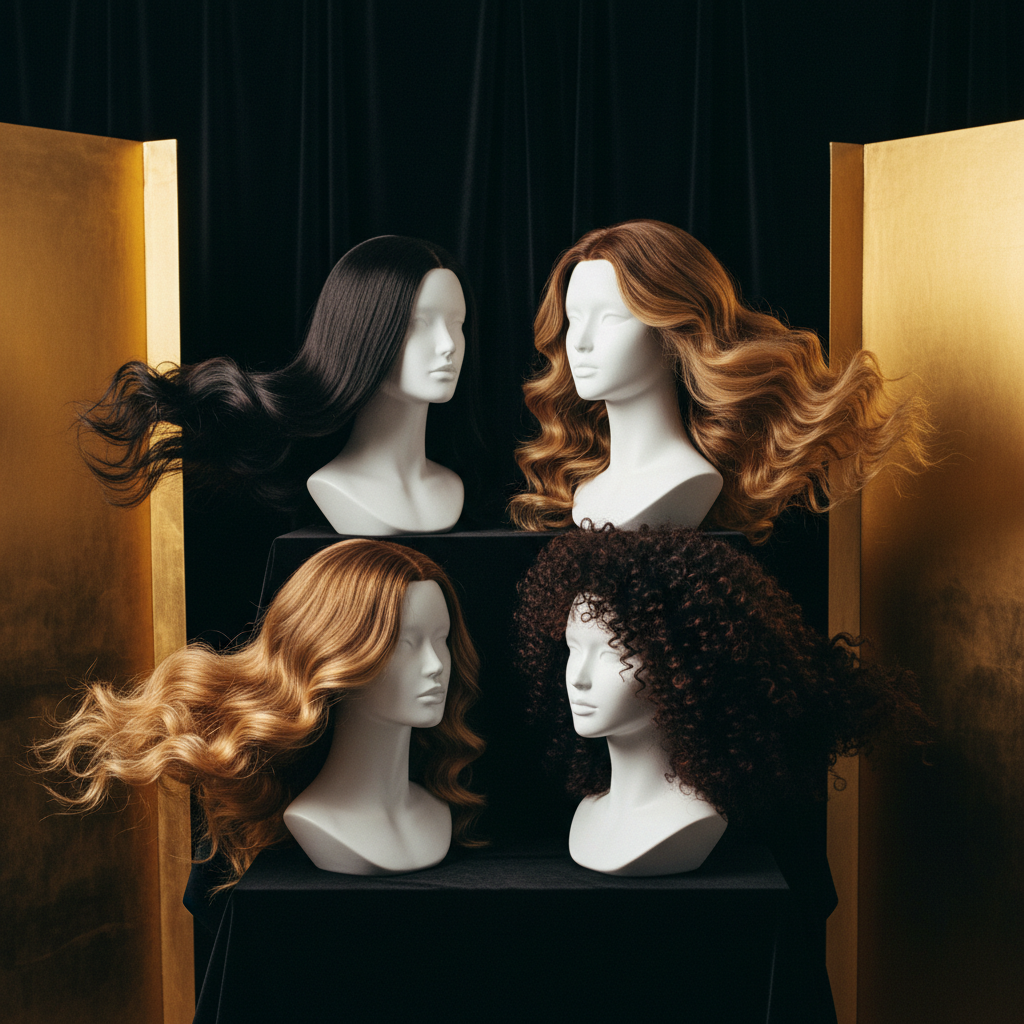
Quick answer: Hair Type describes the natural characteristics of your hair, primarily influenced by its curl pattern, strand thickness, and porosity. It dictates how your hair behaves, its natural texture, and its care requirements. While commonly categorised by curl pattern, a complete understanding of your Hair Type also considers strand diameter and ability to absorb moisture. This classification system, though widely used, is a helpful guide rather than a strict scientific definition.
Key takeaways
- Your Hair Type is a combination of your curl pattern, strand thickness (diameter), and porosity, all influenced by genetics.
- Curl patterns are broadly categorised from straight (Type 1) to coily (Type 4), with sub-categories for finer distinctions.
- Hair thickness affects how your hair holds style and its resilience, ranging from fine to coarse.
- Hair porosity dictates how well your hair absorbs and retains moisture, impacting product choice and hydration strategies.
- Understanding your specific Hair Type helps you choose appropriate products and techniques to reduce breakage, manage frizz, and maintain overall hair health.
- No single Hair Type is inherently "better" or "worse"; each has unique needs and benefits from tailored care.
Hair Type: what the evidence shows
Your Hair Type refers to the inherent characteristics of your hair, predominantly determined by genetics. These characteristics significantly influence how your hair behaves, its natural texture, its tendency towards dryness or oiliness, and its susceptibility to damage. Recognising your Hair Type is a foundational step in developing an optimal hair care routine and achieving desired styling results. While often simplified to just curl pattern, a comprehensive understanding of Hair Type includes: curl pattern, strand thickness (or diameter), and porosity. These factors interact in complex ways, contributing to the vast diversity of hair types observed across populations.
Curl pattern: the shape of your hair strand
Curl pattern is the most commonly discussed aspect of Hair Type. It describes the natural shape of the hair strand as it grows from the scalp. This shape is determined by the asymmetry of the hair follicle and the distribution of keratin within the hair shaft. Hair follicles can range from round (producing straight hair) to oval or elliptical (producing wavy, curly, or coily hair) (Trueb, 2016).
The widely used classification system, originally developed by Andre Walker, categorises hair into four main types with sub-categories. This framework provides a useful guide, though it's important to remember that hair can exhibit multiple curl patterns on one head, and the system is descriptive rather than purely scientific.
Type 1: Straight hair
Straight hair has no natural curl. The hair strand emerges from a round follicle and falls without any bends or waves. Sebum, the natural oil produced by the scalp, can travel easily down the smooth hair shaft, which means straight hair types often appear oily more quickly. This type generally exhibits good shine due to its smooth surface reflecting light effectively.
- 1A: Very fine, soft, and shiny. It can be difficult to hold a curl and may feel very slick.
- 1B: Straight with a medium texture. It has some body and can hold a curl better than 1A.
- 1C: Generally thick and coarse. It can be resistant to curling and may have a slight natural bend or wave.
Type 2: Wavy hair
Wavy hair forms an S-shape pattern, falling between straight and curly hair. It typically has more body than straight hair but can be less prone to frizz than curly textures. The follicle for wavy hair is slightly more oval than for straight hair.
- 2A: Loose, stretched-out S-waves. It can be easily straightened or curled and tends to be finer.
- 2B: More defined S-waves, often starting closer to the scalp. It can be prone to some frizz at the crown.
- 2C: Well-defined S-waves, often mixed with a few loose curls. This type can be coarser and more frizz-prone, requiring more moisture.
Type 3: Curly hair
Curly hair forms distinct loops and spirals. The curl pattern is generally tighter and more defined than wavy hair. The elliptical shape of the hair follicle for curly hair causes the hair to grow in a curved, spiral fashion. This structure makes it harder for natural oils to travel down the hair shaft, leading to a tendency for dryness and increased frizz. The cuticle scales on curly hair are often more lifted, contributing to moisture loss (Mintel, 2018).
- 3A: Large, loose spirals, about the size of a sidewalk chalk stick.
- 3B: Bouncy, ringlet curls, typically the size of a marker.
- 3C: Tight, corkscrew curls, roughly the size of a pencil.
Type 4: Coily hair
Coily hair is characterised by very tight, often zigzag or Z-shaped bends. This Hair Type experiences the most shrinkage, appearing much shorter when dry than when wet. The highly elliptical and often flattened follicle shape, combined with varied keratin distribution, results in these extremely tight curls. Coily hair is typically the driest and most fragile Hair Type due to its structure making it very difficult for sebum to travel down the shaft, and its cuticle being more open. It requires significant moisture and gentle handling to prevent breakage.
- 4A: Tightly coiled S-pattern curls, about the size of a knitting needle.
- 4B: Tight, Z-shaped coils with sharp angles. The curl pattern can be less defined than 4A.
- 4C: Extremely tight, often with no defined curl pattern. It experiences the most shrinkage and can be very fragile, requiring maximum moisture and gentle care. See also: How to Care for Afro Hair: An Evidence-Based Guide.
Hair thickness (diameter)
Hair thickness, or diameter, refers to the width of individual hair strands, not the density of hair on the scalp. This characteristic influences how hair holds style, its resilience, and its susceptibility to damage.
- Fine: Strands are very thin and delicate (e.g., 50 micrometres in diameter). They can be easily weighed down by heavy products and are more prone to breakage due. For more, see Fine Hair: A Complete Guide to Understanding and Care.
- Medium: This is the most common hair thickness (e.g., 70 micrometres). It is generally strong and resilient, holding styles well.
- Coarse (Thick): Strands are wide and strong (e.g., 90 micrometres or more). They can be resistant to styling and may take longer to dry. While less prone to breakage from tension, they can be stiffer and less flexible.
To determine your hair thickness, take a single strand of hair and roll it between your fingers. If you can barely feel it, it's likely fine. If you can distinctly feel it, it's medium. If it feels quite substantial, it's coarse.
Hair porosity: how your hair absorbs moisture
Hair porosity refers to your hair's ability to absorb and retain moisture. It is determined by the condition of your hair's cuticle, the outermost layer of the hair shaft (Gavazzoni Dias, 2015). Understanding porosity is key to choosing the right conditioning and moisturising products.
| Porosity Type | Cuticle Description | Moisture Absorption | Product Needs |
|---|---|---|---|
| Low Porosity | Tightly closed, overlapping cuticles. | Repels moisture, takes longer to get wet and dry. | Lightweight moisturisers, heat to open cuticles for product penetration. Avoid heavy oils. |
| Medium Porosity | Loosely packed, slightly raised cuticles. | Absorbs and retains moisture well. | Balanced products, regular conditioning. |
| High Porosity | Raised, often damaged cuticles. | Quickly absorbs moisture but loses it just as fast. | Rich, heavy moisturisers, anti-humectants in humid climates, protein treatments to temporarily fill gaps. |
To test your porosity, take a clean, product-free strand of hair and drop it into a glass of room-temperature water. If it floats, you likely have low porosity. If it sinks slowly, it's probably medium porosity. If it sinks quickly, you likely have high porosity.
What you can do: tailoring your hair care
Understanding your Hair Type allows you to make informed decisions about your hair care routine, from cleansing to styling. This knowledge helps you address specific challenges and enhance your hair's natural beauty.
- Cleansing: Choose a shampoo appropriate for your scalp and hair needs. For oily scalps, a clarifying wash may be beneficial, but drier Hair Types, especially curly or coily, will benefit from gentler, sulfate-free shampoos to prevent stripping natural oils. See also: Choosing the Right Shampoo: A Comprehensive Guide to Hair Cleansing and Sulfate-Free Shampoo Benefits.
- Conditioning & Moisturising: Match conditioners to your hair's porosity and dryness levels. Low porosity hair can be weighed down by heavy products, while high porosity hair benefits from rich, emollient conditioners and leave-in treatments. Humectants are beneficial for many Hair Types, but high porosity hair might need specific care in very humid or dry conditions. See: The Science of Conditioners: How Hair Care Formulations Work and Hair Hydration: The Science Behind Keeping Hair Moist.
- Styling: Air drying or low-heat drying can minimise damage across all Hair Types. Protective styling can be especially beneficial for curly and coily textures to reduce manipulation and breakage. When using heat styling, always apply heat protectants. See also: Heat Styling Safety Best Practices.
- Scalp Health: A healthy scalp is fundamental to healthy hair growth for every Hair Type. Addressing concerns like dandruff or an oily scalp ensures the best environment for your hair. See: Understanding Scalp Health.
When the cause may be something else
While Hair Type dictates natural characteristics, significant changes in hair texture, excessive shedding, or sudden breakage might indicate underlying issues beyond your inherent Hair Type.
- Hair Breakage: If your hair suddenly becomes brittle and breaks easily, it may be due to chemical treatments, excessive heat styling, or harsh mechanical styling. This is distinct from hair shedding or hair loss. See: Hair Damage: Causes, Signs, and Solutions.
- Hair Shedding/Hair Loss: A noticeable increase in hair shedding (e.g., telogen effluvium) or localised hair loss (alopecia) is not related to Hair Type. These conditions can be caused by stress, nutritional deficiencies, hormonal changes, or medical conditions and require professional assessment. See: Anagen Effluvium.
- Environmental Factors: Hard water can significantly impact all Hair Types, leading to dryness, dullness, and breakage, regardless of your genetic predisposition. See: Hard Water and Hair Damage: Understanding the Impact on Your Hair.
When to get professional advice
If you experience persistent scalp irritation, unexplained changes in hair texture, excessive hair shedding, or hair loss, it's advisable to consult a dermatologist or trichologist. They can accurately diagnose underlying conditions that may be affecting your hair and scalp health, separate from your natural Hair Type.
Frequently asked questions about Hair Type
Can my Hair Type change over time?
Yes, your hair's characteristics can change. Hormonal fluctuations (e.g., pregnancy, menopause), ageing, chemical treatments (like colouring or perms), and even certain medications can alter your hair's texture, thickness, and porosity. While your core curl pattern might not drastically change, its definition or your hair's ability to retain moisture can evolve, requiring adjustments to your care routine.
Is one Hair Type healthier than another?
No, no Hair Type is inherently healthier or unhealthier than another. Each type has its unique structure and care requirements. For example, straight hair might appear oily faster, while coily hair tends to be drier and more prone to breakage if not moisturised adequately. The "health" of your hair depends entirely on how well its specific needs are met through appropriate care and maintenance.
How does hair density differ from hair thickness?
Hair density refers to the number of individual hair strands per square inch on your scalp, determining how full your hair appears. Hair thickness, on the other hand, describes the diameter of a single hair strand (fine, medium, coarse). You can have fine hair that is dense, or thick hair that is sparse. Both play a role in how your hair looks and behaves.
Does Hair Type affect how well products work?
Absolutely. Products are formulated with different Hair Types and their specific needs in mind. A heavy, rich butter might be perfect for highly porous, coily hair but would likely weigh down fine, straight hair. Conversely, a lightweight serum that benefits fine hair might not provide enough moisture for thicker, curlier textures. Matching products to your Hair Type improves efficacy.
Understanding your Hair Type
Understanding your unique Hair Type is the cornerstone of effective hair care. By recognising your hair's natural curl pattern, strand thickness, and porosity, you can move beyond generic advice and adopt a regimen that truly nurtures your hair. This knowledge empowers you to choose the right products and techniques, leading to healthier-looking, more resilient hair that responds well to styling. Embrace your unique Hair Type and provide it with the tailored care it deserves.
Sources and references
- Trueb, R. M. (2016). Molecular Genetics of Hair Loss. Springer International Publishing.
- Gavazzoni Dias, M. F. (2015). Hair Cosmetics: An Overview. International Journal of Trichology, 7(1), 2-15. DOI: 10.4103/0974-7753.153927
- Mintel (2018). Haircare, US, March 2018. Mintel Group Ltd.