The Hair Structure and Growth Cycle: Understanding Hair Anatomy and Growth
9 min read ·
The Hair Structure and Growth Cycle describes how hair grows from the follicle, its layered composition, and its cyclical phases of growth, transition, and rest.
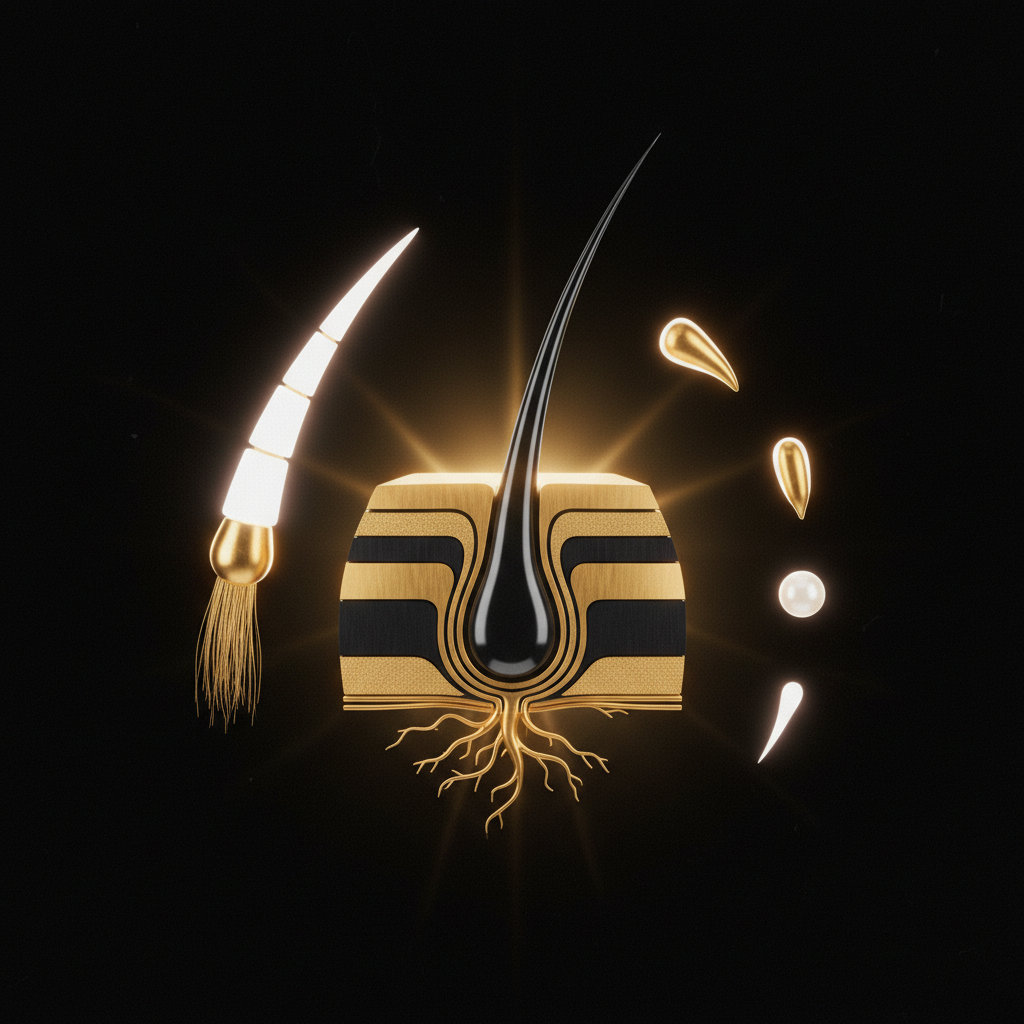
Quick answer: The Hair Structure and Growth Cycle describes the biological process by which hair is formed, grows, and renews itself. This includes the intricate layered anatomy of each hair strand and the three distinct phases (anagen, catagen, and telogen) that hair follicles cyclically undergo. While this cycle is fundamental to hair health, individual variations in genetics, health, and environment significantly influence its duration and outcomes, meaning what is "normal" can vary widely. Understanding these processes helps in managing and maintaining hair health effectively.
Key takeaways
- Hair is primarily composed of keratin protein, forming a visible shaft and a root embedded in a follicle.
- Each hair strand has three main layers: the protective cuticle, the strength-giving cortex, and the central medulla.
- The Hair Structure and Growth Cycle consists of three distinct phases: anagen (active growth), catagen (transition), and telogen (resting/shedding).
- Hair follicles operate independently, with most scalp hairs in the anagen phase at any given time.
- Many factors, including genetics, nutrition, hormones, age, and hair care practices, influence the hair cycle.
- A typical healthy person sheds 50 to 100 hairs daily as part of the natural cycle, which is distinct from hair loss or breakage.
The Hair Structure and Growth Cycle: What the Evidence Shows
Understanding the Hair Structure and Growth Cycle is fundamental to appreciating how hair grows, maintains its health, and responds to various internal and external influences. Each hair strand, though seemingly simple, is a complex biological structure, and its growth is a highly regulated, cyclical process involving three distinct phases.
The Anatomy of a Hair Strand
Each hair fibre is primarily made of keratin, a strong, fibrous protein. It emerges from a hair follicle, a tiny organ in the skin. The visible part is the hair shaft, and the part within the follicle is the hair root.
In cross-section, a hair strand has three main layers, each with a specific function:
- Cuticle: This is the outermost, protective layer, made of several overlapping, dead, flattened cells resembling roof tiles. These cells typically point towards the hair's tip. A healthy, intact cuticle lies flat, reflects light, and helps protect the inner layers from damage, contributing to shine and smoothness. When damaged or raised, hair can feel rough, look dull, and be prone to tangling and breakage.
- Cortex: Forming the bulk of the hair, the cortex sits beneath the cuticle. It consists of elongated, keratinised cells packed tightly together. This layer provides most of hair's strength, elasticity, and natural colour. Melanocytes within the cortex produce melanin pigments: eumelanin for black and brown tones, and pheomelanin for red and yellow tones.
- Medulla: The innermost core, the medulla, is not always present, especially in fine vellus hairs. When present, its structure can be continuous, fragmented, or even absent along the same strand. Its exact function is not fully understood, but it might play a role in regulating the hair's thermal properties or contributing to its overall mechanical strength. Coarser hair types, such as those found in Afro-textured hair, are more likely to have a prominent medulla.
The Hair Growth Cycle Explained
Hair growth is not continuous but occurs in a cyclical pattern, with each hair follicle operating independently. There are three primary phases:
- Anagen (Growing Phase): This is the active growth phase, during which hair cells in the follicle rapidly divide. New hair cells push existing hair upwards, causing the hair to lengthen. The anagen phase can last from two to seven years, with an average of three to five years for scalp hair. This duration largely determines the maximum length a person's hair can achieve and is primarily genetically determined. At any given time, approximately 85% to 90% of scalp hairs are in the anagen phase.
- Catagen (Transition Phase): A short, transitional phase that follows anagen, lasting about two to three weeks. During this time, active hair growth stops, and the hair follicle shrinks. The lower part of the follicle detaches from the dermal papilla, which supplies blood and nutrients. The hair shaft, now called a 'club hair', is pushed upwards.
- Telogen (Resting and Shedding Phase): This is a resting period for the hair follicle, typically lasting around three to four months. The club hair remains in the follicle but no active growth occurs. Towards the end of this phase, a new anagen hair begins to grow beneath the club hair, eventually pushing it out of the follicle. This shedding is a normal part of the Hair Structure and Growth Cycle. Losing 50 to 100 hairs per day is considered typical for a healthy adult and is a sign of normal hair renewal, not hair loss.
Factors Influencing the Hair Structure and Growth Cycle
Many elements can affect the duration of each cycle phase, the rate of hair growth, and the overall health of hair fibres:
- Genetics: Our genes determine many hair characteristics, including colour, texture, thickness, and the typical length of our anagen phase. Genetic predispositions also play a significant role in conditions like androgenetic alopecia.
- Nutrition: A balanced diet rich in proteins, vitamins (especially B vitamins, D, and E), and minerals (such as iron and zinc) is crucial. Deficiencies can impact hair health, leading to weaker hair or increased shedding. For example, iron deficiency anaemia can shorten the anagen phase and trigger increased telogen shedding.
- Hormones: Hormonal shifts, such as those occurring during pregnancy, postpartum, menopause, or due to thyroid imbalances, can significantly alter the Hair Structure and Growth Cycle, often leading to temporary changes in shedding patterns.
- Age: As we age, the anagen phase often shortens, and hair follicles may miniaturise, leading to thinner hair and a reduced growth rate. The cumulative effect of environmental damage also becomes more apparent.
- Stress: Chronic physical or psychological stress can prematurely shift a greater proportion of hair follicles from the anagen to the telogen phase, leading to increased hair shedding, a condition known as telogen effluvium.
- Environmental Factors: Exposure to UV radiation, pollution, and harsh weather can damage the hair shaft and scalp over time, affecting its structural integrity and potentially impacting follicle health.
- Hair Care Practices: Gentle handling, appropriate styling, and using nourishing products help maintain the integrity of the hair's cuticle and overall health. Conversely, excessive heat styling, certain chemical treatments (like colouring or perms), and aggressive brushing can cause significant hair damage and breakage, which is distinct from the natural shedding cycle. For more on this, see "Hair Damage: Causes, Signs, and Solutions".
Hair Shedding versus Hair Loss versus Hair Breakage
It's important to distinguish between these terms, as they refer to different phenomena, though they are often confused:
| Feature | Hair Shedding (Telogen Effluvium) | Hair Loss (Alopecia) | Hair Breakage |
|---|---|---|---|
| Mechanism | Normal part of the Hair Structure and Growth Cycle; hair detaches from follicle at root. | Follicle activity diminishes or stops, leading to reduced or no new hair growth. | Hair fibre snaps along the shaft, usually due to damage. |
| Where it occurs | From the scalp (root is visible). | From the scalp (follicle stops producing). | Anywhere along the hair strand, not necessarily at the root. |
| Appearance | Hairs typically have a small, white bulb at the root. | Thinning, receding hairline, bald patches, or overall diffuse thinning. | Short, uneven hairs; split ends; hairs without a root bulb. |
| Cause | Stress, hormonal changes, illness, medication, nutritional deficiencies, postpartum. | Genetics, autoimmune conditions, underlying health issues, severe trauma. | Over-processing, excessive heat, harsh styling, chemical damage, dryness. |
| Outcome | Usually temporary; hair regrows once trigger is resolved. | Can be temporary or permanent depending on the cause and type of alopecia. | Hair length is reduced, hair appears thinner and more fragile. |
When to seek professional advice
If you notice sudden or excessive hair shedding, significant hair thinning, bald patches, or any discomfort on your scalp, it is advisable to consult a general practitioner or a dermatologist. They can help identify underlying causes, rule out medical conditions, and recommend appropriate treatments or management strategies. Early intervention can often lead to better outcomes for various hair and scalp concerns.
Frequently asked questions about Hair Structure and Growth Cycle
How many hairs do we typically shed daily as part of the Hair Structure and Growth Cycle?
It is entirely normal to shed 50 to 100 hairs each day as part of the natural Hair Structure and Growth Cycle. This shedding is the final stage of the telogen phase, where old hairs are pushed out by new, growing hairs. This is not hair loss but a continuous process of renewal.
Can diet affect the Hair Structure and Growth Cycle?
Yes, diet significantly impacts the Hair Structure and Growth Cycle. Hair growth requires a steady supply of protein, vitamins (like B vitamins, D, E), and minerals (such as iron and zinc). Deficiencies in these essential nutrients can lead to weakened hair, increased shedding, or slower growth rates. A balanced diet supports robust hair health.
Does stress really cause hair to fall out?
Acute or chronic stress can indeed disrupt the Hair Structure and Growth Cycle. High stress levels can prematurely push a larger number of hair follicles from the active growth phase (anagen) into the resting and shedding phase (telogen). This condition, known as telogen effluvium, typically results in noticeable shedding a few months after the stressful event.
Is it possible to change my hair's natural growth cycle?
While you cannot fundamentally alter the genetically determined length of your anagen phase or the overall Hair Structure and Growth Cycle, you can support optimal hair health. A healthy lifestyle, balanced nutrition, minimising stress, and gentle hair care practices can help ensure your hair follicles function efficiently, potentially reducing premature shedding and breakage. For example, maintaining scalp health is crucial, as discussed in "Understanding Scalp Health: A Foundation for Thriving Hair".
What's the difference between hair shedding and hair loss?
Hair shedding is a normal, temporary process where hairs naturally detach from the follicle as part of the telogen phase of the Hair Structure and Growth Cycle. Hair loss, or alopecia, refers to conditions where hair growth is genuinely inhibited, or follicles become inactive, leading to thinning or bald patches. Shedding is part of renewal; loss implies a lack of new growth.
Conclusion
The intricate Hair Structure and Growth Cycle is a marvel of biological engineering, continuously working to renew and maintain the hair on our heads. From the layered protection of the cuticle to the cyclical rhythm of anagen, catagen, and telogen phases, each component plays a vital role. While influenced by genetics, our daily choices in nutrition, stress management, and hair care can significantly impact the health and vitality of our hair. Understanding these fundamental processes empowers us to make informed decisions for healthier-looking hair and a thriving scalp.
Sources and references
- American Academy of Dermatology Association. (n.d.). Hair Loss: Diagnosis and Treatment. AAD.org.
- National Institute of Arthritis and Musculoskeletal and Skin Diseases (NIAMS). (2018). Hair Loss. National Institutes of Health.
- Paus, R., & Cotsarelis, G. (1999). The Biology of Hair Follicles. New England Journal of Medicine, 341(7), 491-497. PubMed. DOI: 10.1056/NEJM199908123410706
- Trueb, R. M. (2016). Molecular Mechanisms of Hair Growth and Regeneration. Springer. ISBN: 978-3319246194
- University of California, San Francisco (UCSF) Health. (n.d.). Hair Loss in Women. UCSFHealth.org.
Find these ingredients in Watermans products
- Zinc: you will find this ingredient in our Hair Vitamins.