Understanding Hair Shaft Breakage vs Shedding
10 min read ·
Learn the difference between hair shaft breakage vs shedding. Understand root bulbs, fibre damage, causes, and how to treat each condition correctly.
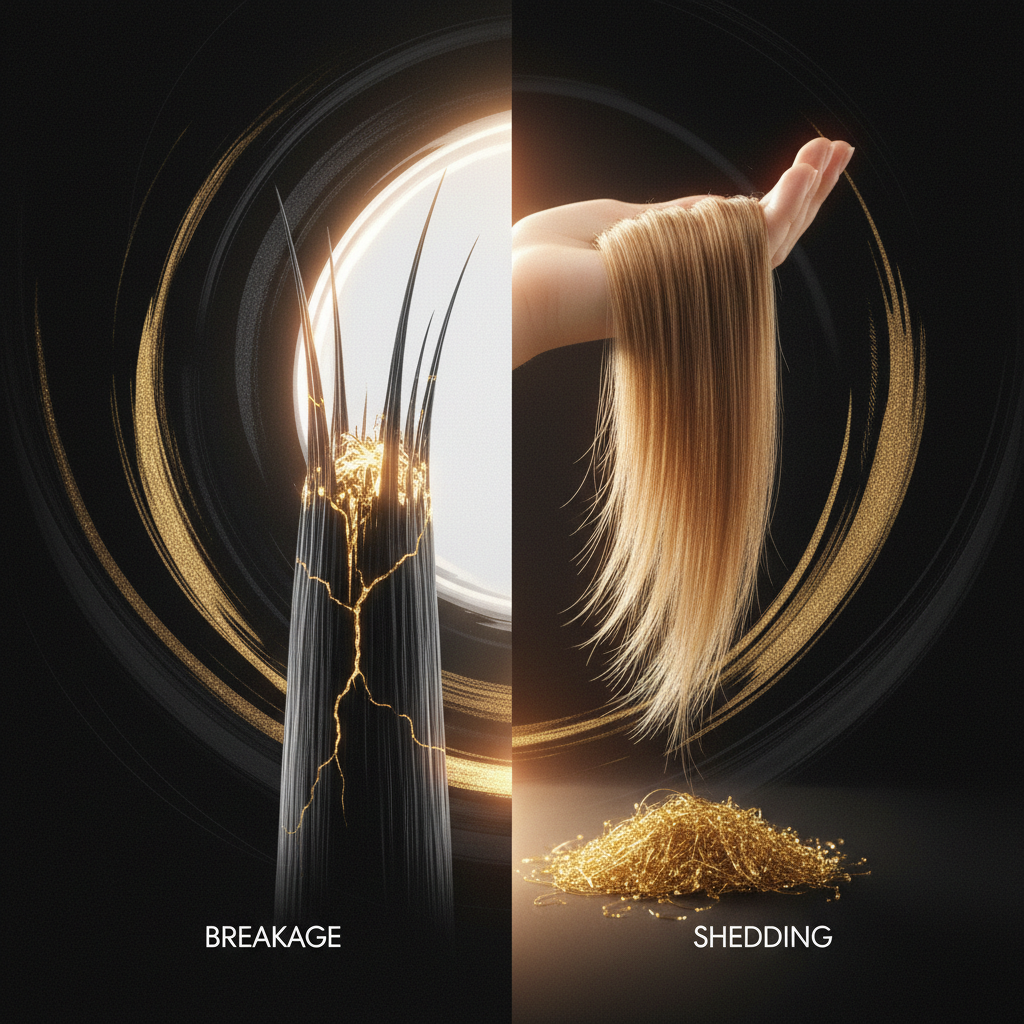
Quick answer: Understanding hair shaft breakage vs shedding begins with examining where the hair separates. Shedding occurs at the follicle level when a hair finishes its biological growth cycle and falls out intact, typically featuring a tiny white keratin bulb at the root end. Breakage happens when the physical hair fibre snaps anywhere along the shaft due to mechanical, thermal, or chemical damage. Understanding hair shaft breakage vs shedding ensures you choose the right corrective strategy, as shedding relates to scalp biology, while breakage requires fibre reinforcement.
Finding loose hairs on your pillow, in your brush, or over your bathroom floor can be alarming. However, not all lost hair reflects a problem at the scalp. Distinguishing whether your strands are coming out from the roots or snapping along the lengths is critical to addressing the issue effectively. Understanding hair shaft breakage vs shedding saves time, money, and unnecessary worry by pinpointing whether you need internal follicular support or external fibre care.
Key takeaways
- Shedding is a natural biological process where hairs detach from the follicle, almost always displaying a visible white bulb.
- Breakage is physical or chemical structural failure along the hair fibre, resulting in shorter, uneven strands without a root bulb.
- Humans normally shed 50 to 100 telogen hairs per day as part of the natural hair growth cycle.
- Breakage is driven by external friction, heat styling, bleach, chemical relaxers, or severe moisture imbalance.
- Treatments for shedding target systemic health, hormones, and scalp vitality, whereas breakage treatments require cosmetic conditioning, protein balance, and gentle handling.
Understanding hair shaft breakage vs shedding: what the evidence shows
Dermatological research makes a clear separation between follicular events and fibre degradation. When trichologists evaluate thinning, their first diagnostic step is determining whether the patient experiences increased telogen shedding or mechanical fibre fragility.
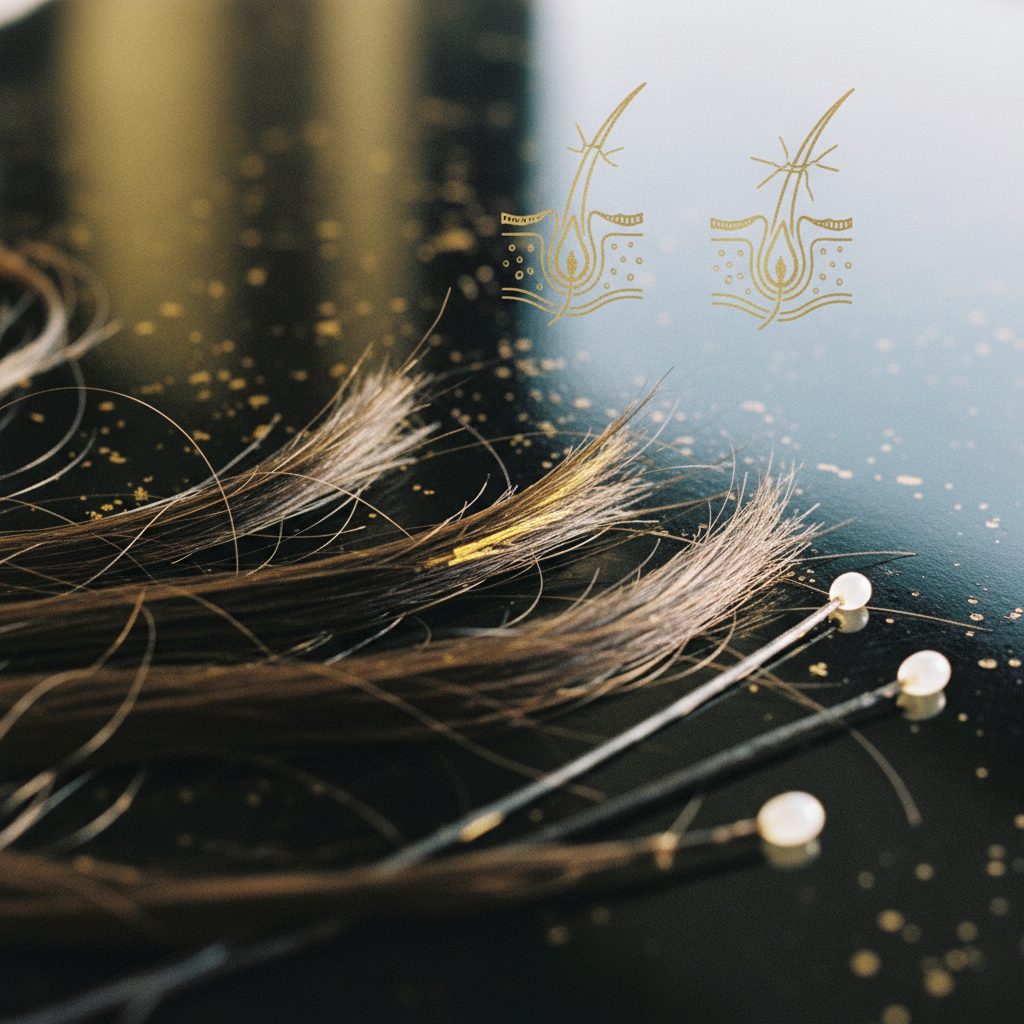
The hair growth cycle consists of three primary phases: anagen (active growth, lasting 2 to 7 years), catagen (transition, lasting 2 to 3 weeks), and telogen (resting, lasting 2 to 4 months). At the end of the telogen phase, the hair enters exogen, where the strand naturally sheds to make room for a new anagen fibre. According to the British Association of Dermatologists, shedding between 50 and 100 telogen hairs daily is completely normal.
Conversely, hair breakage involves structural fracturing of the hair shaft. Human hair consists of an outer protective cuticle, an inner cortex providing tensile strength, and occasionally a central medulla. The cortex is composed of keratin proteins bonded by disulphide, salt, and hydrogen bonds. When chemical processing, ultraviolet radiation, or high temperatures (exceeding 180 degrees Celsius) degrade these bonds and lift or strip the protective cuticle, the cortex loses its tensile strength. The fibre then snaps under normal grooming forces such as combing, brushing, or washing.
| Feature | Hair Shedding | Hair Shaft Breakage |
|---|---|---|
| Point of separation | Follicle (scalp level) | Anywhere along the shaft |
| Visible bulb | Yes, small white/translucent bulb at the end | No bulb; ends appear blunt, frayed, or split |
| Strand length | Full length of your hair | Shorter, variable lengths |
| Primary driver | Biological cycles, hormones, systemic stress | Heat, chemical damage, mechanical friction |
| Normal baseline | 50 to 100 hairs per day | Minimal with gentle handling |
| Effective solution | Scalp stimulation, diet, resolving internal stress | Conditioning treatments, reduced heat, gentle styling |
The physical mechanisms: root detachment vs structural fracture
The biological mechanism of shedding involves the dermal papilla and follicular matrix. During telogen effluvium, an acute stressor (such as illness, childbirth, nutritional deficiency, or severe psychological shock) shocks a large percentage of growing anagen hairs prematurely into the telogen phase. Roughly two to three months after the triggering event, these hairs shed simultaneously in large amounts. The hair follicle itself remains intact under the scalp, ready to initiate a new cycle once conditions stabilise.
Breakage, by contrast, is a mechanical or chemical breakdown known clinically by presentations like trichorrhexis nodosa or trichoptilosis (split ends). In trichorrhexis nodosa, nodes or weak spots form along the fibre where the cuticle has been stripped away. Under tension, the cortex fibres splay outward like two paintbrushes pushed together, causing the strand to fracture. Chemical services such as permanent hair colour, bleach, and chemical relaxers raise the cuticle by altering the natural acidic pH of hair (normally around 4.5 to 5.5) up to alkaline levels of 9.0 to 11.0. This swells the shaft and oxidises disulphide bonds. Repeated chemical exposure without adequate bond repair leaves the hair brittle, leading to severe breakage rather than genuine hair loss from the follicle.
Signs to look for: how to self-diagnose your hair
You can determine what type of hair fall you are experiencing using simple observational tests:
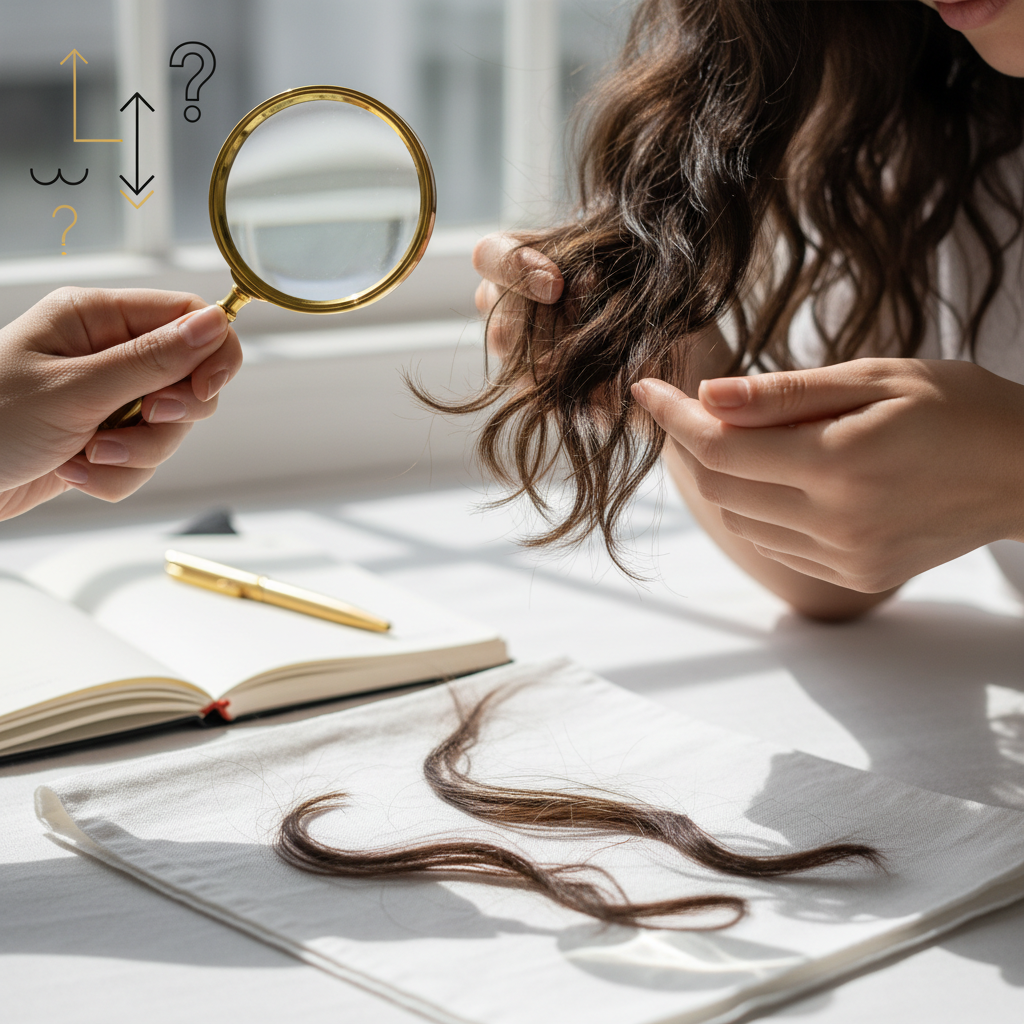
- The root inspection: Pick up several shed strands from your comb or basin. Inspect both ends against a contrasting background or under good lighting. If you see or feel a tiny white or clear nodule on one end, that is the telogen root bulb, indicating normal shedding. If both ends are straight, frayed, or split with no bulb, it is breakage.
- The length check: Hold the fallen strands alongside your hanging hair. If the fallen hairs match your total length, they have shed from the scalp. If you notice a shower of short, fractured pieces measuring a few centimetres or varying lengths, your hair is snapping.
- The texture assessment: Run your fingers down individual strands from root to tip. Hair prone to breakage often feels rough, dry, uneven, or wire-like, indicating elevated or eroded cuticle scales.
- The wet stretch test: Take a single strand of wet hair and gently pull both ends. Healthy hair can stretch up to 30 percent of its length when wet and return to its original state. Hair suffering severe protein or moisture loss will stretch and snap immediately, confirming fibre fragility.
What you can do to address shedding and breakage
Because their underlying causes are entirely different, your corrective measures must be tailored to the specific problem.
Managing hair shedding
- Evaluate recent life events: Think back two to three months for triggers such as high fevers, surgery, intense stress, or rapid weight loss.
- Check nutritional markers: Request blood tests via your GP to check serum ferritin (iron stores), vitamin D, vitamin B12, zinc, and thyroid hormones (TSH and free T4).
- Maintain scalp hygiene: Wash regularly using gentle, scalp-friendly shampoos to remove sebum, styling residue, and microbial buildup that can irritate follicles.
- Support microcirculation: Gentle daily scalp massage helps promote peripheral blood flow around active follicles.
Managing hair breakage
- Minimise thermal exposure: Limit heated styling tools to below 185 degrees Celsius and always use a verified heat protectant.
- Balance moisture and protein: Use rich conditioning masks containing hydrolysed plant proteins and emollients to temporarily patch microscopic gaps in the cuticle layer.
- Reduce friction: Switch to a silk or satin pillowcase, detangle wet hair starting from the ends using a wide-tooth comb or flexible wet brush, and avoid tight hairstyles that place excessive tension on the hair shaft.
- Time your chemical treatments: Space colouring, bleaching, or chemical relaxing sessions at least 8 to 10 weeks apart to allow the hair shaft to recover.
When the cause may be something else
Hair fall does not always fit neatly into pure mechanical breakage or benign telogen shedding. Several conditions require distinct attention:
- Androgenetic alopecia: Often termed male or female pattern hair loss, this involves progressive follicular miniaturisation driven by genetics and dihydrotestosterone (DHT). Hairs become thinner, shorter, and less pigmented over successive cycles, but patients may not notice heavy daily shedding.
- Traction alopecia: This occurs when prolonged physical tension from tight ponytails, braids, or extensions pulls the hair follicle continuously. It combines shaft breakage from tension with eventual follicular scarring if left unaddressed.
- Alopecia areata: An autoimmune condition where the immune system attacks hair follicles, leading to distinct, smooth, circular patches of rapid hair loss. Exclamation mark hairs (short broken hairs that are narrower at the base) often appear around the edges.
When to seek professional advice
Consult a GP or registered trichologist if you notice:
- Sudden, patchy hair loss or complete thinning concentrated on the crown, temples, or parting line.
- Shedding that continues heavily for more than six consecutive months without slowing down.
- Scalp symptoms such as persistent redness, burning, itching, scaling, or pain.
- Hair breaking off within a centimetre of the scalp across wide sections after a chemical procedure.
Supporting hair strength with Watermans
When addressing overall hair health, combining follicular vitality with fibre resilience provides the best outcome. Watermans offers cosmetic formulas developed to support both hair and scalp condition.
Watermans GrowMe Shampoo is formulated with caffeine, biotin, argan oil, rosemary, and niacinamide to invigorate the scalp environment, leaving hair feeling thicker and more resilient from the base. To complement scalp care and defend against mechanical breakage, Watermans ConditionMe Conditioner incorporates cholesterol, shea butter, and hydrolysed lupin protein. This targeted combination moisturises porous lengths, smooths the cuticle surface, improves wet combability, and reduces tensile breakage during daily grooming. Used together, they create a balanced daily routine that cleanses the scalp and reinforces fragile fibres.
Frequently asked questions about Understanding Hair Shaft Breakage vs Shedding
How can you tell if hair in the shower is shedding or breakage?
Look closely at the length and the ends of the strands. Understanding hair shaft breakage vs shedding comes down to identifying the white bulb. If the hair matches your full length and features a small white bulb at one end, it was naturally shed from the scalp. If the strands are varied, shorter than your overall length, and lack a bulb, the hair is snapping from breakage during washing.
Can hair shaft breakage lead to permanent baldness?
No. Breakage is an external issue occurring along the non-living keratin shaft above the scalp surface. Because breakage does not damage the living follicle underneath the skin, it does not cause permanent baldness. However, severe breakage close to the scalp can mimic the appearance of thinning or patchy bald spots until healthier lengths grow out.
Why does hair breakage increase after bleaching or colouring?
Bleaching and permanent dye require alkaline chemicals like ammonia or ethanolamine to raise the hair cuticle, allowing peroxide to penetrate the cortex and dissolve natural melanin. This oxidative process also degrades the disulphide bonds that provide structural strength, leaving the shaft brittle, dry, and vulnerable to snapping under minimal tension.
Is it normal to shed short hairs?
Shedding shorter hairs can occur, but you must inspect them carefully. If a short hair has a bulb, it may represent a miniaturised hair from a follicle experiencing a shortened growth cycle, commonly seen in androgenetic alopecia. If the short hair has no bulb, it is almost certainly a broken fragment from a longer strand.
Does brushing wet hair cause shedding or breakage?
Brushing wet hair primarily causes breakage. When saturated with water, hair absorbs moisture, causing hydrogen bonds to temporarily break and making the fibre up to 30 percent more elastic but far weaker. Pulling a stiff brush through wet tangles stretches the shaft past its breaking point, snapping it rather than detaching it at the root.
Conclusion
Mastering the difference when understanding hair shaft breakage vs shedding allows you to respond calmly and accurately to hair fall. Shedding is an internal, biological shedding of telogen roots that typically rectifies itself once underlying stress, diet, or hormonal fluctuations balance out. Breakage is an external, structural fracture requiring modified styling habits, heat restraint, and restorative conditioning. By carefully inspecting the ends of fallen strands, you can give your scalp and hair shafts precisely the care they need to thrive.
Sources and references
- British Association of Dermatologists. Telogen Effluvium Guidelines and Patient Information, 2021.
- Robbins, C. R. Chemical and Physical Behavior of Human Hair, 5th Edition, Springer-Verlag, 2012.
- Sinclair, R. D. "Healthy hair: what is it?" Journal of Investigative Dermatology Symposium Proceedings, 2007.
- Dawber, R. "Hair: Its Structure and Response to Cosmetic Preparations." Clinics in Dermatology, 1996.
- Trüeb, R. M. "Oxidative stress in ageing of hair." International Journal of Trichology, 2009.
Find these ingredients in Watermans products
- Zinc: you will find this ingredient in our Hair Vitamins.
- Niacinamide: you will find this ingredient in our Hair Mask.
- Shea Butter: you will find this ingredient in our Curly Hair Conditioner.