Hair Protein Treatments: Mechanisms, Benefits, and Evidence
8 min read ·
Hair Protein Treatments temporarily reinforce damaged cuticles and cortex bonds to stop breakage. Learn the science, ideal frequency, and risks of protein overload.
Quick answer: Hair Protein Treatments are topical cosmetic formulations designed to temporarily reinforce damaged hair fibres by depositing hydrolysed proteins into cuticular gaps and bonding along the cortex. They reduce mechanical breakage, improve tensile strength, and restore elasticity to chemically processed or heat-compromised strands. However, Hair Protein Treatments cannot permanently repair split ends or biologically regenerate dead keratin cells; their benefits wash out over time and excessive use without adequate moisture can leave hair feeling brittle and stiff.
Key takeaways
- Hair fibres consist of roughly 85 to 90 percent keratin protein, which degrades when exposed to alkaline chemicals, bleaching, ultraviolet radiation, and heat styling.
- Protein treatments utilise hydrolysed proteins (such as keratin, wheat, silk, or soy) broken down into smaller molecular weights (typically 500 to 10,000 Daltons) to penetrate the cuticular layer.
- Overusing protein treatments without balanced emollients can cause protein overload, resulting in rigid, brittle hair that snaps easily under tension.
- Hair Protein Treatments treat cosmetic hair shaft breakage; they have no biological effect on the hair follicle, shedding rates, or scalp alopecia.
- Selecting the correct treatment depends on hair porosity, damage levels, and the molecular size of the hydrolysed proteins applied.
Hair Protein Treatments: what the evidence shows
Scientific evaluation of Hair Protein Treatments confirms that cosmetic proteins meaningfully alter the physical characteristics of damaged hair shafts. When hair undergoes chemical bleaching or high-temperature straightening (exceeding 185 degrees Celsius), the protective outer layer of cuticular scales lifts, chips, and erodes. This exposes the internal cortex and destroys the hair's natural 18-methyleicosanoic acid (18-MEA) lipid layer, rendering the fibre hydrophilic and porous.
Peer-reviewed studies in cosmetic dermatology demonstrate that hydrolysed proteins adhere to damaged sites via ionic and hydrophobic interactions. Because bleached or heat-damaged keratin develops a strong negative electrical charge, positively charged (cationic) or amphoteric hydrolysed proteins naturally bond to these depleted areas. This temporary deposition smooths the cuticle surface, fills microscopic voids in the cortex, and increases the hair fibre's tensile strength (the amount of force required to snap the strand).
Research also highlights that hair condition improves dynamically after treatment:
- Hydrolysed wheat protein with low molecular weights (around 1,000 Daltons) penetrates deep into the cortex, increasing moisture retention and core elasticity.
- Higher molecular weight proteins (above 5,000 Daltons) form a protective cohesive film over the cuticle, reducing friction between individual hair fibres during brushing.
- Tensile testing shows that treated, bleached fibres withstand higher breaking stresses compared to untreated damaged controls.
What the evidence does not show
It is critical to separate structural cosmetic reinforcement from biological healing. Hair shafts are non-living biological structures primarily made of dead, cornified keratinocytes. Consequently:
- Hair Protein Treatments cannot "heal" hair. They function as cosmetic spackle, temporarily patching defects until subsequent surfactant washes remove the deposited proteins.
- Protein treatments cannot fuse split ends back together permanently. While film-forming proteins can temporarily glue frayed tips, mechanical friction and water exposure quickly undo this effect; trimming remains the only permanent fix.
- Topical proteins do not stimulate hair growth or resolve genetic hair loss (androgenetic alopecia). The hair follicle resides 3 to 4 millimetres beneath the scalp surface, supplied by internal blood microcirculation, entirely unaffected by proteins applied to the lengths.
The mechanism: how hydrolysed proteins bond to hair
Intact proteins, like the native keratin found in raw wool or fingernails, have huge molecular weights exceeding 30,000 to 60,000 Daltons. These molecules are far too large to enter the hair fibre and simply rinse down the drain.
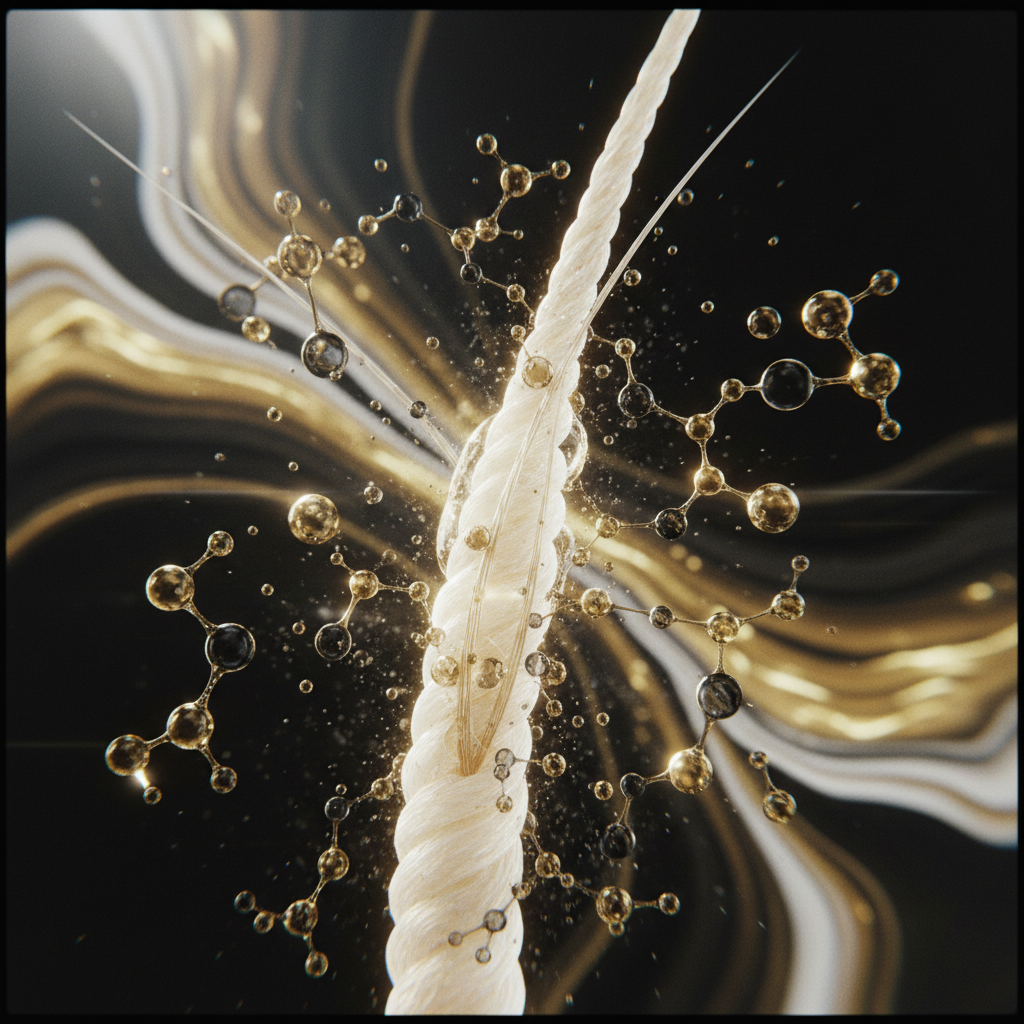
To make them effective, cosmetic chemists subject native proteins to enzymatic or chemical hydrolysis, splitting peptide bonds into smaller fragments called hydrolysed proteins and amino acids.
Intact Protein (>30,000 Da) ──[Hydrolysis]──> Hydrolysed Peptides (500 to 5,000 Da)
 │
 ┌─────────────────────────────────┴─────────────────────────────────┐
 ▼ ▼
 Low Molecular Weight (<1,500 Da) High Molecular Weight (>3,000 Da)
 Penetrates cuticle gaps into the cortex Adsorbs onto surface, forming a protective
 Reinforces internal elasticity smoothing film to lower friction
Once applied to wet hair at a balanced formulation pH (typically between 4.0 and 5.5), these hydrolysed fragments act according to their size:
- Penetration: Peptides below 1,500 Daltons slip through the open cuticle scales of high-porosity hair and settle into the internal cortex.
- Adsorption: Larger peptides (3,000 to 10,000 Daltons) adsorb onto the cuticle surface, smoothing roughness and counteracting negative electrostatic charges.
- Hydrogen bonding: The amino acids in the treatment form temporary hydrogen and ionic bonds with the remaining native keratin chains, temporarily reinforcing the fibre's structural backbone.
Common protein types and their roles
| Protein Source | Typical Molecular Weight | Primary Benefit | Best Hair Indication |
|---|---|---|---|
| Hydrolysed Keratin | 500 to 2,500 Daltons | Rebuilds structural cortex integrity; matches native amino profile | Bleached, chemically relaxed, or severely heat-damaged hair |
| Hydrolysed Wheat Protein | 1,000 to 3,000 Daltons | Balances moisture uptake and improves elasticity under tension | Fine to medium hair prone to snapping when wet |
| Hydrolysed Silk | 1,000 to 5,000 Daltons | Imparts surface shine, slip, and a soft, non-stiff coating | Dry, dull, or frizzy hair with moderate cuticle wear |
| Hydrolysed Collagen | 2,000 to 6,000 Daltons | Forms a protective, flexible moisture-binding film on the cuticle | Coarse, porous, or chemically coloured hair |
| Hydrolysed Soy / Rice | 1,000 to 4,000 Daltons | Enhances fibre volume and body by coating the shaft | Low-density, fine, limp, or thinning hair lengths |
Signs your hair needs protein vs moisture
Determining whether your strands require protein or conditioning moisture comes down to a simple manual wet-stretch test.
Take a clean, damp hair strand between your fingers and gently stretch it:
- Needs protein: The strand feels mushy, limp, gummy, or excessively stretchy when wet. It stretches far beyond its normal length without bouncing back, eventually breaking without resistance. This indicates broken internal bonds and depleted cortical structure.
- Needs moisture: The strand feels rough, coarse, tangled, and straw-like. When pulled gently, it barely stretches at all before snapping abruptly. This indicates dehydration and a lack of conditioning lipids, not a protein deficiency.
- Protein overload: If you have applied too many protein products, the hair will feel excessively dry, stiff, and brittle, snapping under even slight tension.
What you can do: application and maintenance
To use Hair Protein Treatments safely and effectively, follow a measured, periodic approach:
- Assess porosity and damage: Reserve intensive, reconstructive protein treatments for hair that has undergone oxidative chemical services (bleaching, permanent colouring, perming, chemical relaxing) or regular heat styling above 180 degrees Celsius.
- Clarify first: Wash with a gentle clarifying shampoo before treatment to remove silicone and mineral build-up, ensuring the hydrolysed proteins can contact the cuticle directly.
- Respect leave-in times: Leave treatments on for the exact timeframe specified (usually 5 to 20 minutes). Leaving deep protein treatments on for hours or overnight does not yield superior results and can lead to brittleness.
- Always follow with a moisturising conditioner: After rinsing out the protein, apply a pH-balanced conditioner rich in fatty alcohols (such as cetyl or stearyl alcohol) and emollients. This seals the cuticle and restores tactile softness.
- Frequency: High-damage hair benefits from an intensive treatment once every 2 to 4 weeks. Low-porosity or undamaged hair typically only needs light protein-containing conditioners once a month, if at all.
When the cause may be something else
If you observe an alarming number of hairs accumulating on your brush, in the shower drain, or on your pillow, it is vital to distinguish between hair breakage and follicular hair shedding:
- Breakage: The shed fragments are short, varying in length, and lack a white bulb at either end. This is a fibre integrity issue that Hair Protein Treatments are designed to assist.
- Telogen Effluvium (excessive shedding): Hairs falling out are full length and display a distinct white, keratinised bulb (the club hair) at the root end. This condition is triggered by physiological stressors, including high fever, severe illness, rapid weight loss, thyroid imbalances, or post-partum hormonal shifts.
- Pattern hair loss (alopecia): Gradual thinning at the crown or hairline reflects follicular miniaturisation driven by genetic susceptibility and dihydrotestosterone (DHT).
No amount of topical protein will stop physiological shedding or androgenetic thinning. If you suspect an internal cause, consult a GP or a registered trichologist for proper blood work and scalp evaluation.
Supporting hair health from the roots
While Hair Protein Treatments manage the physical integrity of existing hair strands, overall hair density starts within the follicle. Incorporating high-performance, non-stripping scalp care supports an optimal environment for growth. Watermans offers products formulated to invigorate the scalp while delivering gentle, strengthening cosmetic botanicals directly to fine and stressed hair fibres, providing an ideal foundation alongside targeted protein care.
Frequently asked questions about Hair Protein Treatments
How often should you use Hair Protein Treatments?
Most chemically treated or heat-styled hair benefits from intensive Hair Protein Treatments once every 2 to 4 weeks. If your hair is healthy, minimally processed, or naturally low-porosity, using an intensive treatment once every 6 to 8 weeks, or relying on lightly formulated rinse-out conditioners containing hydrolysed proteins, is usually sufficient to avoid stiffness.
Can Hair Protein Treatments cause hair to break?
Yes. Overusing protein treatments without corresponding moisture leads to protein overload. Excess hydrolysed proteins build up on the cuticle and cortex, reducing the hair's natural flexibility. The strands become rigid, lose their elasticity, and snap easily when brushed, styled, or bent, causing increased mechanical breakage.
What is the difference between a protein treatment and a deep conditioner?
A protein treatment deposits amino acids and hydrolysed peptides into cuticular voids to restore tensile strength and structural integrity. In contrast, a traditional deep conditioner supplies water-binding humectants, fatty alcohols, and lipids to improve softness, slip, and flexibility without adding structural rigidity to the hair fibre.
Can natural foods like raw eggs act as Hair Protein Treatments?
No. The native proteins in whole raw eggs, mayonnaise, or yoghurt are much too large (often over 40,000 Daltons) to penetrate the hair cuticle. They simply coat the surface and rinse away without reinforcing internal bonds. Functional protein treatments require hydrolysed proteins that have been enzymatically broken down into small, bio-available fragments.
A balanced approach to hair strength
Maintaining resilient hair requires balancing structural strength with dynamic elasticity. Hair Protein Treatments provide an indispensable tool for reinforcing bleached, porous, and mechanically damaged hair fibres, temporarily restoring the tensile resilience lost to chemical and thermal wear. When applied thoughtfully, matched to your hair's specific porosity, and paired with nourishing emollients, these treatments prevent premature breakage and preserve the cosmetic longevity of your lengths.
Sources and references
- International Journal of Cosmetic Science, "Interactions of hydrolysed proteins with human hair fibres," 2008.
- Journal of Cosmetic Dermatology, "Protein and peptide adsorption on human hair: mechanisms and structural evaluation," 2017.
- Cosmetics (MDPI), "Evaluation of hair damage and the protective efficacy of cosmetic treatments," 2020.
- Robbins, C. R., Chemical and Physical Behavior of Human Hair, 5th ed., Springer, 2012.
Find these ingredients in Watermans products
- Wheat Amino Acids: you will find this ingredient in our Heat Protection Spray.