Hair Porosity and Water Retention: The Complete Science Guide
9 min read ·
Learn how hair porosity and water retention govern fibre hydration, hygral fatigue, and breakage, plus practical steps to protect your hair cuticles.
Quick answer: Hair Porosity and Water Retention describes how well a hair strand absorbs, holds, and loses moisture based on the structural integrity of its protective cuticle layer. Hair with low porosity repels moisture, while high porosity hair absorbs water instantly but loses it just as rapidly through raised or damaged cuticles. However, hair cannot retain pure water permanently on its own; true hydration requires a balance of lipid barriers and film-forming humectants to slow down evaporation and prevent structural fatigue.
Key takeaways
- Porosity refers to the condition of the outer cuticle layer and its ability to let water pass into and out of the hair cortex.
- Low porosity hair has tightly overlapping cuticles that resist water entry, while high porosity hair features open, chipped, or missing cuticle scales.
- High porosity fibres absorb water rapidly, but they also dry out the fastest due to lack of a functional moisture barrier.
- Repeated swelling and contraction of the cortex from water entering and evaporating is called hygral fatigue, a primary driver of fibre breakage.
- Topical oils and conditioners do not add water to the hair, but they seal the cuticle surface to regulate moisture loss.
Hair Porosity and Water Retention: what the evidence shows
The scientific study of Hair Porosity and Water Retention centres on the physical architecture of the hair shaft. Hair fibres are composed of three primary zones: the innermost medulla, the structural cortex made of keratin protein bundles, and the outermost cuticle made of flat, overlapping dead cells resembling shingles on a roof.
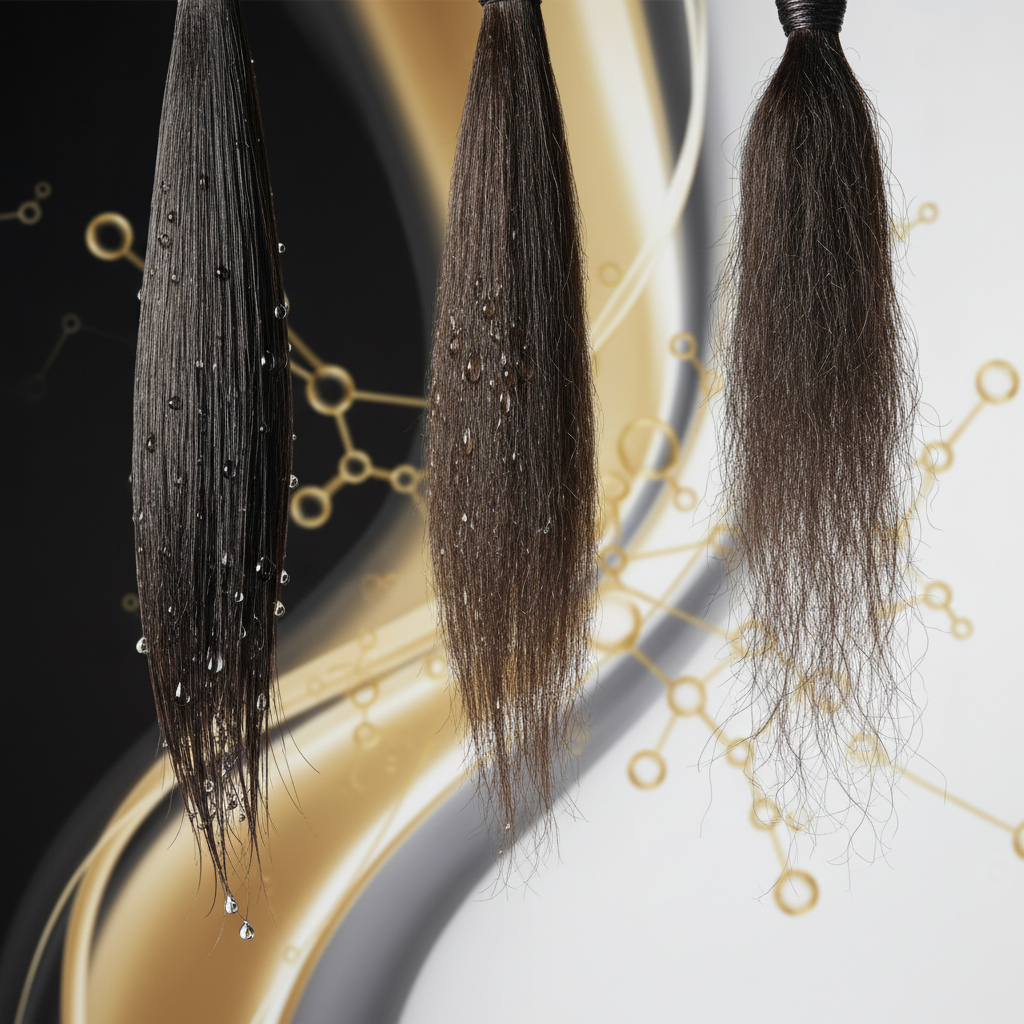
Cosmetic chemists classify hair into three general categories:
- Low porosity: The cuticle scales lie flat, compact, and tightly overlapped. The natural sebum and dense lipid layer (the 18-methyleicosanoic acid or 18-MEA layer) remain largely intact. Water droplets bead on the surface, making it difficult for moisture to penetrate without gentle heat or alkaline assistance. Once wet, however, low porosity hair holds onto internal water tenaciously.
- Medium (normal) porosity: The cuticle tiles are slightly raised or naturally aligned with minimal wear. Water enters steadily and evaporates at a moderate, predictable rate.
- High porosity: The cuticle layer is disrupted, lifted, perforated, or entirely stripped away in patches. This state is common in chemically bleached, permed, relaxed, or severely heat-styled hair, though natural weathering from ultraviolet light also degrades cuticles over time. While high porosity hair absorbs liquid water in seconds, it displays exceptionally poor water retention because water molecules evaporate into the air just as quickly.
Independent studies published in the Journal of Cosmetic Science reveal that human hair can absorb up to 30% to 35% of its dry weight in water under saturated conditions. However, high porosity fibres undergo an uncontrolled influx of water, causing the cortex to swell dramatically. When that water leaves, the cortex shrinks. Over time, this cycling causes microscopic cracks along the fibre axis, weakening the hair shaft and causing breakage.
Porosity categories and moisture behaviour
Understanding how each porosity level behaves under typical washing and styling conditions helps you adjust your haircare strategy.
| Porosity Level | Cuticle Condition | Water Absorption Rate | Water Evaporation Rate | Common Structural Risks |
|---|---|---|---|---|
| Low | Flat, tightly closed, intact lipid layer | Very slow (water beads initially) | Very slow; long drying times | Product build-up, stiffness from excess protein |
| Medium | Uniform, minimally raised scales | Balanced, absorbs evenly | Moderate, dries at normal pace | Minor friction wear, normal weathering |
| High | Raised, frayed, cracked, or missing scales | Rapid (absorbs water instantly) | Very fast; dries quickly but feels dry | Hygral fatigue, fibre tangling, severe breakage |
What the evidence does not show: debunking the float test
A widespread trend suggests that dropping shed hair strands into a glass of tap water reveals porosity: if it floats, it is low porosity; if it sinks, it is high porosity. Controlled laboratory testing shows this method is unreliable.
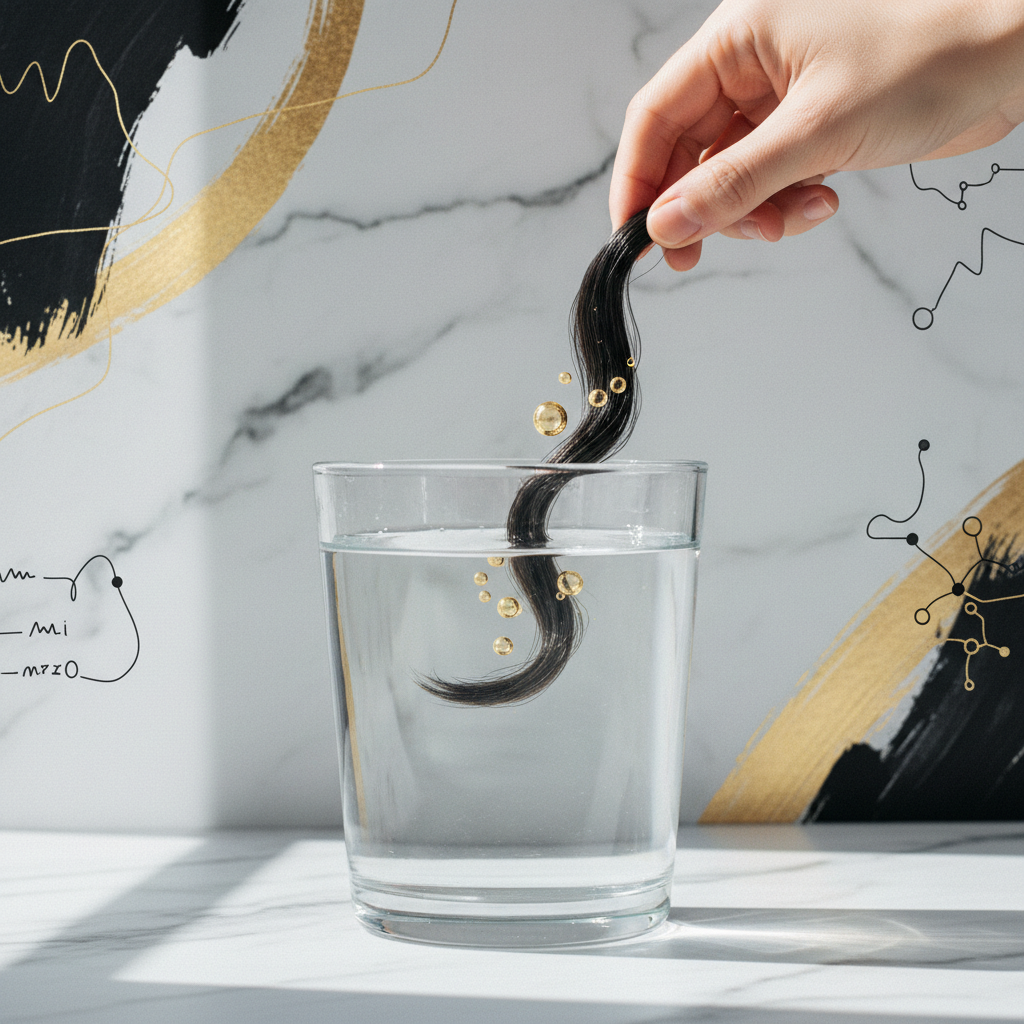
Surface tension from the water holds light hair fibres on the surface regardless of cuticle condition. Furthermore, residual styling oils, natural sebum, or silicone conditioners coat the fibre, making high-porosity hair artificially hydrophobic and causing it to float. Conversely, fine hair with high surface-area-to-weight ratios can sink simply due to mechanical disruption of the surface film. Stylists assess porosity far more accurately by touch (feeling for friction when sliding fingers from tip to root), chemical processing history, and observing how long hair takes to wet and dry naturally.
The biological and physical mechanism of moisture retention
Hair is naturally hygroscopic. It continuously absorbs and releases ambient water vapour to match the relative humidity of the surrounding air. When liquid water enters the hair fibre, it penetrates through the porous intercellular cement between cuticle cells and travels into the cortex. Here, water molecules disrupt temporary hydrogen bonds between adjacent keratin chains.
This disruption explains why wet hair stretches further than dry hair before snapping. However, pure water is not an effective moisturiser on its own. If high-porosity hair absorbs water without an intact protective lipid layer to slow down drying, water rapidly evaporates. As it leaves, it takes transient unbound moisture with it, leaving the hair fibre brittle, stiff, and prone to tangling.
Effective water retention requires a dual-phase approach:
- Internal humectants: Small molecules like glycerin, panthenol, and amino acids attract and hold water inside the outer layers of the fibre.
- External occlusives and emollients: Plant oils, fatty alcohols, and silicones form a hydrophobic film over the cuticles. This film mimics the natural 18-MEA lipid layer, smoothing the raised edges and drastically reducing the trans-epidermal-like water loss from the cortex.
Signs of poor water retention and cuticle wear
Identifying how your hair manages moisture requires looking past simple dryness. Watch for these distinct physical indicators:
- Rapid wetting and flash drying: If your hair becomes completely soaked the moment shower water touches it, yet feels dry, papery, and brittle within 20 minutes of stepping out, you are dealing with high porosity and compromised water retention.
- Excessive wet tangling: When cuticles are raised or missing, wet hair strands catch against one another like Velcro. This friction causes severe knotting during lathering or rinsing.
- Lack of elasticity: Hair that snaps immediately upon light stretching while wet usually suffers from cortex degradation coupled with moisture imbalance.
- Hydrophobic resistance: If you stand under running water for two full minutes and your roots still feel dry to the touch, your cuticles are tightly sealed, indicating low porosity.
Practical ways to balance Hair Porosity and Water Retention
Managing porosity comes down to modifying your washing, conditioning, and sealing habits to match your cuticle structure.
For high porosity hair: seal and fortify
- Incorporate hydrolysed proteins: Small peptides can temporarily fill the microscopic gaps in damaged cuticles, strengthening the shaft and reducing excessive water uptake.
- Lower the pH: Rinses and conditioners formulated with a slightly acidic pH (between 4.0 and 5.0) encourage raised cuticle scales to contract and flatten against the cortex.
- Layer heavier emollients: Use the "leave-in, oil, cream" method. Applying an emollient oil over a water-based leave-in product creates a barrier that slows down evaporation.
For low porosity hair: encourage gentle penetration
- Use warm water and indirect heat: Warm water gently lifts the stubborn cuticle scales just enough to allow conditioning agents to reach the cortex. Using a thermal heat cap during conditioning treatments yields significantly better results.
- Avoid heavy, waxy coatings: Thick butters and unrefined oils can sit on the surface of low-porosity hair, attracting dust and blocking hydration. Opt instead for lightweight, penetrative oils like argan, jojoba, or squalane.
- Clarify periodically: Tightly bound cuticles trap product residue easily on the exterior, creating a barrier that blocks all moisture. A chelating or clarifying wash every 2 to 4 weeks resets the hair surface.
When the problem is not hair porosity
Sometimes, moisture issues have nothing to do with cuticles. Hard water is a frequent culprit. If your tap water contains high concentrations of calcium and magnesium salts (above 180 mg/L), these minerals bond to the hair fibre, forming an insoluble film. This film prevents conditioners from binding and leaves hair feeling dry, brittle, and stiff, mimicking the symptoms of high porosity.
Additionally, true hair shedding occurs at the follicle level under the scalp. Telogen effluvium, nutritional deficiencies, and hormonal imbalances cause hair roots to release fibres prematurely. If you notice full strands falling out with a white bulb attached at the root, your issue is hair shedding, not porosity-related fibre breakage.
The role of premium scalp and fibre support: Watermans
Supporting your hair's overall resilience requires an integrated approach that addresses both new growth at the scalp and the physical durability of existing lengths. While hair porosity is largely a mechanical property of the hair fibre, maintaining a well-nourished scalp environment gives newly emerging hair the best chance at producing a strong, compact cuticle layer from the start.
Watermans GrowMe Shampoo and ConditionMe Conditioner are formulated to support fibre vitality and scalp health without relying on harsh sulfates that strip away natural protective lipids. ConditionMe delivers targeted conditioning agents and cholesterol that smooth roughened cuticles, helping to balance moisture uptake and reduce breakage caused by daily grooming and environmental stress.
Frequently asked questions about Hair Porosity and Water Retention
Can you permanently change your hair porosity?
No, you cannot permanently alter your natural hair porosity from within the follicle. Low porosity hair can be turned into high porosity hair through chemical treatments, bleach, or heat damage, but this change represents structural cuticle degradation rather than a cosmetic improvement. Once the cuticle is compromised, you must rely on conditioning films and protein treatments to temporarily repair the surface until new hair grows in.
Why does high porosity hair lose moisture so quickly?
High porosity hair loses moisture rapidly because its protective outer cuticle scales are lifted, cracked, or missing. While water easily enters the internal cortex, there is no smooth, continuous lipid barrier to prevent it from evaporating into the ambient air. Without an external sealant, the water quickly escapes, leaving the keratin cortex dehydrated and brittle.
Does hard water affect Hair Porosity and Water Retention?
Hard water does not necessarily alter the physical porosity of your cuticles directly, but it severely interferes with water retention. Calcium and magnesium ions bind electrostatically to the hair fibre, creating an insoluble mineral crust. This crust repels moisturising treatments, prevents hydration from penetrating the cortex, and makes hair feel dry, rough, and unmanageable.
How often should high porosity hair be treated with protein?
High porosity hair typically benefits from a targeted protein treatment every 2 to 4 weeks, depending on the severity of chemical or mechanical damage. Hydrolysed proteins patch structural voids along the cuticle layer, which regulates water absorption and reduces breakage. Overusing protein, however, can make the hair rigid and prone to snapping, so always follow protein with a rich emollient conditioner.
Managing your hair fibre resilience
Balancing Hair Porosity and Water Retention comes down to understanding the structural limits of your cuticle layer. Pure water alone will never keep hair moisturised; water must be invited into the cortex under regulated conditions and sealed behind an emollient lipid shield. By tailoring your wash temperatures, balancing humectants with protective oils, and avoiding mechanical over-processing, you can minimise hygral fatigue, protect your hair fibres from needless breakage, and maintain soft, manageable lengths.
Sources and references
- Journal of Cosmetic Science: Uptake and retention of water in human hair under varying relative humidity, 2008.
- Robbins, C. R.: Chemical and Physical Behavior of Human Hair, 5th Edition, Springer, 2012.
- International Journal of Trichology: Hair Cosmetics: An Overview, 2015. PubMed ID: 25878443.
- British Association of Dermatologists: Hair breakage versus hair loss: clinical differentiation, 2019.
Find these ingredients in Watermans products
- Panthenol (Provitamin B5): you will find this ingredient in our Heat Protection Spray.