Hair Porosity Science: Understanding Cuticle Structure and Moisture
9 min read ·
Discover the facts behind Hair Porosity Science, from cuticle structure and lipid barriers to debunking the float test, with evidence-based tips for every hair type.
Quick answer: Hair Porosity Science explains how readily your hair fibre absorbs and retains moisture, determined primarily by the physical integrity of the outer cuticle layer. Governed by genetic hair architecture and mechanical, chemical, or thermal weathering, porosity dictates how products, water, and styling tools interact with your strands. However, Hair Porosity Science is often misunderstood through unscientific home tests like the water float test, which fail to account for surface sebum, water surface tension, and product residues.
Key takeaways
- Porosity refers to the capacity of the hair shaft to absorb and hold moisture, driven by the structure, spacing, and condition of its overlapping cuticle scales.
- Cuticles typically consist of 5 to 10 overlapping cellular layers; lifted, chipped, or missing scales create high porosity, while tightly packed, flat scales create low porosity.
- Genetic factors dictate baseline porosity, but cosmetic processing (bleaching, permanent dyeing, relaxing) and thermal tools drastically increase porosity by degrading the 18-methyleicosanoic acid (18-MEA) lipid layer and cortical proteins.
- The viral "float test" in a glass of water is scientifically invalid because natural oils and hydrophobic coatings cause high-porosity hair to float regardless of its internal state.
- Tailoring product pH, protein content, and lipid sealants to your porosity level reduces friction, prevents moisture loss, and minimises fibre breakage.
Hair Porosity Science: what the evidence shows
Hair Porosity Science sits at the intersection of biophysics and cosmetic chemistry. At its core, porosity describes the volume of open pore spaces within a material. In trichology, it reflects how easily fluids and chemical agents penetrate the outer envelope of the hair shaft to reach the inner cortex.
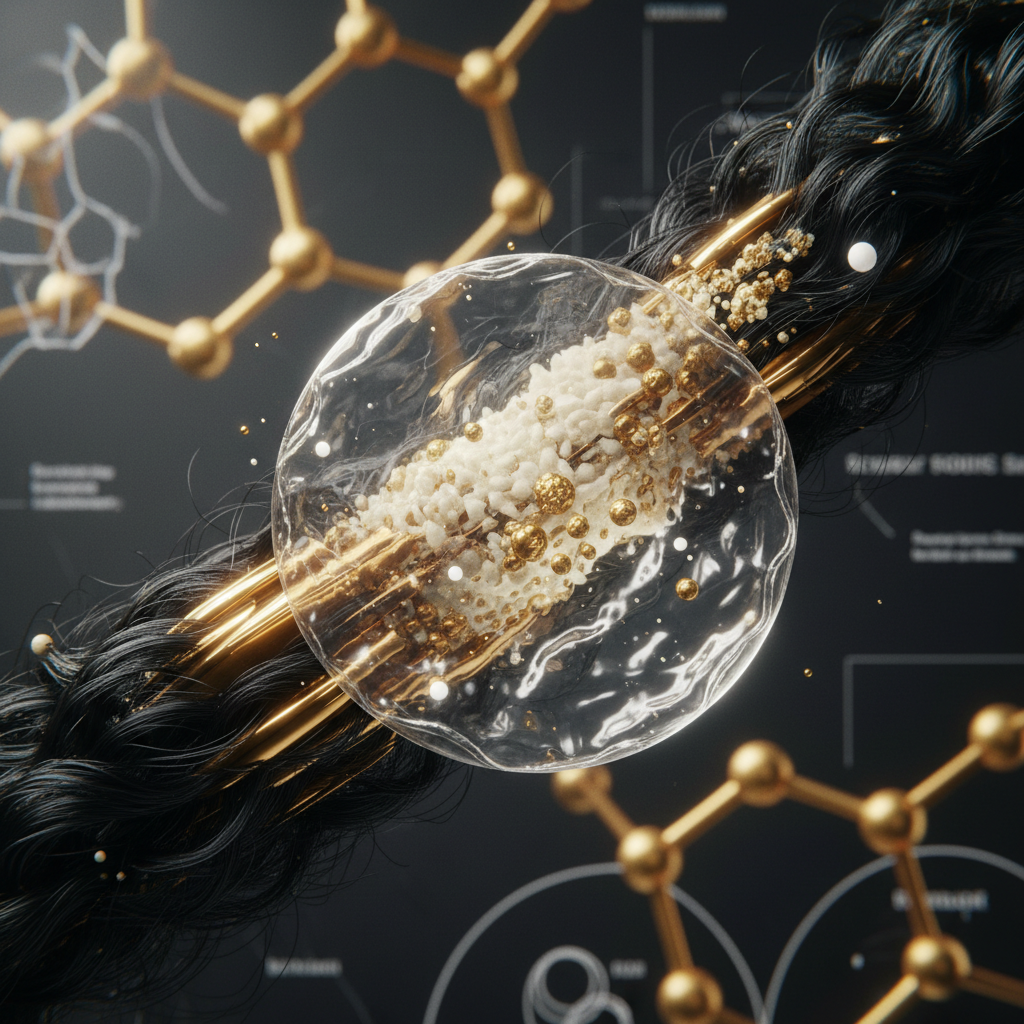
A healthy hair strand features a protective exterior called the cuticle. The cuticle is made of flat, overlapping scales that point toward the hair tip, resembling shingles on a roof. In untreated hair, these scales lie flat and are coated with a protective lipid boundary layer predominantly made of 18-methyleicosanoic acid (18-MEA). This fatty acid monolayer gives hair a hydrophobic (water-repelling) character.
Under scanning electron microscopy, hair porosity changes as these cuticle layers undergo chemical or physical alteration:
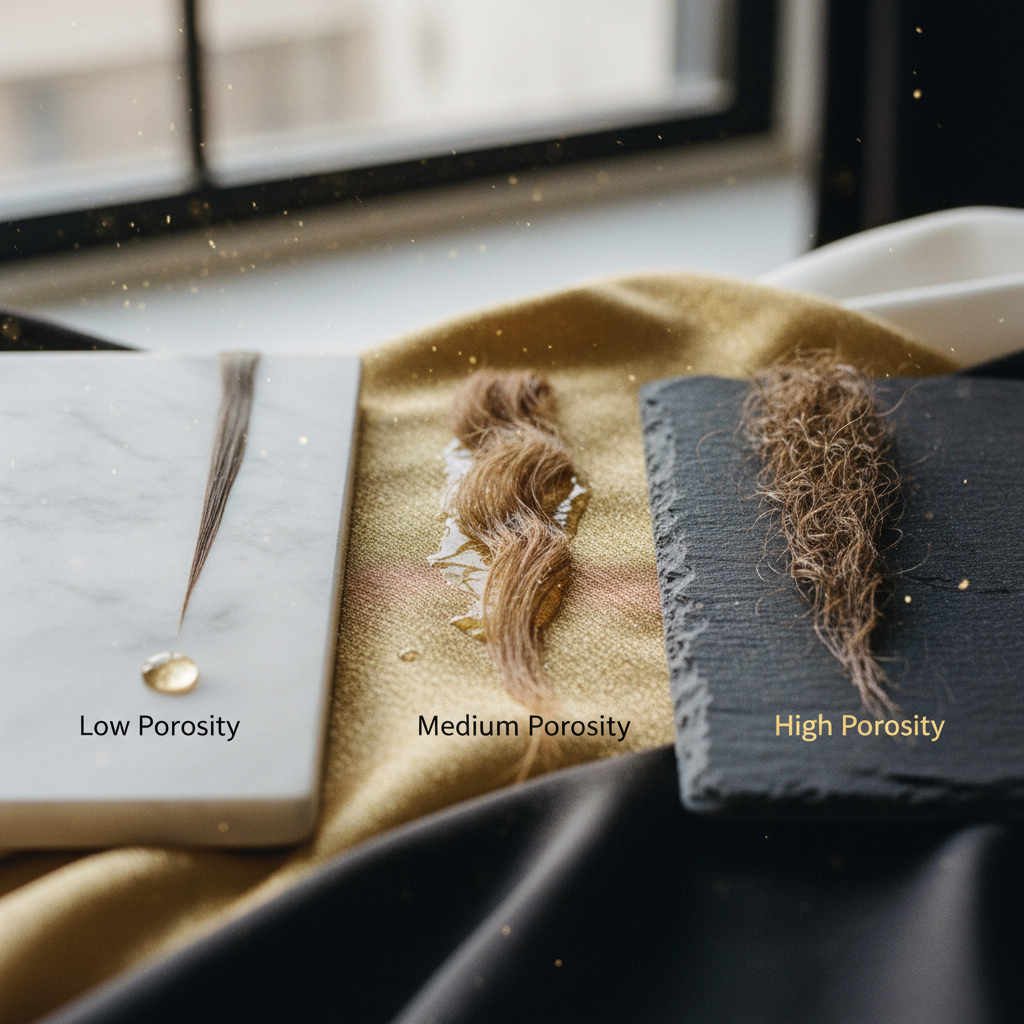
- Low porosity: The cuticle scales lie tightly bound, flat, and intact. The lipid layer is dense. Water penetrates slowly because it meets a strong hydrophobic barrier.
- Medium (normal) porosity: The cuticle scales are slightly loosened or minimally weathered, allowing a steady, predictable influx and efflux of moisture and cosmetic agents.
- High porosity: Cuticle scales are lifted, cracked, or completely eroded, exposing the underlying cortex. Moisture enters rapidly but evaporates just as quickly because the barrier function is compromised.
Studies published in cosmetic science literature demonstrate that alkaline processes such as bleaching and chemical straightening strip the 18-MEA layer and raise the cuticle scales. This process shifts hair from a naturally hydrophobic state to a hydrophilic (water-attracting) state. While hydrophilic hair absorbs water rapidly, it swells excessively (hygral fatigue) and loses tensile strength, making it vulnerable to breakage.
What the evidence does not show: debunking the float test
A persistent myth in consumer haircare is the "glass of water test." Proponents claim that dropping a shed strand into a glass of room-temperature water diagnoses your porosity: floating supposedly indicates low porosity, sinking indicates high porosity.
Hair Porosity Science disproves this method. The float test fails for several fundamental physical reasons:
- Surface tension: Water possesses high surface tension. A single hair fibre is extremely light and often rests on top of the water film purely due to surface tension, regardless of its internal porosity.
- Lipid residues and styling products: Natural sebum and cosmetic oils (like silicones or plant butters) are hydrophobic. If a shed hair carries even a trace of oil, it will float, even if the underlying cortex is damaged and highly porous.
- Static and air bubbles: Microscopic air bubbles frequently cling to damaged, rough cuticles, causing high-porosity hair to float artificially.
Reliable measurements of porosity in cosmetic research require controlled laboratory methods, such as gas sorption (BET method), liquid sorption analysis, or dynamic vapour sorption (DVS). At home, your hair's functional behaviour during washing and drying provides a far more accurate assessment than a glass of water.
Comparing hair porosity levels
The physical state of your hair cuticle influences how your hair responds to water, conditioning agents, and styling products.
| Characteristic | Low Porosity | Medium Porosity | High Porosity |
|---|---|---|---|
| Cuticle Condition | Tightly overlapping, flat, intact 18-MEA lipid layer | Uniformly aligned, minor natural weathering | Lifted, cracked, or missing scales; stripped lipid layer |
| Water Absorption | Very slow; water beads on the surface before absorbing | Moderate, predictable absorption | Absorbs water instantly upon wetting |
| Drying Time | Long; takes hours to air-dry once saturated | Moderate; standard drying timeframe | Very fast; loses water rapidly to ambient air |
| Chemical Penetration | Resistant to dyes, bleaches, and perm solutions | Accepts chemical treatments evenly | Processes rapidly, risks over-processing |
| Product Response | Prone to build-up; heavy oils sit on the surface | Balances moisture and hold effectively | Drinks up rich creams; requires regular film-formers |
| Tactile Sensation | Smooth, glossy, glass-like | Soft, pliable | Rough, dry, prone to tangling and snagging |
Signs of your porosity level
Rather than relying on inaccurate float tests, observe how your hair behaves during normal routines.
Identifying low porosity hair
- Water visibly beads on clean, dry strands before penetrating.
- Washing takes considerable time simply to get the hair thoroughly wet under the shower stream.
- Products tend to accumulate on the surface of the fibre rather than sinking in, leaving a greasy or sticky film.
- Once completely saturated, low porosity hair takes an unusually long time to dry.
Identifying high porosity hair
- Hair gets soaked almost the second water touches it.
- Strands dry remarkably fast, but feel dry, brittle, and rough immediately afterward.
- Hair tangles easily, catches on clothing, and experiences frequent mid-shaft breakage.
- Applying rich conditioners provides only fleeting softness, with frizz returning as soon as ambient humidity shifts.
What you can do: tailored porosity care
Managing hair porosity requires aligning your cosmetic regimen with the physical condition of your cuticle layers.
Managing low porosity hair
Because low porosity hair has a tightly sealed cuticle, the primary objective is facilitating hydration without leaving heavy residues.
- Use gentle warmth: When applying deep conditioning treatments, mild heat (such as a warm towel or steamer) temporarily expands the cuticle network, allowing conditioning agents to penetrate the cortex.
- Choose lightweight humectants: Opt for light hydrators such as glycerin, aloe vera, and panthenol rather than heavy waxes and butters.
- Clarify periodically: Low porosity hair is prone to build-up. A clarifying shampoo used once every 2 to 3 weeks removes product residue that prevents water from reaching the fibre.
Managing high porosity hair
High porosity hair requires reinforcement to patch microscopic gaps in the cuticle and slow the escape of moisture.
- Incorporate hydrolysed proteins: Small-chain hydrolysed keratin, wheat protein, or silk protein temporarily adhere to damaged cuticle sites, restoring tensile strength and reducing porosity.
- Apply lipid sealants: After hydrating the hair, seal the cuticle using emollient plant oils, ceramides, or silicones. This mimics the missing 18-MEA layer, slowing trans-epidermal water loss.
- Maintain an acidic pH: Hair cuticles flatten in an acidic environment (pH 4.5 to 5.5). Using acid-balanced conditioners and rinses helps compact lifted cuticle scales, locking in hydration and boosting shine.
When the cause may be something else
It is vital to distinguish between hair porosity issues and other trichological concerns. High porosity is a structural condition of the dead hair fibre; it does not indicate follicular dysfunction or systemic disease.
If you are experiencing excessive strands shedding from the root (characterised by a small white bulb at the end), this is hair shedding or telogen effluvium, not cuticle porosity. Similarly, patches of scalp showing thinning or recession stem from follicular causes (such as androgenetic alopecia or alopecia areata). Porosity issues cause fibre breakage along the shaft due to mechanical and chemical weakness, never hair loss from the scalp follicle.
When to seek professional advice
Consult a qualified trichologist or dermatologist if you observe:
- Sudden, excessive hair shedding (more than 100 to 150 strands per day consistently).
- Scalp symptoms including persistent redness, itching, scaling, or tenderness.
- Distinct bald patches or widening of your central parting.
For structural porosity concerns, a certified hair colourist or stylist can assess cuticle integrity under high magnification or through a manual stretch test, helping you adjust your chemical processing schedule to prevent irreversible cortical degradation.
Supporting hair health with Watermans
While porosity governs the mechanical behaviour of the hair shaft, healthy hair growth begins at the scalp. Watermans provides targeted, cosmetic formulations designed to support the appearance of strong, resilient hair from root to tip.
Watermans Grow Me Shampoo and Condition Me Conditioner work in harmony with various porosity types. The formula incorporates hydrolysed lupin protein, niacinamide, biotin, and rosemary extract. For high porosity hair, these gentle conditioning agents help coat and protect brittle fibres, reducing breakage caused by cuticle weathering. For low porosity hair, the balanced formula cleanses thoroughly without depositing heavy, occlusive waxes that weigh down strands.
Frequently asked questions about Hair Porosity Science
Can you permanently change your hair porosity?
You can permanently increase hair porosity through chemical processes like bleaching, perming, and thermal styling, which strip cuticles and lipids. However, you cannot permanently decrease high porosity back to low porosity, because the hair shaft is biologically non-living tissue. You can only manage high porosity cosmetically using proteins, acidic products, and sealants until new hair grows.
Why is the glass of water test unreliable according to Hair Porosity Science?
According to Hair Porosity Science, the float test fails because it ignores water surface tension, static electricity, and surface residues. Even highly damaged, porous hair will float if it contains natural sebum or silicone coatings that repel water, rendering the test scientifically inaccurate.
Does high porosity hair cause hair loss?
No. High porosity does not cause hair loss at the follicle. It causes structural weakness along the hair shaft, which leads to fibre breakage and split ends. Hair loss involves follicular shedding or thinning, which is entirely separate from cuticle porosity.
How does water pH affect hair porosity?
Alkaline water (pH above 7.0) causes the cuticle scales to swell and lift, artificially increasing porosity during washing. Slightly acidic water or hair products (pH 4.5 to 5.5) keep the cuticle tightly compressed and flat, preserving moisture and structural integrity.
Is low porosity hair healthier than high porosity hair?
Low porosity hair is often structurally healthier because its cuticle layer and natural 18-MEA lipid coating are fully intact. However, low porosity hair can still suffer from chronic dryness and brittleness if products fail to penetrate and accumulate as heavy surface build-up.
Understanding your hair fibre
Grasping Hair Porosity Science allows you to step away from viral internet myths and treat your hair according to its genuine physical structure. Whether your cuticles are naturally compact or weathered from chemical processing, matching your washing routine, product pH, and conditioning agents to your hair's porosity level protects the fibre, curbs breakage, and keeps your hair looking and feeling its best.
Sources and references
- Robbins, C. R. (2012). Chemical and Physical Behavior of Human Hair (5th ed.). Springer Science & Business Media.
- Cruz, C. F., Costa, C., Gomes, A. C., & Cavaco-Paulo, A. (2016). Hair shape and porosity: dynamic vapour sorption and microscopy investigations. International Journal of Cosmetic Science, 38(4), 384-392.
- Gavazzoni Dias, M. F. (2015). Hair cosmetics: an overview. International Journal of Trichology, 7(1), 2-15.
- Marsh, J. M., Davis, M. G., & Flagler, M. J. (2015). Preserving hair integrity through lipid and protein management. Journal of Cosmetic Science, 66(4), 241-253.
- Sinclair, R. D. (2007). Healthy hair: what is it? Journal of Investigative Dermatology Symposium Proceedings, 12(2), 2-5.
Find these ingredients in Watermans products
- Niacinamide: you will find this ingredient in our Hair Mask.
- Panthenol (Provitamin B5): you will find this ingredient in our Heat Protection Spray.
- Aloe Vera: you will find this ingredient in our Curly Hair Conditioner.