Hair Porosity and Water Absorption: The Complete Evidence-Based Guide
8 min read ·
Understand how hair porosity dictates water absorption and retention, why rapid moisture uptake can cause breakage, and how to manage your specific fibre type.
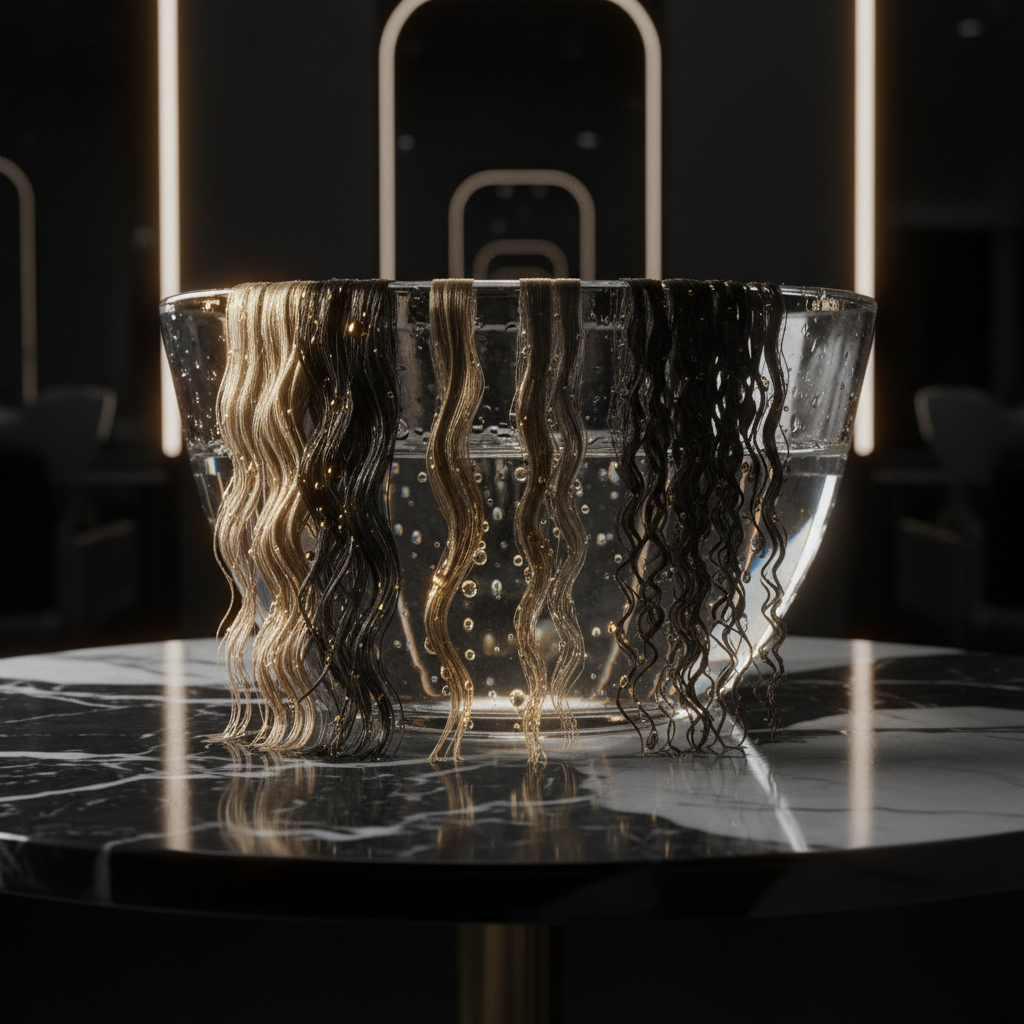
Quick answer: Hair porosity determines how readily your hair takes in and loses moisture. The relationship between Hair Porosity and Water Absorption depends on the physical condition of the cuticle layer: tightly bound cuticles resist water uptake, whereas lifted or chipped cuticles absorb water rapidly yet lose it just as fast. While high porosity hair takes on moisture quickly, it struggles to hold onto it, often leading to chronic dryness, hygral fatigue, and fibre breakage rather than sustained hydration.
Key takeaways
- Hair porosity describes your hair fibre's capacity to absorb and retain moisture, driven primarily by the integrity of the protective outer cuticle.
- Low porosity hair repels water initially due to compact, overlapping cuticle scales, requiring warmth or gentle surfactants to allow moisture entry.
- High porosity hair absorbs water very quickly through gaps in damaged cuticles, but it loses that water at an equally rapid pace.
- Excessive water absorption causes the hair shaft to repeatedly swell and contract, a damaging physical process known as hygral fatigue.
- Cosmetic conditioning agents cannot permanently alter genetic porosity, but they temporarily seal gaps, smooth raised cuticles, and reduce breakage.
Hair Porosity and Water Absorption: what the evidence shows
Scientific analysis of Hair Porosity and Water Absorption reveals that hair is naturally hygroscopic. A single human hair fibre can absorb roughly 30% of its dry weight in water under standard ambient humidity, and up to 45% when fully saturated. How fast that uptake occurs depends almost entirely on the state of the cuticle.
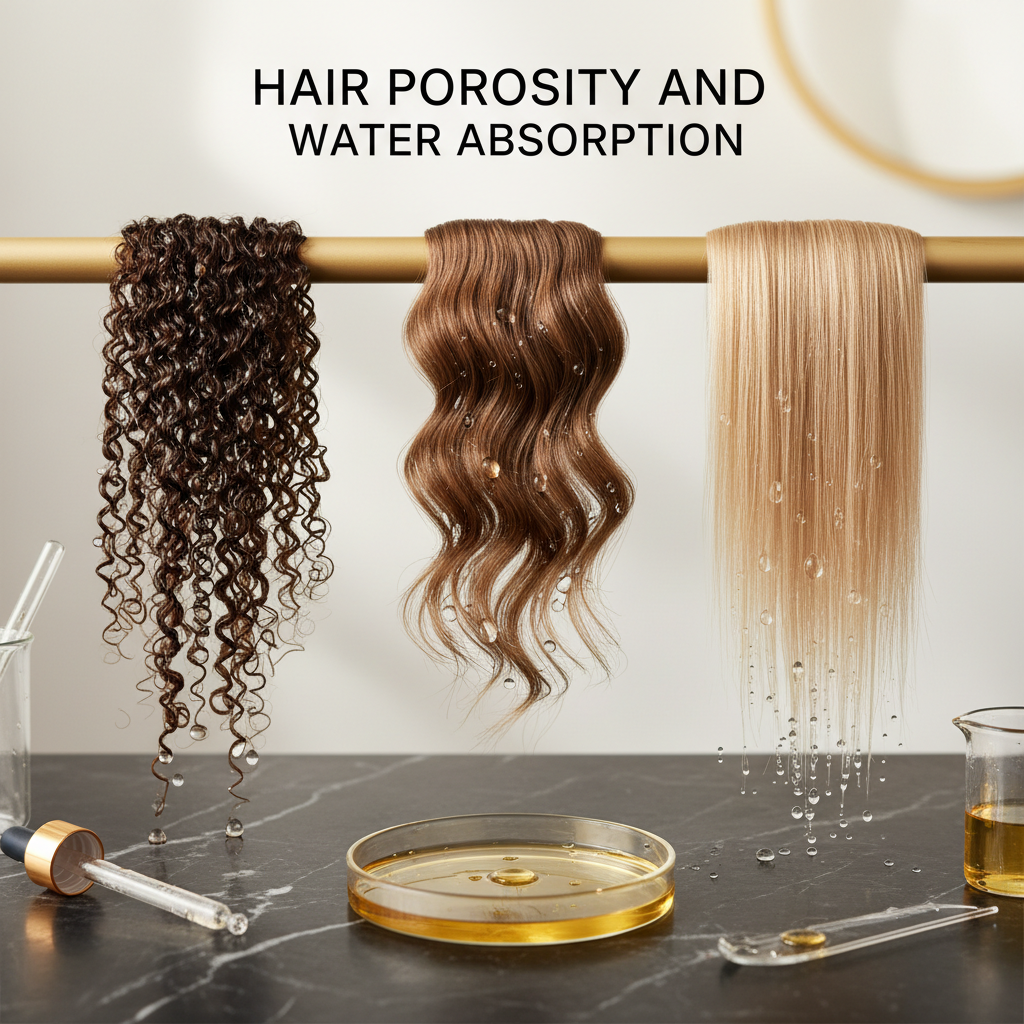
The cuticle consists of flattened, keratinised cells arranged in 5 to 10 overlapping layers, much like tiles on a roof. These scales are bound together by the cell membrane complex (CMC) and coated with a thin lipid layer known as 18-methyleicosanoic acid (18-MEA). This lipid barrier provides natural hydrophobicity, meaning healthy hair actively repels surface liquid.
When chemical processing, heat styling, ultraviolet radiation, or mechanical grooming strip away 18-MEA, the hair shifts from hydrophobic to hydrophilic. The exposed, lifted cuticles allow water molecules to rush directly into the cortex.
Controlled cosmetic science shows that while high porosity fibres take up water much faster than virgin or low porosity fibres, their desorptive rate (water loss) is just as steep. High porosity hair therefore suffers from rapid hydration cycling: it becomes drenched quickly during washing, expands, and then dries out to a fragile, brittle state within minutes of heat or dry air exposure.
| Porosity Level | Cuticle Condition | Water Absorption Speed | Water Retention Ability | Common Challenges |
|---|---|---|---|---|
| Low Porosity | Tightly packed, flat, intact 18-MEA lipid layer | Very slow (water beads on surface) | Excellent once absorbed | Product build-up, slow drying times |
| Medium (Normal) | Slightly open cuticles, intact cell membrane complex | Moderate and steady | Balanced and stable | Minimal; holds styles and moisture easily |
| High Porosity | Chipped, lifted, or missing cuticles; depleted lipids | Extremely rapid | Very poor (evaporates rapidly) | Frizz, tangling, hygral fatigue, fibre breakage |
The biological mechanism of moisture uptake
Water moves into the hair fibre through capillary action and hydrogen bonding. When exposed to liquid water, small molecules slip between the cuticle scales into the cortex. Inside the cortex, water molecules bind to keratin protein chains, temporarily breaking the weak hydrogen bonds that hold your hair's temporary shape.
This inward flux causes the diameter of the hair fibre to swell by approximately 14% to 16%, while its total length increases by only 1% to 2%. In low porosity hair, the intact lipid layer limits this swelling to a safe, controlled rate.
In high porosity hair, the missing cuticle scales allow uninhibited fluid ingress. The cortex swells excessively. When the hair dries, the cortex shrinks back down. This repeated cycle of radical swelling and contracting puts mechanical stress on the cell membrane complex, eventually leading to structural degradation known as hygral fatigue. Over time, hygral fatigue weakens the internal keratin scaffolding, resulting in split ends and hair shaft breakage.
What the evidence does not show
Popular hair forums often promote the idea that high porosity hair is permanently "thirsty" and requires constant soaking or dense raw butters to be cured. Cosmetic chemistry does not support this.
First, water alone is not a long-term moisturiser for hair. Unbound water inside the cortex easily evaporates unless lipid-based sealants or film-forming humectants slow its release. Drenching high porosity hair without conditioning agents accelerates structural damage.
Second, topical treatments cannot permanently reset your hair's structural porosity. Hair is non-living tissue. Once the cuticle is weathered, chipped, or stripped of its natural 18-MEA barrier, no shampoo, mask, or oil can biologically regenerate those dead keratin cells. Treatments can only patch defects temporarily until the next wash.
Finally, water absorption has nothing to do with hair shedding from the scalp. If you notice hairs falling out with the white bulb intact, that is a follicular event (such as telogen effluvium or pattern loss), not a consequence of cuticle porosity or water uptake. Porosity issues lead strictly to fibre breakage along the shaft.
Signs your hair porosity is unbalanced
You can often determine your hair's condition by observing how it behaves when exposed to water and everyday styling products:
- Water beading (Low porosity): Spritzing water onto clean, dry hair causes distinct droplets to sit on the surface for minutes before sinking in.
- Prolonged drying times (Low porosity): The hair stays damp for hours because the dense cuticle holds onto internally trapped moisture once saturated.
- Instant soaking followed by instant dryness (High porosity): Hair feels saturated the second it touches the shower stream, but feels parched, rough, and straw-like shortly after towel drying.
- Tangling and matting (High porosity): Lifted cuticles act like microscopic hooks, catching onto adjacent strands and causing friction, static, and snarls.
- Product absorption patterns: Low porosity hair is prone to product sitting on top of the strand as visible residue, whereas high porosity hair absorbs creams quickly with little lasting softness.
Practical steps to manage hair porosity
Tailoring your routine to your fibre structure helps control moisture exchange and prevents physical breakage.
Managing low porosity hair
Because low porosity cuticles are sealed tightly, standard conditioners often sit on the surface.
- Use warm water when cleansing to gently encourage cuticle relaxation.
- Select lightweight, water-soluble formulations that rely on ingredients like glycerin or aloe vera rather than heavy, occlusive waxes.
- Clarify periodically to remove mineral and product build-up that further blocks moisture entry.
Managing high porosity hair
The goal for high porosity hair is to slow down water uptake, fill cuticle gaps, and reduce evaporation.
- Incorporate hydrolysed proteins (such as wheat, silk, or keratin) into your weekly routine. These smaller protein fragments deposit into the cuticle gaps, reinforcing structural stability.
- Use leave-in conditioners with film-forming humectants and follow with light plant oils to mimic the missing 18-MEA lipid barrier.
- Rinse with cool or lukewarm water. While cool water does not fully snap cuticles shut, it avoids heat-induced cuticle swelling.
- Keep styling tools at moderate temperatures (below 185°C) to prevent further cuticle loss.
When to seek professional advice
If your hair snaps easily under minimal tension, feels gummy or mushy when wet, or shows excessive mid-shaft breakage, speak with a professional stylist or a qualified trichologist.
A stylist can assess the mechanical strength of your hair fibre and recommend salon-grade protein treatments or cut away compromised ends before split ends travel up the shaft. If you are experiencing sudden diffuse shedding, patchy scalp hair loss, or scalp inflammation, consult a GP or dermatologist, as these are medical issues unrelated to hair porosity.
Supporting hair health with Watermans
When managing compromised hair fibres, choosing formulations that support overall scalp vitality and mechanical strand strength is essential. The Watermans collection offers targeted options:
Watermans GrowMe Shampoo delivers a balanced cleanse that clears away product build-up without stripping the hair's surface lipids. Formulated with hydrolysed lupin protein, biotin, and rosemary, it helps fortify fragile fibres vulnerable to moisture-related breakage. Pairing it with Watermans ConditionMe Conditioner provides lightweight, cuticle-smoothing hydration, helping high porosity hair lock in vital moisture without leaving low porosity textures feeling weighed down.
Frequently asked questions about Hair Porosity and Water Absorption
How does the float test work for Hair Porosity and Water Absorption?
The classic float test involves dropping clean hair strands into a glass of water to see if they sink. While popular, it is notoriously unreliable. Surface tension, residual oils, and air bubbles often keep high porosity strands afloat, giving false results. Observing how quickly your hair wets down and dries in the shower is a far more accurate assessment of your hair fibre's real-world behaviour.
Can hard water change your hair's porosity?
Hard water does not directly strip your cuticles, but mineral ions like calcium and magnesium bind to the keratin shaft. These deposits create a rough, pseudo-high porosity feel. The minerals block proper water absorption, leaving strands feeling stiff, brittle, and dry even though the underlying cuticle structure may be healthy.
Does colouring hair increase its porosity?
Yes. Bleaching and permanent oxidative hair dyes use alkaline agents (typically ammonia or ethanolamine) with a pH between 9.0 and 10.5 to swell the hair shaft and force the cuticles open. This process permanently alters the cell membrane complex and strips the natural 18-MEA lipid layer, inevitably raising the porosity of the treated fibre.
What is the ideal pH for closing high porosity cuticles?
Human hair has an isoelectric point around pH 3.67, while the scalp's natural acid mantle sits between pH 4.5 and 5.5. Cleansers and conditioners formulated within this slightly acidic range (pH 4.5 to 5.5) help neutralise negative electrical charges on the hair surface, smoothing down lifted cuticles and reducing excessive water intake.
Balancing Hair Porosity and Water Absorption
Understanding Hair Porosity and Water Absorption shifts your haircare approach from guessing to evidence-based maintenance. By respecting your hair's unique cuticle structure, you can prevent damaging swelling cycles, protect internal keratin bonds, and preserve fibre strength over time. Whether your cuticles are naturally compact or weathered by chemical styling, matching your regimen to your porosity level ensures your hair retains hydration without succumbing to unnecessary breakage.
Sources and references
- Journal of Cosmetic Science: "The effect of water on the mechanical properties of human hair," 2004.
- International Journal of Trichology: "Hair Cosmetics: An Overview," 2015.
- Robbins, C. R.: Chemical and Physical Behavior of Human Hair, 5th Edition, Springer, 2012.
- Society of Cosmetic Scientists (SCS): "Hair Structure and Chemistry Reference Guide," 2018.
Find these ingredients in Watermans products
- Aloe Vera: you will find this ingredient in our Curly Hair Conditioner.