Hair Miniaturisation in Pattern Thinning: Mechanisms, Signs, and Evidence
10 min read ·
Understand Hair Miniaturisation in Pattern Thinning: how DHT shrinks follicles, how to identify early diameter loss, and the proven evidence-based options.
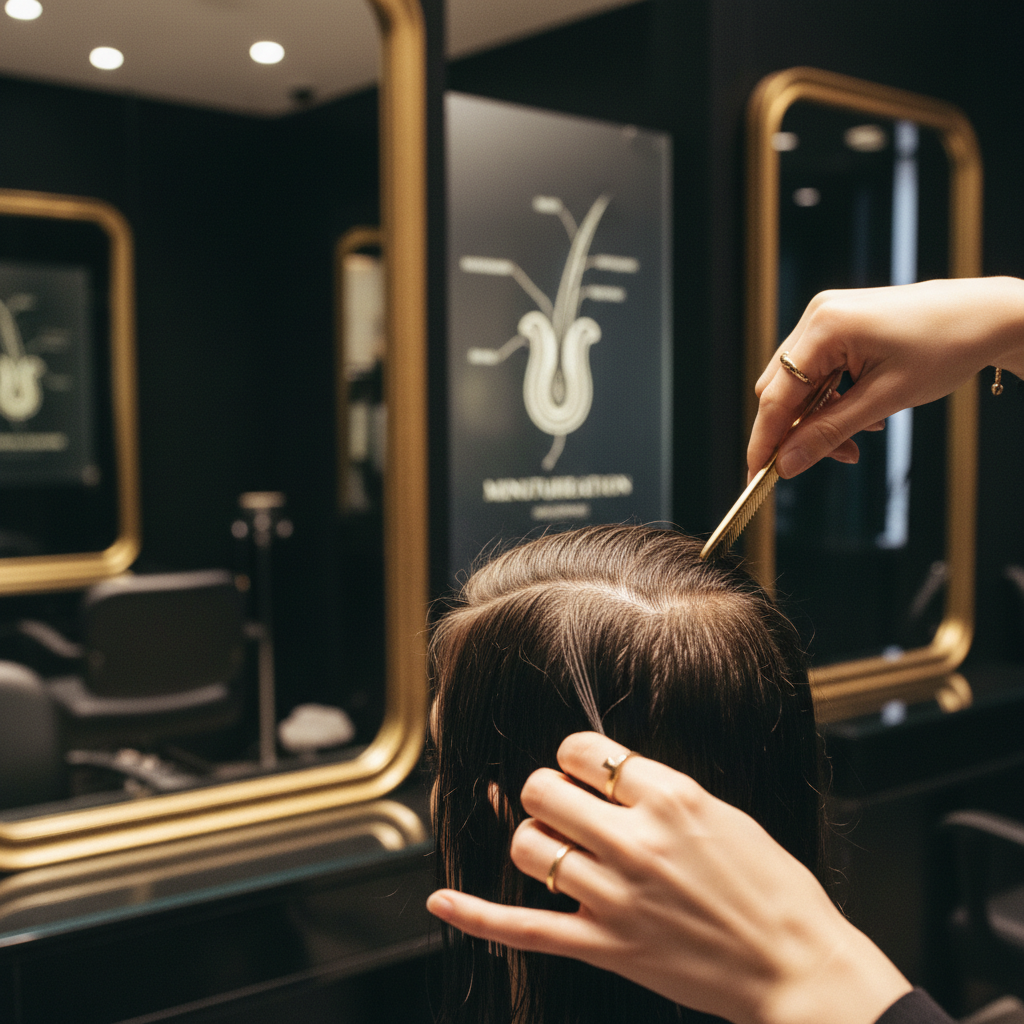
Quick answer: Hair Miniaturisation in Pattern Thinning is the biological process where genetically susceptible hair follicles progressively shrink under the influence of androgens, specifically dihydrotestosterone (DHT). With each consecutive growth cycle, the follicle produces a shorter, finer, less pigmented hair shaft until terminal hairs transform into wispy vellus-like hairs. While medical therapies can halt progression or partially reverse early diameter loss, miniaturisation cannot be fully reversed once a follicle has undergone complete fibrous sclerosis and ceased cycling altogether.
Key takeaways
- Hair Miniaturisation in Pattern Thinning changes thick terminal hairs into thin, unpigmented vellus hairs over multiple growth cycles.
- The primary biochemical driver is dihydrotestosterone (DHT) binding to androgen receptors in genetically predisposed scalp dermal papilla cells.
- Follicular miniaturisation shortens the anagen (growth) phase from years down to months, while extending the kenogen phase (the lag time between shedding and regrowth).
- Hair shedding differs fundamentally from miniaturisation; shedding represents hairs leaving the scalp, whereas miniaturisation represents structural diameter and depth loss within the follicle itself.
- Dermatologists use dermoscopy (trichoscopy) to diagnose the condition, defined primarily by hair diameter diversity greater than 20 percent.
- Early intervention yields significantly better clinical outcomes before follicular fibrosis becomes permanent.
Hair Miniaturisation in Pattern Thinning: what the evidence shows
Hair Miniaturisation in Pattern Thinning is the defining pathological hallmark of androgenetic alopecia (AGA), affecting up to 80 percent of men and 50 percent of women over their lifetimes. The process is not sudden. Instead, it occurs across successive hair growth cycles over several years.
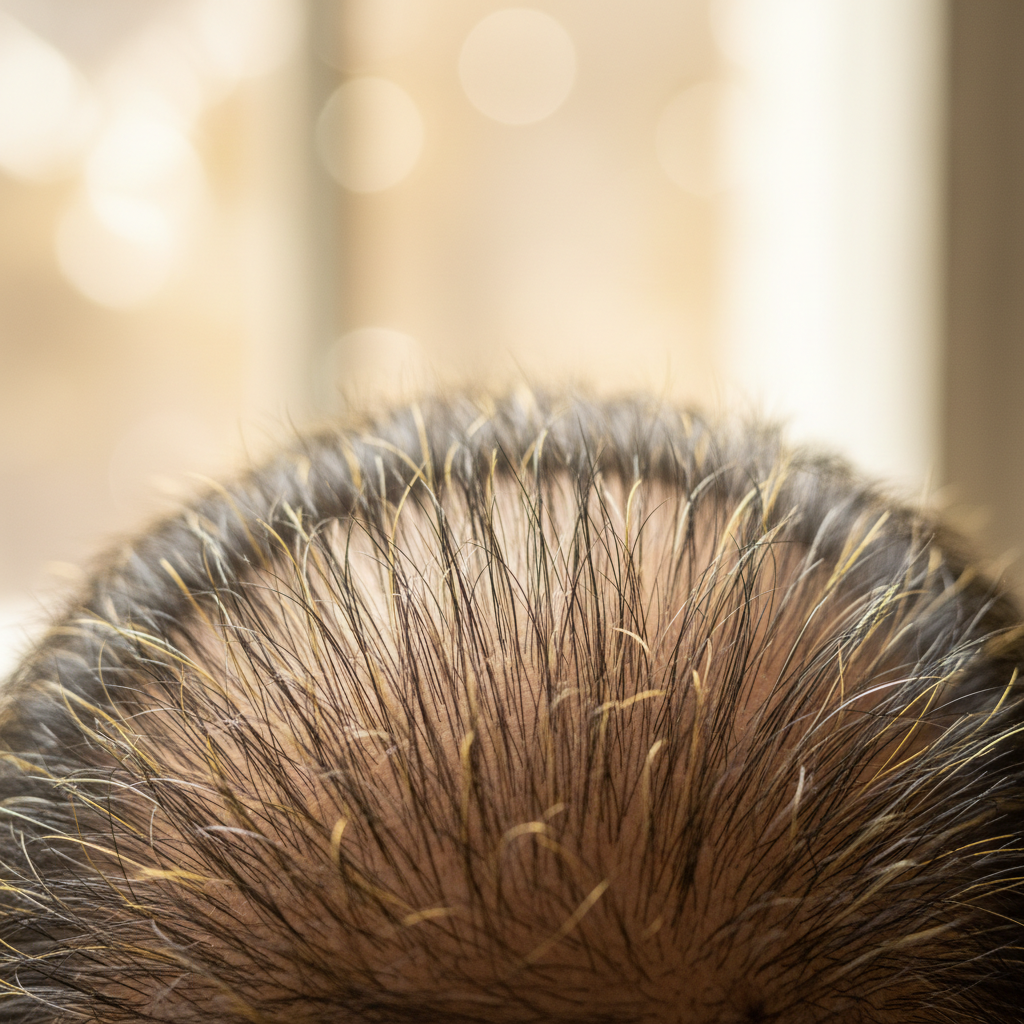
In an unaffected scalp, roughly 85 to 90 percent of follicles reside in the anagen (growth) phase, which typically lasts between 2 and 7 years. During this period, the follicular matrix produces a thick, fully pigmented terminal hair with an average diameter of 60 to 80 micrometres.
When Hair Miniaturisation in Pattern Thinning takes hold, the duration of anagen drastically declines. Over consecutive cycles, anagen may shorten to just a few months or weeks. Concurrently, the telogen (resting) phase remains constant or slightly lengthens, and the duration of kenogen (the interval where the follicle remains empty after the telogen hair sheds) expands significantly.
Because the follicle spends drastically less time in the active synthesis phase, it cannot reach its full structural depth or width. The dermal papilla volume physically decreases, containing fewer cells and a diminished extracellular matrix. Consequently, each new hair shaft emerges narrower, softer, and with diminished melanin production. Eventually, hair fibre diameters shrink below 30 micrometres, closely resembling non-pigmented vellus hairs.
| Characteristic | Normal Terminal Hair | Miniaturised Hair (Pattern Thinning) | True Vellus Hair |
|---|---|---|---|
| Average Shaft Diameter | 60 to 80 µm | 20 to 40 µm | Less than 30 µm |
| Anagen Phase Duration | 2 to 7 years | Months to 1 year | 1 to 2 months |
| Follicular Depth in Scalp | 4 to 5 mm (subcutis) | 1 to 2 mm (upper dermis) | Superficial dermis |
| Medulla Presence | Usually continuous or interrupted | Fragmented or entirely absent | Completely absent |
| Associated Sebaceous Gland | Normal proportionate size | Maintained or hypertrophied | Small or vestigial |
| Reversibility Potential | Baseline state | Partially reversible in early stages | Genetically fixed |
The biological mechanism of follicular shrinking
The primary catalyst for follicular shrinkage in pattern hair loss is the interaction between systemic androgens and local cellular receptors.
Testosterone circulates through the bloodstream and reaches the hair follicle via the dermal microvasculature. Within target tissues, the enzyme 5-alpha reductase converts testosterone into dihydrotestosterone (DHT), a significantly more potent androgen with roughly five times greater binding affinity for the androgen receptor.
Two main isoenzymes of 5-alpha reductase exist in human tissue:
- Type 1: Predominantly located in the sebaceous glands, liver, and skin.
- Type 2: Concentrated in the dermal papilla of hair follicles, prostate tissue, and the inner root sheath.
When DHT binds to the intracellular androgen receptor in a genetically susceptible follicle, it triggers a cascade of inhibitory signalling proteins. Key among these is transforming growth factor-beta (TGF-beta 1 and TGF-beta 2), along with dickkopf-1 (DKK-1), which suppress keratinocyte proliferation and inhibit the Wnt/beta-catenin signalling pathway necessary for maintaining anagen growth.
Deprived of growth signals, the dermal papilla loses cellular volume and microvascular density. The hair bulb recedes upward from the rich subcutaneous fat layer into the less vascularised reticular dermis, physically restricting the nutrients available to construct the emerging shaft.
Importantly, androgen sensitivity is regional. Follicles in the vertex, frontotemporal hairline, and mid-scalp possess higher densities of androgen receptors and 5-alpha reductase enzymes. In contrast, occipital follicles along the lower back of the head generally lack this sensitivity, explaining why donor areas remain robust even in advanced pattern baldness.
The signs to look for: trichoscopy and physical symptoms
Miniaturisation is often advanced before an individual notices visible scalp show-through. A human scalp must typically lose 30 to 50 percent of its hair density or aggregate calibre before thinning becomes obvious to the naked eye.
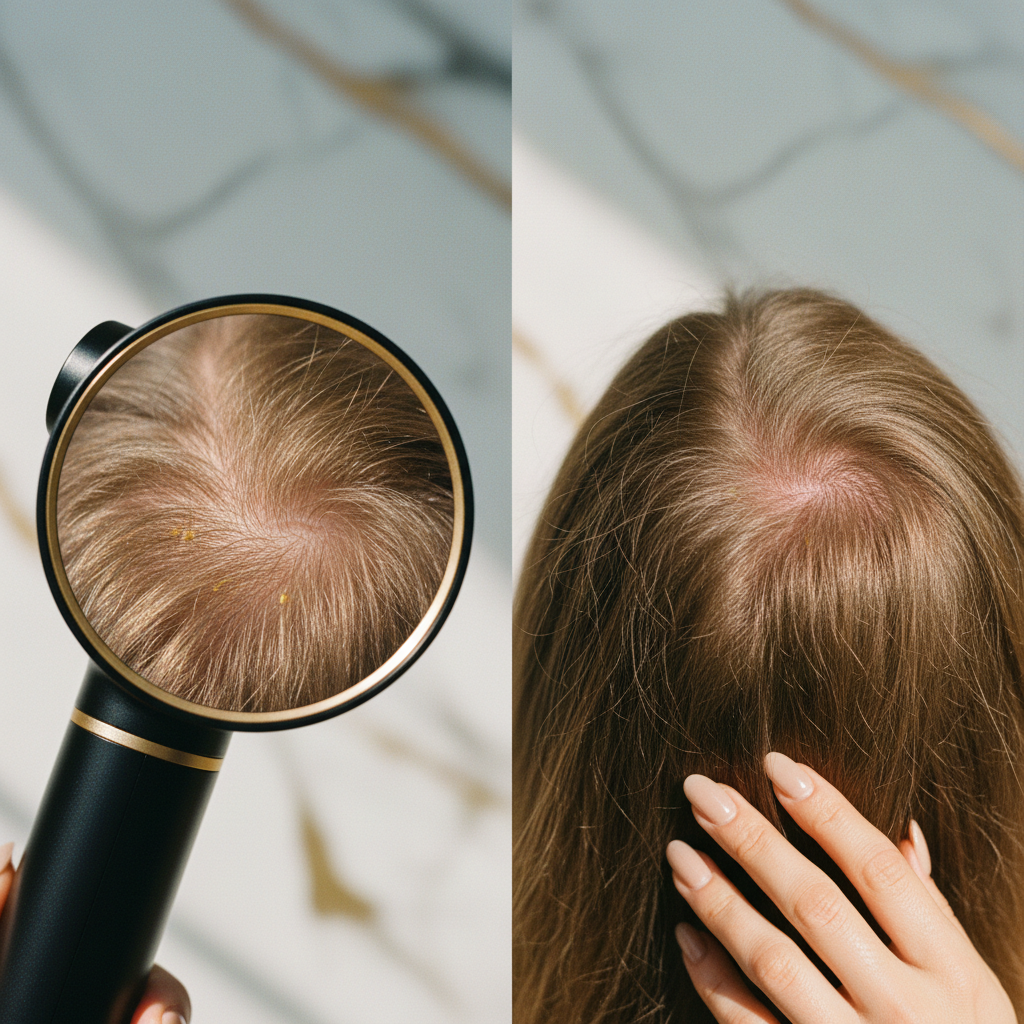
Clinical dermatologists identify the early stages using trichoscopy (polarised light dermoscopy of the scalp):
- Hair Diameter Diversity (Anisotrichosis): The most reliable indicator. A healthy scalp displays uniform fibre thickness, with less than 15 to 20 percent variation across a viewing field. In pattern hair loss, diameter diversity exceeds 20 percent, revealing a mixture of thick terminal hairs, intermediate hairs, and thin wispy strands emerging side by side.
- Peripilar Signs (Perifollicular Pigmentation): A subtle brownish or grey halo around the follicle opening, indicating mild, chronic perifollicular lymphocytic inflammation.
- Reduction of Follicular Units: Healthy scalps typically feature follicular units producing two, three, or four terminal hairs. As miniaturisation advances, multi-hair units transition into single-hair units.
- Yellow Dots: In later stages, empty follicle openings become visible as sebaceous material and keratin debris pool inside dilated infundibula where hairs have ceased emerging.
What the evidence does not show
Misconceptions regarding Hair Miniaturisation in Pattern Thinning frequently steer people toward ineffective habits. The evidence clarifies several common myths:
- It is not caused by poor scalp circulation: While microvascular support diminishes around miniaturising follicles, scientific consensus views this as a consequence of tissue atrophy, not the initiating cause. The follicle shrinks first, requiring less blood flow; poor circulation does not choke out the hair.
- It is not caused by sebum build-up or clogged pores: Sebum is an oily lipid mixture produced by the sebaceous glands. While excess sebum can cultivate conditions like seborrhoeic dermatitis, it does not physically obstruct follicles or convert hairs into vellus fibres.
- It is not normal telogen shedding: Shedding 50 to 100 telogen hairs per day is physiologically normal. Individuals experiencing miniaturisation may actually shed fewer total hairs than someone with acute telogen effluvium, yet their scalp becomes progressively thinner because every replaced hair is structurally smaller.
- Cosmetics cannot alter genetic androgen sensitivity: Shampoos, conditioners, and superficial scalp oils cannot alter 5-alpha reductase expression in the deep dermis or re-engineer androgen receptor genetics.
Evidence-based management strategies
Managing follicular miniaturisation requires realistic expectations. The objective of any therapeutic strategy is two-fold: halt further progressive reduction in shaft diameter, and encourage existing intermediate follicles back into a longer anagen phase.
Medical interventions
Medical treatments evaluated by regulatory authorities such as the MHRA and FDA focus on disrupting the hormonal and cellular drivers of miniaturisation:
- 5-Alpha Reductase Inhibitors: Prescription oral medications (such as finasteride at 1 mg daily) reduce circulating DHT levels by roughly 60 to 70 percent. By preventing DHT from binding to the dermal papilla, these compounds arrest miniaturisation in over 80 percent of users and can partially restore shaft calibre in early-to-intermediate follicles.
- Vasodilators and Potassium Channel Openers: Topical minoxidil (applied as a 5 percent solution or foam) acts independently of hormonal pathways. By opening ATP-sensitive potassium channels and stimulating vascular endothelial growth factor (VEGF), it prolongs anagen duration and widens the follicular opening, encouraging thicker shaft synthesis.
- Anti-Androgens (principally for women): In female pattern hair loss, systemic anti-androgens like spironolactone may be used off-label under medical supervision to block androgen receptors directly.
Supportive scalp care and cosmetic maintenance
While cosmetic formulations cannot cure androgenetic alopecia, maintaining an optimal scalp environment supports follicular comfort and hair shaft integrity:
- Managing Perifollicular Inflammation: Chronic micro-inflammation around the infundibulum accelerates pattern thinning. Using targeted scalp treatments containing anti-fungal ingredients (like ketoconazole or piroctone olamine) helps control Malassezia yeast populations, reducing secondary inflammatory cascades.
- Minimising Mechanical Breakage: When hairs are already thin from miniaturisation, mechanical breakage along the shaft makes hair look dramatically thinner. Gentle handling, reducing high-heat styling, and using conditioning formulations improve tensile strength, ensuring the fine hair produced by miniaturised follicles survives to its full potential length.
When the cause may be something else
Not all hair thinning stems from androgenetic miniaturisation. Identifying the correct condition is essential for proper management:
- Telogen Effluvium: Marked by acute, diffuse shedding across the entire scalp, typically triggered two to four months after a physiological shock, nutritional deficiency (such as severe iron or zinc depletion), or systemic illness. Trichoscopy shows normal hair diameters without significant diversity.
- Alopecia Areata: An autoimmune attack targeting the follicular bulb during anagen, resulting in smooth, circular patches of total loss. Characteristic "exclamation mark" hairs are present at the periphery, rather than progressive, uniform thinning.
- Cicatricial (Scarring) Alopecia: Conditions like lichen planopilaris or frontal fibrosing alopecia destroy the follicular stem cells permanently through direct immune attack, replacing openings with fibrotic scar tissue. Immediate medical dermatology referral is vital to prevent irreversible loss.
Supporting fine and thinning hair: Watermans
For individuals navigating pattern thinning, daily hair and scalp care plays a valuable supportive role alongside medical guidance. While cosmetic solutions cannot alter genetic androgen receptors, keeping the scalp clean, flake-free, and invigorated helps create the best possible conditions for hair to grow.
Watermans GrowMe Shampoo and ConditionMe Conditioner are formulated to support the appearance of fine, fragile strands. Featuring a blend of biotin, caffeine, rosemary extract, niacinamide, and argan oil, the range revitalises the scalp surface while providing lightweight conditioning that won't weigh down thinning hair. For targeted daily application without frequent washing, Watermans Grow More Scalp Elixir delivers concentrated botanical ingredients directly to the scalp barrier, reinforcing strand resilience and leaving the hair looking noticeably fuller and stronger.
Frequently asked questions about Hair Miniaturisation in Pattern Thinning
Can miniaturised hair follicles ever recover their original thickness?
If a follicle has only partially miniaturised, medical therapies can often enlarge the bulb and restore noticeable shaft thickness by extending the anagen cycle. However, if Hair Miniaturisation in Pattern Thinning has progressed to the point where the follicle has fully atrophied and formed fibrous scar tissue, it cannot regenerate a terminal hair shaft.
How can I tell if my hair loss is shedding or miniaturisation?
Hair shedding involves full-length hairs dropping out from the roots, commonly seen on brushes, pillows, or in the shower drain. Miniaturisation is a slow structural change where new hairs grow in thinner, shorter, and less visible, causing gradual scalp exposure without necessarily noticing heavy daily fallout.
Does Hair Miniaturisation in Pattern Thinning affect women differently than men?
Yes. While men typically experience miniaturisation in distinct patterns (receding temples and vertex balding leading to complete local loss), women usually experience diffuse miniaturisation across the crown and mid-part line. The frontal hairline is typically preserved in women, and total baldness rarely occurs.
At what age does follicular miniaturisation usually begin?
Miniaturisation can start anytime following puberty, as soon as androgen production rises. Some genetically predisposed individuals notice early temple thinning or hair diameter reduction in their late teens or early twenties, while others do not experience noticeable progression until their forties or fifties.
Can scalp massage reverse hair miniaturisation?
Controlled scientific evidence on scalp massage is limited. While manual massage can temporarily stimulate local blood circulation, it does not alter systemic DHT levels or cellular androgen receptor sensitivity. It cannot serve as a standalone treatment to reverse genetically driven miniaturisation.
The path forward for miniaturising hair
Hair Miniaturisation in Pattern Thinning is a progressive, biologically determined reduction in follicular dimensions, driven by local androgen sensitivity in genetically susceptible individuals. Identifying the early signs through diameter diversity and reduced multi-hair units allows for timely, evidence-based intervention before follicles progress to complete dormancy. While cosmetic routines cannot rewrite genetic instructions, combining scientifically validated therapies with thoughtful scalp maintenance provides the strongest defence against continued loss of hair density.
Sources and references
- British Association of Dermatologists (BAD): Guidelines for the management of androgenetic alopecia.
- National Institute for Health and Care Excellence (NICE): Alopecia, androgenetic (Clinical Knowledge Summary).
- Journal of the American Academy of Dermatology: "Dermoscopy of hair and scalp disorders with clinical and pathological correlations."
- International Journal of Molecular Sciences: "Transforming Growth Factor-Beta and Androgenetic Alopecia: Mechanisms and Potential Therapies."
- European Academy of Dermatology and Venereology (EADV): Consensus on male and female pattern hair loss management.
Find these ingredients in Watermans products
- Zinc: you will find this ingredient in our Hair Vitamins.
- Niacinamide: you will find this ingredient in our Hair Mask.