Hair Loss vs Hair Breakage: What the Evidence Shows
10 min read ·
Understand the real differences in Hair Loss vs Hair Breakage, how to identify fallen root bulbs versus snapped fibres, and the right evidence-based steps to take.
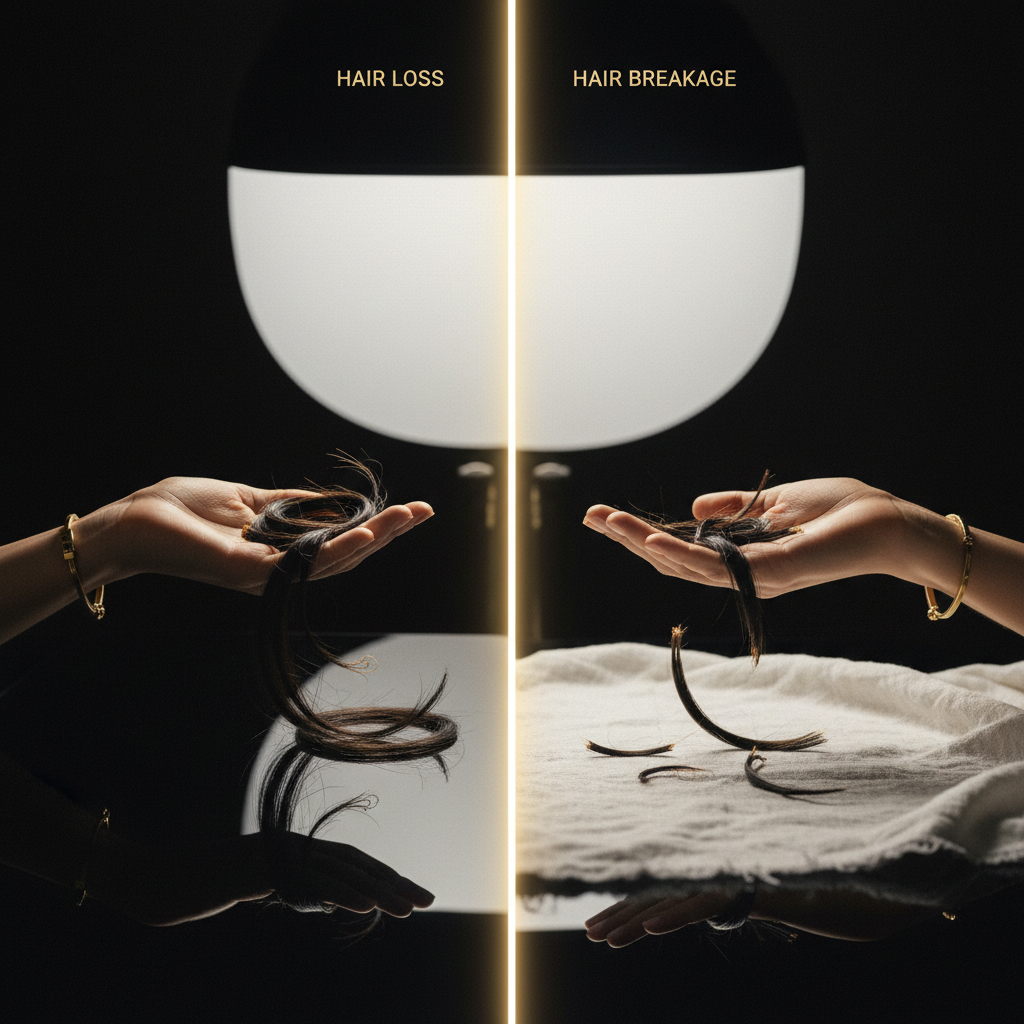
Quick answer: Understanding Hair Loss vs Hair Breakage comes down to where the issue originates. Hair loss occurs at the scalp follicle, causing entire strands to shed from the root, often accompanied by a white bulb. Hair breakage is structural failure along the hair shaft caused by mechanical, chemical, or thermal damage, leaving shorter, uneven fragments without a root. While cosmetic routines can dramatically reduce breakage, true follicular hair loss requires medical evaluation because topicals cannot repair internal or hormonal disruptions.
Key takeaways
- Hair loss originates inside the scalp follicle, whereas hair breakage is physical trauma to the hair fibre.
- Shed hairs display a small, bulbous white keratin tip at the root; broken hairs feature blunt, frayed, or split ends without a bulb.
- Breakage results in uneven lengths, frizz, and thinning ends, while hair loss typically manifests as widening partings, receding hairlines, or diffuse scalp thinning.
- Normal shedding accounts for 50 to 100 hairs daily; breakage has no natural quota and indicates compromised hair integrity.
- Cosmetic products and conditioning agents can prevent breakage, but clinical forms of alopecia require diagnosis by a dermatologist or GP.
Hair Loss vs Hair Breakage: what the evidence shows
The debate surrounding Hair Loss vs Hair Breakage is one of the most common points of confusion in trichology. Clients often notice more hair on their brushes, bathroom floors, or clothing and immediately assume they are going bald. However, the biological mechanisms driving these two conditions are fundamentally distinct.
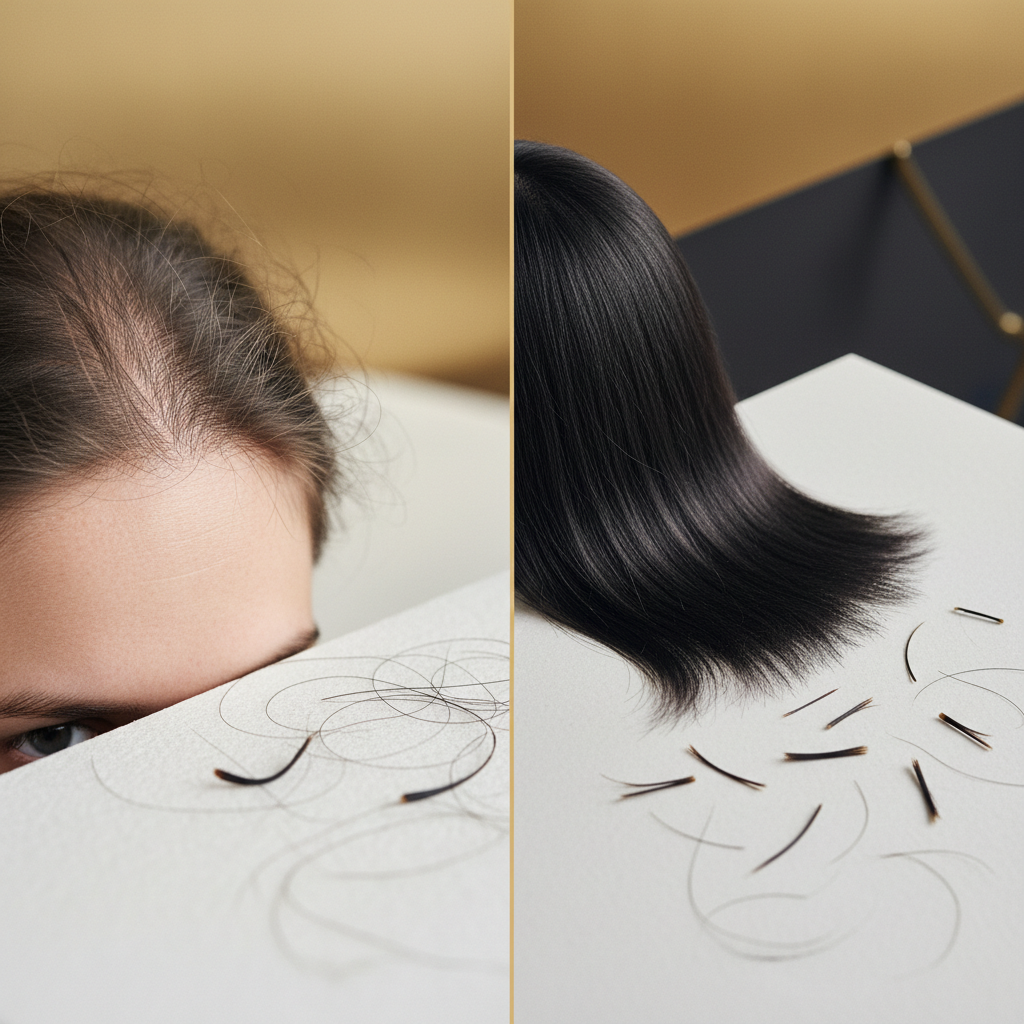
Hair loss encompasses two main categories: excessive shedding (telogen effluvium) and follicle miniaturisation or destruction (alopecia). During normal hair cycling, the follicle moves through anagen (growth), catagen (transition), and telogen (resting). At the end of telogen, the strand enters exogen and sheds naturally. This natural shed averages 50 to 100 strands per day. When medical triggers, hormonal shifts, nutritional deficiencies, or genetics disrupt the cycle, follicles may either prematurely enter telogen or shrink over successive cycles. Crucially, the hair leaves the scalp intact from its origin point.
In contrast, hair breakage is an engineering failure of the hair fibre itself. A hair shaft is composed of an outer protective cuticle of overlapping keratin scales, a central cortex that provides tensile strength and elasticity, and sometimes a central medulla. When chemical processes (bleaching, perming, relaxing), excessive heat (straighteners, curlers over 185°C), or rough physical handling strip the cuticle, the cortex becomes exposed. Devoid of moisture and protective lipids (specifically 18-methyleicosanoic acid, or 18-MEA), the cortex splits under minor tension. The hair simply snaps in two.
| Feature | Hair Loss (Shedding / Alopecia) | Hair Breakage |
|---|---|---|
| Origin point | Inside the scalp follicle | Along the length of the hair shaft |
| Visible strand tip | White, bulbous root sheath visible at one end | Frayed, blunt, or split end; no bulb |
| Length of fallen strands | Full-length hairs matching your current style | Uneven, short to medium length fragments |
| Visual scalp impact | Visible scalp, wider parting, receding edges | Frizzy halo, thin ends, uneven layers, flyaways |
| Normal baseline | 50 to 100 strands daily is physiologically normal | Zero breakage is the biological baseline |
| Primary causes | Genetics, hormones (DHT), illness, iron deficiency | Thermal damage, chemical processing, friction |
| Effective solution | Medical therapies, scalp health, systemic support | Bond builders, protein/moisture treatments, cut |
The physical mechanisms: why hair breaks versus why it falls
To pinpoint whether you are dealing with follicle failure or structural fatigue, you must understand the underlying physical mechanisms.
Why the fibre snaps: structural fatigue
Hair is extraordinarily strong; a healthy strand can support roughly 100 grams of weight before snapping. However, that strength relies on cross-linked disulfide bonds within the cortex.
When you apply alkaline chemical agents like bleach (often operating at pH 10 to 11), you force the cuticle scales open, dissolving melanin while unintentionally breaking these internal bonds. Thermal tools set above 185°C cause keratin denaturation and turn moisture inside the cortex into steam, creating microscopic bubbles (bubble hair deformity).
Once the outer cuticle is worn away, friction from pillowcases, hair ties, or rough brushing creates stress points. The fibre fractures laterally, producing trichorrhexis nodosa (node-like swelling that fractures) or split ends (trichoptilosis).
Why the follicle releases: biological disruption
Follicles operate on tight biological clocks regulated by hormones, cellular signalling, and microcirculation.
In androgenetic alopecia, 5-alpha reductase converts testosterone into dihydrotestosterone (DHT). In genetically susceptible follicles, DHT binds to androgen receptors, causing the growth phase (anagen) to shorten and the follicle to progressively miniaturise. The resulting hairs become thinner, shorter vellus hairs until the follicle stops producing visible fibres altogether.
In telogen effluvium, an acute physiological shock (high fever, sudden weight loss, surgery, childbirth, severe psychological stress) pushes up to 30% of growing anagen hairs prematurely into the resting telogen phase. Roughly two to three months after the trigger, those hairs shed en masse from the follicle.
How to tell the difference: tests you can do at home
You do not need a laboratory microscope to differentiate between structural snapping and follicular shedding. A few simple diagnostic checks can give you an immediate answer.
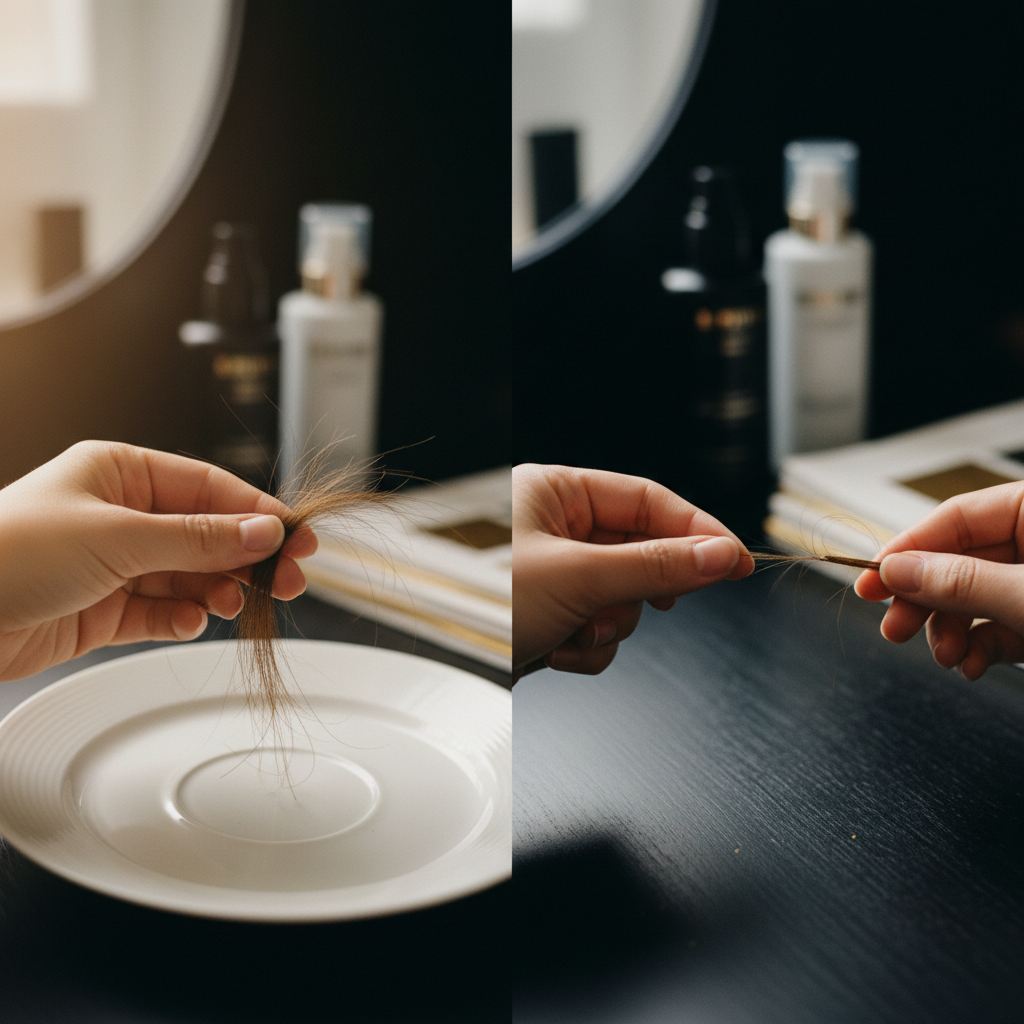
1. The white bulb inspection
Collect several strands from your hairbrush or the floor and inspect them under bright light against a dark sheet of paper.
- If you see a tiny, rounded white or translucent bulb at one end, that hair separated from the follicle. This is shedding or hair loss.
- If both ends are straight, jagged, split, or frayed, the strand broke along the shaft. This is breakage.
2. The strand length comparison
Compare the fallen strands to your overall hair length.
- Full-length strands that match the rest of your hair indicate natural shedding or telogen effluvium.
- Varied, short, choppy pieces that measure significantly shorter than your shortest layer indicate breakage.
3. The gentle tug test
Hold a small section of dry hair between two fingers near the mid-lengths and gently run your fingers to the ends. If tiny fragments shower down, your hair fibre is brittle and breaking. In a clinical pull test for hair loss, a clinician gently tugs about 50 to 60 hairs from the base; if more than six full-length hairs slide out easily from the root, active shedding is occurring.
What the evidence does not show
There are several persistent myths regarding hair damage that clinical research does not support:
- Shampooing does not cause hair loss: People often blame washing their hair for baldness because they see a mass of hair in the drain. Shampooing merely dislodges hairs that detached from the follicle days earlier during the natural exogen phase.
- Conditioners do not stop alopecia: While deeply hydrating masks, silicones, and protein treatments strengthen hair fibres and virtually halt mechanical breakage, they have zero effect on hormonal miniaturisation or autoimmune hair conditions.
- Split ends cannot be permanently glued together: Cosmetic serums can temporarily paste split ends together using polymers, but they do not structurally repair the fibre. The only permanent fix for fractured ends is trimming them away.
Addressing hair breakage: cosmetic and physical solutions
If your inspection reveals snapped strands without roots, the solution lies in restoring the hair's mechanical integrity and reducing friction:
- Lower the heat: Never use heated styling tools above 185°C. Always apply a film-forming heat protectant containing silicones, polyquaterniums, or hydrolysed proteins to buffer heat transfer.
- Balance moisture and protein: Chemically processed hair lacks structural protein and hydration. Look for formulations with hydrolysed wheat, soy, or keratin proteins to fill surface gaps, alongside fatty alcohols (cetyl and stearyl alcohol) to restore suppleness.
- Minimise wet friction: Wet hair can stretch up to 30% beyond its original length before breaking, but its cuticle is softened and vulnerable. Never use a fine-tooth comb on wet hair; opt for a wide-tooth comb or flexible wet-brush, working from the ends upward.
- Switch your sleeping surface: Cotton pillowcases create high friction that strips natural oils and snags fragile strands. Silk or satin pillowcases allow fibres to glide freely, dramatically cutting overnight snapping.
Supporting the scalp: Watermans cosmetic haircare
When your goal is to maintain the ideal environment for healthy hair growth while reinforcing fibre resilience, your routine should support both the scalp and the lengths.
Watermans Grow Me Shampoo and Condition Me Conditioner work in tandem to address both sides of the equation. Grow Me provides a stimulating, clean scalp environment using ingredients like caffeine, rosemary extract, biotin, and niacinamide. This supports natural microcirculation at the surface without harsh sulphates that dry the scalp.
Meanwhile, Condition Me delivers essential moisture, cholesterol, and hydrolysed lupin protein straight to the hair shaft. This fortifies the hair cuticle against everyday styling stress, helping reduce mechanical breakage so your hair can reach its full growth potential.
When to seek professional advice
Hair breakage can almost always be managed at home by improving hair habits and booking a trim with your stylist. However, true hair loss often signals an underlying biological issue that requires clinical diagnosis.
You should consult a GP, dermatologist, or qualified trichologist if:
- You notice sudden, patchy circular bald spots (which may indicate alopecia areata).
- You experience burning, tingling, pain, or redness on the scalp alongside shedding (potential signs of scarring alopecia).
- Your hair is coming out in large handfuls for longer than three months without slowing down.
- You are experiencing concurrent symptoms such as unexplained fatigue, significant weight changes, irregular menstrual cycles, or brittle nails, which can indicate thyroid dysfunction or iron deficiency anaemia.
Frequently asked questions about Hair Loss vs Hair Breakage
Can hair breakage eventually lead to baldness?
No, hair breakage alone will not cause baldness because the hair follicle beneath the scalp remains alive and undamaged. However, extreme, widespread breakage close to the scalp can mimic the visual appearance of thinning or bald patches. Once you eliminate heat and chemical trauma, the hair will continue to grow out normally from the root.
How do I know if I have Hair Loss vs Hair Breakage after bleaching?
Examine the fallen pieces under a bright light. Bleach-induced damage almost always results in hair breakage, producing elastic, stretchy strands that snap into short fragments with jagged ends and no root bulb. If you see full-length hairs with white bulbs at the end, your scalp may be shedding from a chemical burn or coincidental telogen effluvium.
Can you experience hair loss and hair breakage at the same time?
Yes, it is very common to experience both simultaneously. For example, you might have androgenetic alopecia causing overall thinning at the crown, while simultaneously using flat irons or bleach that cause the remaining lengths to snap. Treating both requires a two-pronged strategy: addressing scalp health and biological triggers while protecting the hair fibre with gentle conditioning routines.
Why is my hair breaking off at the crown?
Breakage at the crown is frequently caused by friction and heat. The crown is the most exposed area of the head, bearing the brunt of hot styling tools, harsh brushing, tight ponytails, and sun exposure. In contrast, if the hair at the crown is growing finer, shorter, and sparser directly from the scalp, it is more likely androgenetic hair loss.
Making sense of Hair Loss vs Hair Breakage
Navigating Hair Loss vs Hair Breakage begins with a clear look at your fallen strands. Finding broken, bulb-free fragments points to fibre fatigue, requiring reduced heat, gentler detangling, and restorative conditioning. Finding full-length hairs with tiny white root bulbs points to biological shedding, directing your attention inward toward nutrition, hormones, stress levels, and scalp wellness. By accurately identifying the source of the problem, you can stop guessing and take the right steps to restore your hair's strength and density.
Sources and references
- British Association of Dermatologists. (2020). Telogen Effluvium: Patient Information Leaflet.
- Robbins, C. R. (2012). Chemical and Physical Behavior of Human Hair (5th ed.). Springer-Verlag.
- Sinclair, R. (2007). Hair shedding in women: how much is too much? British Journal of Dermatology, 157(6), 1284 to 1288.
- National Institute for Health and Care Excellence (NICE). (2022). Alopecia Areata: Clinical Knowledge Summaries.
- Gavazzoni Dias, M. F. (2015). Hair cosmetics: An overview. International Journal of Trichology, 7(1), 2 to 15.
Find these ingredients in Watermans products
- Niacinamide: you will find this ingredient in our Hair Mask.