The Hair Growth Cycle Explained
4 min read ·
The hair growth cycle consists of four distinct phases: anagen, catagen, telogen, and exogen, each playing a crucial role in hair health and regeneration.
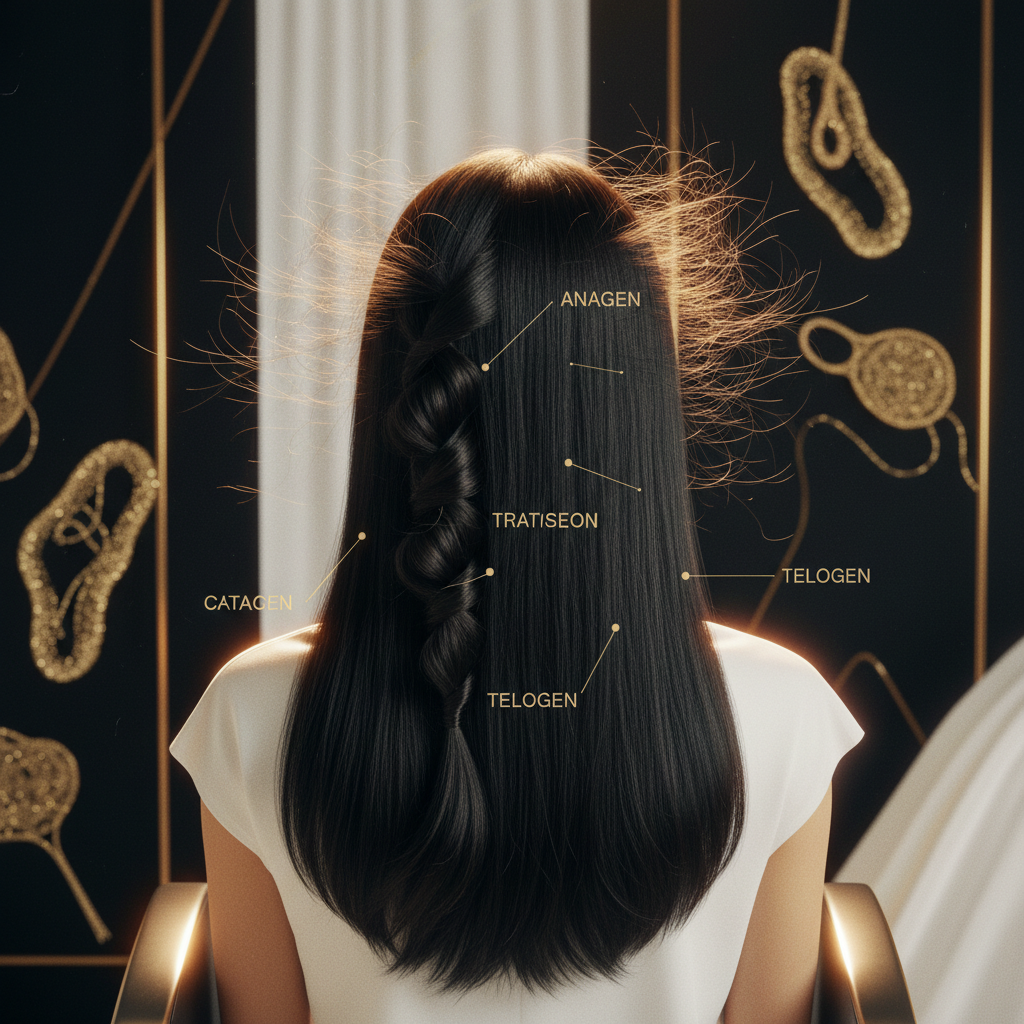
Understanding the Hair Growth Cycle
Hair growth is a fascinating biological process that occurs in a continuous cycle, rather than as a constant, uninterrupted progression. This cycle involves several distinct phases, each with its own characteristics and duration. Understanding these phases is fundamental to comprehending hair health, hair loss, and the effectiveness of various hair care treatments.
The Anagen Phase: Active Growth
The anagen phase is the active growth phase of a hair follicle. During this period, the cells in the hair bulb, which is located at the base of the follicle, divide rapidly, leading to the production of new hair cells. These new cells push the old cells upward, causing the hair shaft to grow longer. The length of the anagen phase largely determines the maximum length a hair can achieve.
- Duration: This phase can last anywhere from two to seven years, though individual variations are common and can be influenced by genetics, age, and overall health.
- Characteristics: Approximately 85-90% of all hairs on your head are typically in the anagen phase at any given time. Hair grows actively during this period, typically at a rate of about 1 centimeter (0.4 inches) per month.
- Factors Affecting Anagen: Good nutrition, particularly adequate intake of proteins, vitamins (especially biotin and vitamin D), and minerals (like iron and zinc), supports a healthy anagen phase. Hormonal balance also plays a significant role.
The Catagen Phase: Transition and Regression
Following the anagen phase, the hair follicle enters the catagen phase, a short transitional period. This phase marks the end of active hair growth.
- Duration: The catagen phase is relatively brief, lasting about two to three weeks.
- Characteristics: During this phase, the hair follicle shrinks, detaches from the dermal papilla (the blood supply that nourishes the hair bulb), and stops growing. The outer root sheath also shrinks, and the hair shaft itself is pushed upwards.
- What Happens: The hair becomes a "club hair," characterized by a bulb-like formation at its root. Only about 1-2% of your hair is in the catagen phase at any given time.
The Telogen Phase: Rest and Dormancy
The telogen phase is a resting phase for the hair follicle. While no active growth occurs during this time, the hair remains anchored in the follicle.
- Duration: This phase typically lasts around two to four months.
- Characteristics: Approximately 10-15% of your hair is in the telogen phase. The club hair is fully formed, but it is not actively growing. Beneath the resting hair, a new anagen hair often begins to form within the same follicle.
- Shedding: Towards the end of the telogen phase, the hair may be shed naturally, often assisted by washing, brushing, or the emergence of the new anagen hair pushing it out.
The Exogen Phase: Active Shedding
While sometimes considered part of the telogen, the exogen phase is increasingly recognized as a distinct phase of active hair shedding. This is when the old hair detaches from the follicle and falls out.
- Duration: This phase can last for several days.
- Characteristics: During exogen, the resting club hair is released, making way for the new hair that is already beginning its anagen phase. It’s normal to shed between 50 and 100 hairs per day as part of this natural replenishment process.
- Distinction from Telogen: The key difference is that telogen is the resting period where the hair is still attached, while exogen is the active process of shedding an old, non-growing hair.
Factors Influencing the Hair Growth Cycle
Several factors can influence the duration and health of each phase of the hair growth cycle:
- Genetics: Genetic predisposition plays a significant role in determining how long your anagen phase lasts and, consequently, your potential hair length.
- Age: As we age, the anagen phase often shortens, hair growth can slow, and hair may become finer.
- Nutrition: A balanced diet rich in essential nutrients is crucial. Deficiencies in vitamins, minerals, and proteins can disrupt the cycle, leading to premature shedding or slowed growth.
- Hormones: Hormonal fluctuations, such as those experienced during pregnancy, childbirth, menopause, or due to thyroid conditions, can significantly impact the hair growth cycle.
- Stress: High levels of physical or emotional stress can prematurely push a large number of hairs into the telogen phase, leading to increased shedding (telogen effluvium).
- Scalp Health: A healthy scalp environment, free from inflammation or fungal infections, supports optimal follicle function and nutrient delivery.
- Hair Care Practices: Harsh chemical treatments, excessive heat styling, and tight hairstyles can damage hair and follicles, potentially shortening the anagen phase or leading to breakage that resembles slowed growth.
Common Cycle Disruptions and Their Effects
When the hair growth cycle is disrupted, it can lead to various forms of hair loss or changes in hair quality. For instance, if too many hairs enter the telogen phase simultaneously (often due to stress, illness, or nutritional deficiencies), significant shedding can occur. This is often temporary, and hair typically regrows once the underlying cause is addressed.
Chronic shortening of the anagen phase, as seen in some genetic conditions, can lead to thinner, shorter hairs and conditions like androgenetic alopecia. Understanding the hair growth cycle helps in diagnosing these conditions and formulating appropriate management strategies, including the use of hair growth shampoos or targeted scalp treatments designed to support healthy follicle function and prolong the anagen phase.
Find these ingredients in Watermans products
- Biotin, you will find this ingredient in our Hair Growth Shampoo.
- Zinc, you will find this ingredient in our Hair Vitamins.