Hair Biology Basics: Understanding the Structure and Growth of Hair
10 min read ·
Hair Biology Basics involves understanding how our hair grows, its intricate structure, and the biological factors that influence its health and appearance.
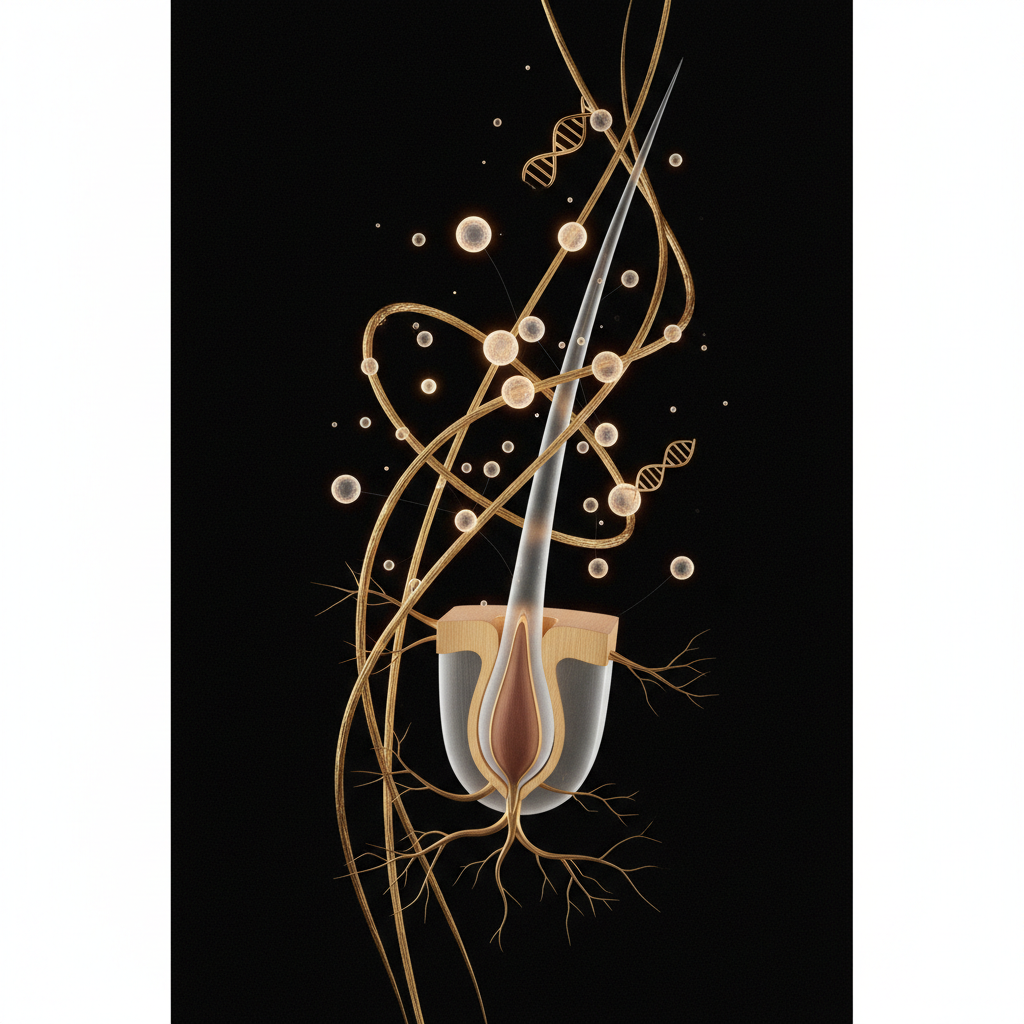
Quick answer: Hair Biology Basics covers the fundamental understanding of hair structure, from its root within the scalp to the visible shaft, and the cyclical process of hair growth. Our hair is primarily composed of keratin protein, forming a complex structure designed for protection and aesthetic function. Understanding these Hair Biology Basics is crucial for effective hair care and for recognising when hair changes might signal underlying health considerations, though it does not diagnose or treat specific conditions.
Key takeaways
- Hair is a complex biological fibre primarily made of keratin, originating from the hair follicle in the scalp.
- Each hair strand has three main layers: the protective cuticle, the strength-giving cortex, and sometimes a central medulla.
- Hair growth occurs in a continuous cycle of four distinct phases: anagen (growth), catagen (transition), telogen (resting), and exogen (shedding).
- Numerous factors, including genetics, nutrition, hormones, stress, and environmental exposure, significantly influence hair health and growth patterns.
- Understanding hair biology helps distinguish between normal shedding, hair breakage, and potential underlying conditions.
Hair Biology Basics: What the evidence shows
Hair, often perceived as a simple aesthetic feature, is a complex biological structure with vital protective functions. It's an appendage of the skin, growing from specialised structures called follicles. A deep dive into Hair Biology Basics reveals that each strand is a miniature testament to the body's intricate design, influencing everything from thermal regulation to sensory perception.
The Anatomy of Hair: From Root to Tip
Hair development begins in the hair follicle, a microscopic organ embedded within the skin. Each follicle acts as a small, independent factory, producing a single hair fibre. The visible part of the hair, the hair shaft, is entirely composed of dead cells that have undergone a process called keratinisation.
The Hair Follicle: The Root of Growth
The hair follicle is a dynamic structure comprising several key components essential for hair production and health:
- Hair Bulb: Located at the base of the follicle, this is where living cells rapidly divide to form the new hair shaft. It surrounds the dermal papilla.
- Dermal Papilla: A small, cone-shaped structure rich in blood vessels and nerves. It supplies essential nutrients and signals to the hair bulb cells, making it crucial for hair growth.
- Sebaceous Gland: Attached to the follicle, this gland produces sebum, a natural oil that lubricates the hair shaft and scalp. Sebum helps maintain moisture, provides a protective barrier, and contributes to the hair's natural shine. (For more on this, see "Sebum Regulation: Understanding and Managing Scalp Oiliness" and "Oily Scalp Care: Understanding and Managing Excess Sebum").
- Arrector Pili Muscle: A tiny muscle that connects to the follicle. When it contracts, it pulls the hair upright, causing "goosebumps."
- Nerve Endings: These receptors around the follicle make hair sensitive to touch.
The Hair Shaft: The Visible Fibre
The hair shaft, the part of the hair that extends beyond the skin surface, is composed of three concentric layers:
- Cuticle: This outermost layer consists of 6 to 10 overlapping layers of flat, dead cells, resembling shingles on a roof. These cells point towards the hair tip. A healthy cuticle lies flat, providing a smooth surface that reflects light, making hair appear shiny. It acts as the primary protective barrier against physical and chemical damage. When the cuticle is damaged (e.g., by heat, chemicals, or harsh brushing), these scales lift, leading to rough texture, tangling, increased porosity, and potential breakage. (See also "Hair Damage: Causes, Signs, and Solutions" and "Understanding Hair Porosity: How Your Hair Absorbs and Retains Moisture").
- Cortex: The thickest layer, making up approximately 75 to 90% of the hair's total weight. It contains tightly packed keratin protein fibres, which provide the hair's strength, elasticity, and shape. The cortex also houses melanin granules, the pigment responsible for natural hair colour. Chemical treatments like perming, straightening, or colouring directly target and alter the structure of the cortex. (For more, see "Hair Coloring Techniques: Understanding the Science Behind Hair Colour" and "Chemical Hair Treatments: What They Are and How They Affect Hair").
- Medulla: The innermost core of the hair shaft, present in some, but not all, hair types (e.g., typically found in coarser hair). Its precise function is not fully understood, but it is thought to play a role in insulation and structural support for thicker hair.
Hair Structure Comparison
| Layer | Location | Primary Composition | Key Function | Implications for Hair Health |
|---|---|---|---|---|
| Cuticle | Outermost | Overlapping Keratin cells | Protection, shine, smoothness | Damage leads to frizz, breakage, dullness |
| Cortex | Middle | Keratin fibres, melanin | Strength, elasticity, colour | Determines hair type, colour, resilience |
| Medulla | Innermost | Air-filled cells (variable) | Possible insulation, structural support | Presence varies by hair type; less understood |
The Hair Growth Cycle: A Continuous Process
Hair growth is not a continuous, steady process across all follicles; rather, each follicle undergoes an independent, cyclical pattern. This asynchronous cycle ensures that we don't lose all our hair at once. There are four main phases:
- Anagen (Growth Phase): This is the active growing period for hair, lasting typically 2 to 7 years. During anagen, cells in the hair bulb rapidly divide and differentiate, pushing the hair shaft upwards. The length of this phase largely determines the maximum length a person's hair can achieve. Around 85 to 90% of all hairs are in the anagen phase at any given time.
- Catagen (Transition Phase): A short transitional phase, usually lasting 2 to 3 weeks. During this time, hair growth stops, the hair follicle shrinks, and the dermal papilla detaches from the hair bulb. Only about 1 to 2% of hairs are in this phase.
- Telogen (Resting Phase): This phase lasts for approximately 2 to 4 months. The hair is fully formed but remains in the follicle, resting. The old hair is preparing to be shed, making way for new hair to begin the anagen phase in the same follicle. About 5 to 10% of hairs are in the telogen phase. It is considered normal to shed 50 to 100 telogen hairs per day.
- Exogen (Shedding Phase): Often considered a sub-phase of telogen, this is when the old hair is actively released and falls out, typically aided by washing or brushing. This phase allows the new anagen hair to emerge from the same follicle. If a new hair does not emerge, the follicle can remain dormant for a period.
Disruptions to this natural cycle, such as a significant increase in the number of hairs prematurely entering the telogen phase, can lead to conditions like telogen effluvium, causing noticeable hair shedding rather than hair loss.
Factors Influencing Hair Health and Growth
Several intrinsic and extrinsic factors profoundly impact the vitality and appearance of our hair. Understanding these influences is a core part of Hair Biology Basics.
- Genetics: An individual's genetic blueprint determines many hair characteristics, including texture (straight, wavy, curly, coily), natural colour, density, and predisposition to certain conditions like pattern baldness or early greying.
- Nutrition: A balanced diet providing adequate protein, essential vitamins (such as B vitamins, vitamin D, vitamin E) and minerals (like iron, zinc, selenium) is fundamental for healthy hair growth and structure. Deficiencies can lead to brittle, dull hair or increased shedding. For example, iron deficiency is a common cause of increased hair shedding in women (British Association of Dermatologists, 2013).
- Hormones: Hormonal fluctuations or imbalances, such as those occurring during pregnancy, menopause, thyroid disorders, or polycystic ovary syndrome (PCOS), can significantly affect the hair growth cycle and hair quality.
- Stress: Both acute and chronic psychological or physiological stress can disrupt the hair growth cycle, often pushing a higher percentage of hairs into the telogen phase prematurely, leading to increased shedding (telogen effluvium) within 2 to 4 months of the stressful event (American Academy of Dermatology Association, 2023).
- Environmental Factors: Exposure to harsh ultraviolet (UV) radiation from the sun, pollution, and extreme weather conditions can degrade the hair protein, leading to dryness, discolouration, and increased breakage. (See "Hard Water and Hair Damage: Understanding the Impact on Your Hair" for another environmental factor).
- Hair Care Practices: The way we treat our hair daily plays a significant role in its health. Gentle handling, appropriate cleansing (see "Choosing the Right Shampoo: A Comprehensive Guide to Hair Cleansing"), conditioning (see "The Science of Conditioners: How Hair Care Formulations Work"), and minimising harsh chemical treatments or excessive heat styling (see "Heat Styling Safety Best Practices") are crucial for preventing hair breakage and maintaining integrity.
When to seek professional advice
While occasional hair shedding is normal (typically 50 to 100 hairs per day), significant or sudden changes in hair density, texture, or persistent scalp irritation warrant a consultation with a healthcare professional, such as a general practitioner or a dermatologist. They can help identify underlying medical conditions, nutritional deficiencies, or hormonal imbalances that might be contributing to hair concerns, and recommend appropriate diagnosis and management plans.
Frequently asked questions about Hair Biology Basics
What is keratin and why is it important for hair?
Keratin is a fibrous structural protein that is the primary building block of hair, skin, and nails. In hair, keratin provides strength, elasticity, and resilience. The tightly packed keratin fibres in the cortex give hair its mechanical properties, while the protective keratin scales of the cuticle form a barrier. Damage to these keratin structures, from heat or chemicals, can lead to weaker, more brittle hair, making understanding Hair Biology Basics important for care.
How does hair colour develop?
Hair colour is determined by melanin, a pigment produced by specialised cells called melanocytes, located in the hair bulb. There are two main types of melanin: eumelanin (which produces black and brown shades) and pheomelanin (which produces red and yellow shades). The combination and concentration of these pigments dictate an individual's natural hair colour. As we age, melanocyte activity decreases, leading to a reduction in pigment production and the emergence of grey or white hair.
Can diet truly affect hair growth and health?
Yes, absolutely. Hair is a non-essential tissue, meaning the body will prioritise nutrients for vital organs first. Therefore, a diet lacking essential proteins, vitamins (especially B vitamins, vitamin D), and minerals (like iron and zinc) can negatively impact hair growth and overall hair health. These nutrients are critical for cell division in the hair bulb and for the synthesis of keratin, leading to slower growth, increased shedding, or brittle strands.
What is the difference between hair shedding and hair breakage?
Hair shedding occurs when an entire hair strand, including its root, falls out from the follicle as part of the natural hair growth cycle (telogen/exogen phase). This is normal. Hair breakage, however, is when the hair fibre snaps along the shaft, often due to damage from heat, chemicals, or physical stress. Breakage results in shorter pieces of hair without a root. Understanding this distinction is crucial for addressing hair concerns effectively.
Watermans and Hair Biology Basics
Understanding Hair Biology Basics underpins the formulation of effective haircare products. Watermans recognises the importance of maintaining the hair's structural integrity and supporting the follicle's function. Our products, such as Watermans Grow Me® Shampoo and Conditioner, are designed to work in harmony with the hair's natural biology. They aim to deliver nourishing ingredients to the scalp and hair fibre, helping to reduce the appearance of breakage and support the look of thicker, fuller hair. For example, key ingredients like hydrolysed lupin protein are included for their ability to contribute to the cosmetic improvement of hair, helping it to feel stronger and look healthier.
Sources and references
- British Association of Dermatologists. (2013). Hair Loss (Alopecia). [Accessed via NHS NICE Guidelines]
- American Academy of Dermatology Association. (2023). Hair loss: Causes. [Accessed via aad.org]
- Van Neste, D., & Tobin, D. J. (2004). Hair cycling: the biogeneration of diversity and cycles in hair follicles. Journal of Investigative Dermatology, 122(3), vi-vii.
- Trueb, R. M. (2003). The impact of oxidative stress on hair. International Journal of Cosmetic Science, 25(3), 167-176.
- Fuchs, E. (2007). Hair: a graceful dance of stem cells and their progeny. Cell, 130(2), 211-213.
- Stenn, K. S., & Paus, R. (2001). Controls of hair follicle cycling. Physiological Reviews, 81(1), 449-494.
- Cash, T. F. (1993). The psychology of hair loss and its implications for patient care. Clinics in Dermatology, 11(1), 3-8.
- NCBI Bookshelf. (2023). Anatomy, Skin, Hair Follicle. [Accessed via National Center for Biotechnology Information]
- Journal of Cosmetic Science. (2018). The hair shaft. 69(2), 79-91.
- Draelos, Z. D. (2007). Hair cosmetics. Clinics in Dermatology, 25(3), 329-333.
Find these ingredients in Watermans products
- Zinc: you will find this ingredient in our Hair Vitamins.