Hair Follicle Miniaturisation Explained: Causes, Science, and Solutions
9 min read ·
Hair Follicle Miniaturisation Explained: uncover the biological causes of shrinking follicles, the role of DHT, and practical steps to preserve hair density.
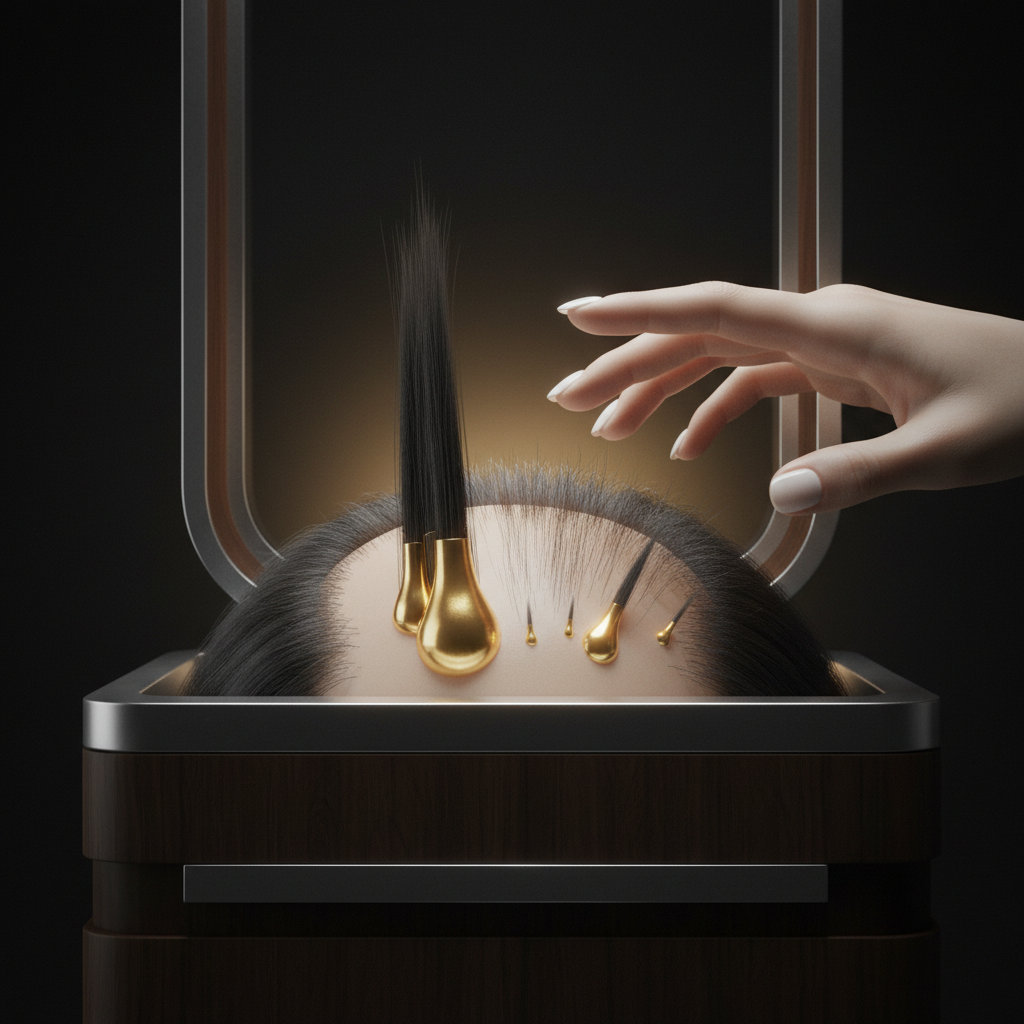
Quick answer: With Hair Follicle Miniaturisation Explained, the process describes how genetically susceptible hair follicles gradually shrink under the influence of dihydrotestosterone (DHT) and local micro-inflammation. Over successive growth cycles, robust terminal hairs transform into short, wispy vellus hairs, reducing overall scalp coverage. While this biological shrinking process forms the cornerstone of pattern hair loss, it cannot be reversed once a follicle has completely fibrosed and formed scar tissue, making early detection and targeted management vital.
Key takeaways
- Follicular miniaturisation is the defining biological mechanism behind androgenetic alopecia in both men and women.
- The androgen dihydrotestosterone (DHT) binds to susceptible follicle receptors, progressively shortening the anagen (growth) phase and lengthening the telogen (resting) phase.
- Each successive hair cycle produces a fibre with a narrower diameter, lighter pigmentation, and reduced mechanical strength.
- True miniaturisation is distinct from diffuse telogen effluvium (temporary shedding) and physical hair breakage along the shaft.
- Early intervention can often arrest progress or thicken partially miniaturised follicles, but completely fibrosed follicles cannot produce terminal hairs again.
Hair Follicle Miniaturisation Explained: what the evidence shows
When dermatologists evaluate progressive scalp thinning, they look for changes in hair calibre rather than simple shed counts. With Hair Follicle Miniaturisation Explained, the primary clinical reality is an alteration in follicular architecture. A healthy human scalp typically features follicular units containing two to four terminal hairs, each measuring roughly 60 to 80 micrometres in diameter.
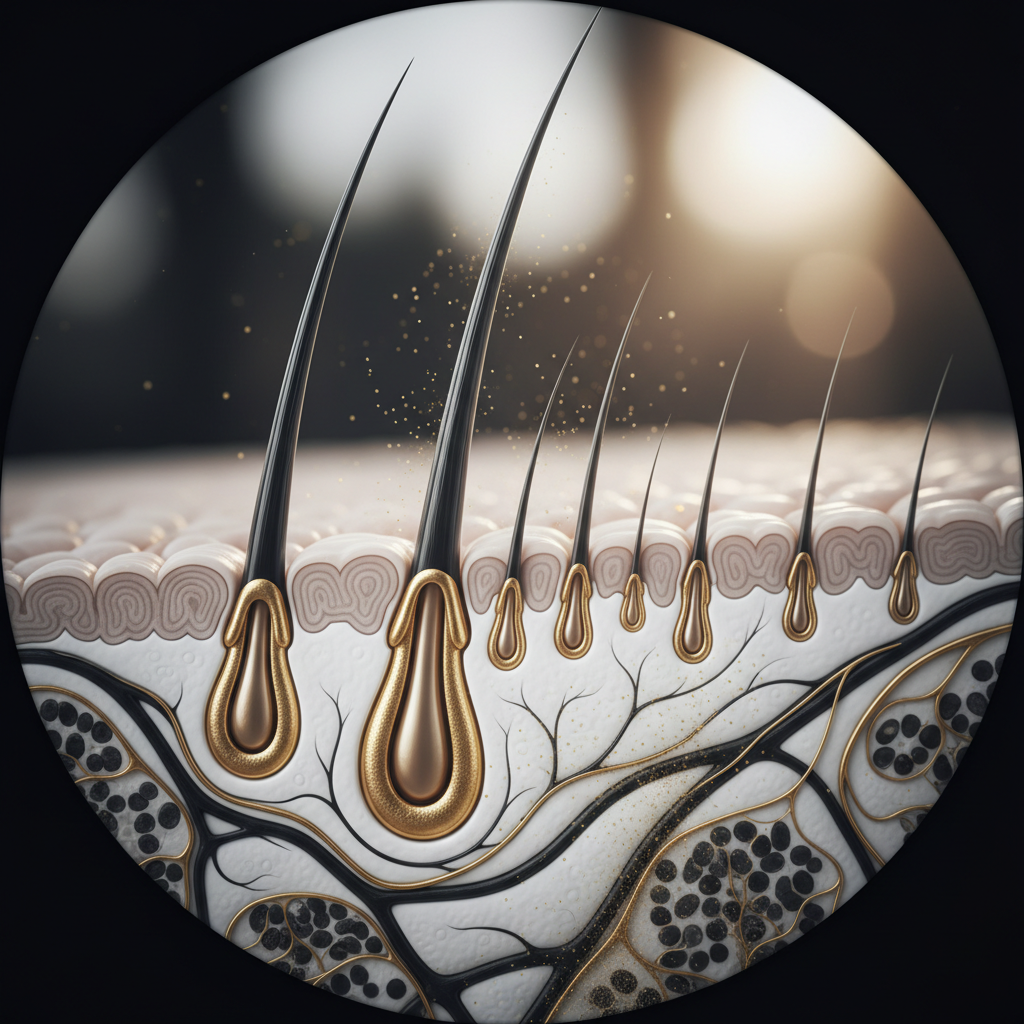
During miniaturisation, sensitive hair follicles undergo a gradual reduction in structural volume. The dermal papilla, which sits at the base of the follicle and dictates hair shaft diameter, decreases in cell count. Consequently, the new hair shaft produced during each subsequent cycle emerges with a smaller cross-sectional area.
Over several cycles, robust terminal hairs become indeterminate hairs, and eventually fine vellus-like hairs measuring under 30 micrometres. Dermatoscopic studies indicate that when more than 20 percent of hairs in a specific scalp zone show diameter diversity (anisotrichosis), active miniaturisation is occurring. This progressive thinning leads to scalp visibility long before the follicles become completely dormant.
The biological mechanism: hormones and the growth cycle
The driving force behind follicular miniaturisation is an interaction between circulating androgens and genetic receptor sensitivity. Testosterone converts into dihydrotestosterone (DHT) through the action of the enzyme 5-alpha reductase (primarily the type II isoenzyme in hair follicles). DHT possesses roughly five times higher binding affinity for androgen receptors than testosterone.
When DHT binds to receptors within the dermal papilla cells of genetically vulnerable follicles, it alters downstream gene expression:
- Shortened anagen phase: The normal growth phase drops from several years (typically 2 to 7 years) down to mere months or weeks. Because the fibre cannot grow for long, it never achieves significant length.
- Prolonged kenogen phase: The lag time between the shedding of an old telogen hair and the emergence of a new anagen hair expands. Empty follicular openings remain vacant for longer stretches.
- Dermal papilla shrinkage: Signalling molecules like transforming growth factor-beta (TGF-beta) and dickkopf-1 (DKK-1) suppress cell proliferation in the hair matrix. As the dermal papilla loses cells, it can only support a thinner hair shaft.
- Perifollicular micro-inflammation: Biopsies frequently reveal a mild, chronic lymphocytic infiltrate around the follicular infundibulum, accompanied by connective tissue sheath thickening (perifollicular fibrosis).
Healthy Terminal Follicle (Deep Subcutis)
 │
 ▼ [DHT Binding + Micro-inflammation]
Intermediate Follicle (Mid-Dermis, Shorter Anagen)
 │
 ▼ [Ongoing Growth Cycle Truncation]
Miniaturised Vellus-like Follicle (Superficial Dermis)
 │
 ▼ [Final Stage]
Complete Fibrosis / Quiescence (Irreversible)
Signs to look for: spotting miniaturisation early
Recognising miniaturisation before visible bald patches appear offers the best window for cosmetic and medical support. Unlike sudden shedding, miniaturisation progresses quietly.
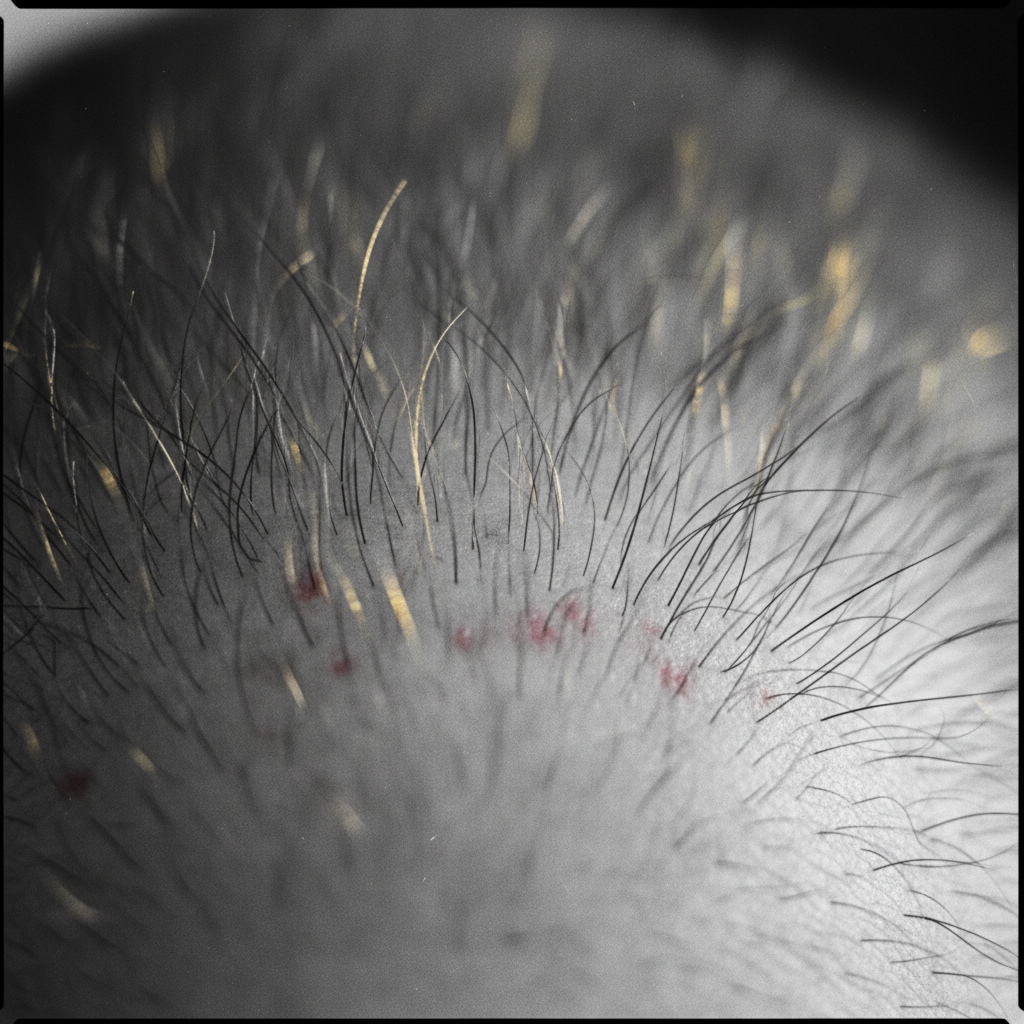
- Diameter diversity (anisotrichosis): If you examine shed hairs or look closely at your scalp under bright lighting, you will notice hairs of wildly different thicknesses growing side by side.
- Loss of styling volume: Ponytails feel thinner, or hair refuses to hold volume at the crown or temples, despite no dramatic increase in daily shedding in the shower.
- Lighter, finer regrowth: New hairs emerging around the hairline or parting look pale, soft, and short, resembling peach fuzz rather than normal scalp hair.
- Widening part line or receding temples: In women, miniaturisation typically manifests as a diffuse thinning across the mid-frontal scalp (the Ludwig pattern). In men, it targets the bitemporal hairline and the vertex (the Norwood-Hamilton scale).
What the evidence does not show
Much misinformation surrounds hair follicle shrinkage. Clinical evidence contradicts several persistent myths:
- It is not caused by clogged sebum plugs: While an oily scalp often coexists with androgenetic alopecia due to androgen receptors on sebaceous glands, sebum itself does not physically choke a follicle into shrinking.
- Poor blood circulation is not the root cause: Miniaturised follicles do show decreased capillary networks, but researchers recognise this as a secondary consequence of a smaller tissue structure requiring less metabolic support, not the primary initiator.
- It is not caused by frequent shampooing: Washing hair merely dislodges fibres already resting in the telogen phase. It plays zero role in follicular diameter reduction.
- Cosmetics cannot revive scar tissue: Shampoos, oils, and tonics cannot resurrect follicles that have undergone complete fibrotic replacement. Cosmetic products can, however, improve scalp hygiene, support hair fibre strength, and improve the appearance of existing hair.
Miniaturisation vs shedding vs breakage
Confusing different hair concerns leads to ineffective management. Use this comparison to identify what is occurring on your scalp:
| Feature | Follicular Miniaturisation | Telogen Effluvium (Shedding) | Hair Breakage |
|---|---|---|---|
| Primary site | Follicular dermal papilla | Follicle growth timing | Hair shaft (cortex/cuticle) |
| Visible symptom | Progressive reduction in hair thickness | High volume of daily shed hairs (300+) | Short, snapped fibres with frayed ends |
| Hair bulb present? | Yes, but tiny or faint | Yes, white keratin bulb intact | No bulb present |
| Fibre diameter | Highly variable (anisotrichosis) | Uniform across the fibre | Uniform, though damaged |
| Reversibility | Progressive; requires ongoing care | Usually self-correcting in 3 to 6 months | Corrected by trim and conditioning |
| Typical trigger | Genetics, DHT sensitivity, age | Illness, stress, nutritional deficit | Bleaching, heat styling, friction |
What you can do to support thinning hair
A multi-tiered approach helps maintain scalp wellness and preserves existing hair diameter.
Medical and clinical therapies
For individuals with confirmed androgenetic alopecia, clinical guidelines from organisations such as the British Association of Dermatologists highlight established interventions. Prescription 5-alpha reductase inhibitors (such as finasteride or dutasteride) lower DHT production systemically, while topical minoxidil encourages blood supply and prolongs the anagen phase at the cellular level. Low-level laser therapy (LLLT) and platelet-rich plasma (PRP) also demonstrate modest utility in supporting follicular cell metabolism.
Scalp care and cosmetic support
Keeping the scalp environment clean reduces the burden of micro-inflammation:
- Anti-dandruff and anti-inflammatory washes: Using ingredients like ketoconazole or piroctone olamine helps control Malassezia yeast populations, calming scalp inflammation that can accelerate thinning.
- Gentle cleansing: Regular cleansing prevents oxidative sebum build-up on the scalp perimeter.
- Caffeine and botanicals: Topically applied caffeine has shown preliminary ability in laboratory settings to penetrate the follicle sheath and counteract some inhibitory effects of testosterone.
Supportive nutrition
Hair production requires immense energy. Ensure adequate levels of ferritin (stored iron), vitamin D, zinc, and dietary protein. While correcting a deficiency will not cure genetic miniaturisation, poor nutritional status can superimpose telogen effluvium on top of miniaturising hair, accelerating visible loss.
The role of specialised haircare: Watermans
When managing the visual impact of miniaturisation, supportive topical products play a practical role. Watermans offers non-medical haircare formulated to revitalise the appearance of thinning hair. The Watermans Grow Me shampoo and conditioner range incorporates natural ingredients including biotin, caffeine, rosemary extract, niacinamide, and argan oil.
While non-prescription cosmetics do not alter systemic hormone levels or treat alopecia, keeping the scalp refreshed and feeding the hair fibres with protein-rich conditioning ingredients reduces mechanical breakage. This allows vulnerable, thinner hairs to reach their maximum potential length, contributing to a fuller-looking canopy.
When the cause may be something else
Miniaturisation is not the only explanation for sparse patches. Several inflammatory and autoimmune disorders cause hair thinning that requires distinct medical protocols:
- Alopecia areata: An autoimmune attack causing round, smooth bald patches without progressive hair diameter tapering.
- Cicatricial (scarring) alopecias: Conditions like lichen planopilaris or frontal fibrosing alopecia cause irreversible destruction of follicular stem cells, marked by redness, perifollicular scaling, and burning sensations.
- Traction alopecia: Prolonged mechanical tension from tight braids, extensions, or ponytails damages follicles along the margins of the scalp.
When to consult a professional
If you notice rapid changes in your hairline, extensive scaling, itching, burning, or patchy shedding, consult a GP or registered trichologist. Dermatologists use dermoscopy (trichoscopy) to inspect the scalp under 20x to 70x magnification. This confirms whether anisotropic hair diameters are present, detects subtle peripilar signs of inflammation, and rules out scarring conditions before permanent follicle damage takes place.
Frequently asked questions about Hair Follicle Miniaturisation Explained
Can completely miniaturised hair follicles be restored?
No. Once a hair follicle has undergone complete miniaturisation and the dermal papilla has fibrosed into scar tissue, it can no longer produce a visible hair shaft. Interventions are designed to rescue and thicken partially miniaturised follicles that are still biologically active.
How does Hair Follicle Miniaturisation Explained differ from temporary shedding?
With Hair Follicle Miniaturisation Explained, the primary issue is the structural diameter and shortened lifespan of individual hairs over years. In contrast, temporary shedding (telogen effluvium) involves structurally normal hairs falling out en masse due to a physiological shock, usually resolving within several months.
Does female pattern hair loss involve the same miniaturisation process?
Yes. Although the pattern of thinning differs, typically causing diffuse reduction across the crown while sparing the front hairline, the cellular mechanism remains miniaturisation driven by local androgen sensitivity, micro-inflammation, and enzymatic variations.
Can scalp massage reverse follicle miniaturisation?
Evidence is limited. Small studies suggest standardised mechanical scalp massage may increase dermal papilla mechanical stress and transiently improve hair thickness. However, massage alone cannot counteract genetic 5-alpha reductase activity or alter androgen receptor sensitivity.
Realities of follicular thinning
Understanding Hair Follicle Miniaturisation Explained allows you to separate normal daily shedding from progressive genetic thinning. By recognising the early signs of diameter variation and addressing the hormonal and inflammatory factors at play, you can take deliberate, evidence-based steps to protect follicular health and sustain overall hair density.
Sources and references
- British Association of Dermatologists. (2020). Androgenetic Alopecia: Patient Information Leaflet. Bad.org.uk.
- Sinclair, R. (2004). Male pattern androgenetic alopecia. BMJ, 329(7460), 254-259.
- Whiting, D. A. (2001). Possible mechanisms of miniaturization during androgenetic alopecia or pattern hair loss. Journal of the American Academy of Dermatology, 45(3), S81-S86.
- Trüeb, R. M. (2002). Molecular mechanisms of androgenetic alopecia. Experimental Gerontology, 37(8-9), 981-990.
- National Institute for Health and Care Excellence (NICE). (2023). Alopecia, androgenetic - Clinical Knowledge Summaries. Nice.org.uk.
Find these ingredients in Watermans products
- Zinc: you will find this ingredient in our Hair Vitamins.
- Niacinamide: you will find this ingredient in our Hair Mask.