Scalp Micro-inflammation Signs: Causes, Symptoms, and Management
8 min read ·
Recognise the early Scalp Micro-inflammation Signs, including tenderness, itch, and redness, to protect follicular health and maintain optimal hair growth.

Quick answer: Identifying subtle Scalp Micro-inflammation Signs early can protect follicular health before permanent structural changes occur. Scalp micro-inflammation is a low-grade, subclinical immune response in the upper hair follicle and dermis that lacks obvious swelling or visible clinical lesions. Typical signs include localised tenderness, mild itching, diffuse tightness, burning sensations, and low-level perifollicular redness under dermoscopy. A critical limitation is that these subtle symptoms often mirror other dermatological conditions, meaning professional examination is essential to distinguish micro-inflammation from clinical scalp disorders.
Key takeaways
- Scalp micro-inflammation operates below the threshold of overt clinical skin disease, involving subtle immune activation around the follicular infundibulum.
- Common sensory signs include trichodynia (scalp pain or tenderness), pruritus (itching), burning sensations, and a persistent feeling of scalp tightness.
- Visual cues are subtle to the naked eye but appear under dermoscopic evaluation as mild perifollicular erythema, slight flaking, or faint follicular casting.
- Chronic micro-inflammation can disrupt normal hair follicle cycling, potentially accelerating shedding or driving miniaturisation in androgenetic alopecia.
- Management focuses on barrier repair, reducing oxidative stress, and eliminating harsh chemical or physical irritants from daily haircare routines.
Scalp Micro-inflammation Signs: what the evidence shows
Micro-inflammation describes an ongoing, low-grade inflammatory process localised to the superficial hair follicle, specifically the infundibulum and upper dermis. Unlike acute conditions such as severe dermatitis or psoriasis, micro-inflammation does not typically produce large plaques, intense pustules, or gross oedema.
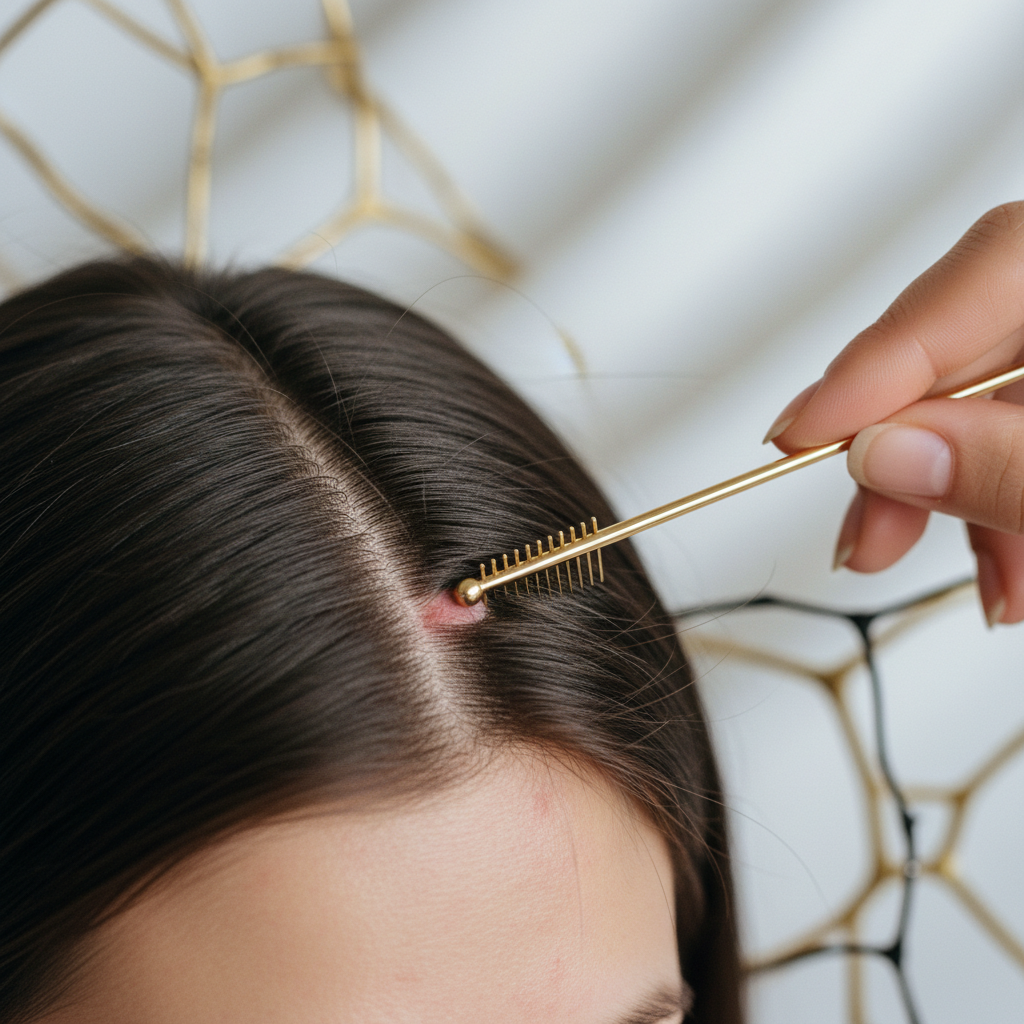
Research published in dermatology journals highlights that follicular micro-inflammation involves activated T-cells, macrophages, and inflammatory cytokines (such as IL-1 alpha, TNF-alpha, and IL-6). These cellular signals alter tissue homeostasis without triggering full-blown clinical inflammation.
Trichologists and dermatologists use dermoscopy (trichoscopy) to detect these subtle changes. The primary clinical signs observed include:
- Perifollicular Erythema: Faint pink or reddish rings surrounding the opening of individual hair follicles. This indicates dilated superficial blood capillaries responding to local cytokine release.
- Follicular Hyperkeratosis: Small, discreet collars of dead keratin build up directly around the hair shaft exit point, often resembling tiny pinpoint flakes rather than broad dandruff scales.
- Sebaceous Alteration: Localised sebum oxidation, which can manifest as greasy micro-crusting or an uncharacteristic waxy layer right at the base of the hair fibre.
- Trichodynia: Uncomfortable sensory feedback, including tenderness when moving the hair, persistent burning, or crawling sensations without obvious surface rash.
- Disrupted Hair Anchorage: An increase in telogen shedding, where follicles prematurely transition from anagen (growth) into telogen (resting) due to inflammatory signalling around the follicular stem cell niche.
+---------------------------+-----------------------------------+-----------------------------------+
| Diagnostic Feature | Scalp Micro-inflammation | Clinical Dermatitis / Psoriasis |
+---------------------------+-----------------------------------+-----------------------------------+
| Visibility to Naked Eye | Mostly invisible or faint pink | Readily visible red plaques/rash |
| Primary Sensory Symptom | Mild tenderness, burning, itch | Intense itch, pain, severe raw feeling|
| Dermoscopy Findings | Faint perifollicular rings, plugs | Thick scales, arborising vessels |
| Flaking Characteristics | Pinpoint micro-scaling at collar | Broad, thick, silvery/yellow flakes|
| Underlying Histology | Low-grade infundibular infiltrate | Dense, deep dermal infiltration |
+---------------------------+-----------------------------------+-----------------------------------+
The biological mechanisms behind micro-inflammation
To understand why micro-inflammation produces such persistent yet muted signs, one must examine the follicle's micro-environment. The follicular infundibulum is naturally colonised by micro-organisms, primarily Malassezia yeasts and Cutibacterium acnes.
When the scalp barrier is compromised by harsh cleansing agents, high water hardness, or elevated UV exposure, these microbes break down sebum into pro-inflammatory free fatty acids (such as oleic acid). These fatty acids penetrate the stratum corneum, activating Toll-like receptors on keratinocytes.
In response, keratinocytes release low concentrations of interleukin-1 alpha (IL-1α). While this amount is insufficient to create an extensive rash, it triggers sensory C-fibres in the dermis, causing the tingling, tenderness, and irritation characteristic of trichodynia. Furthermore, sustained local cytokine release can stimulate fibroblasts to produce collagen around the upper follicle. Over years, this low-grade collagen synthesis can lead to perifollicular fibrosis, a structural change that restricts nutrient diffusion to the hair matrix.
What the evidence does not show
It is vital to distinguish between factual mechanisms and unproven claims. The evidence does not show that scalp micro-inflammation directly causes classic scarring (cicatricial) alopecia on its own. Cicatricial alopecias, such as lichen planopilaris or frontal fibrosing alopecia, involve a completely different, intense auto-antigenic immune assault that destroys follicular stem cells in the bulge.
Furthermore, micro-inflammation is not an automatic death sentence for hair follicles. It acts as an aggravating cofactor rather than an absolute single cause of hair thinning. For example, in androgenetic alopecia, micro-inflammation accelerates miniaturisation driven by dihydrotestosterone (DHT), but micro-inflammation alone does not cause pattern baldness in the absence of genetic androgen sensitivity.
Finally, cosmetic products cannot claim to cure medical scalp conditions. Shampoos and scalp drops can reduce external irritants and support the epidermal barrier, but they do not replace prescription anti-inflammatory therapy when true clinical disease exists.
Practical steps to soothe the scalp
Addressing low-grade inflammation requires restoring the epidermal barrier and calming local sensory pathways.
- Balance Scalp Cleansing Frequency: Wash your hair regularly enough to prevent sebum build-up and fatty acid oxidation, but avoid aggressive over-cleansing. A gentle, sulfate-free approach maintains skin lipids while clearing microbial fuel.
- Opt for Skin-Neutral pH: The scalp maintains a natural acidic mantle between pH 4.5 and 5.5. Cleansers in this range keep the stratum corneum tight, discouraging microbial penetration and reducing barrier irritation.
- Incorporate Calming Botanicals and Antioxidants: Topicals featuring niacinamide, panthenol, green tea extract, or caffeine can help buffer oxidative stress and downregulate local inflammatory cytokines.
- Minimise Physical Friction: Aggressive brushing, tight hairstyles, or rough towel drying activate mechanoreceptors and exacerbate sensory tenderness in compromised tissue.
- Protect Against UV Damage: The scalp is prone to chronic photo-damage, especially along the hair parting. Exposure generates reactive oxygen species that sustain subclinical follicular inflammation.
When the cause may be something else
Subtle scalp discomfort does not always stem from subclinical micro-inflammation. Several distinct issues produce overlapping sensations:
- Contact Dermatitis: An allergic reaction to hair dye ingredients (like paraphenylenediamine/PPD) or fragrance compounds can start with mild itching and tingling before escalating.
- Nerve Compression or Tension: Occipital neuralgia or muscular tension in the galea aponeurotica can cause persistent scalp burning and tenderness without any follicular involvement.
- Early Cicatricial Alopecia: The initial phases of scarring alopecias can mimic harmless micro-inflammation, presenting only with mild redness and itch before permanent follicular ostia loss occurs.
- Systemic Deficiencies: Iron deficiency, thyroid dysfunction, and extreme physiological stress can elevate scalp sensitivity while triggering acute telogen effluvium.
When to seek professional advice
You should consult a registered trichologist or dermatologist if your symptoms persist for more than four weeks despite gentle scalp care. Seek immediate medical evaluation if you notice:
- Sudden, patchy hair shedding.
- Visible loss of follicular openings (the skin looks smooth and shiny).
- Overt swelling, crusting, pustules, or fluid weeping.
- Severe pain that disrupts sleep or daily activities.
A clinician can perform a dermoscopic evaluation and, if necessary, a 4 mm punch biopsy to definitively identify the cellular infiltrate and rule out progressive scarring disorders.
Supporting scalp balance with Watermans
When managing daily hygiene to support a calm scalp environment, product formulation matters. Watermans designs haircare products focused on maintaining general scalp vitality and fibre health. The Watermans Grow Me shampoo formula is blended with caffeine, biotin, argan oil, and rosemary extract, ingredients selected to clarify the scalp surface, nourish the epidermal barrier, and leave hair feeling thicker and more resilient without stripping natural moisture. Using a balanced, nutrient-rich cleanser helps sustain a clean, comfortable environment for hair follicles.
Frequently asked questions about Scalp Micro-inflammation Signs
Can Scalp Micro-inflammation Signs be detected without special equipment?
While dermoscopy provides the most accurate view, you can detect several Scalp Micro-inflammation Signs at home. Pay attention to persistent, unexplained scalp tenderness (trichodynia), mild itching that does not resolve with regular washing, a feeling of heat or tightness across the crown, and tiny keratin flakes anchored at the base of hair shafts.
Does micro-inflammation lead to permanent hair loss?
Micro-inflammation does not typically cause immediate permanent hair loss. However, if left unchecked over many years, the chronic release of cytokines can promote subtle perifollicular fibrosis. In individuals already predisposed to pattern thinning, micro-inflammation can accelerate follicular miniaturisation and worsen overall hair shedding.
How does micro-inflammation differ from everyday dandruff?
Classic dandruff (mild seborrhoeic dermatitis) presents with obvious, large, visible flakes caused by hyper-proliferation of skin cells responding to Malassezia. Scalp micro-inflammation produces much lower-grade structural changes. Flakes are often microscopic or confined strictly to the follicular collar, and the main symptoms are sensory discomfort and faint redness rather than visible peeling.
Can hard water cause signs of micro-inflammation?
Yes. Hard water contains elevated concentrations of calcium and magnesium ions (often exceeding 200 mg/L in hard water zones). These minerals react with fatty acids to form an insoluble residue that disrupts the scalp's protective moisture barrier, potentially triggering barrier breakdown, irritation, and follicular micro-inflammation.
Overview of scalp health
Recognising subtle Scalp Micro-inflammation Signs empowers you to take action before structural stress disrupts your hair's normal growth cycle. By identifying low-grade cues such as faint perifollicular redness, localized tenderness, and mild itching, you can adjust your haircare practices to restore barrier health. A measured approach focusing on balanced cleansing, pH stability, and reduced mechanical friction will keep the scalp environment calm and supportive for long-term hair wellness.
Sources and references
- British Association of Dermatologists: Guidelines on the Management of Alopecia Areata and Scalp Disorders, 2021.
- Journal of Investigative Dermatology: Microinflammation and its Role in Androgenetic Alopecia, 2019.
- International Journal of Trichology: Trichodynia and Scalp Symptoms in Non-Scarring Alopecias, 2020.
- NHS: Itchy Scalp and Scalp Conditions Guide, 2023.
- World Trichology Society: The Clinical Significance of Perifollicular Erythema, 2022.
Find these ingredients in Watermans products
- Oleic Acid: you will find this ingredient in our Camellia & Black Castor Hair & Body Oil.
- Niacinamide: you will find this ingredient in our Hair Mask.
- Panthenol (Provitamin B5): you will find this ingredient in our Heat Protection Spray.