Understanding Dihydrotestosterone DHT: The Science of Hair Miniaturisation
8 min read ·
Master the science of hair loss with our guide to Understanding Dihydrotestosterone DHT, its role in follicular miniaturisation, and effective management strategies.
Quick answer: Understanding Dihydrotestosterone DHT begins with recognising it as a potent androgen derived from testosterone via the 5-alpha reductase enzyme. In genetically susceptible hair follicles, DHT binds to androgen receptors, triggering follicular miniaturisation where growth phases shorten and terminal hairs progressively thin into vellus strands. However, understanding Dihydrotestosterone DHT also means acknowledging a critical limitation: systemic DHT levels in your blood rarely correlate directly with hair thinning. The primary driver is local follicular sensitivity, receptor density, and genetic predisposition rather than raw hormonal excess.
Key takeaways
- Dihydrotestosterone (DHT) is an androgen roughly five times more potent than testosterone at binding to androgen receptors.
- The enzyme 5-alpha reductase converts circulating testosterone into DHT locally within tissues, including the scalp and prostate.
- In pattern hair loss (androgenetic alopecia), DHT causes follicular miniaturisation, shortening the anagen (growth) phase and lengthening the telogen (resting) phase.
- Having high circulating levels of DHT does not automatically cause hair loss; genetic sensitivity of individual follicles dictates the response.
- Pattern hair loss is distinct from temporary hair shedding (telogen effluvium) and mechanical hair breakage along the shaft.
- While medical interventions target systemic or local enzyme inhibition, cosmetic topicals focus on supporting scalp vitality, hair density appearance, and fibre resilience.
Understanding Dihydrotestosterone DHT: what the evidence shows
Understanding Dihydrotestosterone DHT requires examining its physiological role from development through adulthood. Dihydrotestosterone is an endogenous sex steroid responsible for male sexual differentiation in the womb and secondary sexual characteristics during puberty, such as facial hair, body hair, and deepening of the voice. Paradoxically, the exact same hormone that stimulates coarse beard and chest hair growth can signal scalp hair follicles to wither.
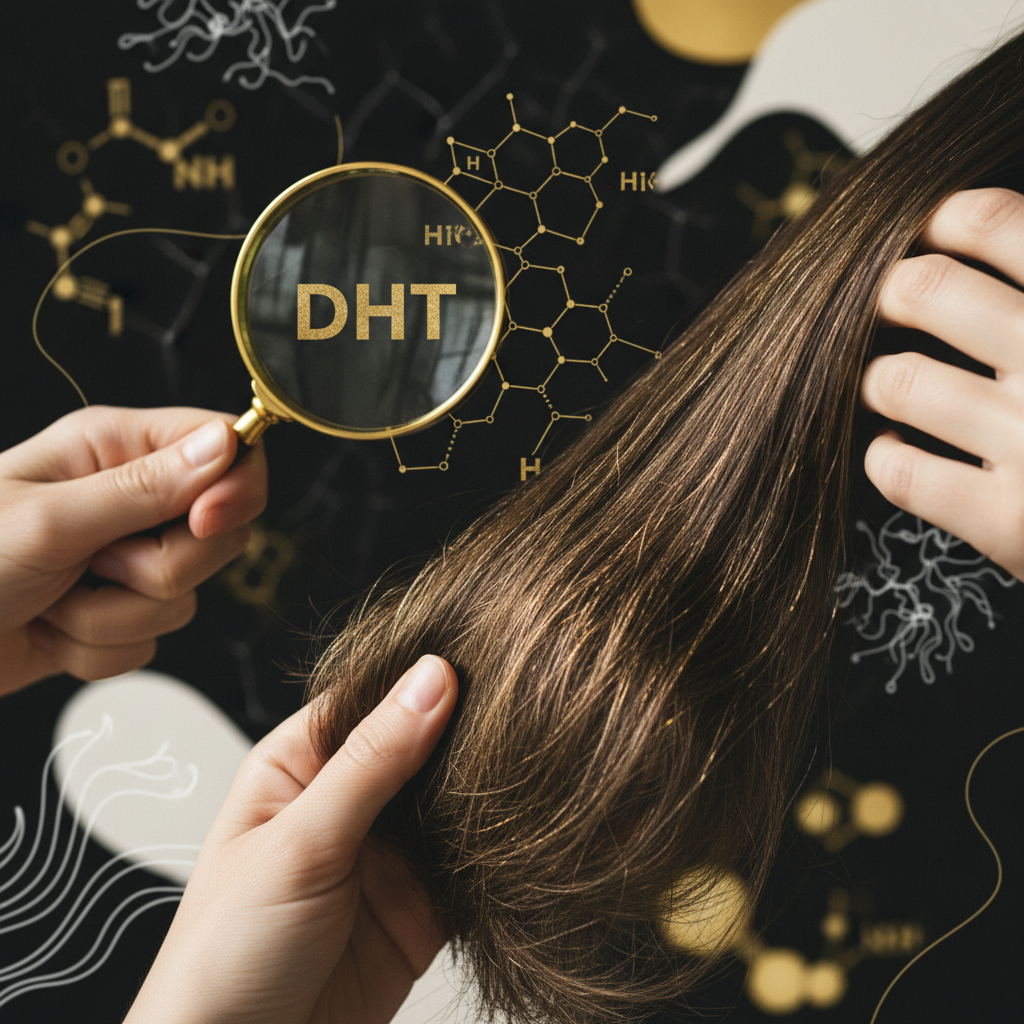
This divergent behaviour comes down to the genetic programming of hair follicles in different anatomical regions. In the scalp, follicles located at the temples, hairline, and crown often express high densities of androgen receptors and elevated levels of the type 2 5-alpha reductase enzyme. When DHT enters these specific cells, it binds to intracellular androgen receptors. This hormone-receptor complex migrates into the cell nucleus, where it alters gene expression, leading to the gradual miniaturisation of the hair follicle over successive cycles.
A normal terminal hair follicle produces a thick, pigmented fibre that grows for two to six years during its anagen phase. Under the prolonged influence of DHT in susceptible follicles, the anagen phase shortens to months or even weeks. Meanwhile, the telogen (resting) phase lengthens. Over several shedding cycles, the follicle shrinks, producing finer, shorter, less pigmented hairs (vellus-like hairs) until some follicles eventually stop producing visible fibres altogether.
What the evidence does not show
There are persistent myths surrounding DHT that clinical science does not support:
- High DHT does not mean high systemic virility or excessive testosterone: Many people experiencing rapid pattern thinning have normal circulating testosterone and DHT levels on standard blood tests. The defining factor is target-tissue sensitivity, not excess hormone production.
- DHT is not an external toxin: DHT is not a metabolic waste product that clogs pores from the outside. While sebum does contain trace androgens, hair loss is driven by internal dermal papilla signalling, not sebum blocking the follicle mouth.
- DHT is not the sole cause of all hair thinning: It does not cause alopecia areata (an autoimmune condition), diffuse telogen effluvium (triggered by stress, illness, or nutritional deficits), or traction alopecia (mechanical pulling).
The mechanism: 5-alpha reductase and the dermal papilla
The biochemical conversion of testosterone to DHT relies on the enzyme 5-alpha reductase. There are two primary isoenzymes of interest in human biology:
- Type 1 5-alpha reductase: Located predominantly in sebaceous glands, liver, and skin. It contributes to sebum production and general cutaneous androgen metabolism.
- Type 2 5-alpha reductase: Concentrated in the dermal papilla of scalp hair follicles, the prostate gland, and the inner root sheath. This isoenzyme is the primary driver behind follicular miniaturisation.
When DHT binds to the androgen receptor within the dermal papilla, it stimulates the production of inhibitory cytokines, most notably transforming growth factor-beta 2 (TGF-beta 2) and dickkopf-1 (DKK-1). These signalling proteins suppress the proliferation of matrix cells in the hair bulb, prompting early entry into the catagen (regression) phase. Consequently, the follicle never achieves the structural volume required to anchor a robust terminal hair.
| Characteristic | Terminal Hair (Healthy Follicle) | Miniaturised Hair (DHT-Affected) | Broken Hair (Shaft Damage) |
|---|---|---|---|
| Fibre Diameter | 60 to 100 micrometres | Under 30 micrometres | Normal diameter, fractured tip |
| Root Status | Healthy bulb anchored in dermis | Diminutive, shallow bulb | Intact follicle, snapped fibre |
| Growth Phase (Anagen) | 2 to 6 years | Months to weeks | Unaffected |
| Primary Cause | Normal biological cycle | DHT sensitivity and genetics | Heat, chemical, or physical trauma |
| Reversibility | Normal lifecycle | Treatable early; harder if fibrosed | Grows out from healthy root |
Identifying the signs: DHT sensitivity versus other issues
Recognising the role of DHT involves distinguishing true follicular miniaturisation from general shedding or physical fibre damage. Because treatments vary drastically, an accurate assessment is crucial.
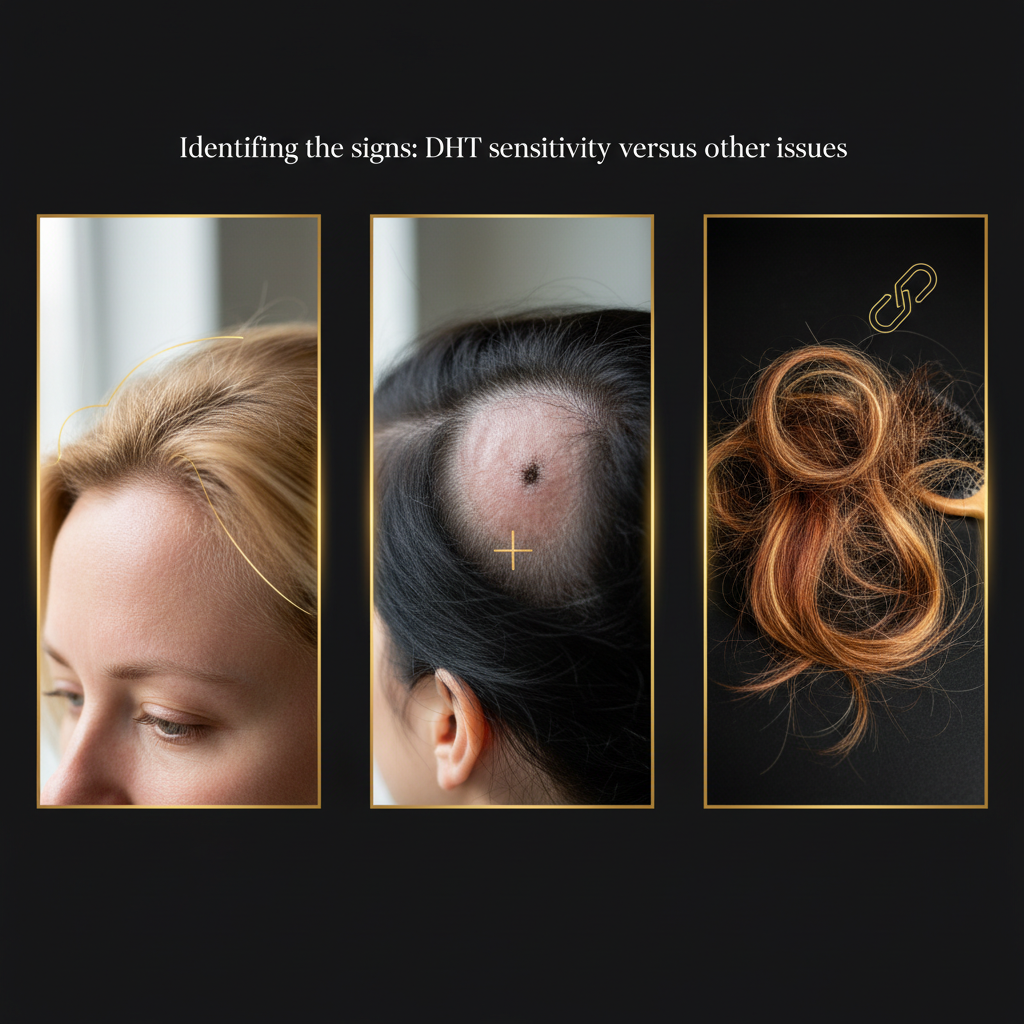
Pattern hair loss (Androgenetic alopecia)
In men, DHT sensitivity typically presents along the Norwood-Hamilton scale: bitemporal recession at the frontal hairline, thinning at the crown, and eventual confluence of both regions. The hair on the occipital scalp (the back and sides) is genetically programmed to be resistant to DHT, which is why it remains intact.
In women, female pattern hair loss typically follows the Ludwig pattern: diffuse thinning across the central vertex and crown with preservation of the frontal hairline, presenting as a widening of the central parting. Although androgens and DHT play a role, the hormonal balance in women involves complex interactions between oestrogen, progesterone, and local aromatase enzymes.
Telogen effluvium (Hair shedding)
Unlike DHT-mediated thinning, telogen effluvium involves a sudden, diffuse shedding of hundreds of hairs daily across the entire scalp, including the DHT-resistant occipital zone. It occurs roughly two to three months after a physiological shock, high fever, surgery, severe psychological distress, or rapid weight loss. The follicles themselves are not miniaturised; they have simply been pushed into the resting phase synchronously.
Hair breakage
Hair breakage has nothing to do with DHT. It occurs along the external fibre due to bleach, chemical relaxers, excessive heat styling, or extreme friction. When hair breaks, you will notice short, uneven pieces without a white keratin bulb at the end. The follicle beneath the scalp remains completely unaffected.
Management strategies and scalp care
Addressing androgenetic hair concerns typically involves a dual approach: clinical interventions to manage internal hormonal pathways, alongside cosmetic strategies designed to optimise the scalp environment and enhance fibre fullness.
Medical and clinical routes
For clinical suppression of DHT, medical practitioners often prescribe pharmaceutical 5-alpha reductase inhibitors (such as finasteride or dutasteride) or topical vasodilators (such as minoxidil). In women, oral anti-androgens like spironolactone may be considered. These treatments require medical consultation, prescription oversight, and ongoing monitoring for potential side effects.
Cosmetic care and the role of Watermans
For those seeking non-pharmaceutical, daily cosmetic support, hair and scalp hygiene plays an essential complementary role. A clear, well-nourished scalp provides the ideal environment for emerging hairs.
Watermans formulated its GrowMe shampoo and conditioning products to assist with the cosmetic appearance of thinning hair. By incorporating ingredients such as caffeine, biotin, rosemary extract, niacinamide, and argan oil, the formula supports a refreshed, invigorated scalp while depositing light conditioning agents that help fine, miniaturised hair look fuller and feel thicker. While cosmetic topicals do not alter internal endocrine functions, maintaining optimal scalp microcirculation, cleanliness, and fibre hydration reduces premature mechanical breakage and keeps existing strands looking their best.
When to seek professional advice
Because hair loss can mirror systemic illnesses, you should consult a doctor, dermatologist, or qualified trichologist if:
- You notice sudden, patchy circular bald spots (indicative of alopecia areata).
- Thinning is accompanied by scalp burning, pain, redness, or scarring.
- You experience extreme shedding across the entire scalp within a few weeks.
- You are female and notice irregular periods, adult cystic acne, or unwanted facial hair alongside thinning (symptoms consistent with polycystic ovary syndrome).
A specialist can perform a trichoscopy to examine follicular openings under high magnification, confirming the presence of miniaturisation (diversity of hair shaft diameters) characteristic of DHT activity.
Frequently asked questions about Understanding Dihydrotestosterone DHT
Does shampoo wash DHT out of your scalp?
No. Dihydrotestosterone is produced and operates internally within the dermal papilla cells beneath the scalp surface. Regular shampoos clean away excess sebum, dead skin, and external debris from the epidermis. While keeping follicles clean is healthy, surface washing does not flush out intracellular hormones.
Can women have high DHT hair loss?
Yes. Although testosterone and DHT exist in much smaller amounts in women, genetic sensitivity or hormonal fluctuations can trigger pattern thinning. When oestrogen drops (for instance, during menopause) or when androgen levels rise (as in PCOS), the relative impact of DHT on susceptible follicles can increase noticeably.
Why is understanding Dihydrotestosterone DHT helpful for choosing treatments?
Understanding Dihydrotestosterone DHT prevents you from wasting time on remedies that do not target the actual mechanism. If your thinning is caused by DHT miniaturisation, treatments designed solely for dry hair, stress shedding, or scalp fungi will not address the genetic signalling shrinking your follicles.
Does working out or lifting weights raise DHT enough to cause baldness?
Resistance training can cause temporary, minor increases in circulating serum testosterone and DHT, but there is no clinical evidence that exercise accelerates pattern hair loss. Hair loss depends on the genetic sensitivity of your scalp follicles, not transient physiological exercise spikes.
Can a miniaturised hair follicle recover?
If caught in the earlier stages of miniaturisation, follicles can often be revitalised to produce thicker, healthier terminal fibres through medical treatments or supportive care. However, once a follicle has been dormant and fibrosed for many years, recovery becomes significantly more difficult.
Concluding thoughts on managing DHT sensitivity
Understanding Dihydrotestosterone DHT is the cornerstone of making informed decisions about pattern hair thinning. Rather than viewing the hormone as an unnatural toxin, modern trichology recognises it as a standard biological androgen that intersects with individual genetic vulnerability. By clearly distinguishing between genetic miniaturisation, stress-induced shedding, and surface breakage, you can deploy the right combination of clinical therapies and nourishing cosmetic routines to protect your hair density for years to come.
Sources and references
- British Association of Dermatologists. "Androgenetic Alopecia." Clinical Guidelines, bad.org.uk.
- National Institute for Health and Care Excellence (NICE). "Alopecia, androgenetic - male and female." Clinical Knowledge Summaries, nice.org.uk.
- Trueb, R. M. "Molecular mechanisms of androgenetic alopecia." Experimental Gerontology, 2002.
- Kaufman, K. D. "Androgens and alopecia." Molecular and Cellular Endocrinology, 2002.
- Randall, V. A. "Androgens and hair growth." Dermatologic Therapy, 2008.
Find these ingredients in Watermans products
- Niacinamide: you will find this ingredient in our Hair Mask.