Hair Density vs Thickness: The Essential Trichology Guide
10 min read ·
Understand hair density vs thickness: learn the difference between strand diameter and follicle count, how to test your hair at home, and choose the right care routine.
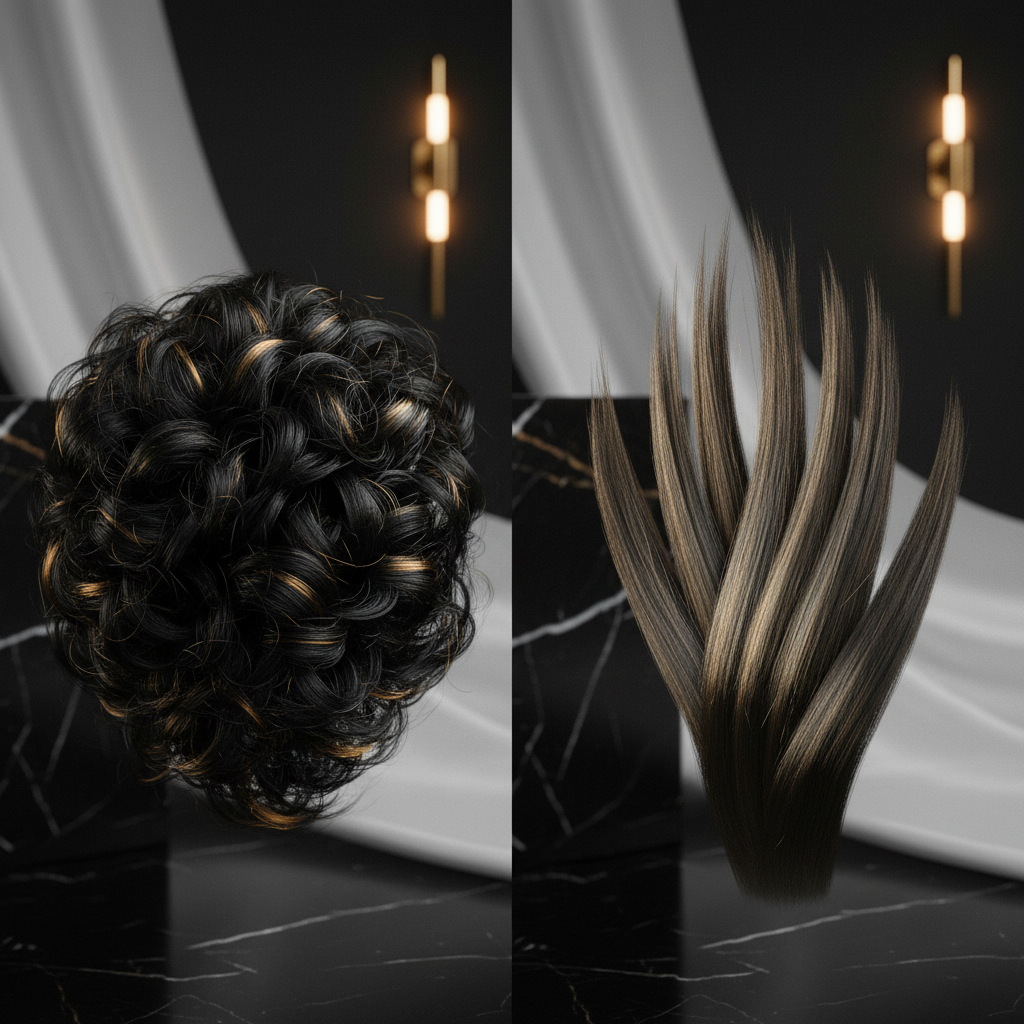
Quick answer: Hair density vs thickness refers to two completely different biological measurements that determine how your hair looks and behaves. Hair density measures the number of individual strands growing per square centimetre of scalp, while hair thickness refers to the physical width or diameter of a single hair shaft (fine, medium, or coarse). Confusing the two often leads to using the wrong hair products. However, while topical styling can alter the appearance of both, topical cosmetics cannot permanently alter your natural follicle count or genetic shaft diameter.
Key takeaways
- Hair density measures how closely packed your hair follicles are across your scalp surface.
- Hair thickness (strand diameter) describes the gauge of an individual hair fibre, categorized as fine, medium, or coarse.
- You can have high-density hair that is fine in texture, or low-density hair composed of coarse, thick strands.
- Typical scalp density averages between 150 and 300 hairs per square centimetre, varying by genetics and ethnicity.
- Strand thickness ranges broadly from 0.04 mm (fine) to over 0.10 mm (coarse).
- True changes in follicular density require clinical evaluation, whereas strand thickness can be cosmetically supported through protein-binding topicals.
Hair Density vs Thickness: what the evidence shows
Understanding hair density vs thickness is essential for diagnosing hair concerns and selecting effective care routines. In clinical trichology and cosmetic science, confusing these two metrics is one of the most common reasons people purchase products that weigh down their hair or fail to deliver adequate moisture.
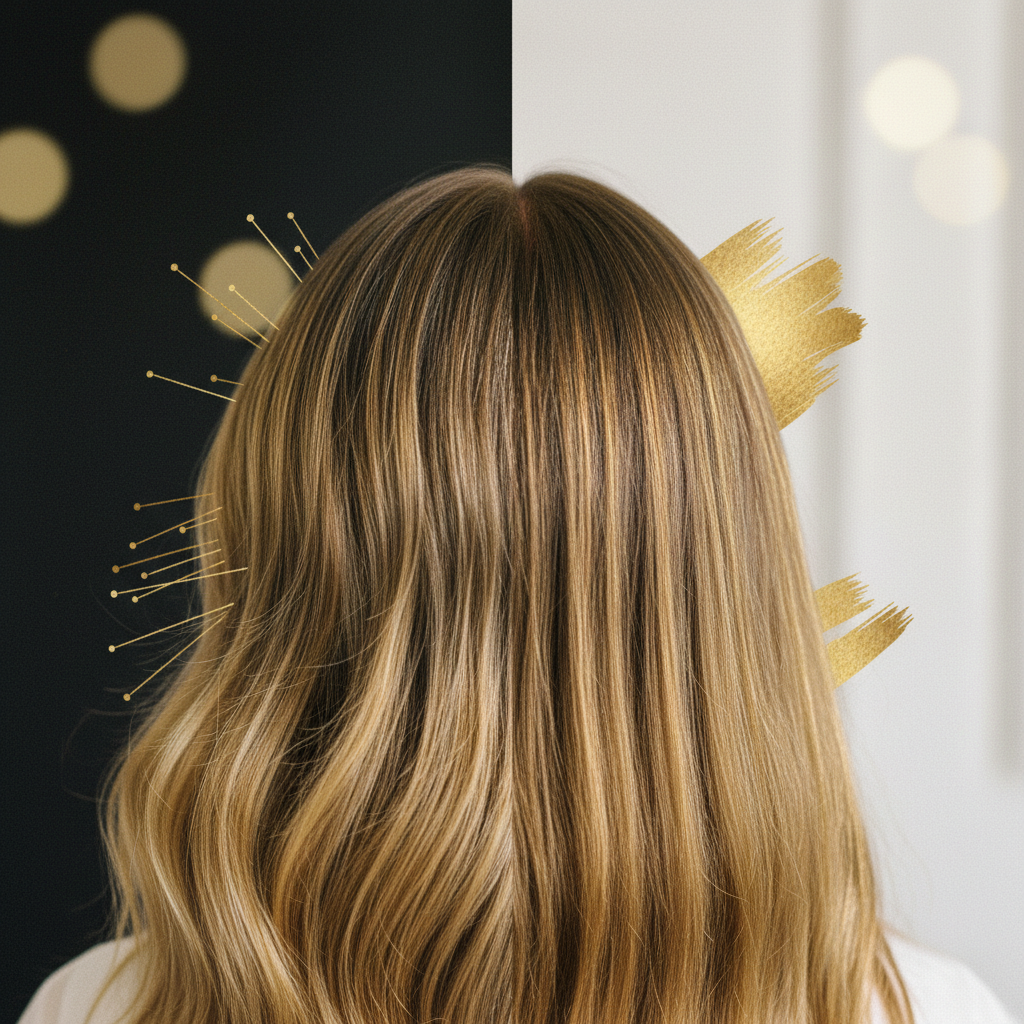
Follicular density is a count of actively producing follicular units. Human scalps house roughly 80,000 to 120,000 hairs in total, with follicles grouped into anatomical structures called follicular units (containing 1 to 4 hairs each). Scalp density is highest in childhood and naturally decreases with age as follicles undergo miniaturisation or enter extended resting phases.
Shaft thickness, by contrast, is a physical dimension determined by the size of the dermal papilla within the hair bulb. A larger hair bulb creates a thicker hair fibre containing an outer cuticle, an inner cortex, and frequently a central core called the medulla. Fine hair has a narrower cortex and often lacks a medulla entirely, making it more pliable and vulnerable to mechanical breakage.
Diagnostic differences at a glance
| Metric | Hair Density | Hair Thickness (Strand Diameter) |
|---|---|---|
| Definition | Number of hairs per square centimetre of scalp | The diameter/cross-section of an individual fibre |
| Typical measurement | 150 to 300 hairs/cm² | 0.04 mm to 0.12 mm |
| Structural cause | Number of active follicular units | Size of the dermal papilla and hair matrix |
| Visual clue | How easily you can see the scalp when parted | How easily you feel a single strand between your fingers |
| Common mistake | Assuming thin-looking hair means fine strands | Assuming "thick hair" means you have many follicles |
| Cosmetic goal | Scalp coverage, volume at the root | Tensile strength, fibre body, damage resistance |
What the evidence does not show
Research does not show that topical shampoos, oils, or serums can multiply the total number of follicles you were born with. The total number of hair follicles across the body is genetically determined during fetal development, around the 22nd week of gestation. No cosmetic ingredient can create brand-new follicles on a human scalp.
Similarly, evidence does not show that natural shaft thickness can be permanently widened from the inside out using consumer haircare products. While certain styling ingredients such as panthenol, hydrolyzed wheat proteins, and polymers can temporarily coat or penetrate the cuticle to increase fibre diameter by 5 to 10 percent until the next wash, they do not permanently modify follicular output.
Finally, having low density does not mean you are experiencing pathological hair loss. Some individuals naturally have a lower baseline follicular density without experiencing shedding, follicle miniaturisation, or pattern thinning.
The biological mechanisms behind density and thickness
The biological mechanism governing density is follicular patterning and cycle retention. Follicles cycle through anagen (growth), catagen (transition), and telogen (rest). At any given time, roughly 85 to 90 percent of healthy follicles are in the anagen phase. When systemic stressors disrupt this cycle, hairs enter telogen prematurely (telogen effluvium), reducing overall density across the scalp. In androgenetic alopecia, dihydrotestosterone (DHT) binds to receptors in genetically susceptible follicles, shortening the anagen phase and causing follicular miniaturisation over successive cycles.
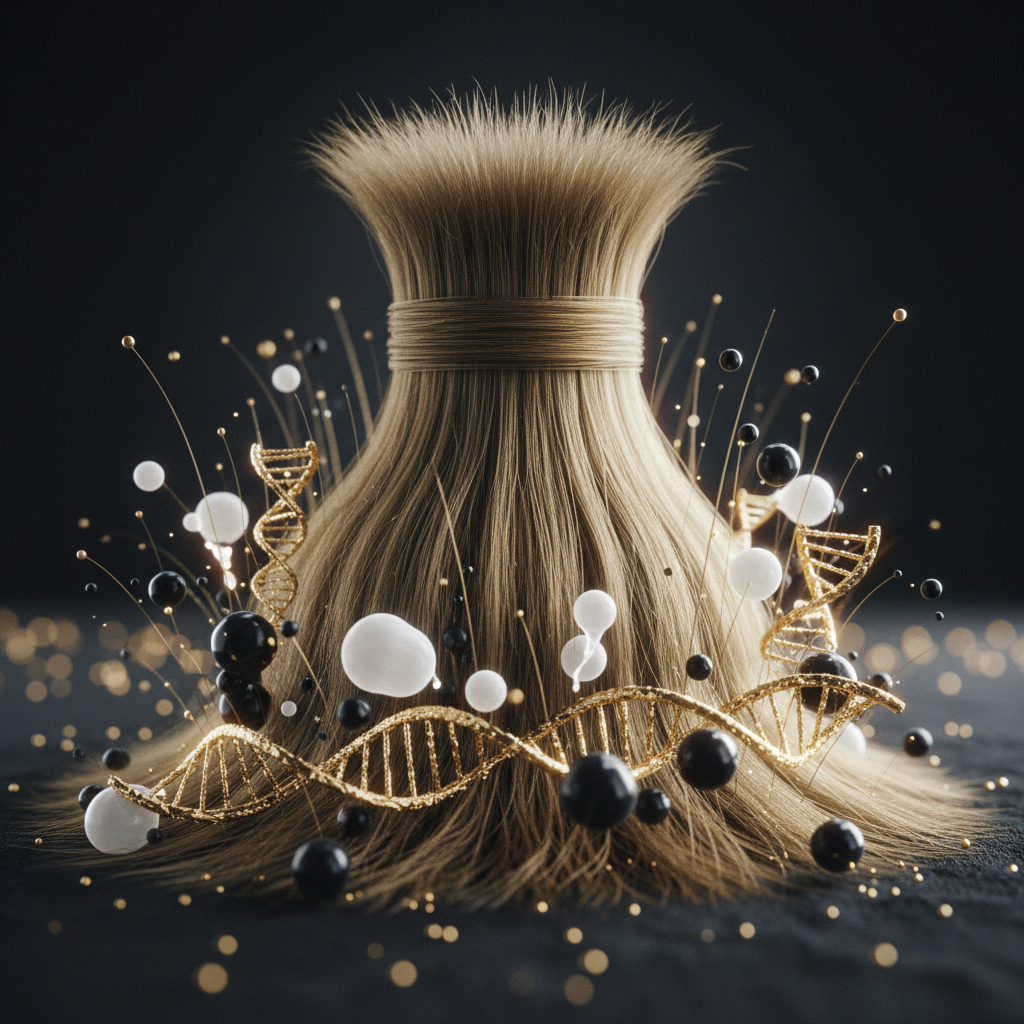
The mechanism governing thickness is cellular output within the hair bulb. Keratinocytes in the matrix rapidly divide and push upward, undergoing terminal differentiation into the cortical cells that form the hair shaft. The size of the dermal papilla dictates the volume of matrix cells generated. A larger papilla produces a broad cortex packed with keratin intermediate filaments, yielding a thick, coarse strand. A smaller papilla produces fewer cells, creating a fine strand with less structural rigidity.
How to determine your hair density and thickness
You do not need a trichology clinic to get a reliable estimate of your hair type. You can test both parameters at home using straightforward physical assessments.
Assessing hair density
- The scalp visibility test: Stand in natural light in front of a mirror with clean, dry hair in its natural state. Look at your natural part and crown. If your scalp is clearly visible without moving your hair, you likely have low density. If the scalp is somewhat visible, you have medium density. If the scalp is difficult to see even when you pull sections apart, you have high density.
- The ponytail circumference test: If your hair is long enough to pull into a ponytail, gather all of it at the crown and secure it. Measure the circumference of the base using a flexible measuring tape. A circumference under 5 cm points to low density, 5 to 10 cm indicates medium density, and over 10 cm indicates high density (assuming medium strand thickness).
Assessing hair thickness
- The thread test: Pluck a shed hair from your brush and lay it on a white sheet of paper next to a standard length of sewing thread. If your hair is visibly narrower than the thread, it is fine. If it is roughly the same width, it is medium. If it is noticeably thicker and stiffer than the thread, it is coarse.
- The roll test: Take a single strand between your thumb and forefinger. Roll the hair between your pads. If you can barely feel the strand, it is fine. If you feel a distinct, slightly wiry strand, it is coarse.
Tailoring your routine to your combination
Because density and thickness operate independently, you fall into one of four primary combinations. Each requires a distinct formulation balance between lightweight volume and heavy conditioning.
High density with fine strands
This combination often feels like you have "a lot of hair," but individual hairs limp and tangle easily. Heavy plant butters and silicone-laden conditioners coat fine cuticles, causing strands to clump and flatten against the scalp.
- Focus on lightweight, clarifying shampoos to keep roots lifted.
- Use protein-rich conditioners that strengthen the narrow cortex without leaving greasy lipid films.
- Opt for mousses and dry texture sprays rather than heavy finishing oils.
High density with coarse strands
This hair type is dense, strong, and highly resistant to moisture absorption. It can absorb significant amounts of product without looking weighed down, but it is prone to extreme bulk, frizz, and stiffness.
- Use rich, lipid-replenishing deep conditioners containing nourishing emollients.
- Incorporate leave-in creams and humectants (like glycerin and aloe) to soften the thick cortex.
- Avoid overuse of structural proteins, which can make already-rigid coarse hair feel brittle.
Low density with fine strands
Here, the scalp is easily visible and the strands are fragile. This hair type requires delicate handling to prevent breakage and product choices that create an illusion of fullness without stripping the scalp.
- Use volumising formulas containing gentle, sulphate-free surfactants that wash clean without residue.
- Avoid applying conditioner directly to the roots; focus exclusively on mid-lengths and ends.
- Be cautious with heat tools. Fine hair has a smaller cortex and burns at lower thermal thresholds (often below 180 degrees Celsius).
Low density with coarse strands
This pattern features fewer hairs across the scalp, but each individual hair is thick and wiry. Because the scalp is visible, avoiding dry, frizzy separation between strands is key.
- Choose hydrating styling creams that define individual hair clumps to create uniform coverage.
- Focus on scalp health to preserve active follicular units.
- Avoid harsh stripping cleansers that leave coarse fibres looking wire-like and detached.
Supporting the scalp environment: The Watermans approach
Maintaining existing hair density relies on a balanced, micro-nutrient-rich scalp environment. When follicles are well-nourished and the scalp barrier remains free from chronic build-up and inflammation, individual hair fibres can complete their full natural anagen cycle.
Watermans Grow Me Shampoo and Conditioner are formulated specifically to support the feeling of denser, fuller-looking hair without weighing down fine strands. Powered by naturally derived active ingredients including biotin, rosemary extract, caffeine, niacinamide, and hydrolyzed lupin protein, these formulations invigorate the scalp while temporarily coating the outer hair fibre. The result is hair that feels stronger and looks visibly thicker from root to tip, providing an optimal cosmetic complement regardless of your baseline density.
When to seek professional advice
A gradual change in your hair's density or thickness over many years can be part of normal ageing. However, rapid or patchy changes warrant medical evaluation. Consult a GP or a registered trichologist (such as a member of The Institute of Trichologists) if you observe:
- Sudden excessive shedding (more than 100 to 150 hairs daily) lasting longer than six weeks.
- Distinct circular patches of baldness appearing on the scalp or facial hair.
- Progressive widening of your central parting accompanied by smaller, finer hairs (miniaturisation).
- Persistent scalp itching, tenderness, burning, scaling, or redness.
A professional can perform dermoscopy or a trichogram to measure follicular density accurately and differentiate between temporary shedding and progressive follicular conditions.
Frequently asked questions about Hair Density vs Thickness
Can you change your natural hair thickness permanently?
No. Natural strand thickness is genetically governed by the size of your hair follicle and matrix. While you cannot permanently widen the follicle bulb through cosmetic products, chemical treatments and excessive heat can permanently reduce strand thickness by stripping the protective cuticle layer and eroding cortical keratin.
Does cutting your hair make it denser?
Cutting your hair has zero effect on hair density or the follicles beneath the scalp surface. A blunt haircut trims away split ends and aligns the blunt edges of hair shafts, which creates an optical illusion of greater density and thickness at the perimeter. The actual number of growing hairs remains unchanged.
What causes a sudden loss in hair density?
A sudden reduction in hair density is most frequently triggered by telogen effluvium, an acute reaction to physiological shock, high fever, severe illness, rapid weight loss, or hormonal shifts. It pushes large numbers of growing hairs into the shedding phase roughly two to three months after the triggering event.
In terms of hair density vs thickness, which matters more for styling products?
When choosing between hair density vs thickness, thickness (strand diameter) is the most critical factor for product weight, while density dictates the volume of product required. Fine hair needs lightweight sprays and foams regardless of density, whereas coarse hair requires richer creams and emollients to achieve manageability.
Can low hair density be reversed?
Whether low hair density can be reversed depends on the root cause. If density dropped due to temporary conditions like nutritional deficiencies or telogen effluvium, the hair usually regrows once the trigger is resolved. If it stems from longstanding androgenetic alopecia where follicles have fully scarred or atrophied, lost density cannot be naturally restored.
The bottom line on Hair Density vs Thickness
Distinguishing between hair density vs thickness is the foundation of building a haircare routine that truly works. Density tells you how many individual hairs you have on your scalp, while thickness measures the physical diameter of each individual strand. Neither characteristic is inherently better than the other, and having high density does not guarantee coarse hair, just as having fine hair does not automatically mean low density. By identifying your exact combination, you can select the right product weights, styling techniques, and scalp-care habits to achieve healthy, vibrant, and resilient hair.
Sources and references
- British Association of Dermatologists. "Telogen Effluvium: An Overview." bad.org.uk, 2021.
- Robbins, Clarence R. Chemical and Physical Behavior of Human Hair. 5th ed., Springer-Verlag, 2012.
- Sinclair, Rodney D. "Healthy Hair: What Is It?" Journal of Investigative Dermatology Symposium Proceedings, vol. 12, no. 2, 2007, pp. 2 to 5.
- Dawber, Rodney, and Dominique Van Neste. Hair and Scalp Disorders: Common Presenting Signs, Differential Diagnosis and Management. Martin Dunitz, 2004.
- National Institute for Health and Care Excellence (NICE). "Alopecia androgenetica: Scenario: Management." Clinical Knowledge Summaries, 2022.
Find these ingredients in Watermans products
- Niacinamide: you will find this ingredient in our Hair Mask.
- Panthenol (Provitamin B5): you will find this ingredient in our Heat Protection Spray.