Hair Fibre Structure: Understanding the Science of the Hair Shaft
8 min read ·
Explore the complex Hair Fibre Structure, from the protective outer cuticle to the protein-rich cortex, and learn how to prevent irreversible damage.
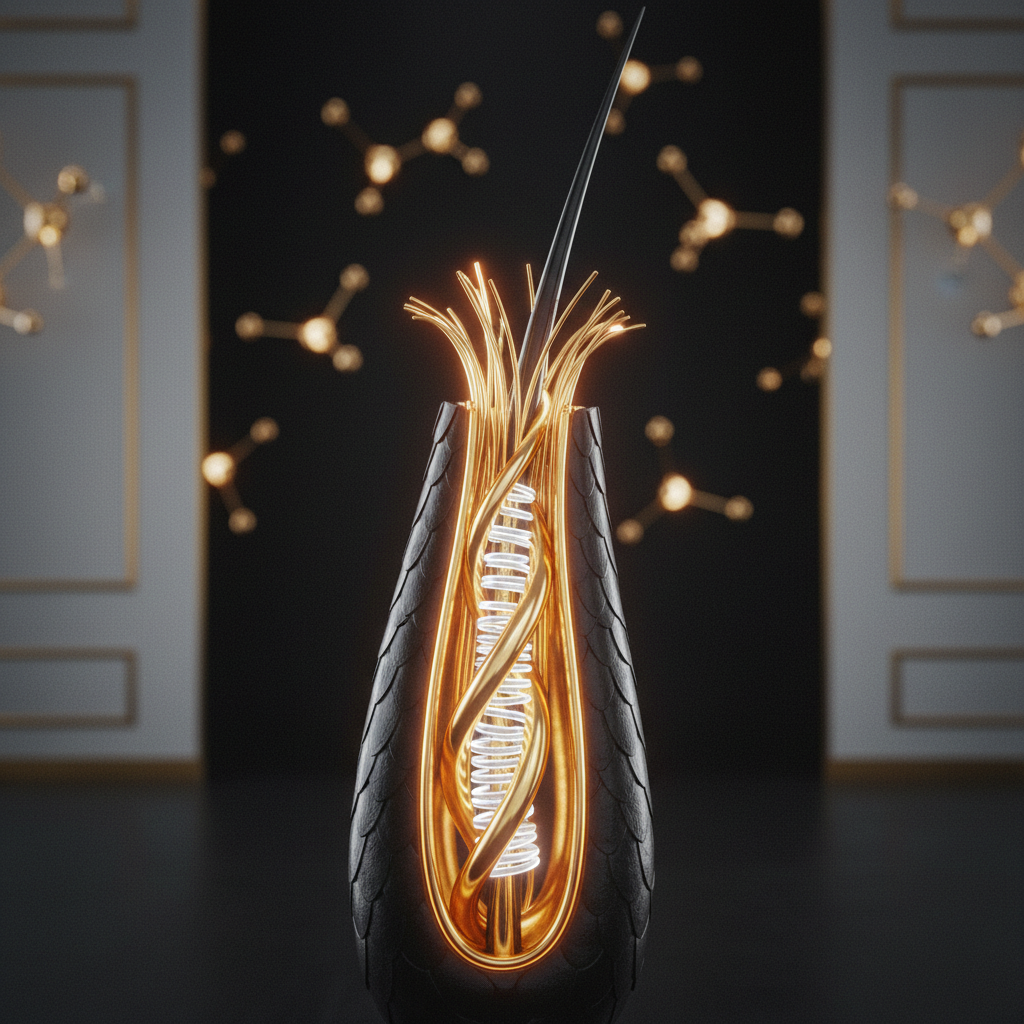
Quick answer: The human Hair Fibre Structure consists of three concentric layers: the outer protective cuticle, the structural cortex, and the central medulla. Keratin proteins account for 65 to 95 percent of the fibre's weight, bonded by disulphide links, ionic salt bridges, and weak hydrogen bonds. Because the visible hair shaft is biologically non-living tissue, any mechanical, thermal, or chemical damage done to its architecture cannot be regenerated by the body, requiring external cosmetic maintenance to manage structural integrity and prevent fibre breakage.
Key takeaways
- Human hair fibres are non-living biological composites made primarily of alpha-keratin, lipids, water, and melanin.
- The outer cuticle contains 5 to 10 overlapping cellular scales that shield the inner cortex from environmental and chemical friction.
- The cortex comprises approximately 85 to 90 percent of total fibre volume, determining mechanical tensile strength, elasticity, and natural pigment.
- Disulphide bonds create permanent structural resilience, whereas hydrogen and salt bonds temporarily yield to water and heat styling.
- The innermost medulla consists of porous, hollow cells and is often absent or fragmented in fine hair fibres.
- Once the external fibre breaks or weathers, cellular self-repair is physiologically impossible.
Hair Fibre Structure: what the evidence shows
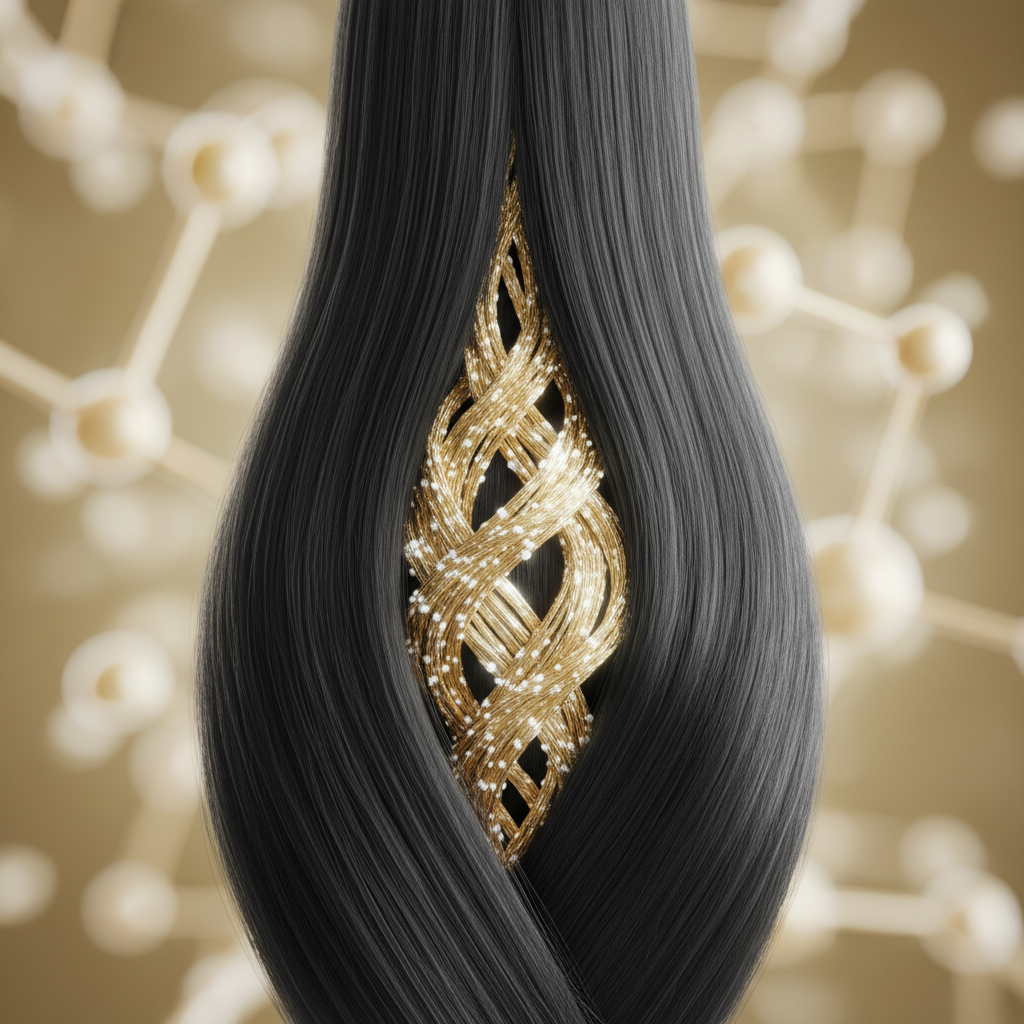
The physical Hair Fibre Structure is divided into three distinct anatomical zones visible under electron microscopy: the cuticle, the cortex, and the medulla.
 +------------------------------------+
 | CUTICLE (5 to 10 overlapping |
 | scale layers; F-layer lipids) |
 +------------------------------------+
 |
 v
 +------------------------------------+
 | CORTEX (85-90% fibre volume; |
 | macrofibrils, keratin, melanin) |
 +------------------------------------+
 |
 v
 +------------------------------------+
 | MEDULLA (Central porous core; |
 | present mainly in coarse hair) |
 +------------------------------------+
1. The Cuticle
The cuticle forms the outermost protective shield of the fibre. It consists of 5 to 10 layers of flattened, dead cells that overlap like roof tiles, angled from the root downward toward the tip. Each cuticle cell measures roughly 0.3 to 0.5 micrometres thick.
Under surface analysis, the cuticle contains multiple specialized sub-layers:
- The Epicuticle: A thin outer membrane covered by the 18-methyleicosanoic acid (18-MEA) lipid layer, often called the "F-layer". This imparts natural hydrophobicity, causing water to bead on healthy hair.
- The A-layer: A highly cross-linked protein layer rich in cystine (around 30 percent), conferring strong resistance to chemical assault.
- The Exocuticle: Another cystine-dense zone (roughly 15 percent cystine) that provides physical rigidity.
- The Endocuticle: An inner matrix with very low cystine content (around 3 percent) that swells readily in water.
2. The Cortex
The cortex accounts for 85 to 90 percent of the hair's total mass. It houses the structural protein framework responsible for flexibility, moisture retention, and mechanical tensile strength.
Within the cortical cells lie intermediate filaments (microfibrils) embedded in an amorphous, cystine-rich protein matrix. These filaments group into larger macrofibrils. The cortex also contains melanin granules (eumelanin and pheomelanin), which dictate the natural shade of the fibre.
3. The Medulla
At the core sits the medulla, a low-density canal of disordered cells and air-filled pockets. The medulla contributes negligible mechanical strength to the hair shaft. It is frequently discontinuous or entirely absent in fine fibres, appearing predictably in coarse, thick terminal hairs and beard hairs.
The molecular architecture: bonds within the cortex
The physical stability of hair relies on three distinct types of chemical bonds that link parallel keratin chains:
- Disulphide bonds (covalent): Formed between sulphur atoms within paired cystine amino acids. These permanent bonds give hair its natural elasticity and rigidity. They do not break in water and require strong chemical reducing agents (such as ammonium thioglycolate or bleaching agents) to rupture.
- Salt bridges (ionic): Created between positively charged and negatively charged amino acid side chains. These depend directly on pH. Hair rests in its most stable, compact state at its isoionic point (pH 3.67), while typical scalp and hair products aim for an acidic range of pH 4.5 to 5.5.
- Hydrogen bonds (physical): Abundant, weak bonds between hydrogen and oxygen or nitrogen atoms. These break easily when exposed to water or humidity and reform as the fibre dries, which forms the scientific basis for temporary blow-drying, wet setting, and hot-iron styling.
| Structural Component | Primary Function | Chemical Vulnerability | Effect of Structural Loss |
|---|---|---|---|
| F-layer (18-MEA Lipids) | Repels liquid, creates surface slip, reduces friction | Alkaline products, bleaching, chemical lifting | Hydrophilic hair, tangling, static charge |
| Cuticle Scales | Shields interior, regulates moisture exchange | Mechanical abrasion, dry brushing, heat tools above 185°C | Porous shaft, raised scales, dull appearance |
| Cortical Matrix | Elasticity, elongation, mechanical strength | Bleaching, perm solutions, excessive UV exposure | Fibre snap, split ends, loss of bounce |
| Disulphide Bonds | Permanent shape and structural integrity | Chemical processing, extreme thermal degradation | Irreversible limpness, structural collapse |
| Medulla | Internal insulation, optical depth | Negligible structural role | None measurable for styling or strength |
What the evidence does not show
Research into the Hair Fibre Structure disproves several persistent haircare myths:
- Hair fibres cannot be permanently healed: Because the hair shaft is anucleated, biologically dead tissue, it contains no living cells to produce new keratin once emerged from the scalp. Conditioning treatments, silicones, and hydrolysed protein conditioners temporarily deposit onto or penetrate the shaft to patch structural deficits, but they rinse away over time.
- Split ends cannot be permanently mended: Products marketed as split-end menders use synthetic polymers to glue split cortical segments together. They provide cosmetic bridging, not biological reconstruction.
- Topical nutrients cannot "feed" the shaft: Vitamins, minerals, and collagen applied to the hair lengths cannot incorporate into the dead keratin matrix. Nutrition only influences the living follicle cells located below the skin surface prior to keratinisation.
Signs of architectural breakdown
When the hair fibre undergoes physical or chemical stress, specific diagnostic signs emerge along the shaft:
- Loss of hydrophobicity: Water instantly soaks into the strand rather than beading, indicating depletion of the protective 18-MEA lipid layer.
- Trichorrhexis nodosa: The formation of microscopic nodes along the shaft where the cuticle has stripped away, exposing cortical fibres that broom outwards until the hair snaps under minimal tension.
- Trichoptilosis: Longitudinal splitting of the distal hair tip, commonly called split ends, resulting from cumulative friction and dry cortex separation.
- Extreme wet elasticity without recovery: A strand that stretches excessively when wet and fails to snap back indicates widespread disruption of cortical disulphide bonds, often following excessive bleaching.
Protecting your fibre architecture
You cannot replace the hair shaft, but you can minimise structural decay:
- Keep pH balanced: Use shampoos and conditioners formulated between pH 4.5 and 5.5 to prevent alkaline swelling of the cuticle.
- Limit heat tool exposure: Keep styling tools below 185°C. At temperatures exceeding 200°C, cortical proteins denature, moisture boils rapidly inside the cortex (creating bubble hair deformity), and keratin suffers irreversible degradation.
- Manage friction when wet: The cuticle swells and softens in water, lowering its mechanical resistance. Detangle gently using wide-tooth tools or flexible brushes starting from the ends and moving upward.
- Apply protective leave-in barriers: Emollients and conditioning polymers smooth down lifted cuticle edges, temporarily mimicking the lost F-layer to reduce daily mechanical shear.
When the issue is not fibre damage
It is critical to distinguish between hair fibre breakage and medical hair loss:
- Breakage happens when the shaft snaps mid-length or at the tip. You will see short, irregular fragments on your clothes or brush without a white bulb at the base. This is an external structural issue.
- Shedding (telogen effluvium) involves the whole hair falling out from the root, featuring a small white keratin bulb at the end. This is a follicular cycle issue, often triggered by stress, systemic illness, or nutritional shifts.
- Thinning (androgenetic alopecia) represents follicle miniaturisation under hormonal influence, producing finer diameter strands over time rather than physical snapping of existing lengths.
If you notice sudden widespread shedding, bald patches, scalp pain, or redness, consult a trichologist, dermatologist, or your GP. Structural haircare treatments cannot resolve follicular medical conditions.
The Watermans perspective
While Watermans does not alter the fundamental biological laws of hair keratanisation, the range is engineered to support both the living scalp and the cosmetic appearance of hair fibres. Maintaining a healthy scalp environment supports normal follicular production before the fibre emerges. Meanwhile, gentle cleansing without harsh sulphates protects the vulnerable external cuticle from unnecessary friction and lipid stripping, helping to preserve the integrity of your hair's existing architecture.
Frequently asked questions about Hair Fibre Structure
What is the most fragile part of the hair fibre?
The cuticle layer is the most mechanically vulnerable. While the cortex provides tensile strength, the outer cuticle takes the brunt of physical friction, dry brushing, heat, and UV exposure. Once the cuticle scales lift or break off, the internal cortex is left completely exposed to rapid breakdown.
Can products permanently repair damaged Hair Fibre Structure?
No cosmetic product can permanently rebuild a broken Hair Fibre Structure. The hair shaft consists of non-living, non-vascular keratin that cannot regenerate. Modern bond-building treatments and hydrolysed protein conditioners create temporary chemical or ionic reinforcements within the cortex, but these gradually wash out and require regular maintenance.
What temperature causes permanent structural damage to hair?
Thermal damage begins around 150°C as natural moisture evaporates rapidly. Between 185°C and 200°C, structural alpha-keratin denatures into weaker beta-keratin forms. At temperatures exceeding 215°C, the protein matrix experiences severe thermal degradation, leading to structural blistering, irreversible melting of cortical proteins, and immediate fibre snapping.
How does porosity relate to hair fibre structure?
Porosity describes how readily the hair absorbs and releases moisture, which depends directly on cuticle alignment. Compact, flat-lying cuticle scales create low porosity, keeping moisture out. Lifted, damaged, or missing cuticles create high porosity, allowing water to penetrate quickly while leaving the cortex vulnerable to rapid dehydration and environmental stress.
Summary
Understanding your hair fibre structure shifts how you approach day-to-day haircare. Because the shaft is non-living keratin, every thermal, chemical, and physical action permanently alters its composite architecture. By respecting the delicate cuticle shield, balancing product pH, and managing styling friction, you can preserve the cortex, minimise breakage, and maintain natural fibre resilience over its entire lifespan.
Sources and references
- Robbins, C. R. (2012). Chemical and Physical Behavior of Human Hair. 5th ed. Springer-Verlag New York.
- Cruz, C. F., et al. (2016). Human hair characteristics investigated by advanced analytical techniques. International Journal of Cosmetic Science, 38(5), 444-454.
- Gavazzoni Dias, M. F. (2015). Hair cosmetics: An overview. International Journal of Trichology, 7(1), 2-15.
- Swift, J. A. (1999). The mechanics of fracture of human hair. International Journal of Cosmetic Science, 21(4), 227-239.
- Dawber, R. (1996). Hair: Its structure and response to cosmetic preparations. Clinics in Dermatology, 14(1), 105-112.
Where Watermans fits
If you want a routine built around the science above, these are the products from the range that apply here: