The Hair Fibre Cuticle Structure: Anatomy, Function, and Care
8 min read ·
Explore the Hair Fibre Cuticle Structure: understand its microscopic anatomy, lipid barrier, causes of cuticle erosion, and evidence-based tips to prevent breakage.
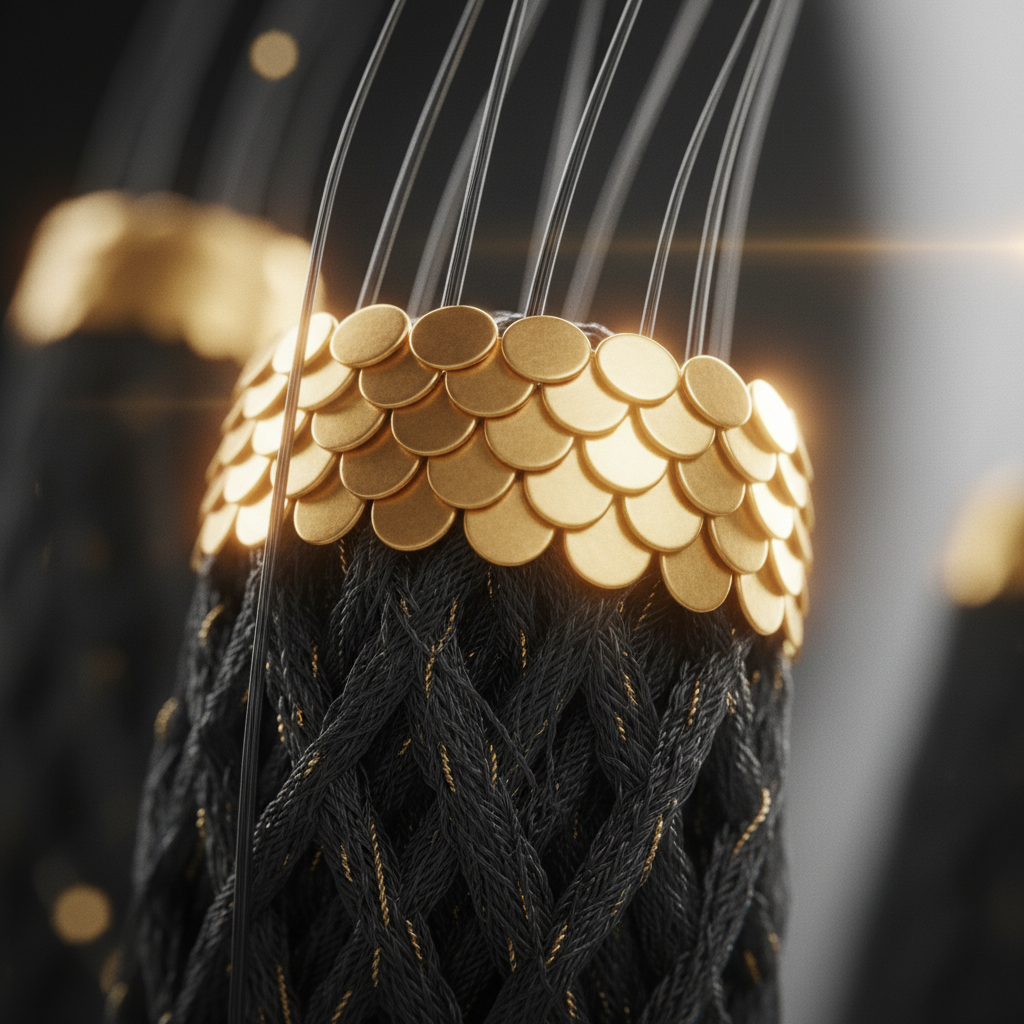
Quick answer: The Hair Fibre Cuticle Structure is the protective outermost barrier of the hair shaft, consisting of 5 to 10 overlapping, keratinised cell layers arranged like shingles on a roof. Its primary biological function is shielding the delicate inner cortex from chemical, thermal, and mechanical damage, while regulating moisture retention and imparting surface shine. However, cuticle cells are non-living biological tissue; once severely degraded, fractured, or stripped away by environmental or styling friction, the cuticle cannot self-repair or biologically regenerate.
Key takeaways
- The cuticle forms the outermost protective shield of the hair shaft, comprising 5 to 10 flat, overlapping layers of scale-like cells.
- Each individual cuticle cell contains distinct biochemical sub-layers: the hydrophobic epicuticle, the cysteine-rich exocuticle, and the softer, mechanically vulnerable endocuticle.
- A critical 18-methyleicosanoic acid (18-MEA) lipid layer coats the external cuticle surface, providing vital water-repelling properties and lubricity.
- Healthy cuticles lay flat, reflecting light and retaining internal moisture, whereas lifted or worn cuticles lead to tangling, moisture loss, and eventual fibre breakage.
- Cuticle cells are non-living; damaged scales cannot regenerate organically and require cosmetic conditioning agents, optimal pH management, and mechanical protection to prevent further breakdown.
The Hair Fibre Cuticle Structure: what the evidence shows
Research into the hair shaft reveals that The Hair Fibre Cuticle Structure acts as the primary physical and chemical defence mechanism for mammalian hair. Electron microscopy demonstrates that human hair cuticles consist of flattened, scale-like cells that overlap one another, pointing from root to tip. In healthy human terminal hair, these scales wrap around the circumference in 5 to 10 layers, accounting for roughly 10% to 15% of the total fibre weight.
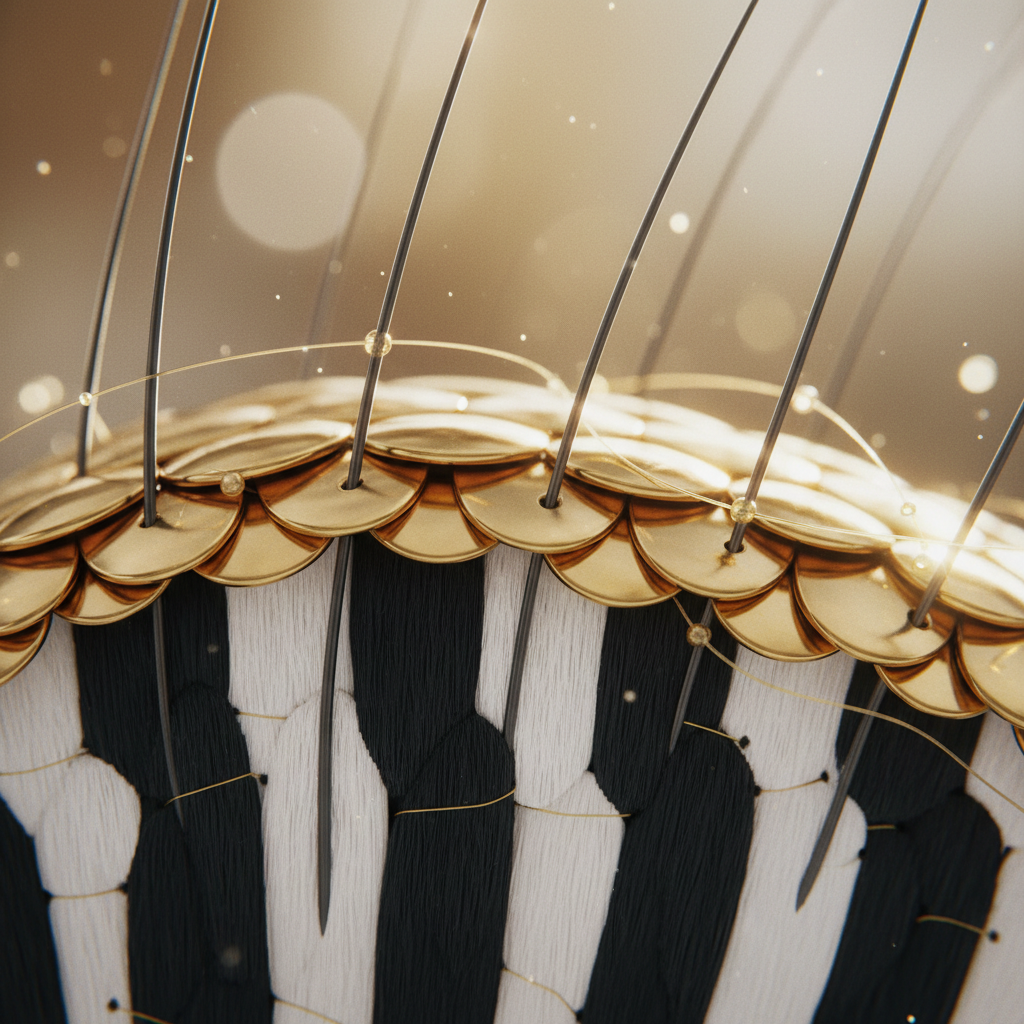
Beyond mere mechanical shielding, the cuticle is biochemically specialised. The outermost layer is the epicuticle, a thin membrane roughly 5 to 10 nanometres thick, covered by a covalently bonded monolayer of fatty acids dominated by 18-methyleicosanoic acid (18-MEA). This fatty layer makes healthy virgin hair strongly hydrophobic (water-repelling). Beneath the epicuticle sits the exocuticle, an exceptionally tough, rigid matrix rich in the amino acid cysteine (around 30% of total amino acid content), which provides rigid structural integrity through extensive cross-linked disulphide bonds.
Below the exocuticle lies the endocuticle. The endocuticle contains far lower levels of cysteine (around 3% to 5%) and higher amounts of soluble, basic amino acids. Because it possesses fewer cross-links, the endocuticle swells readily when water enters the hair shaft. Between neighbouring cuticle cells runs the cell membrane complex (CMC), an adhesive intercellular cement containing lipids and proteins that bonds adjacent scales together.
Biochemical anatomy of the cuticle layers
To understand how the cuticle responds to environmental stress and grooming, it helps to examine its layers from the outside inward:
| Cuticle Sub-Layer | Thickness / Location | Primary Composition | Functional Role |
|---|---|---|---|
| F-Layer (18-MEA) | ~1 nm (outermost surface) | 18-Methyleicosanoic acid | Imparts hydrophobicity, reduces friction, repels moisture uptake |
| Epicuticle | 5 to 10 nm | Semi-permeable protein membrane | Resistant to chemical breakdown, coats outer scale face |
| Exocuticle | ~0.2 to 0.4 µm (upper interior) | High cysteine keratin (~30%) | Rigid physical shield, provides mechanical rigidity and resilience |
| Endocuticle | ~0.1 to 0.3 µm (lower interior) | Low cysteine, soluble proteins | Highly swellable; vulnerable to mechanical disruption when wet |
| Cell Membrane Complex (CMC) | ~25 to 30 nm (between scales) | Lipids (ceramides, sterols) and protein | Biological cement holding individual cuticle scales intact |
Mechanisms of cuticle damage and wear
Cuticle degradation occurs through chemical, physical, and thermal pathways. Because hair fibres emerge from the scalp fully keratinised, they possess no cellular machinery to manufacture new proteins. Every form of external friction wears down the original architecture over time.
Chemical erosion
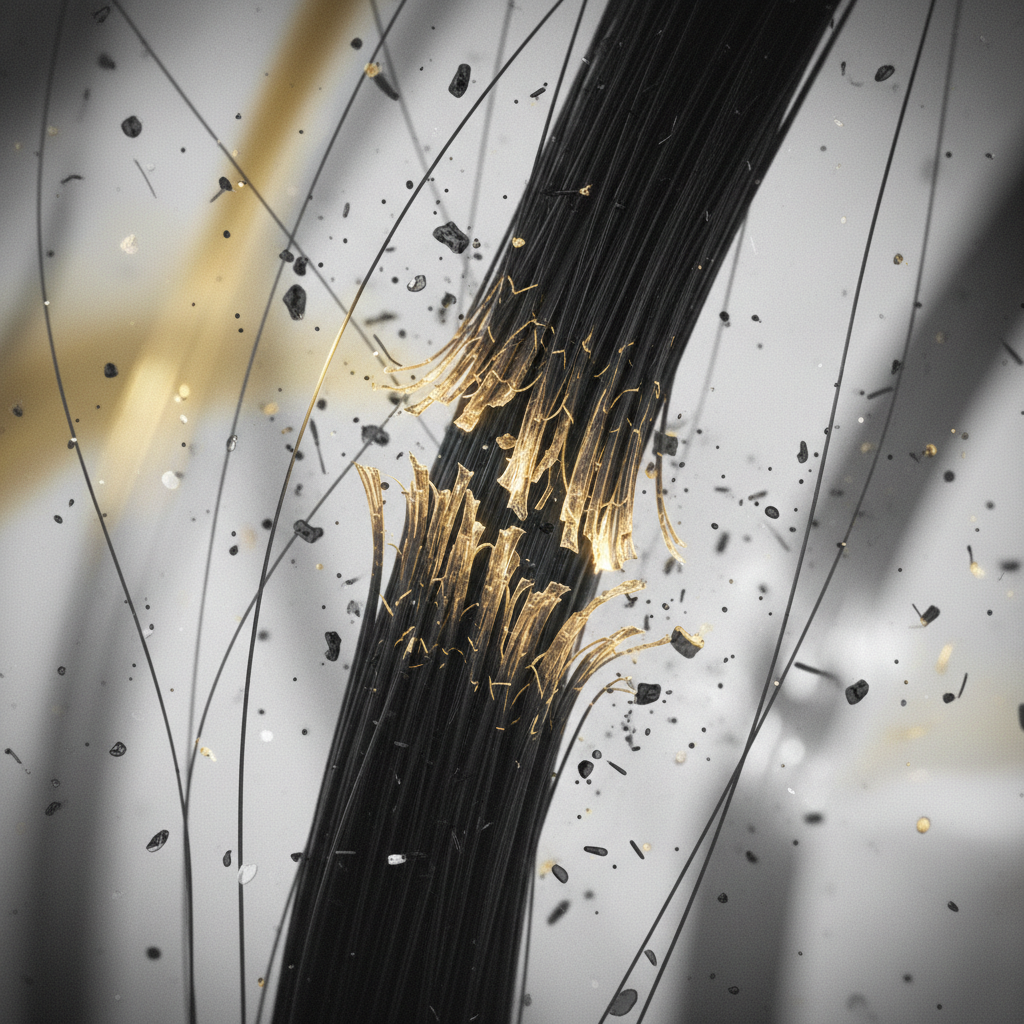
Alkaline environments, such as permanent hair dyes, bleach, and chemical relaxers with a pH between 9.0 and 11.0, force the cuticle scales to lift by penetrating the lipid-rich cell membrane complex and neutralising the hair's natural isoelectric point (around pH 3.67). This lifting allows active processing chemicals to reach the cortex.
Repeated alkaline exposure strips the outer 18-MEA lipid layer entirely. Once this natural boundary layer is removed, the fibre turns from hydrophobic to hydrophilic, readily absorbing ambient humidity, swelling unevenly, and losing its native slip.
Mechanical and thermal fatigue
Everyday brushing, wet combing, and rough friction strip the delicate edges of cuticle scales. Because the endocuticle swells when wet, mechanical strain while washing causes internal pressure against the rigid exocuticle. Over time, this shear stress creates microscopic stress fractures, leading to scale lifting, edge chipping, and eventual peeling.
Thermal styling tools operating above 180 degrees Celsius degrade surface keratin, bubble the internal moisture within the endocuticle, and melt residual boundary lipids, causing permanent surface irregularities.
Signs of cuticle compromise
You can assess the structural integrity of your hair cuticles through clear physical markers:
- Rough, dry texture: Running your fingers from tip to root feels rough, raspy, or uneven.
- Dull appearance: A raised or fragmented cuticle scatters incident light in multiple directions rather than bouncing it cleanly back, causing hair to look matte.
- Excessive tangling: Lifted cuticle scales interlock like Velcro when individual strands rub past each other.
- Fast wetting and drying: Hydrophilic hair with depleted surface lipids absorbs water almost instantly in the shower and loses that moisture just as rapidly in dry air.
- Increased fibre breakage: Hair snaps mid-shaft during light detangling because unprotected cortical fibrils are exposed to bending stresses.
What you can do to preserve the cuticle
While the biological structure cannot self-repair, you can preserve remaining cuticle scales and recreate surface lubricity through informed routine habits:
- Maintain acidic pH balance: Use shampoos and conditioners formulated near hair's natural isoelectric range (pH 4.5 to 5.5). Mild acidity keeps the cuticle scales tightly compacted against the fibre shaft.
- Deposit protective conditioning agents: Cationic surfactants, silicones, and plant-derived oils adhere to damaged, negatively charged areas of the hair fibre, filling empty scale spaces and restoring lubricity.
- Minimise wet mechanical strain: Hair is at its most vulnerable when saturated with water, as the swollen endocuticle softens. Always use wide-tooth combs, detangle with generous conditioner slip, and avoid aggressive towel drying.
- Shield from high heat: Apply thermal protectants that reduce heat transfer rates and lower surface friction before using blow dryers or heated styling irons. Keep tool temperatures under 180 degrees Celsius where possible.
When fibre breakage is mistaken for hair loss
A common clinical pitfall is confusing cuticle degradation with true hair loss. When cuticle layers are worn away, the exposed cortex easily snaps under tension. This results in short, broken strands collecting on clothes, pillowcases, or bathroom counters.
This snapping is hair fibre breakage, not follicular hair loss. True hair loss, such as androgenetic alopecia or telogen effluvium, involves the biological hair follicle within the dermis shedding full-length hair strands that display a white bulb at the root. Cuticle erosion never causes follicular shedding. If you notice overall diffuse thinning at the scalp rather than shortened, broken fragments, consult a dermatologist or qualified trichologist for follicular evaluation.
Supporting hair condition: The Watermans approach
Maintaining the outward health of your hair requires caring for the living scalp environment alongside the physical lengths. Watermans designs cosmetic haircare systems specifically to support hair density, scalp comfort, and surface fibre management. Products like Watermans GrowMe Shampoo and ConditionMe Conditioner deliver nutrient-rich scalp nourishment alongside cationic conditioning agents that smooth lifted scales, improve wet combing lubricity, and reduce mechanical friction, helping you protect your lengths against everyday styling breakage.
Frequently asked questions about The Hair Fibre Cuticle Structure
What is the primary biological purpose of The Hair Fibre Cuticle Structure?
The primary biological purpose of The Hair Fibre Cuticle Structure is to protect the internal, protein-dense cortex from external environmental, chemical, and physical degradation. By creating a tough, overlapping, hydrophobic barrier, the cuticle prevents excessive water loss, shields delicate keratin filaments from ultraviolet and thermal exposure, and provides a low-friction surface that allows hairs to slide past one another smoothly.
Can damaged hair cuticles heal or repair themselves naturally?
No, hair cuticles cannot naturally heal or regenerate. The hair shaft extending beyond the scalp surface is non-living keratinised tissue without blood vessels or cellular mechanisms. Once the cuticle scales are chipped, lifted, or stripped away by chemical treatments or physical friction, the damage is permanent. Cosmetic conditioners, oils, and bond-building formulas can temporarily smooth or fill these microscopic gaps, but they cannot biologically regenerate the cuticle.
How does water affect the cuticle layers during washing?
Water causes the cuticle to expand. While the outer exocuticle is relatively rigid, the internal endocuticle absorbs water rapidly and swells. This internal swelling pushes the outer cuticle scales outward, leaving their fragile edges exposed. In this wet state, mechanical friction from vigorous scrubbing or brushing can snap or lift scale edges far more easily than when the hair fibre is dry.
What is 18-MEA, and why is it important for cuticle health?
18-MEA (18-methyleicosanoic acid) is a branched-chain fatty acid covalently bonded to the outer protein membrane of the cuticle. It creates a microscopic hydrophobic layer that naturally repels water and prevents moisture absorption from the air. 18-MEA reduces surface friction, giving hair its natural slip, shine, and softness. Routine chemical processes like permanent bleaching strip this delicate lipid layer, leaving the fibre hydrophilic and porous.
The Hair Fibre Cuticle Structure in review
The Hair Fibre Cuticle Structure represents a sophisticated, highly organised defence system designed to endure substantial daily mechanical and environmental stress. Its multi-layered architecture, reinforced by a hydrophobic lipid seal, balances mechanical flexibility with rigid chemical protection. Because this non-living keratin structure cannot repair itself, safeguarding its integrity demands mindful grooming, balanced pH management, and the minimisation of high-heat and harsh chemical treatments. Protecting your hair's outer cuticle ensures the inner cortex remains intact, resilient, and visibly vibrant over the lifetime of every fibre.
Sources and references
- Robbins, C. R. (2012). Chemical and Physical Behavior of Human Hair. 5th ed. Springer-Verlag New York.
- Swift, J. A. (1999). The mechanics of human hair: a review. International Journal of Cosmetic Science, 21(4), 227-239.
- Hesse, M., et al. (2007). Human hair cuticle: structural features and modifications by cosmetic treatments. Journal of Cosmetic Science, 58(4), 381-390.
- Negri, A. P., et al. (1993). Structural characterization of the human hair cuticle surface by atomic force microscopy and X-ray photoelectron spectroscopy. Textile Research Journal, 63(2), 109-116.
- Cruz, C. F., et al. (2016). Human hair characteristics and methods to evaluate hair damage: an overview. International Journal of Cosmetic Science, 38(5), 443-457.