Hair Fibre Anatomy and Keratin Structure: A Stylist and Science Reference
9 min read ·
Explore the science of hair fibre anatomy and keratin structure, detailing the cuticle, cortex, medulla, and the molecular bonds that give hair its strength.
Quick answer: Understanding Hair Fibre Anatomy and Keratin Structure explains how the hair shaft maintains its strength, elasticity, and barrier function. The hair fibre consists of three concentric layers: the outer protective cuticle, the structural cortex, and the inner medulla. Roughly 85% to 90% of the dry weight is alpha-keratin protein, anchored by covalent disulphide bonds, salt bridges, and hydrogen bonds. The primary limitation is that fully emerged hair fibre is non-living tissue: damaged keratin cannot self-repair biologically and must be reinforced cosmetically.
Key takeaways
- The human hair fibre has three distinct anatomical layers: cuticle, cortex, and medulla.
- Keratin is a fibrous protein rich in cysteine, which forms the disulphide bonds responsible for hair's mechanical strength.
- Chemical treatments, extreme thermal styling above 180 degrees Celsius, and UV exposure degrade cortical protein and lift protective cuticle scales.
- Hydrogen bonds provide temporary shape (reforming when hair dries), while disulphide bonds provide permanent structural integrity.
- Hair fibres are non-living biological structures; lost structural proteins cannot regenerate from within once the shaft emerges from the scalp.
Hair Fibre Anatomy and Keratin Structure: what the evidence shows
Research published in the International Journal of Cosmetic Science and cosmetic dermatology literature confirms that human hair is an intricately organised composite biomaterial. Understanding Hair Fibre Anatomy and Keratin Structure requires examining the fibre from the outside inward, along with the macromolecular arrangement of keratin.
1. The Cuticle
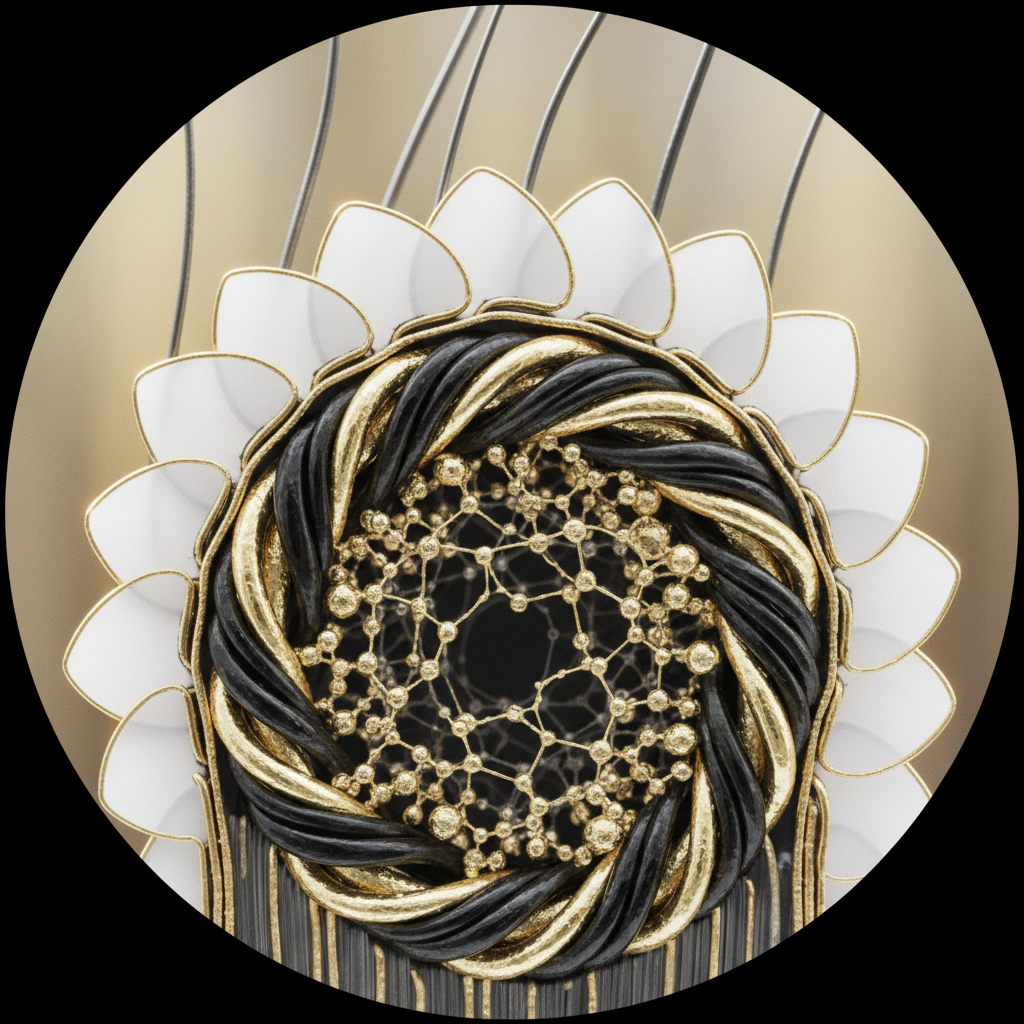
The cuticle serves as the chemical and physical shield for the entire fibre. It consists of 6 to 10 overlapping, flattened, scale-like cells that point toward the hair tip. Each cuticle cell is roughly 0.3 to 0.5 micrometres thick and features three sub-layers:
- Epicuticle: A thin, hydrophobic membrane covered by the 18-methyleicosanoic acid (18-MEA) lipid layer, which repels water and provides surface lubricity.
- Exocuticle: A rigid layer rich in cysteine (roughly 12% to 15% of total amino acid content), giving the outer shell high structural resistance.
- Endocuticle: A softer, protein-poor layer containing around 3% cysteine, which swells readily in water.
Between individual cuticle cells lies the Cell Membrane Complex (CMC), a lipid-protein blend that acts as intercellular cement.
2. The Cortex
Making up roughly 80% to 85% of total fibre mass, the cortex dictates mechanical properties such as tensile strength, bending stiffness, and elasticity. It consists of elongated, spindle-shaped cortical cells packed parallel to the fibre axis.
Within these cells reside intermediate filaments (macrofibrils), which house microfibrils made of low-sulphur alpha-helical keratin. These microfibrils are embedded in an amorphous, high-sulphur protein matrix rich in cystine. This "rod-and-matrix" structure functions identically to reinforced concrete: the crystalline keratin rods resist tension, while the amorphous matrix resists compression and shear.
The cortex also contains melanin granules (eumelanin for black and brown, pheomelanin for red and yellow tones) that give hair its natural colour.
3. The Medulla
The innermost column of the hair fibre is the medulla. It consists of loosely packed, vacuolated cells with air-filled spaces. The medulla is discontinuous or entirely absent in fine hair and common in coarse or grey hair. Studies indicate it contributes negligibly to overall tensile strength, serving mainly a minor thermoregulatory or optical scattering role.
The Molecular Bonds of Keratin
Keratin's resilience depends on three distinct chemical bonds operating at the sub-microscopic level:
- Disulphide Bonds (Covalent): Formed between adjacent cysteine amino acid residues. These covalent bonds require strong reducing agents (such as ammonium thioglycolate) or oxidising chemicals to break. They dictate hair's permanent curvature and tensile resistance.
- Salt Bridges (Ionic Bonds): Formed between the positively charged amino groups and negatively charged carboxyl groups of neighbouring amino acids. They are pH-dependent, maintaining peak strength at hair's natural isoelectric point (around pH 3.67 to 5.5). Alkaline solutions above pH 8.0 disrupt these bridges, causing swelling.
- Hydrogen Bonds (Physical): Weak electrostatic attractions between polar atoms. Though weak individually, their massive volume accounts for significant lateral cohesion. Water easily breaks hydrogen bonds, which is why wet hair stretches further and can be reshaped upon drying.
| Bond Type | Bond Mechanism | Relative Strength | Disrupted By | Cosmetic Implication |
|---|---|---|---|---|
| Disulphide | Covalent cross-links between cysteine residues | High | Bleach, relaxers, perms, heat over 200°C | Permanent damage or permanent reshaping; causes structural breakage if excessive |
| Salt Bridges | Ionic attraction between opposite charges | Medium | Extreme pH shifts (acids < pH 2 or alkalis > pH 8) | High pH lifts cuticles and swells the cortex, leaving fibre vulnerable to friction |
| Hydrogen | Dipole-dipole attractions between polar groups | Low (high quantity) | Water, moisture, moderate heat | Enables temporary styling (blow-drying, water setting); creates humidity-induced frizz |
What the Evidence Does Not Show
- Damage cannot be biologically "cured": The hair shaft contains no living cells, vascular supply, or nerve endings. Claims that any product can permanently "repair" or "heal" split ends at a cellular level are biologically false. Topical treatments can only temporarily patch, coat, or bridge damaged sites.
- Medulla presence does not equal stronger hair: Fine hair lacking a medulla can possess identical tensile yield strength per unit of cortical cross-sectional area compared to coarse hair containing a full medulla.
- Topical keratin does not replicate native keratin architecture: While hydrolysed proteins adhere to the hair surface and temporarily enter micro-porosities, they cannot rebuild the dense, crystalline alpha-helical microfibril network formed during follicular keratinisation.
The Mechanism of Fibre Degradation
Degradation of the hair fibre follows a predictable sequence. Friction, aggressive detangling, or chemical alkaline swelling first strips the delicate 18-MEA lipid layer. Without this protective lipid barrier, the cuticle cells become hydrophilic and prone to chipping.
Once cuticle scales chip and expose the cortex, the structural microfibrils face direct mechanical shear, environmental oxidation, and moisture fluctuations. Thermal styling tools operated above 180 degrees Celsius induce a phase transition in alpha-keratin, permanently unwinding the helical coiled coils into random or beta-sheet conformations. This manifests macroscopically as split ends (trichoptilosis), mid-shaft nodules (trichorrhexis nodosa), and premature fibre snapping.
Crucially, this snapping is fibre breakage. It must not be confused with hair shedding (the natural release of the telogen root from the follicle) or hair loss (follicular miniaturisation caused by conditions such as androgenetic alopecia).
Signs of Compromised Fibre Architecture
- High Porosity: Hair absorbs water instantly, takes hours to dry, and tangles severely when wet.
- Loss of Elastic Recovery: When gently stretched wet, the fibre fails to bounce back to its original length or snaps under minimal tension.
- Dullness and Roughness: When light hits lifted, cracked cuticle scales, it scatters unevenly rather than reflecting smoothly.
- Increased Inter-Fibre Friction: Strands knot easily and feel rasping when rubbed from tip to root.
What You Can Do to Support Keratin Integrity
- Maintain Scalp and Hair at Physiological pH: Use acidic-balanced cleansers and rinses (pH 4.5 to 5.5). This contracts the cuticle scales, locks down the intercellular cement, and preserves ionic salt bridges.
- Control Styling Temperatures: Limit heated tools to 150 to 180 degrees Celsius. Always apply a film-forming heat protectant to distribute thermal transfer and prevent rapid water boiling inside the cortex (bubble hair).
- Incorporate Conditioning Agents: Formulations featuring hydrolysed proteins, amino acids, and biomimetic lipids can deposit into surface micro-fissures, reducing cuticular drag and water absorption.
- Minimise Wet Manipulation: Hair can stretch up to 30% of its dry length before breaking, but wet hair has a lower yield point where permanent deformation occurs. Detangle hair gently using wide-toothed tools, ideally coated in conditioner to lower frictional resistance.
When the Cause May Be Something Else
If you are experiencing thinning, patches of visible scalp, or large quantities of hair coming out with visible white bulbs at the base, your issue is not cuticle abrasion or cortical protein loss. Telogen effluvium (diffuse shedding triggered by systemic stress, illness, or iron deficiency) and androgenetic alopecia (pattern hair loss driven by dihydrotestosterone) happen at the follicular level underneath the skin. No surface conditioning routine will resolve a follicular hair cycle disturbance.
When to Seek Professional Advice
Consult a trichologist, dermatologist, or medical doctor if you observe:
- Shedding exceeding 100 to 150 hairs daily for more than six to eight weeks.
- Discrete bald spots, patchy shedding, or widening parts.
- Redness, scaling, burning, or pain on the scalp skin.
- Extreme brittleness throughout the entire head despite zero chemical or heat exposure, which may indicate a rare genetic structural disorder (such as trichothiodystrophy or monilethrix).
Supporting Fibre Condition with Watermans
Cosmetic products cannot change the internal genetics of hair, but supporting the external barrier and scalp environment makes a notable difference to hair manageability and breakage rates. Watermans provides targeted, pH-balanced hair solutions, including their Grow Me Shampoo, formulated with rosemary extract, biotin, hydrolysed lupin protein, and niacinamide. While these topical botanicals and hydrolysed proteins do not biologically alter follicular hair loss or rebuild native disulphide bonds, they help clean away sebum, support a healthier-feeling scalp, and coat the hair fibre to reduce day-to-day breakage caused by brushing and environmental stress.
Frequently asked questions about Hair Fibre Anatomy and Keratin Structure
How does chemical bleaching disrupt Hair Fibre Anatomy and Keratin Structure?
Chemical bleach uses strong alkaline agents (usually ammonium hydroxide) to swell the cuticle, allowing oxidising hydrogen peroxide to penetrate the cortex and destroy melanin. In doing so, it irreversibly oxidises cysteine into cysteic acid, breaking the critical disulphide bonds that give the hair its structural strength. This leaves the cortex porous and structurally weakened.
Can split ends be repaired by applying keratin products?
No. Split ends represent an irreversible physical separation of the cortex and cuticle along longitudinal lines. Topical hydrolysed keratin can temporarily bridge the split via polymer films, creating a smoother appearance until the next wash. However, the biological cross-links cannot be reformed. Trimming the split area remains the only permanent fix.
What is the role of the 18-MEA layer in hair anatomy?
18-methyleicosanoic acid (18-MEA) is a covalently bound lipid monolayer covering the surface of the epicuticle. It provides hydrophobicity, repelling water and lowering surface friction between adjacent strands. A single chemical bleaching or alkaline treatment can strip this lipid layer, making the fibre hydrophilic, rough, and prone to mechanical breakage.
Why is wet hair more fragile than dry hair?
When water enters the hair shaft, it penetrates the cortex and disrupts millions of weak hydrogen bonds between adjacent keratin coils. This disruption allows the protein chains to slip past one another more easily under tension. Consequently, wet hair stretches more readily, has a lower breaking point, and can suffer permanent damage if brushed aggressively.
Understanding Fibre Architecture for Healthier Hair
A practical grasp of Hair Fibre Anatomy and Keratin Structure clarifies why gentle mechanical handling, pH awareness, and heat moderation are fundamental to hair preservation. While keratin provides remarkable physical tensile resilience, its non-living structure cannot regenerate once damaged. Respecting the outer cuticle and minimising stress on internal cortex bonds remains the most effective strategy for maintaining strong, resilient hair from root to tip.
Sources and references
- Robbins, C. R. (2012). Chemical and Physical Behavior of Human Hair. 5th Edition, Springer-Verlag New York.
- Dawber, R. (1996). Hair: Its structure and response to cosmetic preparations. Clinics in Dermatology, 14(1), 105-112.
- Swift, J. A. (1999). The mechanics of fracture of human hair. International Journal of Cosmetic Science, 21(4), 227-239.
- Wolfram, L. J. (2003). Human hair: A unique physicochemical composite. Journal of the American Academy of Dermatology, 48(6), S106-S114.
- British Association of Dermatologists (BAD). Hair Structure and Hair Loss Guidelines, revised clinical documentation.
Find these ingredients in Watermans products
- Niacinamide: you will find this ingredient in our Hair Mask.