Hair Cuticle Porosity and Lipid Protection: The Science of Fibre Integrity
8 min read ·
Understand the relationship between Hair Cuticle Porosity and Lipid Protection, the role of 18-MEA, and how to defend hair against structural breakage.
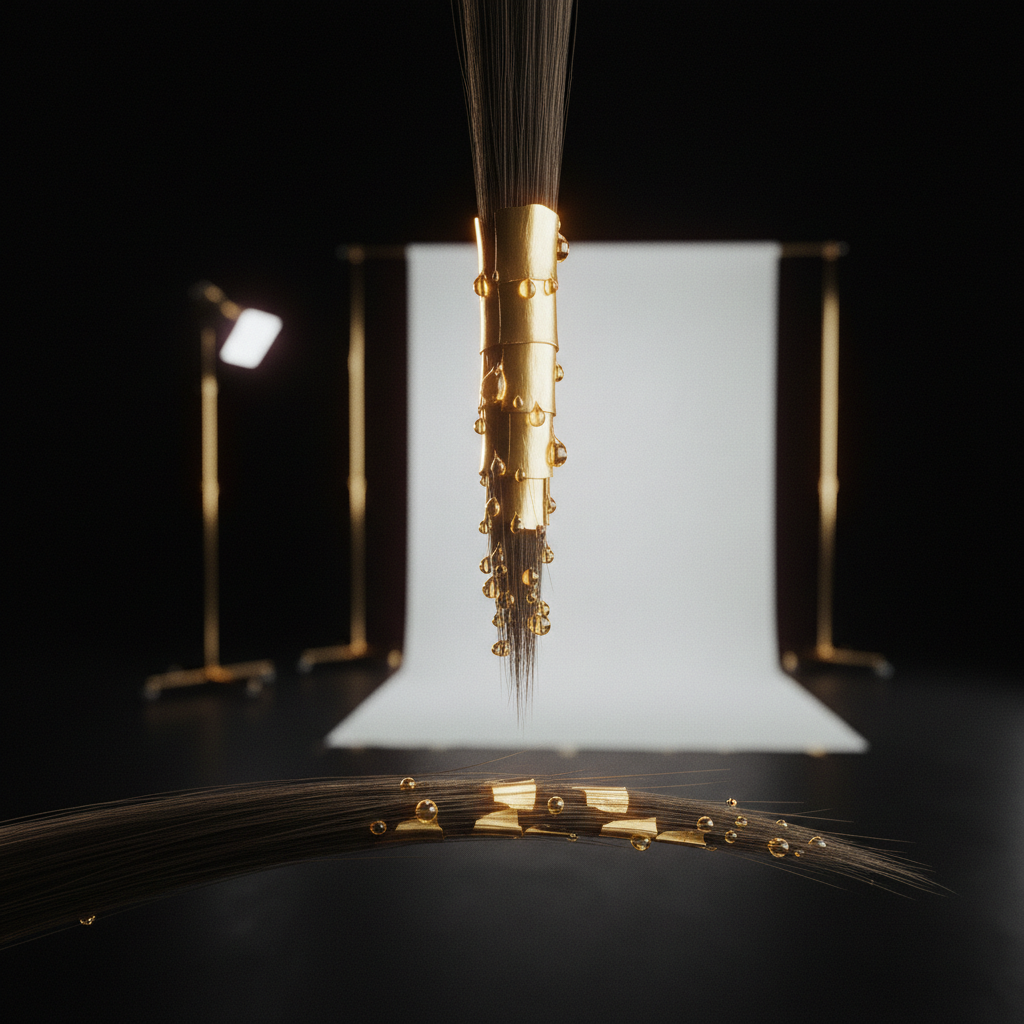
Quick answer: Hair Cuticle Porosity and Lipid Protection refers to how the overlapping scales of the hair shaft and its natural surface fats regulate moisture intake. Healthy hair has a protective lipid coating, mainly 18-methyl eicosanoic acid (18-MEA), which keeps the cuticle flat and water-repellent. When chemical processing, heat or weathering strips these lipids, cuticle scales lift, creating high porosity that leads to rapid moisture loss, frizz and fibre breakage. However, topical cosmetics can only temporarily patch these barriers, not permanently regenerate lost natural lipids.
Key takeaways
- The hair cuticle consists of 5 to 10 overlapping cellular layers shielded by an integral lipid barrier known as the F-layer.
- 18-methyl eicosanoic acid (18-MEA) is the primary lipid covalently bound to the cuticle surface, giving healthy hair its hydrophobic (water-repelling) nature.
- Porosity measures how easily water, chemicals and environmental moisture penetrate and exit the hair cortex.
- Chemical bleaching, alkaline relaxers, UV radiation and thermal tools above 180 degrees Celsius strip surface lipids and erode cuticle edges.
- While high porosity increases susceptibility to mechanical breakage, no cosmetic product can biological recreate the original F-layer once chemically lost.
Hair Cuticle Porosity and Lipid Protection: what the evidence shows
Research in cosmetic dermatology demonstrates that Hair Cuticle Porosity and Lipid Protection are fundamentally linked through hair surface chemistry. The human hair fibre is surrounded by an outermost protective envelope termed the epicuticle. Bonded to this envelope is the F-layer, a monomolecular layer of fatty acids primarily composed of 18-MEA. This lipid layer ensures the hair surface remains strongly hydrophobic.
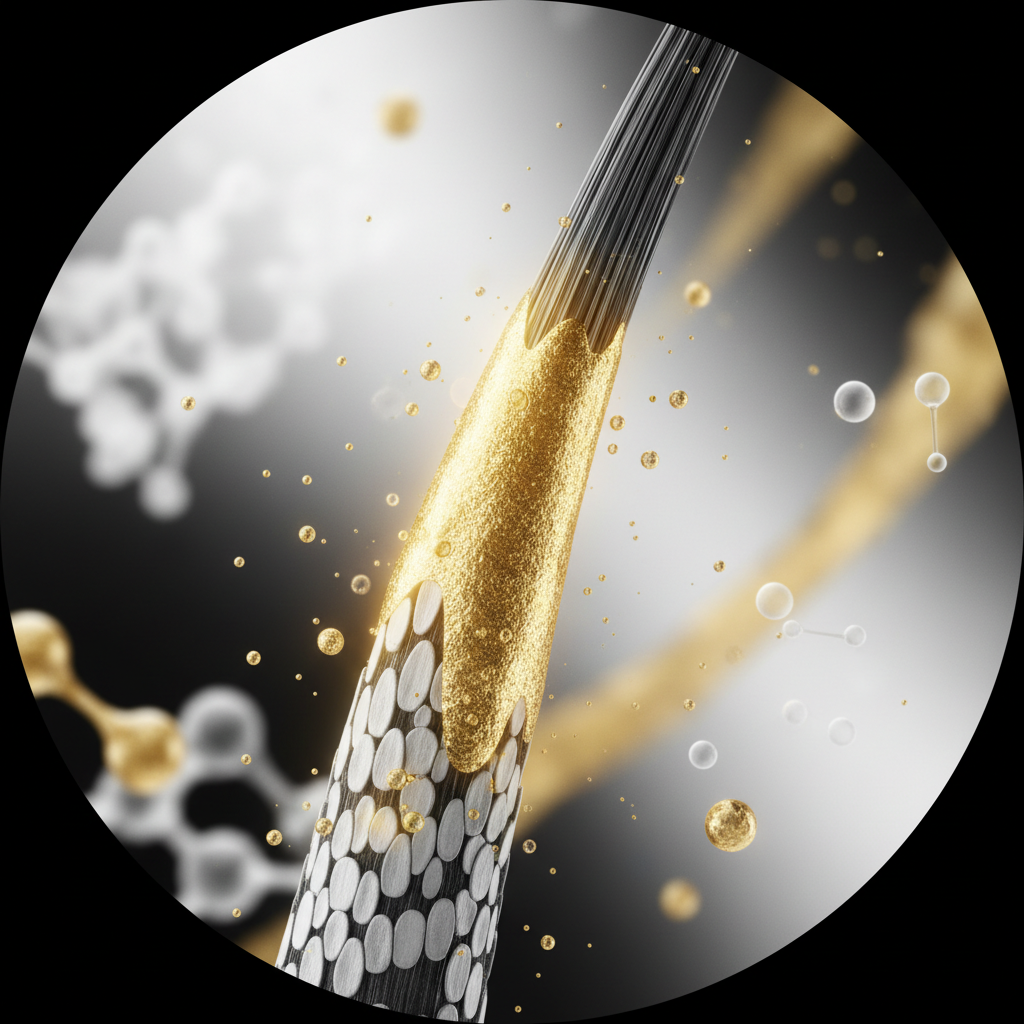
Under normal conditions, this lipid coating creates a high contact angle with water droplets, preventing excessive water absorption. When the F-layer is intact, the cuticle scales lie flat against the hair shaft. This configuration maintains low to medium porosity, protecting the inner cortex from swelling and protein degradation.
Studies using scanning electron microscopy (SEM) confirm that alkaline chemical treatments, such as bleaching or permanent colouring with a pH above 9.0, hydrolyse the thioester bonds anchoring 18-MEA. When these lipids are removed, the hair fibre changes from hydrophobic to hydrophilic. Without lipid protection, water rapidly rushes into the hair cortex, causing repeated swelling and contracting known as hygral fatigue.
 HEALTHY CUTICLE (Low Porosity) DAMAGED CUTICLE (High Porosity)
 +------------------------------------+ +------------------------------------+
 | [18-MEA Lipid Layer / F-Layer] | | (Lipid layer stripped / absent) |
 | ================================ | | \ / \ / \ |
 | Cuticle scales flat and sealed | | Lifted, chipped cuticle scales |
 | Water repelled (Hydrophobic) | | Water enters rapidly (Hydrophilic)|
 +------------------------------------+ +------------------------------------+
Cuticle architecture and the lipid mechanism
The cuticle is not a single uniform sheath. Instead, it features between 5 and 10 overlapping scales along any given point of the fibre. Each individual cuticle cell contains three distinct sub-layers that vary in their protein and cross-link density:
- The Epicuticle: The outermost boundary, approximately 5 to 7 nanometres thick, containing the lipid F-layer covalently bound to cysteine residues.
- The Exocuticle: A rigid layer rich in heavily cross-linked cystine (accounting for roughly 30% of its amino acid content), providing mechanical resistance.
- The Endocuticle: The innermost, softer layer containing low levels of cystine (around 3%), making it vulnerable to swelling when exposed to water.
Between individual cuticle cells lies the Cell Membrane Complex (CMC). The CMC contains its own set of internal lipids, including ceramides, cholesterol and free fatty acids. These internal lipids act as a flexible adhesive that cements adjacent cuticle cells together.
When external lipids are stripped, the soft endocuticle absorbs ambient moisture and swells. This internal swelling pushes the rigid exocuticle outwards, forcing the visible edges of the scales to lift. Once lifted, friction between adjacent hair strands increases dramatically, accelerating mechanical chipping, split ends and fibre snapping.
What the evidence does not show
There are persistent misconceptions regarding porosity testing and lipid restoration. Controlled scientific research clarifies several critical boundaries:

- The float test is unreliable: Placing strands of hair in a glass of water to gauge porosity does not yield valid scientific results. Surface tension, residual styling oils and hair density interfere with floating, making it an inaccurate measurement of cuticle integrity.
- Lipids cannot be permanently replaced: No topical oil, treatment or mask can re-establish the covalent thioester bonds of 18-MEA once cleaved. Conditioners deposit temporary hydrophobic coatings, but these wash away with subsequent surfactant use.
- Porosity does not dictate hair loss: Cuticle porosity relates solely to hair shaft integrity. High porosity causes hair breakage along the shaft; it does not trigger follicular shedding, telogen effluvium or pattern baldness.
Porosity states compared
Understanding the physical characteristics of different porosity levels helps in diagnosing structural vulnerabilities.
| Characteristic | Low Porosity | Medium (Balanced) Porosity | High Porosity |
|---|---|---|---|
| Cuticle Condition | Tightly packed, flat overlapping scales | Uniform alignment with minimal lifting | Raised, cracked, eroded or missing scales |
| Surface Chemistry | Strongly hydrophobic (repels water droplets) | Moderately hydrophobic | Strongly hydrophilic (rapidly absorbs water) |
| Lipid Status | Intact 18-MEA F-layer and stable CMC | Minor depletion of surface lipids | Severe depletion of 18-MEA and CMC lipids |
| Drying Time | Extended; water sits on the surface | Moderate and predictable | Very fast drying, yet holds ambient humidity |
| Common Causes | Genetic architecture, minimal processing | Gentle handling, low heat exposure | Bleach, relaxers, UV weathering, excessive heat |
| Primary Risk | Product build-up and poor moisture ingress | None under routine maintenance | Tangling, hygral fatigue and structural breakage |
Signs of depleted lipid protection and high porosity
Hair that has lost its protective lipid layer behaves predictably under everyday conditions. Stylists and consumers can identify compromised lipid barriers through specific tactile and visual cues:
- Rapid wetting and drying: Hair absorbs water almost instantaneously during washing rather than beading, yet dries unnaturally fast because the cuticle cannot seal moisture inside.
- Rough tactile feedback: Running fingers upward from the ends to the roots feels abrasive, gritty or uneven due to raised scale margins.
- Persistent tangling: Missing surface lipids increase the friction coefficient between strands, causing hair to knot easily when dry.
- Dullness and lack of shine: An uneven cuticle surface scatters light randomly rather than reflecting it uniformly, causing hair to appear matte.
- Extreme frizz in humid environments: Hydrophilic hair absorbs atmospheric moisture, causing the cortex to swell unevenly and disrupting the hair's intended shape.
What you can do to protect and maintain cuticle lipids
Because natural surface lipids cannot be synthesised by hair dead cells, protection and cosmetic mimicry are essential strategies.
Adjust washing temperature and surfactant choice
Hot water swells the hair fibre and accelerates the removal of intercellular lipids. Wash hair using lukewarm water. Use gentle, balanced cleansers with a pH between 4.5 and 5.5. Highly alkaline cleansers (pH 7.0 or higher) expand the cuticle scales and strip the delicate lipid layers within the Cell Membrane Complex.
Apply lipid-replenishing cosmetic ingredients
Topical conditioning agents containing biomimetic lipids can emulate the missing F-layer. Look for formulations containing:
- Hydrolysed proteins and quaternary compounds that adhere electrostatically to negatively charged, damaged sites.
- Synthetic 18-MEA analogues, which temporarily re-coat the fibre with a hydrophobic film.
- Ceramides and fatty acids that penetrate micro-cracks in the cuticle to support the internal Cell Membrane Complex.
Manage thermal and mechanical stress
Thermal styling appliances degrade hair proteins and melt internal lipids at temperatures exceeding 180 degrees Celsius. Always apply a film-forming heat protectant prior to blow-drying or straightening. Additionally, avoid aggressive brushing when hair is wet, as water-saturated high-porosity hair stretches easily and snaps under low mechanical tension.
When the cause may be something else
If hair appears fragile or dry, low lipid protection is not always the culprit. Consider other potential factors:
- Hard water mineral accumulation: Calcium and magnesium ions bind to keratin, mimicking the rough texture of high porosity without cuticle scale loss. Chelating washes resolve this.
- Excessive product build-up: Silicones and heavy waxes can coat low-porosity hair, preventing hydration and creating a false sensation of dryness.
- Internal health and nutritional changes: Changes in hair tensile strength or diameter can stem from nutritional deficiencies, such as low ferritin or inadequate protein intake, which alter the keratin matrix during follicular development.
Professional support and when to seek advice
If hair experiences sudden shedding from the root (more than 100 hairs daily) rather than snapping along the length, schedule an evaluation with a trichologist or dermatologist. Fibre breakage can be addressed in the salon through bond-building services, conditioning treatments and trimming split ends, but follicular hair shedding requires medical evaluation.
Supporting hair condition: Watermans
For those seeking to maintain a clean scalp environment while supporting overall hair condition, Watermans provides carefully balanced formulations. Watermans GrowMe Shampoo delivers a balanced cleanse that does not rely on harsh, stripping surfactants, helping to preserve vital hair shaft lipids. Complemented by the Watermans ConditionMe Conditioner, which incorporates hydrolysed lupin protein, cholesterol, and natural seed oils, these formulas coat damaged cuticles, reduce friction-induced breakage, and leave brittle fibres feeling softer and visibly reinforced.
Summary of Hair Cuticle Porosity and Lipid Protection
Maintaining sound Hair Cuticle Porosity and Lipid Protection requires recognising the limitations of the hair fibre. As a non-living biological structure, hair cannot produce new lipids once the shaft emerges from the scalp. The F-layer and its constituent 18-MEA fatty acids represent the hair's primary defence against environmental degradation, mechanical friction and moisture imbalance. By adopting pH-balanced cleansing routines, moderating thermal styling and relying on biomimetic lipid treatments, you can effectively safeguard the cuticle structure against premature breakage and maintain smooth, manageable hair.
Sources and references
- Robbins, C. R. (2012). Chemical and Physical Behavior of Human Hair (5th ed.). Springer-Verlag.
- Ruetsch, S. B., Kamath, Y. K., & Weigmann, H. D. (2003). Photodegradation of human hair: a study by fluorescence microscopy and scanning electron microscopy. Journal of Cosmetic Science, 54(5), 441-457.
- Breakspear, S., et al. (2022). The Hair Fibre: A Complex Architecture and Surface. Cosmetics, 9(4), 83.
- Cruz, C. F., et al. (2016). Human Hair Keratin: Structural Features and Changes Induced by External Factors. International Journal of Molecular Sciences, 17(10), 1667.
- Society of Cosmetic Chemists (SCC). Monograph: Hair Porosity and Chemical Processing Dynamics.