The Hair Cuticle Explained: Structure, Function, and Care
9 min read ·
Learn how the hair cuticle protects hair health, controls shine and porosity, and why non-living cuticle scales cannot regenerate once lost. The Hair Cuticle Explained.
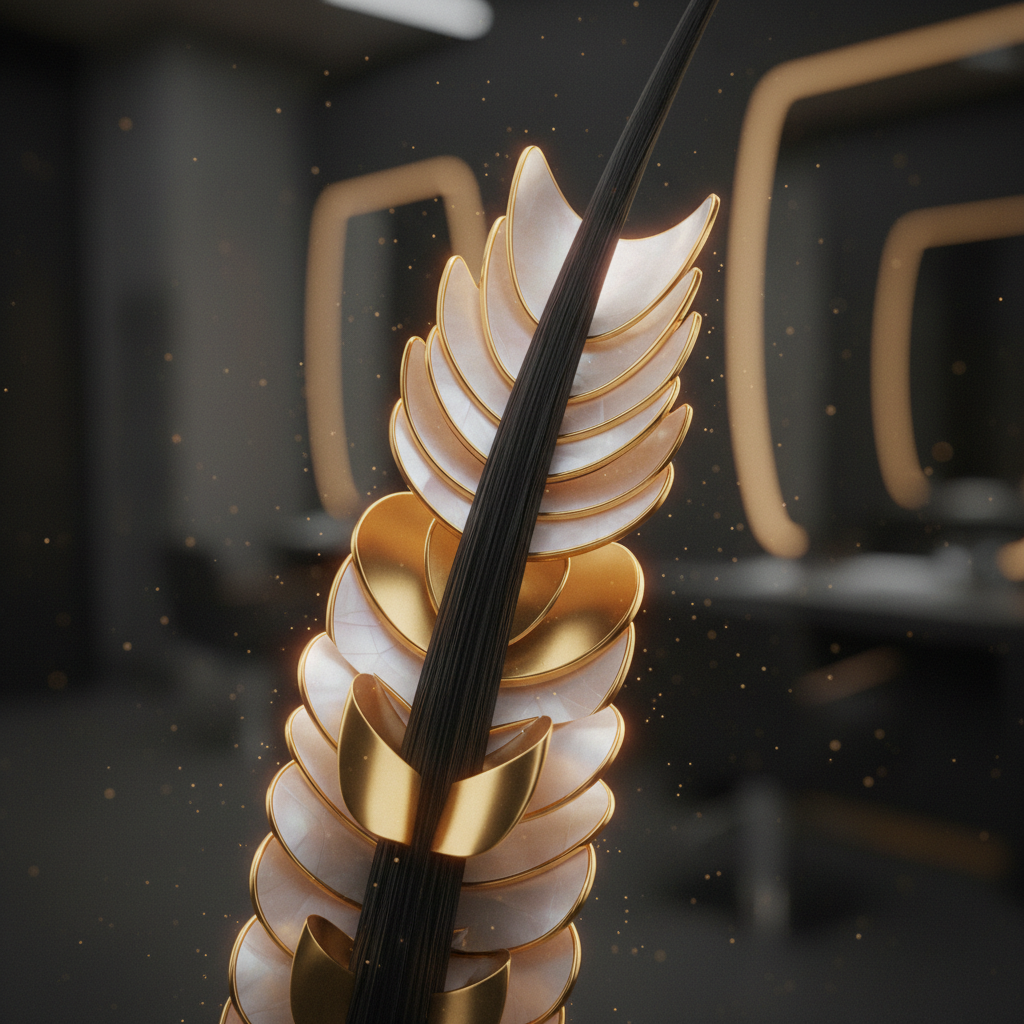
Quick answer: With The Hair Cuticle Explained, understanding your hair starts at its outermost layer. The hair cuticle consists of 5 to 10 overlapping layers of dead, keratinised cells that shield the inner cortex from chemical, thermal, and mechanical trauma. While a flattened cuticle creates smooth, reflective shine and locks in internal moisture, it cannot regenerate once biologically lost. Cosmetic routines can coat, smooth, or temporarily patch these scales, but they cannot permanently regrow damaged cuticle tissue.
Key takeaways
- The cuticle is the hair fibre's outermost protective barrier, made of flattened, scale-like cells overlapping like roof tiles.
- Each cuticle cell contains three main protein layers: the epicuticle, exocuticle, and endocuticle, bounded by a lipid layer rich in 18-methyleicosanoic acid (18-MEA).
- Healthy cuticles lie flat, reflecting light for natural shine and preventing excessive moisture loss from the inner cortex.
- Chemical processing (such as bleaching or relaxing) and heat styling raise or strip the cuticle scales, leading to porosity and breakage.
- Cuticle cells are non-living tissue; once damaged or broken off, they cannot biologically repair themselves, requiring protective cosmetic management.
The Hair Cuticle Explained: what the evidence shows
When examining The Hair Cuticle Explained under an electron microscope, the structure resembles the overlapping scales of a pinecone or shingles on a roof. These cells originate in the hair follicle bulb, hardening through keratinisation as the fibre grows upward through the scalp.
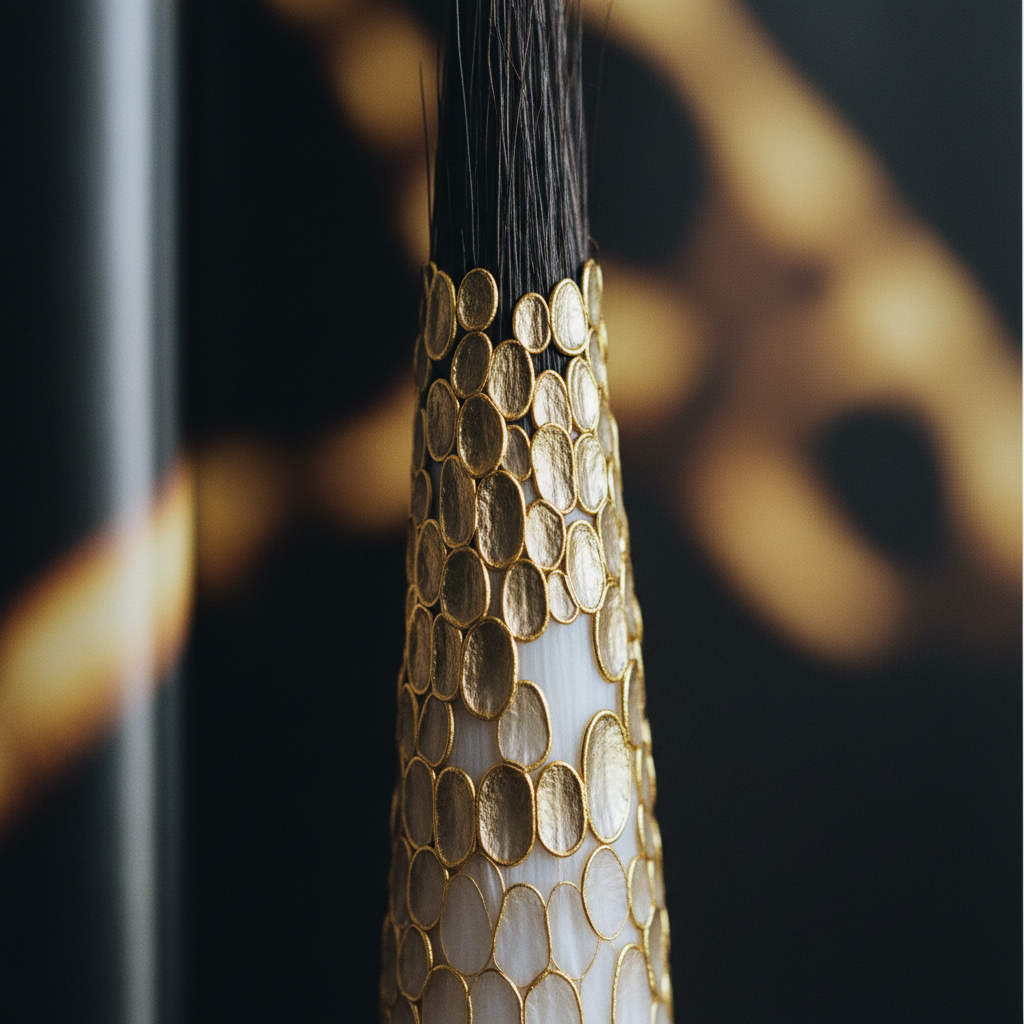
In human hair, the cuticle layer is typically 5 to 10 scales thick (measuring roughly 3.5 to 4.5 micrometres in total cross-section). Each individual cuticle cell is roughly 0.3 to 0.5 micrometres thick and about 35 to 45 micrometres long. Healthy hair points these scale edges downward, running from root to tip.
The outermost surface is coated with a specialised lipid monolayer known as the F-layer. This layer is primarily composed of 18-methyleicosanoic acid (18-MEA), a branched fatty acid covalently bound to the underlying protein matrix. This microscopic lipid shield makes virgin hair naturally hydrophobic (water-repellent). It allows water droplets to bead on the surface and reduces friction between adjacent fibres. When hair glides smoothly without tangling, it is largely thanks to this intact fatty layer.
Anatomical layers of a single cuticle cell
To truly break down the cuticle, researchers divide each individual cell into distinct sub-layers, each possessing a different biochemical composition and degree of vulnerability:
- The Epicuticle: The outermost boundary of the cell, directly beneath the 18-MEA lipid layer. It is a thin, tough membrane (roughly 5 to 7 nanometres thick) with high cystine content, resisting mild chemical attack.
- The Exocuticle: Making up roughly 40% of the cell's volume, this layer contains a very high concentration of sulfur-rich cystine (over 12%). This extensive cross-linking makes it rigid and mechanically resilient.
- The Endocuticle: The innermost part of the cell, resting against the cell membrane complex. It contains very low levels of cystine (around 3%) and high levels of basic amino acids. Because it has fewer rigid sulfur bridges, the endocuticle swells significantly in water, making it softer and mechanically weaker than the exocuticle.
- The Cell Membrane Complex (CMC): The intercellular "cement" that bonds adjacent cuticle scales to one another and secures the cuticle to the underlying cortex. The CMC consists of lipid layers sandwiching a central protein band (the delta layer).
Because the endocuticle swells much more readily in water than the rigid exocuticle, wetting hair creates physical strain across the cell. Repeated cycles of excessive swelling and drying cause mechanical fatigue, often termed hygral fatigue, which can loosen the cuticle margins over time.
How the cuticle controls porosity and shine
The arrangement of cuticle scales directly controls how your hair looks, feels, and interacts with moisture.
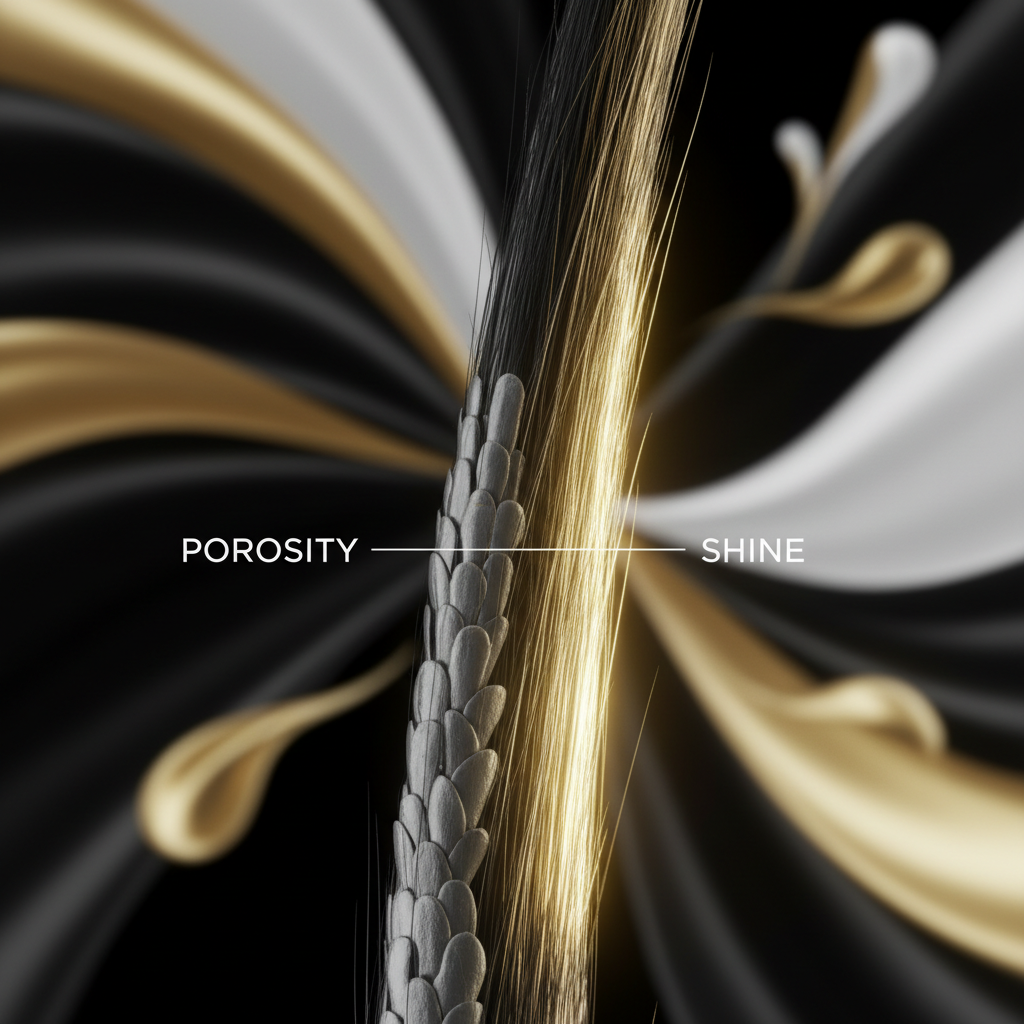
When the cuticle lies flat and smooth, light bounces off the hair shaft uniformly, producing a natural gloss or shine. Furthermore, tightly closed cuticle tiles limit the rate at which water vapour enters and exits the cortex, maintaining optimal internal hydration.
When cuticle scales are raised, chipped, or stripped away:
- Light scatters irregularly, making hair look dull and matte.
- The internal cortex absorbs ambient humidity rapidly, causing frizz and swelling.
- Moisture escapes just as quickly in dry air, leaving hair brittle.
- Fibre friction increases dramatically, causing persistent tangles, snagging, and mechanical breakage.
| Cuticle State | Surface Lipid (18-MEA) | Porosity Level | Tactile Feel | Breakage Risk |
|---|---|---|---|---|
| Intact (Virgin hair) | Fully present, highly hydrophobic | Low to balanced | Smooth, slippery, glides easily | Very low |
| Mechanically Worn | Partially worn by friction/brushing | Medium | Slightly rough toward the ends | Moderate |
| Chemically Lifted | Depleted by alkaline solutions (pH > 8.0) | High | Dry, catches when sliding fingers up | High |
| Severely Stripped | Completely removed; exposed cortex | Very high (compromised) | Rough, brittle, straw-like | Critical (hair snaps easily) |
What damages the hair cuticle?
Cuticle degradation is cumulative because hair fibre is non-living; it has no metabolic capacity to replace damaged cells. Several primary stressors degrade the cuticle over time:
Alkaline chemical processing
Permanent hair colour, bleaches, perms, and relaxers rely on alkaline agents (such as ammonium hydroxide or ethanolamine) to raise the hair's pH above its natural isoelectric point (pH 3.67) to roughly pH 9.0 to 11.0. This alkaline environment forces the cuticle scales to lift and flare open, allowing processing agents to reach the melanin and disulfide bonds in the cortex.
Bleaching is especially destructive: alkaline oxidation cleaves the covalent thioester bonds anchoring 18-MEA, stripping the hair's natural water-repellent barrier in a single service.
Thermal exposure
Using flat irons, curling tongs, or blow dryers above 180 degrees Celsius strips surface moisture and physically buckles cuticle edges. Extreme heat can cause microscopic blistering and cracks in the exocuticle. If applied to damp hair, water trapped inside the cortex boils rapidly, causing structural cavities known as "bubble hair."
Mechanical friction
Vigorous towel drying, dry backcombing, and aggressive detangling chip away the fragile margins of the cuticle scales. Once the edges wear away, the cell membrane complex degrades, leading to peeling scales, split ends (trichoptilosis), and eventual fibre breakage.
Environmental degradation
Ultraviolet radiation (UVA and UVB) breaks down amino acids in the cuticle, specifically cystine and tryptophan. Combined with oxidative pollution and chlorinated water, UV light oxidises surface lipids, leaving hair dry, porous, and prone to colour fading.
Caring for your hair cuticle
While you cannot biologically regenerate lost cuticle tiles, you can protect existing scales and cosmetically smooth them:
- Maintain an acidic pH balance: The natural isoelectric point of hair is roughly pH 3.67. Shampoos and conditioners formulated within a mildly acidic range (pH 4.5 to 5.5) help contract and flatten raised cuticle margins, reducing friction.
- Recondition with functional lipids: Look for treatments containing biomimetic fatty acids, cetyl alcohol, or hydrolysed plant proteins. These ingredients deposit a temporary protective film over gaps in the cuticle, mimicking the missing 18-MEA layer.
- Minimise wet mechanical stress: Hair is weakest when wet because water plasticises the keratin and swells the endocuticle. Detangle gently using a wide-tooth comb or flexible-bristle brush, starting at the ends and working upward.
- Control heat tools: Always apply a thermal protectant containing ingredients like silicones or plant-based conditioning polymers that distribute heat evenly. Keep hot tools below 180 degrees Celsius whenever possible.
- Reduce friction overnight: Sleeping on smooth silk or satin pillowcases significantly lowers the mechanical friction that chips away cuticle edges during sleep.
Supporting the hair fibre with Watermans
A healthy hair routine begins at the scalp and extends across the length of the fibre. While topical formulations cannot rebuild missing cuticle tissue, well-formulated products support the fibre's appearance and fortify strands against unnecessary mechanical stress.
Watermans GrowMe Shampoo is formulated to thoroughly cleanse the scalp while respecting the hair fibre. Free from aggressive sulfates that can disrupt surface lipids, it blends biotin, rosemary extract, niacinamide, and argan oil to deliver essential moisture and slip. Pairing a gentle cleansing routine with a dedicated conditioner smooths raised cuticle scales, improving wet combability and dramatically cutting down the friction that leads to mid-shaft breakage.
When cuticle damage mimics other conditions
It is critical to distinguish between cuticle damage and biological hair shedding.
Cuticle degradation causes hair breakage: the hair fibre snaps along the shaft, leaving short, ragged fragments without a white bulb at the root. In contrast, hair shedding (such as telogen effluvium) or genetic hair thinning (androgenetic alopecia) occurs inside the hair follicle beneath the scalp surface. Shed hairs come out at full length, with a tiny, keratinised bulb intact at the base.
If your hair feels rough, tangles easily, or snaps when brushed, you are dealing with cuticle weathering and structural damage. If you notice diffuse thinning across your scalp, a widening parting, or excessive daily hair fall where strands fall from the root, the issue stems from follicle activity rather than cuticle wear. Consult a registered trichologist or dermatologist for an accurate diagnosis if you suspect follicle-driven shedding.
Frequently asked questions about The Hair Cuticle Explained
Can damaged hair cuticles be permanently repaired?
No. Hair is non-living keratinised tissue without metabolic activity or cellular renewal. Once cuticle scales chip, lift, or break away completely, they cannot regenerate. Conditioning agents, oils, and bond-building treatments can patch imperfections, coat the fibre, and temporarily cement lifted edges, but these wash out over time and must be reapplied consistently.
How does water affect the cuticle?
Water penetrates the hair cuticle and is absorbed by the inner cortex and endocuticle, causing the hair shaft to swell. This process lifts the cuticle edges slightly, leaving the fibre vulnerable to mechanical damage. Frequent swelling and drying can lead to hygral fatigue, gradually weakening the cell membrane complex between scales.
What is the role of 18-MEA in The Hair Cuticle Explained?
In The Hair Cuticle Explained, 18-methyleicosanoic acid (18-MEA) is the essential lipid layer covering the hair's surface. It bonds covalently to the epicuticle, creating a hydrophobic shield. This layer repels water, prevents cortical moisture loss, and reduces friction between strands so hair feels soft, sleek, and easily detangled.
Why do alkaline products cause hair frizz?
Alkaline products (pH greater than 7.0) disrupt the ionic bonds in hair keratin, causing the hair fibre to swell and the cuticle scales to flare open. When the cuticles remain lifted, ambient humidity easily penetrates the hair cortex, causing uneven swelling of the inner protein chains, which manifests visibly as frizz and rough texture.
Does cold water really close the hair cuticle?
Cold water has a negligible physical effect on closing the hair cuticle. Cuticle scales do not possess muscles or active response systems. While cool water avoids the excessive heat that softens protective lipids, cuticle flattening is primarily driven by pH (mildly acidic environments) and the smoothing action of conditioning agents, rather than water temperature alone.
Summary of The Hair Cuticle Explained
Understanding The Hair Cuticle Explained reveals why hair health depends heavily on preventative care. As the non-living armour protecting the delicate cortex, the cuticle shields your hair from environmental degradation, chemical erosion, and physical wear. While cosmetic conditioning, acidic balances, and gentle handling can preserve and seal these delicate scales, they cannot be regrown once lost. Treating your hair cuticle with care ensures long-term strength, shine, and resilience against daily styling.
Sources and references
- Robbins, C. R. (2012). Chemical and Physical Behavior of Human Hair (5th ed.). Springer-Verlag.
- Dawber, R. (1996). Hair: Its structure and response to cosmetic preparations. Clinics in Dermatology, 14(1), 105-112.
- Swift, J. A. (1999). The mechanics of the hair cuticle: An overview. Journal of Cosmetic Science, 50(1), 23-47.
- Breakspear, S., et al. (2022). How healthy is human hair? A review of hair damage mechanisms and prevention. International Journal of Cosmetic Science, 44(4), 385-404.
- Gavazzoni Dias, M. F. (2015). Hair cosmetics: An overview. International Journal of Trichology, 7(1), 2-15.
Find these ingredients in Watermans products
- Niacinamide: you will find this ingredient in our Hair Mask.