Hair Coloring Techniques: Understanding the Science Behind Hair Colour
8 min read ·
Hair colouring techniques involve altering the hair's natural pigment or depositing new colour, ranging from temporary surface stains to permanent chemical changes within the hair shaft, but all methods carry potential for hair fibre alteration.
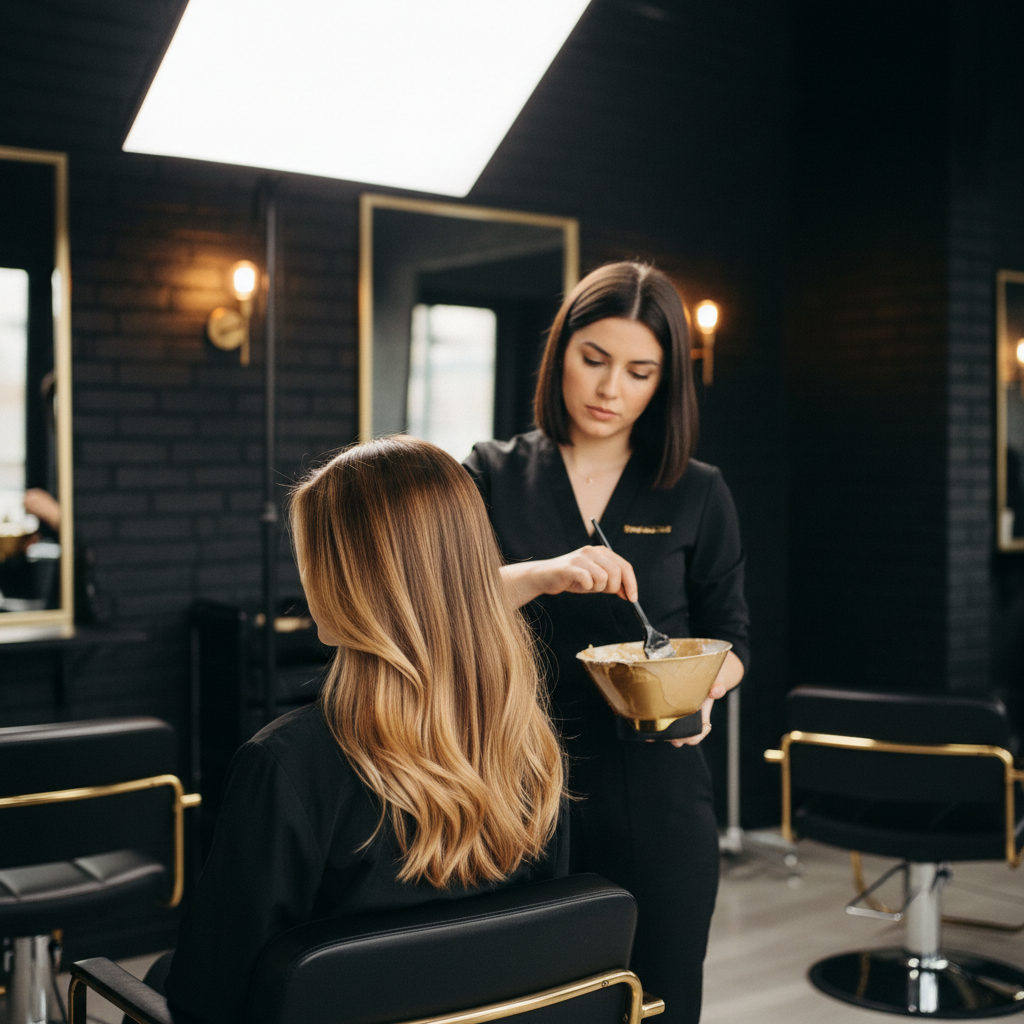
Quick answer: Hair Coloring Techniques refer to various methods used to change the colour of hair, ranging from temporary dyes that coat the hair surface to permanent chemical processes that alter the hair's internal structure. While these techniques offer diverse aesthetic outcomes, they all interact with the hair fibre, and some can lead to changes in its condition or integrity.
Key takeaways
- Hair colouring methods vary significantly in their longevity, depth of penetration, and chemical action, from temporary rinses to permanent dyes and lightening treatments.
- Temporary colours coat the hair surface, semi-permanents penetrate the cuticle, while demi-permanent and permanent colours reach the cortex, altering or depositing pigment.
- Lightening processes remove natural hair pigment through oxidation, which can significantly impact hair structure.
- Understanding the pH balance and chemical reactions involved in different Hair Coloring Techniques is crucial for minimising potential hair damage.
- Careful application, post-colour treatment, and ongoing maintenance are essential to preserve hair health and colour vibrancy, regardless of the technique used.
Hair Coloring Techniques: what the evidence shows
Hair colouring techniques are diverse, each working on different principles to achieve various colour changes. They range from simple temporary deposits on the hair's surface to complex chemical reactions that alter the hair's natural pigment within the cortex. The effectiveness and potential impact on hair health depend heavily on the specific technique and ingredients employed.
How Temporary Colours Work
Temporary hair colours are typically large dye molecules that do not penetrate the hair cuticle. Instead, they deposit pigment on the outer surface of the hair shaft. They adhere through physical attraction and are easily removed with one shampooing. These products usually do not contain ammonia or hydrogen peroxide, meaning they do not induce chemical changes to the hair fibre. They are suitable for experimental or novelty colours, offering no commitment.
How Semi-Permanent Colours Work
Semi-permanent colours contain smaller dye molecules than temporary ones, allowing them to penetrate the outermost layers of the cuticle, but generally not reaching the cortex. These dyes do not require an oxidant or developer. They gradually fade over several washes, typically lasting for 4 to 12 shampoos. Semi-permanent dyes can enhance natural hair colour, add shine, or blend early grey hair. They cannot lighten hair because they do not remove the natural pigment.
How Demi-Permanent Colours Work
Demi-permanent hair colours use an alkaline agent, often ethanolamine or monoethanolamine, and a low-volume hydrogen peroxide developer (typically 6 to 15 volume). This combination allows dye molecules to penetrate deeper into the hair shaft, reaching the cortex. While they deposit colour efficiently, they do not significantly lift the hair's natural pigment. These colours are effective for blending grey hair, enhancing existing tones, or refreshing faded permanent colour. They typically last for 20 to 28 shampoos, fading without a harsh line of demarcation as hair grows, which can reduce the visibility of regrowth.
How Permanent Colours Work
Permanent hair colouring involves a two-step chemical process to achieve a lasting colour change. First, an alkaline agent, usually ammonia, opens the hair's cuticle. This allows a mixture of unoxidised dye precursors and hydrogen peroxide to penetrate the cortex. Inside the cortex, the hydrogen peroxide oxidises the natural melanin, lightening the hair's natural pigment. Simultaneously, it oxidises the dye precursors, causing them to link together and form larger, permanent dye molecules. These larger molecules become trapped within the cortex, resulting in a colour that cannot be shampooed out. Permanent colour can lighten, darken, or change the tone of hair and provides comprehensive grey coverage. The trade-off is a noticeable line of demarcation as hair grows, requiring regular root touch-ups.
Lightening (Bleaching) Techniques
Lightening, often referred to as bleaching, involves the removal of natural or artificial pigment from the hair. This process uses an oxidising agent, typically hydrogen peroxide, frequently combined with an alkalising agent and persulfates (such as ammonium, potassium, or sodium persulfates) to speed up the reaction. The alkaline component causes the hair shaft to swell, while the peroxide and persulfates break down the melanin granules within the cortex, rendering them colourless. The extent of lightening depends on the strength of the lightening agent and the processing time. This is a potent chemical process that can compromise hair integrity if not carefully managed. You can find more information on the effects of these processes in our article, 'Chemical Hair Treatments: What They Are and How They Affect Hair'.
Dimensional Colouring Techniques: Highlights, Lowlights, Balayage, and Ombré
These Hair Coloring Techniques focus on selectively colouring strands of hair to create visual depth, dimension, and contrast. They can be applied using various methods, including foils, freehand painting (balayage), or cap techniques.
- Highlights: Strands of hair are lightened to a shade lighter than the base colour. This can create a sun-kissed or brighter effect.
- Lowlights: Strands are coloured darker than the base. This technique adds depth and can make hair appear fuller.
- Balayage: A freehand application technique where colour is swept onto the hair surface. This method results in a softer, more natural-looking effect with less distinct lines of demarcation compared to traditional foiled highlights, allowing for a more natural grow-out.
- Ombré and Sombré: Ombré features a distinct gradient transition from darker roots to lighter ends. Sombré is a softer variation, with a less abrupt blend between dark and light, creating a more diffused look.
The Impact on Hair Fibre
All Hair Coloring Techniques interact with the hair fibre to some degree. Processes that involve opening the cuticle and altering the cortex, such as permanent colouring and lightening, inherently affect the hair's structural integrity. This can lead to increased porosity, reduced elasticity, and potential for dryness or breakage. The pH of the products is also a crucial factor; hair naturally has an acidic pH (around 4.5 to 5.5). Alkaline products, necessary to open the cuticle for permanent colour, can temporarily raise the hair's pH, making it more vulnerable. Subsequent conditioning treatments often aim to restore the hair's natural pH and seal the cuticle. For more on this, see 'The pH Scale and Hair'.
Proper care, including using conditioning treatments, limiting heat styling, and appropriate cleansing, is essential for maintaining the health of colour-treated hair. Our guide, 'Maintaining Colour-Treated Hair: A Guide to Longevity and Health', offers further advice.
Hair Colouring Techniques Comparison
| Technique | Longevity | Lift (Lightening) | Grey Blending/Coverage | Ammonia/Peroxide Required | Hair Fibre Impact |
|---|---|---|---|---|---|
| Temporary | 1 shampoo | None | None | No | Minimal, surface deposit |
| Semi-Permanent | 4-12 shampoos | None | Light blending | No | Low, minimal cuticle penetration |
| Demi-Permanent | 20-28 shampoos | Minimal | Good blending | Yes (low volume) | Moderate, some cuticle opening & cortex penetration |
| Permanent | Permanent (grows out) | Yes | 100% coverage | Yes | High, cuticle significant opening & cortex alteration |
| Lightening (Bleach) | Permanent (grows out) | Significant | N/A (removes pigment) | Yes | Very high, significant protein degradation |
Frequently asked questions about Hair Coloring Techniques
How do I choose the right Hair Coloring Technique for me?
Choosing the right technique depends on your desired outcome, current hair condition, and maintenance commitment. For a temporary change or slight enhancement without chemical alteration, semi-permanent or temporary dyes are suitable. For significant colour change or grey coverage, demi-permanent or permanent options are needed. Consult a professional stylist for personalised advice, especially if considering lightening or a drastic change, to ensure hair health.
Can hair colouring cause hair loss?
Hair colouring, when done correctly, typically does not cause true hair loss (alopecia), which involves the follicle. However, aggressive chemical processes, especially lightening or repeated permanent colouring, can cause hair breakage along the shaft due to damage to the hair fibre. This breakage can make hair appear thinner or shorter. Always follow product instructions and consider patch tests to minimise scalp irritation.
Is it safe to colour hair during pregnancy?
Evidence regarding hair colouring during pregnancy is mixed. The consensus among many medical bodies is that the small amount of chemical absorbed through the skin is unlikely to pose a significant risk to a developing baby. However, some advise caution, particularly during the first trimester. Opting for techniques that minimise scalp contact, such as highlights, balayage, or temporary dyes, may be preferred. Always discuss with your healthcare provider for personalised advice.
How often can I colour my hair?
The frequency with which you can colour your hair depends on the technique and your hair's condition. For permanent colour, root touch-ups are typically needed every 4 to 8 weeks as hair grows. Semi-permanent colours fade more quickly, allowing for more frequent application, perhaps every 2 to 4 weeks. Always assess your hair's health; if it feels dry, brittle, or shows signs of breakage, extend the time between colouring sessions and focus on intensive conditioning treatments.
What can I do to maintain my coloured hair?
To maintain the vibrancy and health of your coloured hair, use shampoos and conditioners specifically designed for colour-treated hair, which are often sulphate-free to prevent premature fading. Minimise heat styling and use heat protectants when you do. Incorporate regular deep conditioning treatments to keep hair moisturised and to help seal the cuticle. Protecting your hair from excessive sun exposure can also help prevent colour fade. For specific product recommendations, explore Watermans shampoos and conditioners designed to support hair health.
Preserving your hair with Watermans
After undergoing Hair Coloring Techniques, maintaining hair health is paramount. Watermans offers a range of products formulated to support hair strength and vitality. Our sulphate-free shampoos and conditioners are designed to gently cleanse and nourish, helping to prevent colour fade and minimise dryness often associated with chemical treatments. Using products like Watermans Grow Me Shampoo and Conditioner can provide essential nutrients to the scalp and hair, supporting overall hair health and resilience against environmental stressors and styling damage. Regular use can help keep coloured hair looking vibrant and feeling stronger.
Sources and references
- British Association of Dermatologists (BAD), Patient Information Leaflets. "Hair Dyes". Bad.org.uk
- American Academy of Dermatology Association (AAD). "Hair colouring: Is it safe?" aad.org
- US National Library of Medicine, National Institutes of Health (NIH), PubMed. "Hair Cosmetics: An Overview". International Journal of Trichology, 2015. DOI: 10.4103/0974-7753.153927
- European Commission, Scientific Committee on Consumer Safety (SCCS). "Opinion on Hair Dyes". 2021. Ec.europa.eu
- NHS, "Is it safe to use hair dye when I