Hair Care Routines: An Evidence-Based Guide
11 min read ·
Hair Care Routines are systematic approaches to maintaining healthy hair and scalp, involving cleansing, conditioning, and targeted treatments tailored to individual needs. While essential for cosmetic health, evidence does not support claims that specific Hair Care Routines can prevent or treat alopecia.
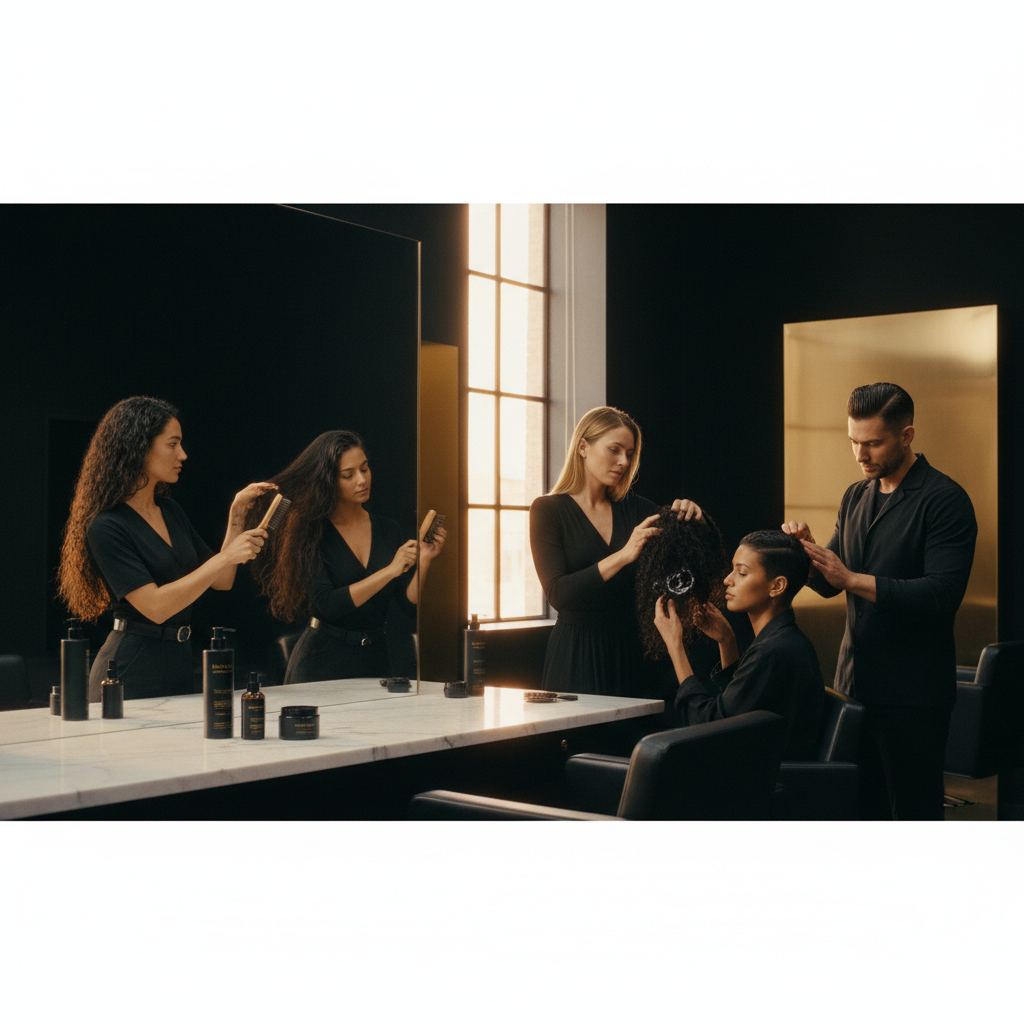
Quick answer: Hair Care Routines are structured approaches to looking after your hair and scalp, typically involving regular cleansing, conditioning, and targeted treatments. These routines are designed to maintain the cosmetic health, appearance, and feel of your hair, helping to reduce breakage and promote a healthier-looking scalp. It's important to recognise that while effective Hair Care Routines contribute to overall hair well-being, current scientific evidence does not support their use as a primary treatment for hair loss conditions like alopecia.
Key takeaways
- Effective Hair Care Routines focus on cleansing the scalp, conditioning the hair fibre, and protecting against damage.
- Understanding your hair type (texture, porosity, density) and scalp condition (oily, dry, sensitive) is crucial for customising a routine.
- The frequency of washing and specific products used should adapt to individual needs, lifestyle, and environmental factors.
- While Hair Care Routines improve hair's cosmetic health and feel, they are not treatments for underlying medical hair loss conditions.
- Choosing products with a balanced pH helps maintain the hair cuticle's integrity, reducing the risk of damage and frizz.
- Consistency and regular assessment of your hair's response are key to optimising any Hair Care Routine.
Hair Care Routines: what the evidence shows
Hair Care Routines are not a one-size-fits-all solution, but rather a dynamic set of practices designed to maintain the health and appearance of your hair and scalp. The core components, supported by dermatological and cosmetic science, involve regular cleansing, conditioning, and protection. These steps work together to remove dirt, oil, and product build-up, replenish moisture, smooth the hair cuticle, and shield the hair from environmental and mechanical stressors.
Evidence indicates that a well-chosen routine can significantly impact the cosmetic quality of hair, leading to reduced breakage, improved manageability, and a healthier-looking scalp. For example, regular conditioning helps to repair the hair's outer layer (the cuticle), making it smoother and less prone to tangling and subsequent breakage. Specific ingredients, such as hydrolysed proteins and humectants, have demonstrated effectiveness in strengthening the hair fibre and enhancing hydration.
However, it's crucial to differentiate between cosmetic benefits and medical treatments. While a good Hair Care Routine can improve the appearance of fullness by reducing breakage and enhancing fibre thickness, it does not prevent or treat androgenetic alopecia, alopecia areata, or other forms of true hair loss where the follicle stops producing hair. Cosmetic claims relate to the hair fibre and scalp surface, not to follicular biology that dictates hair growth cycles.
The mechanism of healthy hair care
Healthy Hair Care Routines work by addressing several key aspects of hair and scalp biology:
- Cleansing: Shampoos contain surfactants that lift away sebum, dead skin cells, environmental pollutants, and styling product residue from the scalp and hair fibre. Maintaining a clean scalp environment is vital for healthy hair growth, as excessive build-up can contribute to conditions like dandruff or folliculitis. The pH of shampoos is typically formulated to be slightly acidic (pH 5.0 to 7.0) to avoid excessive swelling of the hair cuticle, though some can be more alkaline.
- Conditioning: Conditioners, with their typically acidic pH (around 3.5 to 5.5), help to close and flatten the hair's cuticle layer. This smooths the hair surface, reduces friction between strands, minimises tangling, and enhances shine. Ingredients like silicones, fatty alcohols, and emollients provide lubrication and deposit a protective film, improving elasticity and reducing breakage. For more detail, see The Science of Conditioners: How Hair Care Formulations Work.
- Moisture retention: The hair's ability to hold onto water is critical for flexibility and strength. Humectants (like glycerin) attract water, while emollients (like natural oils) and occlusives help to seal it in. Products designed for hair hydration reduce dryness and brittleness, especially important for textured hair types, as discussed in Hair Hydration: The Science Behind Keeping Hair Moist.
- Protection: Hair is susceptible to damage from heat styling, chemical treatments, and UV exposure. Protective products (e.g., heat protectants) create a barrier, mitigating the impact of these stressors. Maintaining colour-treated hair, for instance, requires specific care to prevent premature fading and damage to the sensitised hair fibre.
What the evidence does not show
There is currently insufficient evidence to conclude that any specific Hair Care Routine or cosmetic product can directly stimulate new hair growth in cases of genetic or autoimmune hair loss (alopecia). While some ingredients, such as minoxidil or finasteride, are medically proven to treat certain types of hair loss, these are pharmaceuticals, not cosmetic haircare products. Cosmetic products may help create an optimal scalp environment for existing hair, or reduce hair shedding caused by breakage, but they do not alter the hair growth cycle at a follicular level in the same way medical treatments do.
Furthermore, claims that certain hair washing frequencies or product types universally cause or prevent hair loss are generally unfounded. For example, the idea that washing hair daily leads to hair loss is a common misconception; frequent washing with a gentle shampoo does not typically harm hair or follicles. Conversely, prolonged periods without washing can lead to scalp issues for some individuals.
Customising your Hair Care Routines
Tailoring your Hair Care Routines to your specific hair and scalp type is essential for optimal results. Hair can differ significantly in texture (straight, wavy, curly, coily), thickness (fine, medium, thick), and porosity (low, medium, high). Your scalp can be oily, dry, normal, or sensitive.
- Hair Texture: This refers to the shape of the hair strand. Straight hair has no curl pattern, while coily hair has tight, dense curls. Curl patterns influence how sebum travels down the hair shaft and how prone hair is to dryness and breakage.
- Hair Thickness (Density): This is the circumference of an individual hair strand. Fine hair is delicate and can be easily weighed down, while thick hair is more robust. Hair density (how many strands you have per square inch) also impacts product choice and styling.
- Hair Porosity: This describes your hair's ability to absorb and retain moisture. Low porosity hair has tightly bound cuticles, making it resistant to moisture penetration but also slower to lose it. High porosity hair has raised or damaged cuticles, readily absorbing moisture but also releasing it quickly. Understanding Hair Porosity: How Your Hair Absorbs and Retains Moisture provides more detail.
- Scalp Type: The condition of your scalp affects hair health. An oily scalp produces excess sebum, requiring more frequent cleansing (see Oily Scalp Care: Understanding and Managing Excess Sebum). A dry scalp may benefit from soothing and hydrating ingredients. A healthy scalp is the foundation for healthy-looking hair, as discussed in Understanding Scalp Health: A Foundation for Thriving Hair.
Frequency and product choices
The table below offers general guidelines for adjusting your Hair Care Routines based on common hair and scalp types. Remember these are starting points, and personal observation is key.
| Hair/Scalp Type | Shampoo Frequency | Conditioner Frequency | Deep Conditioning/Treatment | Notes |
|---|---|---|---|---|
| Oily scalp, fine hair | Daily or every other day | Every wash, light formula | Weekly to bi-weekly, lightweight | Focus on gentle but thorough cleansing at the roots. Avoid heavy conditioners or styling products that can weigh hair down. Consider sulfate-free shampoo benefits to prevent over-stripping. |
| Normal scalp, medium hair | Every 2 to 3 days | Every wash | Weekly | A balanced approach. Can experiment with different product types. Regularly check for signs of product build-up and clarify as needed. |
| Dry scalp, thick/coily hair | Every 3 to 7 days, or co-wash | Every wash, rich formula | Weekly, intensive mask | Prioritise moisture. Co-washing (cleansing with conditioner only) can be beneficial for retaining natural oils. Leave-in conditioners are often essential. See How to Care for Afro Hair for specific guidance. |
| Chemically treated (e.g., colour-treated) | Every 2 to 4 days, gentle | Every wash, colour-safe | Weekly, repairing | Use colour-safe products to prevent fading and damage. Hair Coloring Techniques shows how these processes can impact hair structure. Focus on protein and moisture balance. |
| Damaged, brittle hair | Every 2 to 3 days, repairing | Every wash, restorative | Weekly, protein-rich | Emphasise strengthening and repairing ingredients. Minimise heat styling. Hair Damage: Causes, Signs, and Solutions offers more insight. |
Lifestyle and environmental considerations
Your Hair Care Routine should also adapt to your lifestyle and environment:
- Exercise: Frequent physical activity can lead to increased sweat and sebum production, necessitating more frequent cleansing. Opt for gentle shampoos if you wash daily.
- Climate: Humid climates might necessitate products to reduce frizz (see Dealing with Frizzy Hair), while dry climates call for more intensive moisturising to combat dehydration.
- Hard Water: Water with high mineral content can deposit on hair, leading to dullness and dryness. Regular clarifying washes can help, as explained in Hard Water and Hair Damage: Understanding the Impact on Your Hair.
- Chemical Treatments: Hair that has undergone chemical processes (colouring, perms, relaxers) has altered cuticle structures and requires specialised care to maintain integrity and health. Maintaining Colour-Treated Hair: A Guide to Longevity and Health provides specific strategies.
- Heat Styling: Frequent use of heat tools without protection can lead to significant damage. Always use a heat protectant and follow Heat Styling Safety Best Practices.
When to get professional advice
While Hair Care Routines are generally about cosmetic maintenance, certain signs indicate it's time to seek advice from a medical professional, such as a dermatologist or trichologist. If you observe:
- Sudden or excessive hair shedding: Losing large amounts of hair rapidly, beyond normal daily shedding (typically 50 to 100 strands), could indicate a condition like telogen effluvium or other underlying health issues.
- Patchy hair loss or bald spots: This is a clear sign of alopecia, which requires medical diagnosis and treatment, not just a change in Hair Care Routines.
- Persistent scalp irritation: Chronic itching, redness, inflammation, flaking, or pain that doesn't improve with over-the-counter treatments could be indicative of conditions like psoriasis, eczema, or fungal infections.
- Changes in hair texture or quality: If your hair suddenly becomes extremely brittle, fine, or develops unusual patterns, it could signal an internal health issue.
These symptoms suggest medical investigation is needed. A medical professional can accurately diagnose the cause and recommend appropriate treatments, which may include prescription medications or lifestyle changes beyond the scope of cosmetic Hair Care Routines.
Frequently asked questions about Hair Care Routines
How often should I wash my hair?
There's no universal rule for how often to wash your hair; it largely depends on your scalp oiliness, hair type, activity level, and environmental factors. Those with an oily scalp or who exercise frequently might need to wash daily or every other day. If you have a dry scalp, thick, or curly hair, you might find washing every 3 to 7 days, or even co-washing, is more beneficial for maintaining moisture without over-stripping.
Can my Hair Care Routine cause hair loss?
No, your cosmetic Hair Care Routine itself is highly unlikely to cause true hair loss (alopecia), which originates from the hair follicle. However, very aggressive practices, such as excessive tension from tight hairstyles or rough brushing, can cause hair breakage or even traction alopecia over time. Similarly, harsh chemical treatments or improper use of heat tools can damage the hair shaft, leading to breakage, not follicular hair loss.
What are pH-balanced hair products?
PH-balanced hair products are formulated to match the natural slightly acidic pH of healthy hair (around 3.67) and the scalp (around 5.5). Using products within this range helps to keep the hair's cuticle flat and sealed, which contributes to smoothness, shine, and reduced frizz. Products that are too alkaline can cause the cuticle to lift, making hair more prone to damage and tangling.
Do I need a leave-in conditioner?
Whether you need a leave-in conditioner depends on your hair type and concerns. If you have dry, curly, frizzy, or chemically treated hair, a leave-in conditioner can provide continuous moisture, detangling assistance, and an extra layer of protection against environmental stressors. It's particularly beneficial for maintaining hydration between washes and improving manageability, especially for textured hair types.
How long does it take for a new Hair Care Routine to show results?
Visible results from a new Hair Care Routine can vary. Changes in hair feel, shine, and manageability might be noticeable within a few washes or weeks. For improvements in scalp condition or reduced breakage, it might take 4 to 8 weeks as your hair and scalp adjust. Consistency is key; allow enough time for products to work before deciding if they are effective for your hair.
Enhancing your Hair Care Routines with Watermans
Watermans offers a range of products designed to complement and enhance your Hair Care Routines. Their formulations are developed to support the appearance of healthier, stronger-feeling hair and a nourished scalp. For example, Watermans Grow Me Shampoo and Conditioner are formulated with hydrolysed lupin protein, which has been shown in some in-vitro studies to improve hair strength and density. The Watermans Masque Me hair mask provides intensive conditioning, designed to deeply moisturise and help reduce breakage. These products can be integrated into your regular cleansing and conditioning steps to target concerns such as visible thinning or brittle hair, contributing to a robust and supportive Hair Care Routine.
Sources and references
- American Academy of Dermatology Association, "Hair Loss: Diagnosis and Treatment".
- Gavazzoni Dias, M. F. R. (2015). "Hair Cosmetics: An Overview". International Journal of Trichology, 7(1), 2 to 15.
- National Institutes of Health, National Library of Medicine, PubMed.
- Robbins, C. R. (2012). Chemical and Physical Behavior of Human Hair (5th ed.). Springer Science & Business Media.
- The Society of Cosmetic Scientists, "Hair Science".
- University of California, San Francisco, Department of Dermatology.
- Wickett, R. R., & Davis, M. G. (2018). "Hair Colour, Cosmetics, and Perming". Clinical Dermatology, 36(5), 589-596.