Science-Backed Frizzy Hair Solutions for Smooth, Resilient Hair
9 min read ·
Explore evidence-based Frizzy Hair Solutions to balance moisture, smooth the cuticle, and shield your hair against environmental humidity and breakage.
Quick answer: Effective Frizzy Hair Solutions focus on smoothing the outer cuticle layer and balancing moisture within the hair cortex to stop ambient humidity from swelling the fibre. True frizz occurs when lifted cuticle scales allow airborne moisture to enter unevenly, breaking and reforming weak hydrogen bonds. While cosmetic treatments, humectant balancing, and lipid sealing deliver immediate mechanical control, no permanent topical fix exists because new hair growth and environmental wear will naturally re-expose the underlying hair structure over time.
Key takeaways
- Frizz happens when raised cuticle scales allow water vapour to enter the cortex, altering temporary hydrogen bonds and forcing fibres away from their natural alignment.
- Mechanical damage, chemical processing (bleaching or permanent colouring), and heat styling deplete hair lipids, worsening cuticle lifting.
- Successful management balances moisture-attracting humectants with protective lipid barriers, such as botanical oils or silicones.
- Frizz is fundamentally an alignment issue along the hair shaft; it must not be confused with hair shedding or follicular hair loss.
- High-porosity hair types, especially naturally wavy, curly, and coily patterns, require richer emollient layers to maintain structural cohesion in humid environments.
Frizzy Hair Solutions: what the evidence shows
Scientific evaluation reveals that lasting Frizzy Hair Solutions rely on surface chemistry rather than follicle biology. Cosmetic scientists test anti-frizz efficacy by measuring fibre alignment and diameter changes inside controlled humidity chambers, typically set between 65% and 80% relative humidity at 21 degrees Celsius.
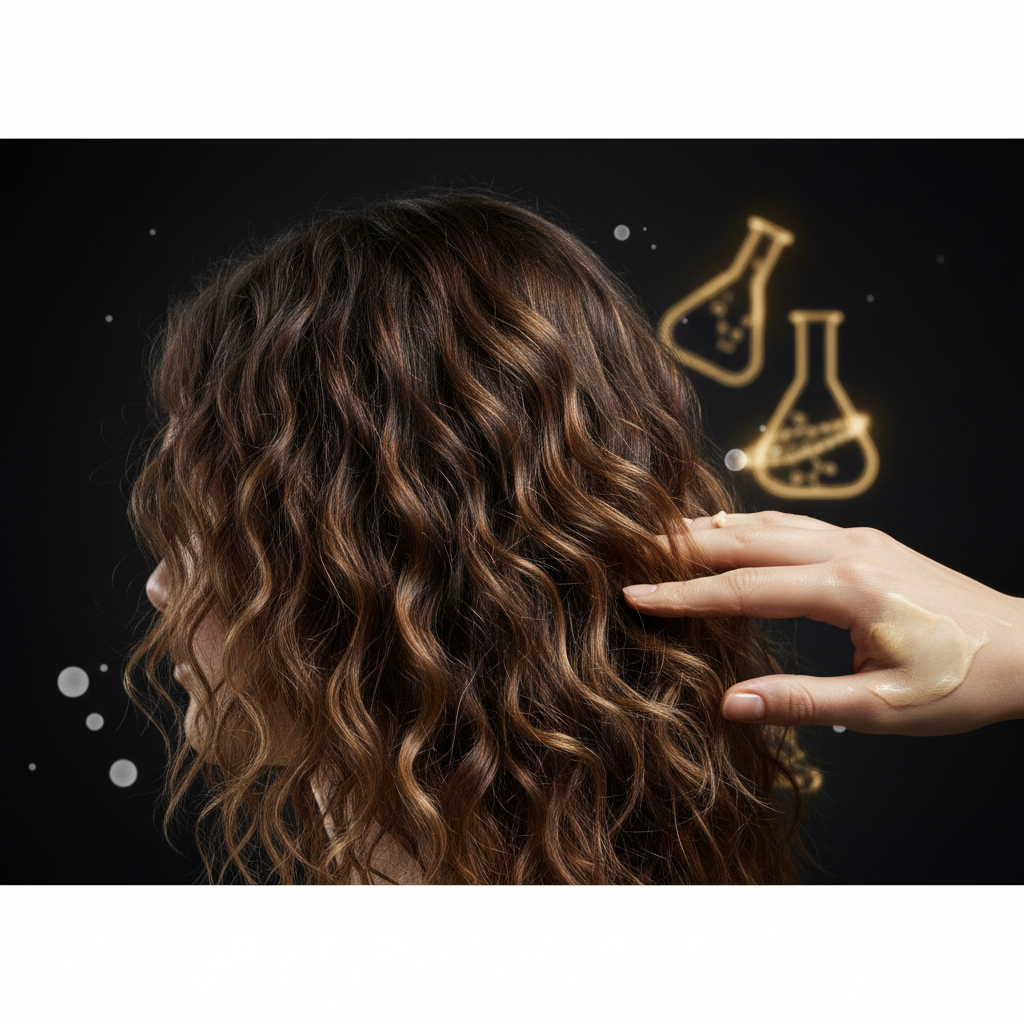
The hair shaft consists of three main components: an inner medulla, a structural cortex rich in keratin protein, and an outer protective cuticle made of overlapping scales. In healthy, smooth hair, these cuticle scales lie flat, locked together by an ultra-thin lipid layer containing 18-methyleicosanoic acid (18-MEA). When 18-MEA is stripped away by alkaline shampoos, UV exposure, chemical lightening, or physical friction, the cuticle lifts.
Once lifted, the cortex becomes porous and hygroscopic. Hair naturally seeks equilibrium with the air around it. When surrounding humidity is high, water molecules penetrate the exposed cortex and disrupt the weak hydrogen bonds that stabilise its keratin chains. As these bonds reform haphazardly, individual hair fibres buckle, twist, and separate from their neighbours. This uncoordinated expansion is what stylists and consumers observe as frizz. Clinical studies show that applying hydrophobic films reduces water vapour absorption across a 24-hour window by over 50%, preserving bundle cohesion.
What the evidence does not show
Controlled research has not found that frizzy hair is caused by dietary deficiencies, poor scalp circulation, or follicular abnormalities in the vast majority of cases. While severe systemic malnutrition can alter hair tensile strength, routine frizz is an acquired or genetic physical trait of the exposed fibre.
Furthermore, topical products cannot permanently rebuild the cuticular 18-MEA layer once it has sheared off. Many marketing claims promise to "cure" frizz permanently with single-wash solutions. In reality, no topical product can permanently weld lifted cuticle scales back to virgin status. Treatments wash away, oxidise, or wear off through routine brushing and friction, meaning that ongoing fibre maintenance is required to keep hair smooth.
The biological and physical mechanisms of frizz
Three major variables dictate how prone a strand of hair is to frizzing: cuticle integrity, natural fibre curvature, and ambient moisture gradients.
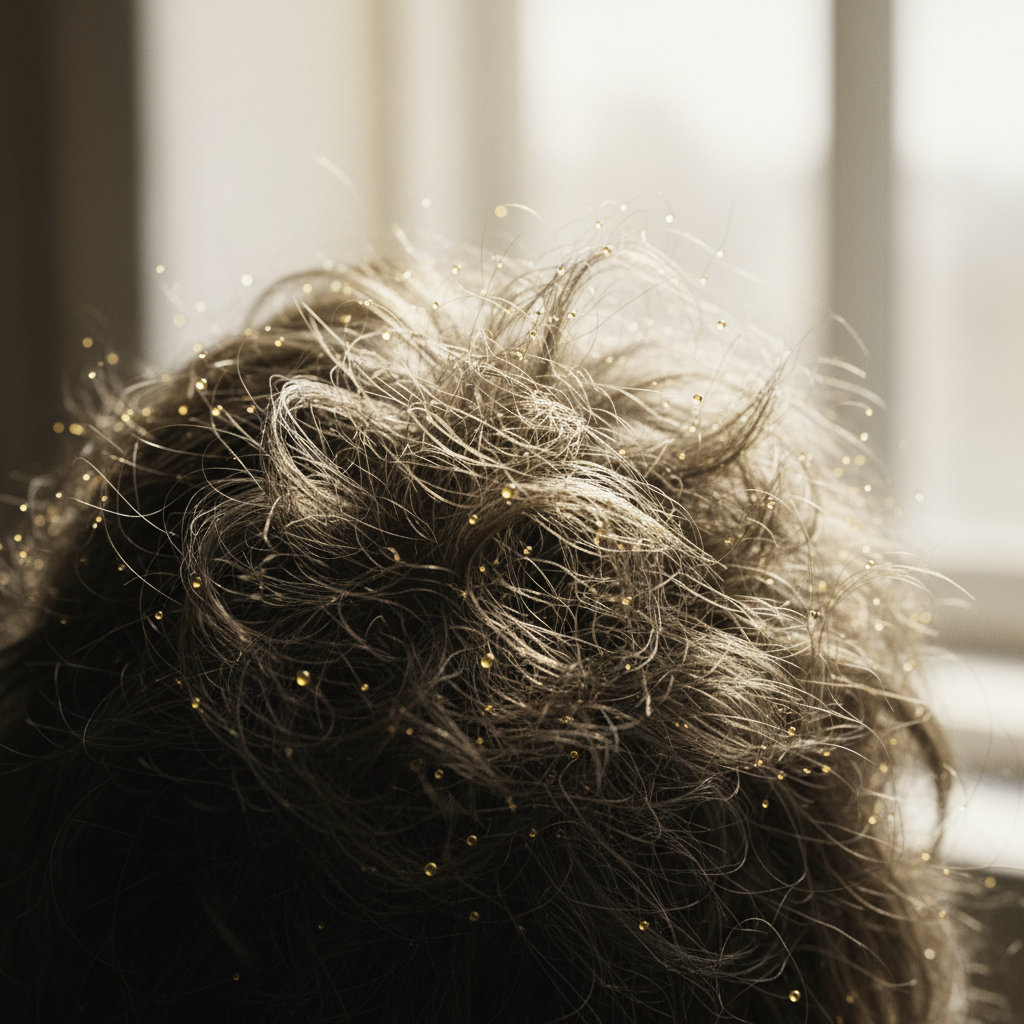
Low Porosity (Flat Cuticle) --> Water repelled --> Hydrogen bonds stable --> Sleek fibre
High Porosity (Lifted Scales) --> Water absorbed --> Hydrogen bonds reshuffle --> Frizzed fibre
Porosity and cuticle integrity
Virgin hair with tightly overlapping scales has low porosity. It repels moisture effectively, keeping internal water levels stable regardless of external weather. High-porosity hair, whether caused by chemical treatments or natural texture, possesses microscopic fissures. Alkaline salon treatments, which often raise hair pH above 8.0, force the cuticle wide open to deposit pigment or alter disulphide bonds. If not returned to the hair fibre's natural isoelectric point (around pH 3.67 to 5.5), these scales remain elevated, creating an open gateway for environmental humidity.
Natural curvature and curl geometry
Straight hair fibres generally feature uniform cross-sections and round follicle openings, allowing sebum to travel down the shaft with relative ease. Wavy, curly, and afro-textured hair fibres grow from elliptical or asymmetric follicles. These fibres twist as they grow, creating points of stress where cuticle scales flare naturally along the outer curve of the bend. This geometry makes sebum migration difficult, leaving the mid-lengths and ends dry and exceptionally vulnerable to ambient moisture shifts.
Signs that your hair needs structural frizz support
Identifying the specific behaviour of your hair ensures you select the correct intervention:
- Halo frizz: A light aura of single, elevated fibres sitting above the main canopy, commonly caused by surface friction from towels or pillowcases.
- Surface roughness: Hair feels like rough paper or dry straw when sliding fingers from the ends upward toward the roots.
- Puffing upon exposure to weather: Sleek styles double in volume within minutes of stepping into misty or humid conditions.
- Tangling and webbing: Adjacent hair fibres catch and knot together rather than gliding past each other cleanly.
- Dull appearance: A lifted cuticle reflects light irregularly and diffuses it, making hair look matte and lacklustre.
Practical steps to control and prevent frizz
Managing frizz requires an approach that reduces physical friction, restores surface lubricity, and prevents moisture migration.
- Cleanse gently at an acidic pH: Use sulphate-free shampoos formulated between pH 4.5 and 5.5. Acidic environments compact the cuticle scales, creating a smoother outer perimeter that resists water intrusion.
- Layer leave-in conditioners and emollients: Apply water-based leave-in conditioners to damp hair to hydrate the cortex, then seal the strand with an occlusive agent. Plant oils (such as argan, jojoba, or coconut) and cosmetic silicones (such as dimethicone) coat the fibre with a protective hydrophobic barrier.
- Minimise towel friction: Standard cotton loop towels catch open cuticle edges and tear them through abrasive friction. Gently squeeze wet hair using a smooth microfibre towel or cotton wrap instead.
- Moderate heat styling: Direct heat exceeding 185 degrees Celsius melts the hair's internal keratin structures and causes trapped water within the cortex to boil, creating structural defects known as "bubble hair". Always apply a dedicated thermal protectant before using blow-dryers or flat irons.
- Nighttime friction control: Cotton pillowcases absorb natural protective oils and roughen the cuticle during sleep. Sleeping on silk or satin pillowcases allows fibres to glide freely, preserving alignment.
Comparing anti-frizz approaches
| Method | Primary Mechanism | Best For | Typical Duration | Limitations |
|---|---|---|---|---|
| Film-Forming Silicones | Coats shaft with hydrophobic seal; lowers surface friction | High-humidity weather, heat-styled hair | 1 to 3 washes | Requires gentle surfactants to prevent build-up over time |
| Botanical Lipids & Oils | Penetrates outer layers; mimics missing natural lipids | Dry, coarse, wavy, curly, and afro textures | 1 to 2 washes | Can weigh down fine, low-density hair if over-applied |
| Acidic Rinses (pH 3.5 - 4.5) | Shrinks and tightens overlapping cuticle scales | Chemically lightened or high-porosity hair | Until next wash | Does not add substantial slip or heavy moisture on its own |
| In-Salon Keratin Treatments | Crosslinks proteins and coats fibre with protective polymers | Severe frizz, unruly wave patterns | 8 to 12 weeks | Often involves harsh aldehydes; reduces natural curl pattern |
When the cause may be something else
It is essential to distinguish between frizz and other structural hair changes. A halo of short, unruly hairs at the crown may not be frizzy hair at all, but rather short, healthy regrowing hairs following a period of telogen effluvium (diffuse shedding). These new hairs lack the length and weight to lie flat against the scalp alongside mature fibres.
Conversely, widespread fuzziness coupled with snapped, uneven ends indicates hair breakage, not simple frizz. Breakage happens when mechanical or chemical damage degrades the cortex to the point that the hair fibre fractures entirely. Finally, trichorrhexis nodosa, a structural defect where tiny nodes form along the hair shaft causing it to snap easily, can present visually as unmanageable frizz. If your hair snaps under gentle tension or sheds from the follicle in large clumps, consult a qualified trichologist or dermatologist for a clinical assessment.
Support your routine with Watermans
When building a daily regimen to tame unmanageable fibres, starting at the root is vital. Watermans offers nutrient-dense, revitalising hair products designed to foster a healthy, balanced scalp environment while gently detangling and conditioning vulnerable strands. Formulated with premium botanical extracts, rosemary, and hydrolysed lupin protein, these sulphate-free blends support cuticle integrity and smooth the hair shaft, leaving your lengths feeling stronger, softer, and more resilient against daily environmental wear.
Frequently asked questions about Frizzy Hair Solutions
Why does humidity make hair frizzy so quickly?
Humidity refers to water vapour suspended in the atmosphere. When the air is moist, porous hair absorbs this ambient water. The incoming water molecules disrupt and rearrange the fragile hydrogen bonds inside the hair cortex, causing individual strands to swell, bend, and pull away from neighbouring fibres.
Can cold water rinses close hair cuticles to stop frizz?
Cold water rinses do not close cuticles. Hair cuticle scales are non-living biological structures that lack muscles or nerve endings; they cannot dilate or contract in response to temperature. Cuticle closure is governed primarily by pH, not water temperature. Mildly acidic products tighten cuticles, while alkaline products force them open.
Are natural oils or silicones better Frizzy Hair Solutions?
Both options serve useful purposes. Silicones create a robust, lightweight hydrophobic shield that repels moisture vapour exceptionally well during high-humidity days. Natural oils, such as argan or coconut, penetrate the outer layers of the hair shaft to replenish lost lipids and soften the fibre. Many people achieve the best results by using a balanced combination of both.
How do I stop frizz without losing my natural curl pattern?
Apply styling products using the "praying hands" technique onto wet hair to smooth cuticles without disrupting natural curl clumps. Use a leave-in conditioner containing humectants, seal with an emollient gel or oil, and diffuse on low heat or air-dry without touching the hair while it dries.
Does frizzy hair mean that my hair is permanently damaged?
Not necessarily. Frizz is frequently a natural feature of wavy, curly, and coily hair textures due to their irregular follicle geometry and natural cuticle flaring. While chemical or heat damage certainly exaggerates frizz by raising cuticle scales, genetically textured hair can be entirely healthy while still being naturally prone to frizz.
Effective management of unruly strands
Finding dependable Frizzy Hair Solutions comes down to understanding hair fibre structure and working with surface chemistry. Frizz is neither a medical flaw nor an unsolvable mystery. By moderating heat, maintaining an acidic pH balance, and coating the cuticles with protective hydrophobic seals, you can control fibre swelling and enjoy soft, well-aligned hair regardless of what the weather brings.
Sources and references
- Robbins, C. R. (2012). Chemical and Physical Behavior of Human Hair. 5th Edition, Springer-Verlag.
- Gavazzoni Dias, M. F. (2015). Hair cosmetics: An overview. International Journal of Trichology, 7(1), 2-15.
- D'Souza, P., & Rathi, S. K. (2015). Shampoo and Conditioners: What a Dermatologist Should Know? Indian Journal of Dermatology, 60(3), 248-254.
- Cloete, E., Khumalo, N. P., & Ngoepe, M. N. (2019). The What, Why and How of Curl Pattern: A Review. Cosmetics, 6(4), 65.
- British Association of Dermatologists. (2021). Hair care and cosmetic practices. BAD Clinical Guidelines.
Find these ingredients in Watermans products
- Rosemary Extract: you will find this ingredient in our Hair Growth Shampoo.