Folliculitis and Scalp Health: Causes, Prevention, and Care
10 min read ·
Explore the connection between Folliculitis and Scalp Health. Learn about triggers, biological mechanisms, effective care routines, and when to seek medical advice.
Quick answer: Folliculitis and Scalp Health are intimately connected, as folliculitis represents an inflammatory or infectious disruption of the hair follicle that compromises the skin barrier. Triggered by bacteria, yeasts, or physical friction, it manifests as tender pustules, itching, and redness across the scalp. While mild superficial cases resolve with proper hygiene and antiseptic washes, persistent or deep folliculitis requires medical diagnosis, because chronic untreated inflammation can permanently damage follicles and lead to irreversible cicatricial hair loss.
Key takeaways
- Scalp folliculitis is an inflammation of one or more hair follicles, most frequently caused by Staphylococcus aureus or Malassezia yeasts.
- Physical triggers include tight headwear, heavy pomades, occlusive styling oils, friction, and scratching.
- Early superficial folliculitis affects only the upper follicle, whereas deep folliculitis can destroy the hair bulb and follicular stem cells.
- Standard cosmetic shampoos cannot cure deep microbial infections; topical or oral antimicrobial treatments prescribed by a clinician are often necessary.
- Distinguishing folliculitis from seborrhoeic dermatitis, acne necrotica, or scalp psoriasis is vital for effective management.
Folliculitis and Scalp Health: what the evidence shows
Understanding Folliculitis and Scalp Health requires looking at the delicate ecosystem of the scalp epidermis. The human scalp harbours roughly 100,000 hair follicles, each accompanied by a sebaceous gland that secretes sebum. This lipid-rich environment naturally hosts micro-organisms, primarily Cutibacterium acnes, Staphylococcus epidermidis, and lipophilic Malassezia species. Under physiological conditions, these organisms exist in harmony with the host skin barrier, which maintains an acidic pH between 4.5 and 5.5.
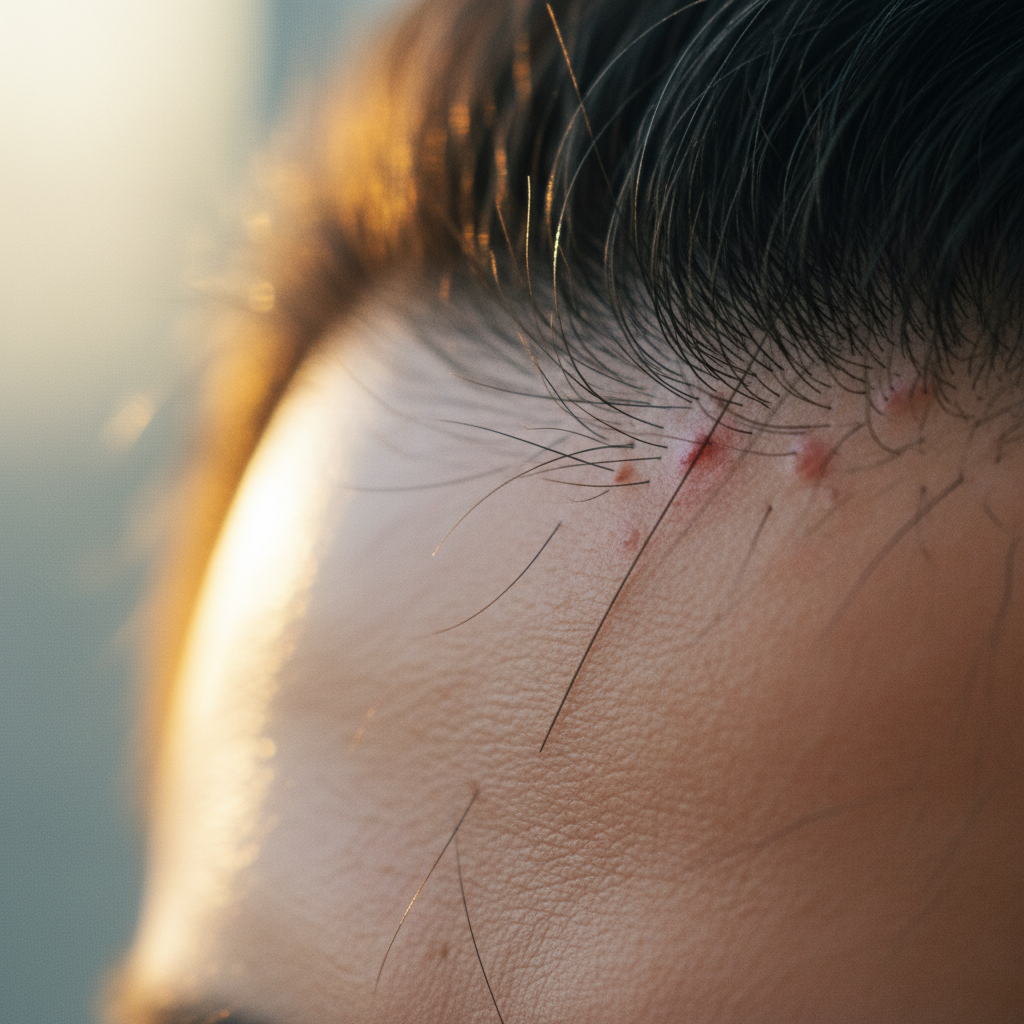
Folliculitis develops when this equilibrium breaks down. The follicle ostium (the opening of the pore at the skin surface) becomes blocked by excess sebum, dead corneocytes, or external styling residues. When trapped beneath this blockage, opportunistic pathogens proliferate. Staphylococcus aureus is the most prevalent bacterial culprit, accounting for the majority of superficial bacterial folliculitis cases. When fungi are the primary drivers, Malassezia species overgrow within the infundibulum, triggering pityrosporum folliculitis.
Research published in clinical dermatology journals demonstrates that sustained inflammation around the follicular infundibulum recruits neutrophils and lymphocytes. If this inflammatory cascade remains confined to the upper third of the follicle, it is classified as superficial folliculitis (often called Bockhart impetigo in bacterial presentations). However, if the inflammation penetrates deeper into the isthmus and bulb, it weakens hair anchoring and can prompt acute shedding or permanent follicular scarring.
Biological mechanisms: how the scalp follicle becomes inflamed
Follicular disruption follows a distinct biological pathway that alters both the tissue environment and hair growth cycle:
- Follicular occlusion: The process begins at the infundibulum. Heavy waxes, mineral oils, accumulated sweat, or unwashed styling products create a plug alongside desquamated keratinocytes.
- Microbial overgrowth: Behind the plug, sebum accumulates. This provides an abundant substrate for lipophilic microbes. In bacterial cases, Staphylococcus aureus produces toxins and enzymes, such as coagulase and hyaluronidase, that degrade cellular adhesion.
- Immune recruitment: The host immune system detects pathogen-associated molecular patterns (PAMPs). Keratinocytes release pro-inflammatory cytokines, specifically interleukin-1 alpha (IL-1α), tumour necrosis factor-alpha (TNF-α), and interleukin-8 (IL-8).
- Neutrophilic infiltration: Neutrophils migrate from dermal capillaries into the follicular canal, forming the visible purulent exudate (pus) characteristic of an active pustule.
- Tissue alteration: If neutrophils release excessive reactive oxygen species and proteases, the outer root sheath ruptures. In severe forms, like folliculitis decalvans, destruction of the follicular bulge eradicates the epithelial stem cells responsible for hair regeneration.
Common triggers that compromise scalp health
Folliculitis rarely occurs in a vacuum. Everyday grooming habits, environmental factors, and systemic conditions frequently trigger or exacerbate the condition:
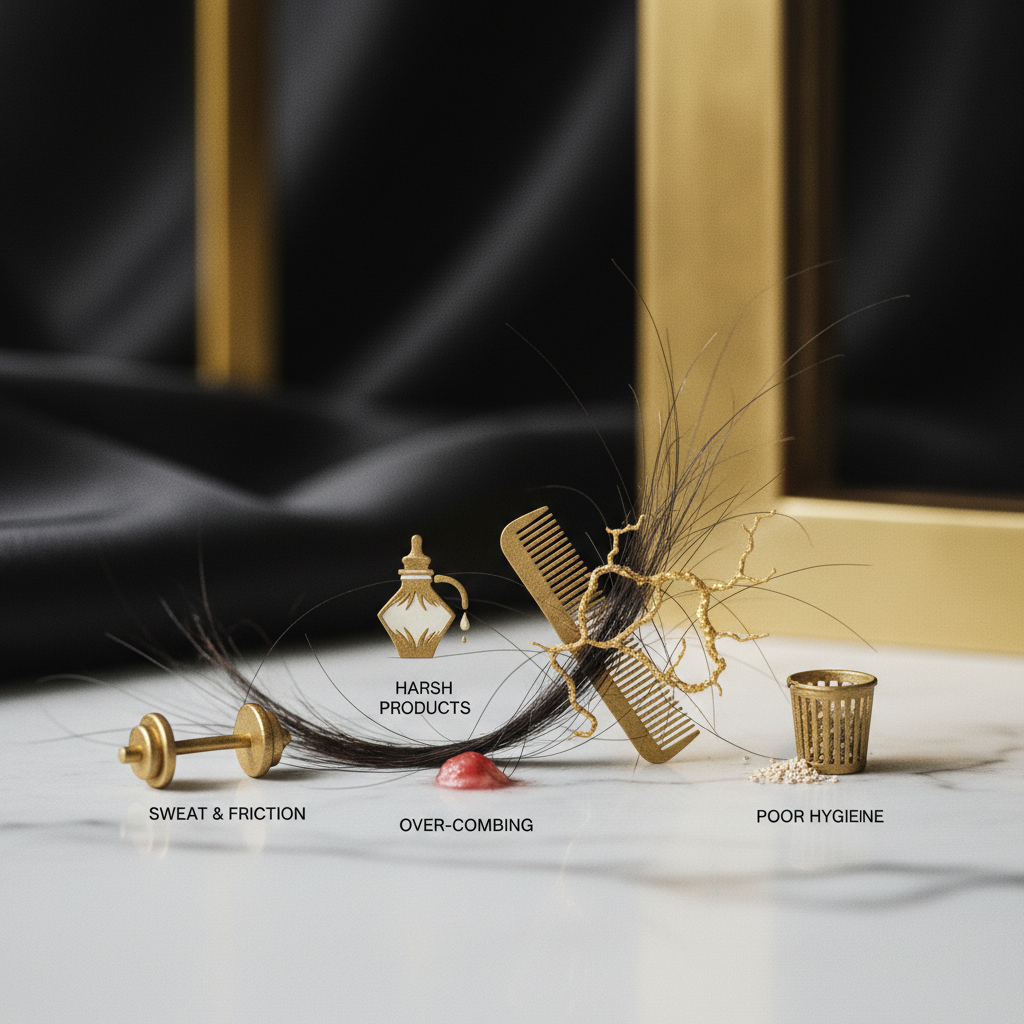
- Occlusive hair products: Heavy vegetable butters, petrolatum, and thick pomades seal the follicular opening. This is especially prevalent in pomade acne or traction-related folliculitis seen with tight hairstyles.
- Mechanical friction and traction: Helmets, tight headbands, baseball caps, and tight braids chafe the follicular opening. This mechanical micro-trauma compromises the stratum corneum, letting surface bacteria enter.
- Heat and humidity: Sweating combined with warm environments accelerates microbial proliferation while softening the follicular barrier.
- Impaired immune response: Diabetes mellitus, immunosuppressive therapies, and chronic systemic stress alter sebum composition and suppress local cutaneous immunity.
- Shaving and close trimming: Razors produce micro-abrasions and can push severed hair tips back beneath the skin surface, triggering pseudofolliculitis capitis.
What the evidence does not show
There is no clinical evidence that poor general hygiene is the sole cause of folliculitis. Clean scalps develop folliculitis when mechanical trauma, razor abrasion, or microbial dysbiosis creates an entry point.
Furthermore, evidence does not show that standard commercial shampoos, clarifying washes, or natural essential oils can eradicate deep-seated bacterial or fungal folliculitis. While ingredients like tea tree oil possess mild antimicrobial properties in laboratory petri dishes, controlled trials demonstrate they rarely achieve the tissue concentration needed to clear deep follicular infiltrates.
Finally, cosmetic hair products do not directly cause permanent scarring hair loss unless they trigger severe contact dermatitis or secondary bacterial infection that goes untreated for months.
Signs and symptoms: how to spot folliculitis
Recognising the signs of follicular inflammation early helps prevent complications. Symptoms vary depending on whether the condition is superficial or deep:
- Superficial folliculitis: Clusters of small, red papules or fragile, yellowish pustules measuring 1 to 2 millimetres across, pierced by a central hair shaft. Mild pruritus (itching) and slight tenderness are common.
- Deep folliculitis (e.g., sycosis or boils): Larger, erythematous, painful nodules that feel firm beneath the skin. These lesions may coalesce, discharge pus, and leave crusts.
- Perifollicular erythema: A distinct ring of redness encircling the base of individual hairs, often accompanied by a burning sensation rather than simple itching.
- Crusting and scaling: As pustules rupture, dried exudate forms amber or dark crusts that adhere firmly to the hair fibres.
Folliculitis compared with other scalp conditions
Many scalp disorders present with redness, scaling, or pustules. The table below outlines key distinctions to aid identification:
| Condition | Primary Cause | Characteristic Appearance | Itch vs Pain | Hair Shedding Risk |
|---|---|---|---|---|
| Bacterial Folliculitis | Staphylococcus aureus | Discrete pustules centred on hair shafts; yellow crusts | Soreness and mild itch | Low, unless infection is deep |
| Pityrosporum Folliculitis | Malassezia yeast | Uniform, itchy, pinpoint pink papules and pustules | Intense, prickling itch | Minimal |
| Seborrhoeic Dermatitis | Immune response to Malassezia | Greasy, yellowish scales over diffuse red patches | Moderate to severe itch | Low; temporary shedding |
| Scalp Psoriasis | Autoimmune hyperkeratosis | Well-demarcated silvery-white plaques on red skin | Variable; often tight or burning | Low; breakage from scale removal |
| Folliculitis Decalvans | Chronic neutrophilic inflammation | Expanding patches of pustules with tufted hairs ("doll's hair") | Severe pain, burning, tenderness | High; permanent scarring hair loss |
Evidence-based scalp management
Addressing scalp folliculitis requires a staged approach combining physical hygiene modifications with targeted therapeutics.
Optimising the cleansing routine
Maintain a regular washing schedule using a balanced cleanser with a pH between 4.5 and 5.5. Washing removes excess sebum, environmental contaminants, and desquamated cells before they form obstructive plugs. Avoid vigorous scrubbing with fingernails, which creates micro-abrasions; massage gently using the pads of your fingers.
Thermal and mechanical adjustments
Avoid hot water, which strips necessary surface lipids and prompts reactive sebum overproduction. Use lukewarm water. Sanitise hairbrushes, combs, pillowcases, and sports helmets weekly. Discontinue the use of heavy occlusive pomades, unrefined oils, and waxy edge controls until the scalp clears.
Topical antimicrobials and washes
Over-the-counter antiseptic washes containing chlorhexidine, benzoyl peroxide (2.5 to 5 percent), or pyrithione zinc can help manage mild, superficial bacterial loads. For suspected fungal involvement, washes containing ketoconazole (1 to 2 percent) or selenium sulphide help suppress Malassezia populations. Apply the wash to wet hair, leave it in contact with the scalp for 3 to 5 minutes to allow active ingredients to penetrate the follicular infundibulum, then rinse thoroughly.
Professional medical therapies
When lesions are painful, spreading, or resistant to over-the-counter measures, a general practitioner or dermatologist should evaluate the scalp. Bacterial swabs determine antibiotic sensitivities. Prescriptions often involve topical clindamycin or fusidic acid, or oral antibiotics such as doxycycline, lymecycline, or flucloxacillin for widespread bacterial infections. Fungal presentations may require oral itraconazole or fluconazole.
Supportive care from Watermans
For general maintenance between flares, cosmetic support plays a valuable role in keeping the scalp clean, refreshed, and clear of build-up. The Watermans collection offers daily care designed to maintain an optimal scalp environment.
Watermans GrowMe Shampoo delivers a thorough, non-stripping cleanse that helps wash away excess surface sebum, dead skin flakes, and residue that could otherwise block vulnerable follicles. Formulated with rosemary extract, caffeine, biotin, and allantoin, it comforts the scalp while leaving the hair feeling fuller and stronger.
To support the scalp barrier without adding greasy weight, Watermans GrowMore Elixir provides a leave-in topical infusion. Because it is water-based rather than an occlusive oil, it delivers conditioning botanical extracts directly to the scalp surface without clogging pores or trapping micro-organisms. While these products are cosmetic formulations intended for general scalp wellness and are not treatments for active medical infections, they help preserve a clean, balanced foundation for healthy hair growth.
When to seek medical advice
You should arrange an evaluation with a doctor or dermatologist if you experience any of the following:
- Pustules that expand, become intensely painful, or develop into fluctuant, draining nodules.
- Follicular pustules accompanied by swollen cervical lymph nodes, fever, or general malaise.
- Patches of hair coming away easily with the roots intact, leaving smooth, shiny bald areas.
- The appearance of "tufting", where multiple hair fibres emerge from a single dilated pore opening surrounded by redness and crusting.
- Symptoms that fail to improve after 14 days of using targeted antiseptic or anti-dandruff cleansers.
Frequently asked questions about Folliculitis and Scalp Health
Can Folliculitis and Scalp Health issues cause permanent baldness?
Superficial folliculitis usually resolves without affecting future growth, as it only inflames the upper pore. However, deep or chronic forms, such as folliculitis decalvans or dissecting cellulitis, destroy the follicular bulge where stem cells reside. When this occurs, connective tissue replaces the follicle, causing irreversible cicatricial (scarring) alopecia. Early intervention protects against long-term damage.
How do I tell if my folliculitis is bacterial or fungal?
Bacterial folliculitis typically features yellowish, pus-filled blisters that feel sore or tender, often linked to shaving or friction. Fungal (Pityrosporum) folliculitis presents as uniform, highly itchy, small red bumps across the hairline and crown, worsening in hot, humid weather. A medical practitioner can confirm the exact cause by taking a simple swab or scraping.
Does washing my hair every day make scalp folliculitis worse?
Washing daily does not worsen folliculitis if you use a gentle, pH-balanced cleanser and lukewarm water. In fact, regular washing clears trapped sebum, dead skin cells, and sweat that encourage bacterial growth. However, aggressive scrubbing with nails, scalding water, and harsh alkaline soaps can strip the barrier, increasing inflammation and making the condition worse.
Should I stop using hair oils if I have folliculitis?
Yes. Occlusive oils like coconut oil, castor oil, and mineral oil seal the follicular opening. This creates an oxygen-deprived environment that accelerates Cutibacterium acnes and Staphylococcus growth, while providing fatty acids that feed Malassezia yeasts. Switch to light, water-based leave-in treatments until your scalp is completely clear and healthy.
Preserving your scalp barrier
Maintaining balanced Folliculitis and Scalp Health requires consistent, informed habits that safeguard the skin barrier while minimising physical irritation. Treating the scalp with the same care as the skin on your face means avoiding harsh friction, keeping follicular openings free of heavy residue, and acting swiftly when inflammation appears. By balancing targeted hygiene with timely medical support, you can clear follicular disruptions and preserve a resilient foundation for long-term hair growth.
Sources and references
- British Association of Dermatologists. Guidelines for the management of folliculitis decalvans. Br J Dermatol. 2017.
- National Institute for Health and Care Excellence (NICE). Boils, carbuncles, and staphylococcal folliculitis: antimicrobial prescribing. Clinical Guideline [NG141]. 2019.
- Luelmo-Aguilar J, Santandreu MS. Folliculitis: recognition and management. Am J Clin Dermatol. 2004;5(5):301-310.
- Harries MJ, Paus R. The pathogenesis of primary cicatricial alopecias. Am J Pathol. 2010;177(5):2152-2162.
- NHS UK. Folliculitis Overview and Symptoms. NHS Website Health A-Z. 2023.
Find these ingredients in Watermans products
- Zinc: you will find this ingredient in our Hair Vitamins.
- Castor Oil: you will find this ingredient in our Camellia & Black Castor Hair & Body Oil.