Ferritin and Hair Shedding: How Stored Iron Affects Growth
8 min read ·
Understand the link between ferritin and hair shedding, how low iron stores trigger telogen effluvium, optimal lab ranges, and steps to restore healthy hair growth.
Quick answer: Ferritin and hair shedding are closely linked because serum ferritin reflects your body's stored iron, a vital mineral required by rapidly dividing follicle cells. When ferritin levels fall below optimal thresholds, follicles can shift prematurely from growth into shedding, triggering diffuse telogen effluvium. However, low ferritin is rarely the sole cause of chronic hair loss, and raising your levels through supplementation takes three to six months to show noticeable improvements in density.
Key takeaways
- Serum ferritin measures your body's intracellular iron stores, not the free iron circulating in your bloodstream.
- Rapidly dividing matrix cells in hair follicles require iron-dependent enzymes for cellular respiration and DNA synthesis.
- Depleted iron reserves can trigger acute or chronic telogen effluvium, causing diffuse shedding rather than patchy baldness.
- Normal laboratory ranges for ferritin often start as low as 15 micrograms per litre (mcg/L), but many dermatologists recommend maintaining levels above 50 to 70 mcg/L for optimal hair growth.
- You must always test your blood before supplementing, as excess iron carries serious toxicity risks.
Ferritin and Hair Shedding: what the evidence shows
Research into ferritin and hair shedding demonstrates that hair matrix cells are among the most metabolically active cells in the human body. Because these matrix cells divide so rapidly to produce the hair shaft, they are exceptionally sensitive to subtle declines in cellular energy and nutrient availability.
Ferritin is an intracellular protein that binds and stores iron, releasing it in a controlled fashion. When nutritional intake falls or blood loss occurs, your body draws upon these stores to preserve essential systemic functions, such as haemoglobin production for oxygen transport. Non-essential processes, including the energy-intensive anagen (growth) phase of the hair cycle, are deprioritised. As a result, hair follicles are pushed prematurely into the telogen (resting) phase, leading to diffuse shedding roughly two to four months after the metabolic trigger.
Multiple clinical studies published in dermatological literature show a higher prevalence of low serum ferritin in women experiencing diffuse telogen effluvium compared to healthy control groups. While standard laboratory reference ranges typically define normal ferritin as 15 to 200 mcg/L for women, several peer-reviewed investigations, including publications in the Journal of the American Academy of Dermatology, suggest that telogen effluvium is significantly more common when serum ferritin drops below 30 to 40 mcg/L.
What the evidence does not show
The relationship between iron stores and follicular health is frequently oversimplified. Clinical evidence does not show that low ferritin causes every form of alopecia. Specifically:
- It does not cause pattern baldness: Low ferritin does not cause female pattern hair loss (androgenetic alopecia), which is fundamentally mediated by genetics and hormonal sensitivity to dihydrotestosterone (DHT). While low iron can unmask or worsen pattern thinning by adding a diffuse shed on top, iron deficiency itself is not the underlying driver.
- It does not guarantee hair regrowth on its own: Normalising ferritin through supplements does not automatically stop shedding if other concurrent triggers exist, such as thyroid dysfunction, severe psychological stress, or protein deficiency.
- High ferritin does not produce faster hair growth: Ferritin functions as a reserve tank, not an accelerator. Once your body reaches sufficient cellular storage, additional iron does not speed up the hair cycle or increase shaft diameter.
Biological mechanism: why follicles demand iron
Hair follicles cycle through three primary phases: anagen (active growth lasting 2 to 7 years), catagen (a brief transitional phase lasting 2 to 3 weeks), and telogen (a resting phase lasting 2 to 4 months, ending in shedding).
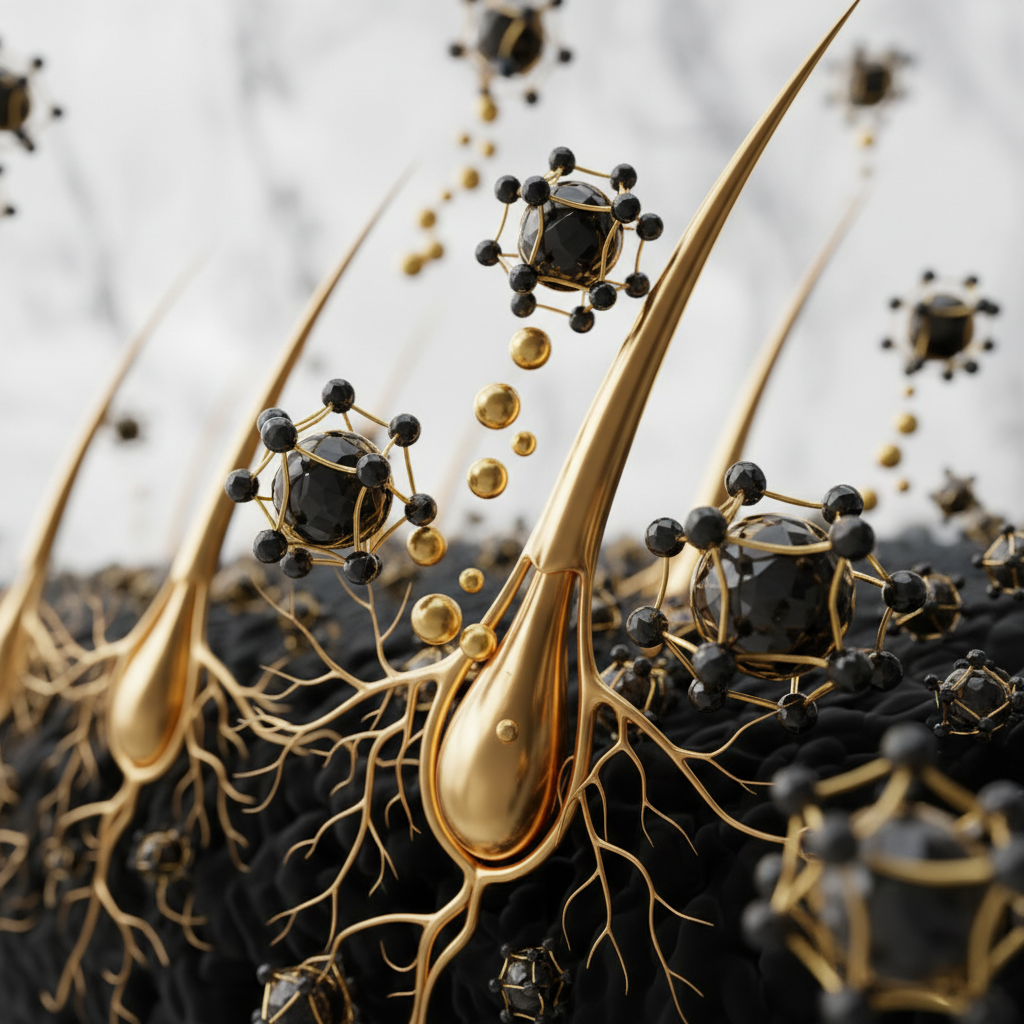
To sustain continuous hair production during anagen, matrix cells rely heavily on ribonucleotide reductase, an iron-dependent enzyme required for DNA synthesis. Iron is also a core component of cytochromes within mitochondria, which generate the adenosine triphosphate (ATP) needed for cellular protein synthesis, including keratin assembly.
When ferritin stores drop, your body conserves iron for vital organs like the heart, brain, and erythroid bone marrow. Deprived of adequate cellular iron, follicle matrix cells cannot sustain their rapid rate of mitosis. The follicle receives a biological signal to truncate the anagen phase and transition immediately into catagen and telogen. After the two to four month resting period concludes, the club hair naturally detaches from the base, resulting in visible shedding across the entire scalp.
Signs of low ferritin versus breakage
It is critical to distinguish between hair shedding from the root and hair breakage along the strand. Low ferritin causes shedding, not structural fibre weakness.
| Feature | Low Ferritin (Telogen Effluvium) | Fibre Breakage |
|---|---|---|
| Source | The follicle root | Mid-shaft or ends |
| Visible bulb | Tiny white keratin bulb present at the tip | No bulb; snapped, jagged ends |
| Pattern of loss | Diffuse thinning across the entire scalp | Patchy thinning, often concentrated on crown, hairline, or nape |
| Hair length | Shed hairs are full length | Shed fragments are short, uneven lengths |
| Primary cause | Systemic nutrient depletion and shortened anagen | Mechanical, chemical, or heat damage to the cuticle |
| Systemic symptoms | Fatigue, pale conjunctiva, brittle nails, breathlessness | None; strictly external and cosmetic |
What you can do to address low ferritin
If you suspect iron deficiency is contributing to your hair shedding, take a systematic, measured approach.
1. Request comprehensive blood panels
Do not rely on a standard complete blood count (CBC) alone. A CBC checks haemoglobin levels, which only drop after your iron stores are completely exhausted. Ask your doctor for:
- Serum ferritin
- Full blood count (FBC/CBC)
- Total iron-binding capacity (TIBC) or transferrin saturation
- C-reactive protein (CRP), because ferritin is an acute-phase reactant that falsely spikes during systemic inflammation or infection
2. Follow supervised iron supplementation
If tests confirm low ferritin, work with a medical practitioner to select the correct supplement. Common clinical choices include ferrous fumarate, ferrous sulphate, and gentler chelated options such as iron bisglycinate.
- Take oral iron alongside vitamin C (ascorbic acid) to enhance absorption in the duodenum.
- Avoid consuming iron supplements alongside tea, coffee, calcium, or dairy products, which inhibit iron uptake.
- Never self-prescribe high-dose iron, as excess iron accumulates in the liver and organs, leading to dangerous toxicity.
3. Maintain nutritional intake
Support your systemic stores with dietary iron. Haem iron (found in lean red meat, poultry, and fish) has a high absorption rate of roughly 15 to 35 percent. Non-haem iron (found in lentils, spinach, pumpkin seeds, and fortified cereals) has an absorption rate of roughly 2 to 20 percent. Pairing non-haem sources with citrus fruits, peppers, or tomatoes improves bio-availability.
4. Support the scalp environment
While addressing internal nutritional status, look after the external hair fibre and scalp skin. Using mild shampoos, avoiding aggressive tension styles, and keeping the scalp clean helps protect fragile growing hairs as your follicles recalibrate their growth cycles.
Supporting hair condition externally
Internal nutritional corrections take time to reflect in visible hair density. While you work with your doctor to normalise ferritin, caring for existing hair fibres reduces unnecessary mechanical stress.
Products formulated to support scalp vitality can help maintain an optimal environment for emergence. Watermans Grow Me Shampoo combines biotin, rosemary, caffeine, and argan oil in a balanced cosmetic formula designed to invigorate the scalp surface, strengthen hair strands, and improve the appearance of thinning hair. Supporting the scalp topically provides cosmetic density and resilience while systemic stores recover.
When to seek medical advice
Hair shedding can stem from multiple internal factors that mimic or overlap with iron deficiency. You should consult a general practitioner or a registered dermatologist if:
- Shedding exceeds 100 to 150 hairs per day for more than three consecutive months.
- You notice distinct, smooth round bald patches, which suggests alopecia areata rather than diffuse shedding.
- You experience accompanying red flags such as unexplained weight changes, joint pain, extreme fatigue, irregular menstrual cycles, or persistent cold intolerance.
- Your ferritin has normalised above 70 mcg/L for six months, but excessive shedding continues unchanged.
Frequently asked questions about Ferritin and Hair Shedding
What ferritin level is needed to stop hair shedding?
While standard medical guidelines treat ferritin levels above 15 mcg/L as non-anaemic, dermatological consensus generally suggests a target of at least 50 mcg/L, and ideally 70 mcg/L, to maintain an active anagen growth phase. However, optimal targets vary individually, so you should always interpret results with your doctor.
Can ferritin and hair shedding improve without iron pills?
Mild reductions in iron storage may improve through dietary adjustments, such as increasing intake of lean red meat, seafood, and vitamin C. However, if your ferritin is clinically depleted (below 30 mcg/L), dietary changes alone are rarely sufficient to replenish marrow and tissue stores rapidly. Targeted oral supplementation under medical supervision is typically required.
How long does it take for hair to grow back after fixing ferritin?
Hair regrowth requires patience due to the timeline of the human hair cycle. Once serum ferritin reaches optimal thresholds, it generally takes three to six months to see a measurable reduction in shedding, followed by another three to six months to notice new, short regrowing hairs across the scalp.
Does high ferritin cause hair loss?
High ferritin itself does not typically cause shedding, but it can indicate underlying systemic issues. Ferritin is an acute-phase reactant; levels rise during chronic inflammation, infection, metabolic syndrome, or conditions like hemochromatosis. If high ferritin reflects chronic bodily inflammation, that inflammation can disrupt the hair cycle.
Can you take iron supplements if you only suspect low ferritin?
No, you should never supplement iron without a confirmed blood test. The human body lacks an active mechanism to excrete excess iron. Uncontrolled supplementation can lead to iron overload (hemochromatosis), causing serious damage to the liver, pancreas, heart, and joints.
Managing Ferritin and Hair Shedding for long-term health
Understanding the connection between ferritin and hair shedding gives you a clear, measurable metric to track during periods of diffuse thinning. Because hair follicles have exceptional metabolic demands, low storage iron signals the body to divert vital resources away from cosmetic hair growth. By confirming your ferritin levels through standard blood tests, addressing deficiencies under professional medical guidance, and protecting your scalp and fibre externally, you give your follicles the optimal environment to recover their natural growth rhythm.
Sources and references
- British Association of Dermatologists (BAD): Telogen Effluvium Guidelines and Information, 2021.
- National Institute for Health and Care Excellence (NICE): Anaemia - iron deficiency clinical knowledge summary, 2023.
- Journal of the American Academy of Dermatology: "The role of iron in alopecia", 2006.
- Skin Appendage Disorders: "Iron Deficiency and Hair Loss: A Review", 2019.
- World Health Organization (WHO): Serum ferritin concentrations for the assessment of iron status in populations, 2020.