Essential Oils for Thinning Hair: Evidence, Mechanisms, and Safe Use
8 min read ·
Explore the evidence behind Essential Oils for Thinning Hair. Learn which botanicals support follicles, realistic timelines, safe dilution methods, and limits.
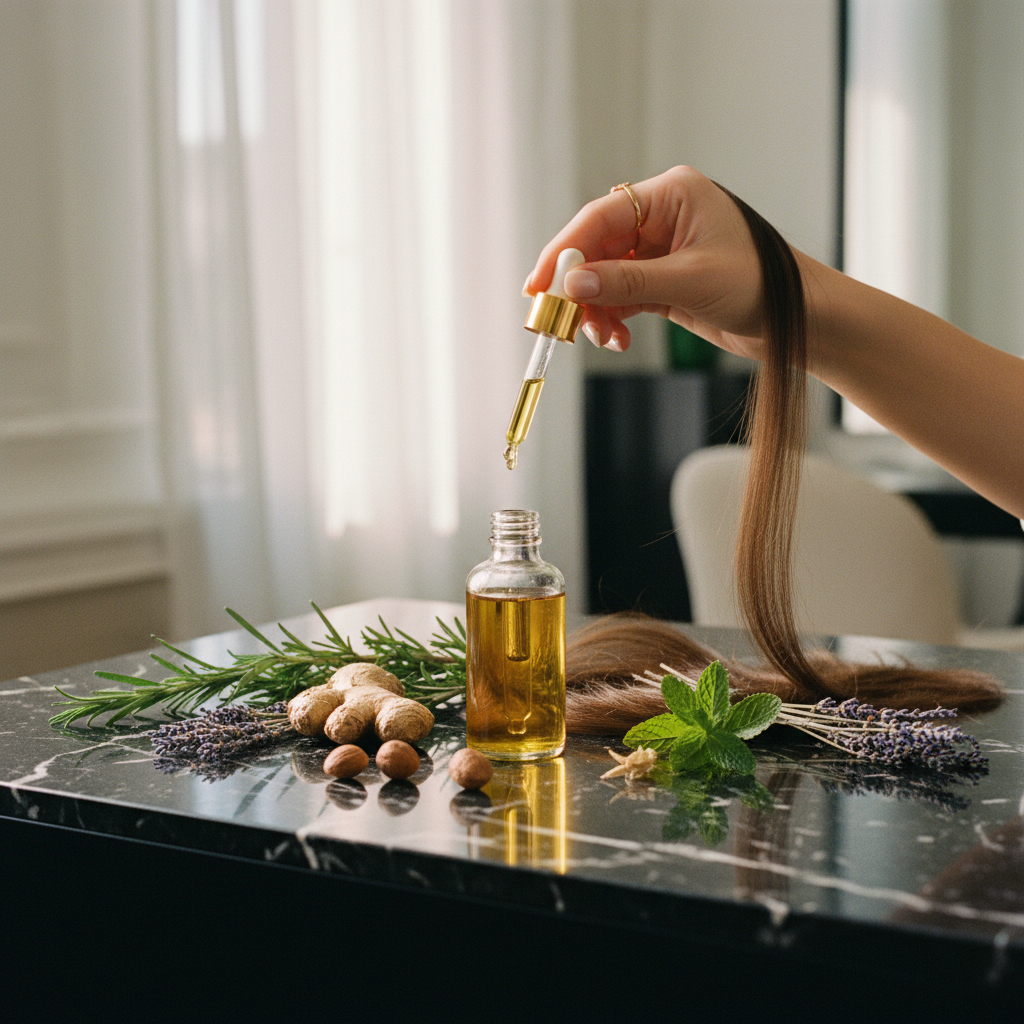
Quick answer: Using Essential Oils for Thinning Hair can support scalp health, improve local blood microcirculation, and create a favourable environment for follicle function. Small-scale clinical trials suggest oils such as rosemary and peppermint may match mild standard topical treatments for hair density over 3 to 6 months. However, essential oils cannot cure underlying genetic pattern baldness, reverse scarring alopecias, or replace medical intervention for progressive systemic hair loss. They must always be properly diluted in a carrier oil to prevent contact dermatitis.
Key takeaways
- Certain essential oils, notably rosemary and peppermint, possess mild vasodilator, anti-inflammatory, and antimicrobial properties that support follicle function.
- Essential oils are cosmetic botanical extracts, not approved pharmaceutical cures for progressive pattern alopecia or autoimmune hair loss.
- Undiluted essential oils can cause severe contact dermatitis and irritant inflammation, which can paradoxically worsen hair shedding.
- Noticeable changes in hair fullness or shedding rate typically require a minimum of 3 to 6 months of consistent application.
- Sudden, patchy, or rapid diffuse hair shedding indicates an internal trigger that requires dermatological or trichological assessment rather than home oil treatments.
Essential Oils for Thinning Hair: what the evidence shows
Research into botanical extracts reveals that selected plant oils carry biologically active compounds capable of influencing scalp tissue. When discussing Essential Oils for Thinning Hair, the conversation focuses primarily on three candidates: rosemary oil (Rosmarinus officinalis), peppermint oil (Mentha piperita), and tea tree oil (Melaleuca alternifolia).
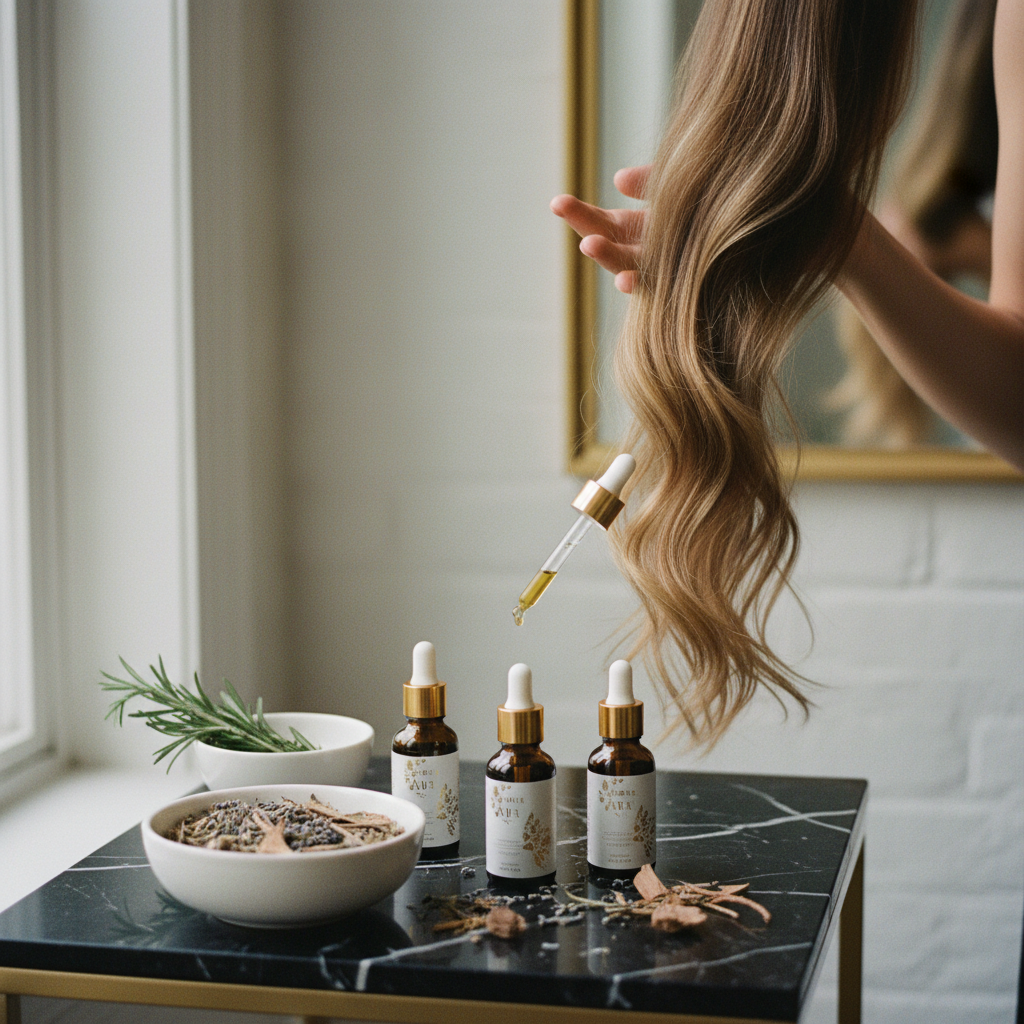
A widely cited 2015 comparative trial published in Skinmed evaluated rosemary oil alongside 2% topical minoxidil in individuals with androgenetic alopecia. Over a period of six months, both cohorts demonstrated a statistically significant increase in hair count, with the rosemary group reporting less scalp itching than the minoxidil group. The proposed mechanism involves rosemary's active constituents, including carnosic acid and 1,8-cineole, which promote microvascular circulation and provide antioxidant tissue protection around the dermal papilla.
Peppermint oil has shown notable proliferative potential in preclinical animal models. A 2014 study in Toxicological Research demonstrated that a 3% topical dilution of peppermint oil stimulated rapid entry into the anagen (growth) phase, increased dermal thickness, and elevated follicle depth. Menthol acts as a natural vasodilator by triggering cold-sensitive TRPM8 receptors and stimulating local blood flow without inducing systemic blood pressure changes.
Tea tree oil acts through a completely different biological route. Rather than stimulating blood vessels, its rich terpinen-4-ol content delivers broad-spectrum antifungal and antibacterial action against Malassezia yeasts. Because chronic scalp inflammation, seborrhoeic dermatitis, and follicular occlusion exacerbate shedding, tea tree oil helps stabilise the epidermal barrier and reduces secondary, inflammation-driven thinning.
| Essential oil | Primary active compound | Key biological mechanism | Primary application |
|---|---|---|---|
| Rosemary (Rosmarinus officinalis) | Carnosic acid, 1,8-cineole | Microcirculation support, antioxidant | Diffuse thinning, androgenetic support |
| Peppermint (Mentha piperita) | Menthol | TRPM8 receptor stimulation, vasodilation | Sluggish follicular microcirculation |
| Tea Tree (Melaleuca alternifolia) | Terpinen-4-ol | Antifungal against Malassezia, anti-inflammatory | Dandruff-associated shedding, sebum build-up |
| Cedarwood (Cedrus atlantica) | Cedrol, thujopsene | Astringent, sebum regulation | Excessive oiliness, mixed alopecia trials |
| Lavender (Lavandula angustifolia) | Linalool, linalyl acetate | Anti-inflammatory, antimicrobial | Scalp irritation, follicular stress |
What the evidence does not show
Essential oils are not a panacea, and marketing claims frequently outpace clinical science. Controlled studies have not demonstrated that plant extracts can block the intracellular conversion of testosterone to dihydrotestosterone (DHT) inside the human follicle with the potency of 5-alpha reductase inhibitors like finasteride.
Furthermore, botanical oils cannot regenerate follicles that have become completely fibrosed or miniaturised beyond a certain threshold. In cases of advanced androgenetic alopecia (Norwood scale 4 and above, or Ludwig scale 3), topical oils will not restore lost density. They also offer no therapeutic reversal for scarring alopecias, including frontal fibrosing alopecia, lichen planopilaris, or central centrifugal cicatricial alopecia (CCCA), where the follicular stem cell niche is permanently destroyed.
It is equally vital to separate biological hair loss from cosmetic hair breakage. Essential oils applied to the scalp cannot repair structural fractures along the hair shaft caused by heat styling, chemical bleach, or mechanical traction. Treating hair fibre breakage requires bond-builders and protein conditioners, not scalp-stimulating volatile oils.
How to use essential oils safely on a thinning scalp
Pure essential oils are highly concentrated volatile liquids that should never be applied directly to the scalp without a carrier vehicle. Doing so disrupts the stratum corneum and can provoke acute allergic contact dermatitis, triggering a rush of inflammatory cytokines that accelerates hair shedding into the telogen phase.
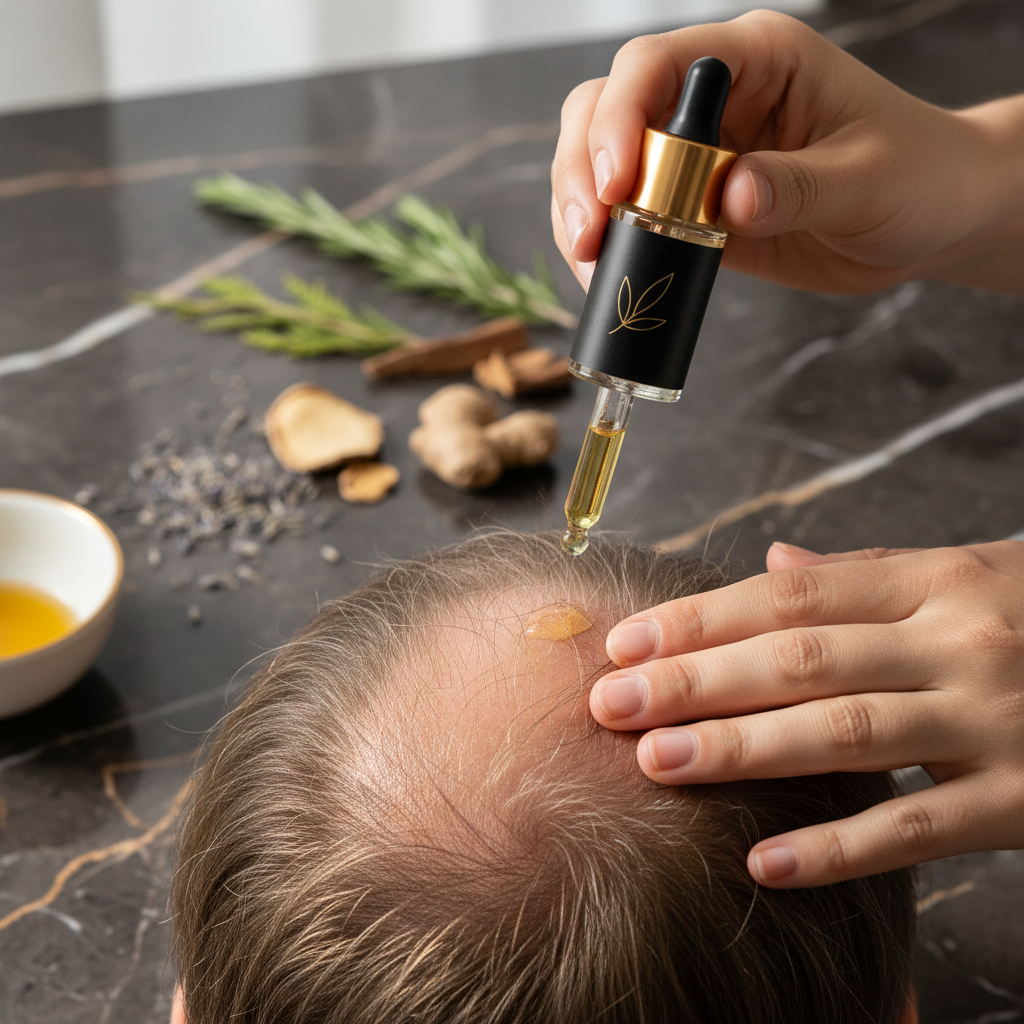
- Select an appropriate carrier oil: Choose lightweight, non-comedogenic oils that mimic natural sebum. Jojoba oil, squalane, and fractionated coconut oil penetrate the follicle funnel effectively without suffocating the scalp microbiome or oxidising into irritant free fatty acids.
- Measure correct dilution rates: Maintain a safe cosmetic concentration of 1% to 2%. To achieve a 1% dilution, mix 6 drops of essential oil into 30 ml (two tablespoons) of your carrier oil. For a 2% dilution, use 12 drops per 30 ml. Sensitive scalps should start at 0.5% (3 drops per 30 ml).
- Conduct a patch test: Place 2 drops of your diluted mixture onto the inside of your forearm or behind the ear. Cover loosely and monitor the area for 24 to 48 hours. If erythema, burning, swelling, or pruritus occurs, discontinue use immediately.
- Apply systematically: Part clean, dry or damp hair into sections. Dispense several drops of the oil blend across the thinning zones and gently massage with your fingertips for three to five minutes. Leave the mixture on the scalp for at least 30 to 60 minutes, or overnight if tolerated, before washing thoroughly with a clarifying or revitalising shampoo.
- Maintain realistic schedules: Follicle biological cycles operate slowly. Expect to repeat this routine 2 to 3 times per week for a minimum of 16 to 24 weeks before evaluating changes in hair calibre or shedding rates.
When thinning hair indicates an internal cause
When hair thinning presents rapidly or in atypical patterns, topical essential oils will not address the root physiological driver. Diffuse, rapid shedding occurring two to three months after a physiological shock (such as high fever, severe illness, rapid weight loss, or surgical trauma) typically indicates telogen effluvium. In this condition, up to 30% of growing follicles prematurely shift into the resting and shedding phases simultaneously.
Other systemic drivers that require clinical investigation include:
- Nutritional deficiencies: Insufficient serum ferritin (iron stores), low serum zinc, or deficient vitamin D levels impair the energetic demands of rapidly dividing matrix cells within the hair bulb.
- Thyroid dysfunction: Both hypothyroidism and hyperthyroidism disrupt the normal hair growth cycle, leading to diffuse dry thinning or generalised thinning across the entire scalp.
- Autoimmune presentations: Alopecia areata presents as distinct, smooth, circular patches of total hair loss caused by T-cell lymphocytic attacks on the hair bulb, which cannot be halted with cosmetic oils.
- Hormonal shifts: Perimenopause, postpartum hormone drops, and polycystic ovary syndrome (PCOS) fundamentally alter the balance of oestrogen, progesterone, and androgens, requiring targeted endocrine management.
Exploring targeted cosmetic haircare with Watermans
While creating homemade essential oil blends offers a natural approach, balancing proper dilution, scalp absorption, and washability can prove challenging. Watermans incorporates botanical extracts alongside clinically proven hair and scalp complexes into refined, everyday wash-day formulations.
Watermans GrowMe Shampoo and ConditionMe Conditioner deliver concentrated natural components, including rosemary extract, caffeine, argan oil, allantoin, and hydrolysed lupin protein, in precise, dermatologically balanced ratios. Caffeine works synergistically with botanical extracts to stimulate scalp microcirculation and invigorate dormant-looking follicles directly during cleansing. Formulated to a scalp-friendly pH between 5.5 and 6.0, these products cleanse away sebum and environmental debris without stripping the epidermal barrier, leaving thinning hair looking thicker, fuller, and perceptibly more resilient against daily breakage.
Frequently asked questions about Essential Oils for Thinning Hair
Can Essential Oils for Thinning Hair regrow hair on a completely bald spot?
No, essential oils cannot regrow hair where follicles have become completely inactive or scarred over. They function by supporting existing, living follicles through local microcirculation and scalp conditioning. If the scalp skin appears smooth and shiny with no visible follicular openings, medical or surgical advice is necessary.
How long does it take for essential oils to show results?
It generally takes 3 to 6 months of consistent application (2 to 3 times per week) to observe measurable results. The human hair growth cycle is slow, with the anagen phase producing roughly 1 to 1.25 cm of growth per month. Immediate changes within the first four weeks reflect improved scalp hydration and shine rather than true density increases.
Will rosemary oil cause an initial shedding phase?
Some individuals notice a brief increase in shedding when introducing stimulating topicals like rosemary oil. This occurs because the compound can accelerate the transition of telogen (resting) hairs out of the follicle to make way for new anagen growth. However, if shedding persists beyond four weeks or causes scalp redness, discontinue use and evaluate for contact irritation.
Is it safe to leave essential oils on the scalp overnight?
Yes, properly diluted essential oil blends (1% to 2% in a suitable carrier oil like jojoba or squalane) can safely be left on the scalp overnight, provided you have completed a negative 48-hour patch test. If you have an active inflammatory scalp condition such as seborrhoeic dermatitis or psoriasis, rinse the oil off after 30 minutes to avoid feeding yeast proliferation.
Understanding your long-term scalp strategy
Using Essential Oils for Thinning Hair represents a low-risk, natural strategy for improving the microenvironment of the scalp. While plant extracts such as rosemary, peppermint, and tea tree demonstrate genuine physiological actions, they must be approached with realistic expectations and strict safety protocols. Correct dilution, gentle massage, and persistent application over several months remain essential to achieving visible outcomes. If hair thinning is sudden, patchy, or accompanied by systemic symptoms, schedule an appointment with a registered trichologist or dermatologist to identify the precise clinical cause.
Sources and references
- Panahi, Y., et al. (2015). Rosemary oil vs minoxidil 2% for the treatment of androgenetic alopecia: a randomized comparative trial. Skinmed, 13(1), 15-21.
- Oh, J. Y., Min, M. A., & Lee, C. F. (2014). Peppermint oil promotes hair growth without toxic signs. Toxicological Research, 30(4), 297-304.
- British Association of Dermatologists. (2021). Telogen Effluvium: An Information Leaflet. BAD Guidelines.
- National Institute for Health and Care Excellence (NICE). (2022). Alopecia androgenetica: Clinical Knowledge Summary. NICE.
Find these ingredients in Watermans products
- Zinc: you will find this ingredient in our Hair Vitamins.