Epidrat B5calm: Epidrat B5 Calm: Dermatological Barrier Repair and Scalp Care
8 min read ·
Epidrat B5 Calm is a soothing dexpanthenol cream that repairs sensitised skin, calms redness, and supports dry skin barriers along delicate hairline borders.

Quick answer: Epidrat B5 Calm is a dermatological barrier-repair and soothing cream formulated primarily with provitamin B5 (dexpanthenol) and calming agents to relieve redness, irritation, and dryness. While engineered for sensitive or sensitised facial skin, individuals often explore epidrat b5calm for soothing dry, inflamed scalp borders and post-treatment irritation. Its main limitation is that it is a rich topical emulsion, meaning it cannot treat internal causes of hair loss or active scalp infections like seborrhoeic dermatitis.
Key takeaways
- Epidrat B5 Calm relies on dexpanthenol (provitamin B5) to accelerate stratum corneum repair and reduce transepidermal water loss (TEWL).
- It excels at calming localized skin barrier disruption, post-procedure irritation, and chemical burn sensations along the hairline.
- The product is a skin barrier balm, not a hair growth stimulant; it has no direct mechanism to reverse androgenetic alopecia or telogen effluvium.
- Heavy emollient creams applied directly to hair-bearing areas of the scalp can clog follicles and worsen yeast-driven issues like Malassezia overgrowth.
- Patch testing is recommended, especially for reactive or allergy-prone skin types experiencing acute inflammation.
epidrat b5calm: what the evidence shows
Epidrat B5 Calm is designed around the dermatological properties of provitamin B5 (panthenol) combined with soothing moisturising complexes. In dermatological science, dexpanthenol converts into pantothenic acid within skin cells, functioning as an essential precursor to Coenzyme A. Coenzyme A drives cellular metabolism, lipid synthesis, and physiological regeneration of the stratum corneum.
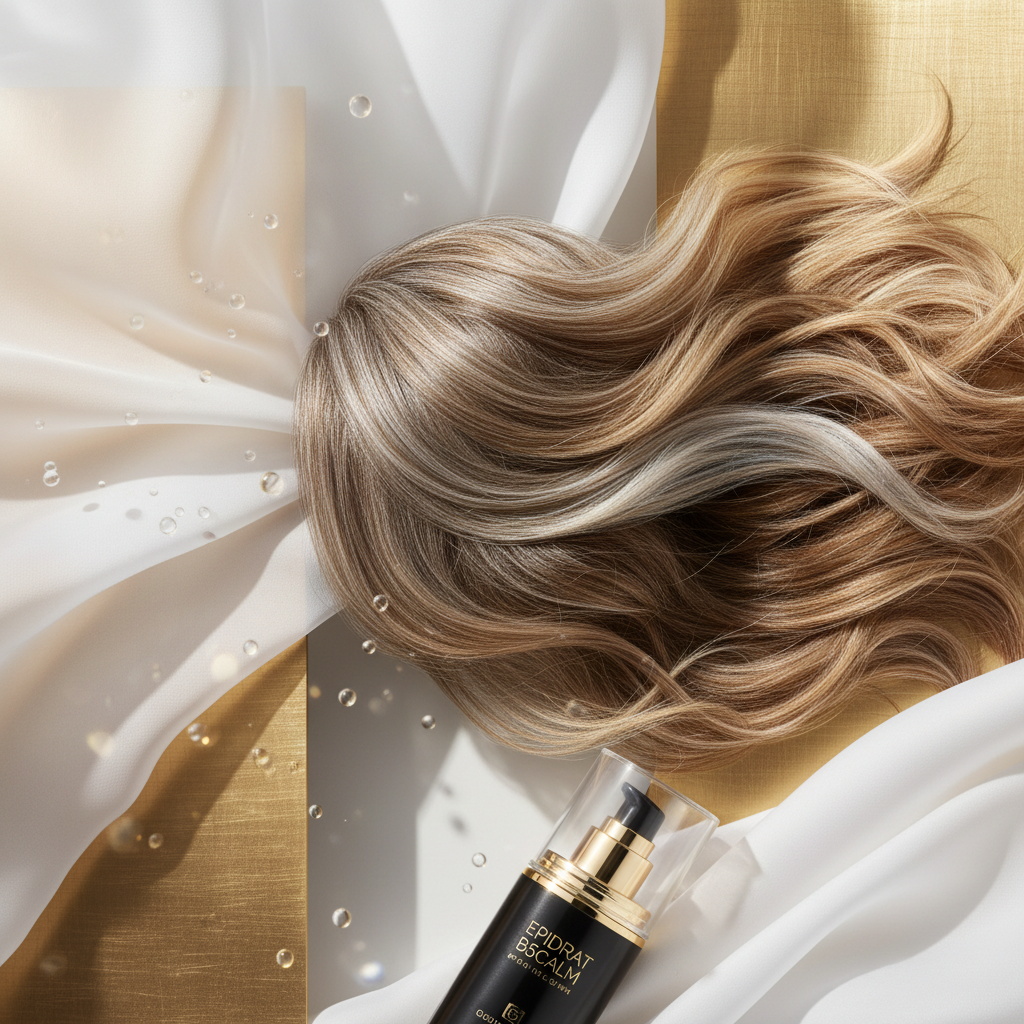
Clinical research published in peer-reviewed dermatology journals confirms that topical dexpanthenol formulations consistently improve skin hydration, preserve skin barrier integrity, and diminish signs of erythema (redness). When applied to damaged skin, concentrations of 2% to 5% panthenol stimulate fibroblast proliferation and re-epithelialisation. This makes formulations such as epidrat b5calm particularly effective for rehydrating cracked tissue, calming windburn, and mitigating superficial peeling after cosmetic procedures or harsh chemical exposure.
When used along the hairline or on bare scalp patches that have suffered sunburn or mechanical chafing, these barrier-repair properties help restore the acid mantle and ease stinging sensations. By reducing transepidermal water loss, it creates an environment where irritated epidermal cells recover more rapidly.
What the evidence does not show
There is no scientific evidence demonstrating that epidrat b5calm stimulates hair follicle cycling, prevents genetic hair loss, or treats hair thinning. The formulation does not alter dihydrotestosterone (DHT) levels, nor does it prolong the anagen (growth) phase of hair follicles.
Furthermore, evidence does not support using heavy restorative creams as all-over scalp treatments for conditions driven by microbial imbalances. Dandruff and seborrhoeic dermatitis stem largely from an inflammatory response to Malassezia yeasts, which metabolise lipids found in heavy creams and natural sebum. Applying rich barrier balms across an oily, flaky scalp can inadvertently nourish these yeasts, compounding erythema and desquamation rather than relieving them.
It is also important to differentiate hair breakage from hair loss. A barrier cream will not reinforce keratin bonds within the hair fibre. If your hair is snapping along the shaft due to bleach or heat, a skin cream like epidrat b5calm provides no structural tensile repair.
How dexpanthenol and barrier balms work
To understand why people turn to barrier creams for scalp and skin irritation, it helps to examine the biological mechanisms of skin barrier recovery.

The stratum corneum operates like a brick-and-mortar wall: corneocytes (the bricks) are suspended in a lipid matrix made of ceramides, cholesterol, and free fatty acids (the mortar). When you expose your scalp or hairline to chemical relaxers, peroxide, hard water deposits, or harsh weather, this lipid matrix becomes depleted. Transepidermal water loss spikes, external irritants penetrate the viable epidermis, and sensory nerve endings trigger burning and itching.
External Stressors (Bleach, Friction, Dry Air)
 │
 ▼
 Stratum Corneum Disruption
 │
 ▼
 Elevated Transepidermal Water Loss (TEWL)
 │
 ▼
 Erythema, Stinging, and Micro-flaking
 │
 ┌──────────────────┴──────────────────┐
 ▼ ▼
Without Intervention With Dexpanthenol (B5)
• Chronic inflammation • Cellular lipid synthesis
• Compromised follicle base • Accelerated barrier repair
• Sustained irritation • Moisture restored & calmed
Dexpanthenol penetrates the upper epidermal layers readily. Once inside, it increases moisture retention within the cellular layers, increases skin softness, and signals epidermal differentiation. This biological cascade quells micro-inflammation, helping skin look and feel comforted.
Identifying the signs: when a barrier cream is appropriate
Recognising whether your scalp or hairline issue requires a barrier cream or a medical treatment ensures you do not inadvertently worsen your symptoms.
Use a barrier cream when you experience:
- Localised redness and tightness along the forehead or nape following hair colour application.
- Dry, non-greasy micro-flaking caused by cold winds or low indoor humidity.
- Sunburn across exposed partings or shaved areas of the scalp.
- Chafing or razor burn around the neck and sideburn borders.
Avoid rich creams and seek targeted alternatives when you notice:
- Greasy, yellowish scales clinging to the scalp and hair roots.
- Widespread inflammatory bumps, folliculitis, or pustules.
- Accelerated shedding where entire hairs fall out with a white bulb intact.
- Patchy, well-defined circular areas of sudden hair loss.
Comparing barrier balms with scalp-specific treatments
| Feature | Barrier Balms (e.g. Epidrat B5 Calm) | Targeted Scalp Lotions / Serums | Antifungal Scalp Treatments |
|---|---|---|---|
| Primary Indication | Compromised skin barrier, acute redness, dry skin | Follicle support, lightweight hydration, hair thinning | Seborrhoeic dermatitis, greasy dandruff, yeast overgrowth |
| Key Ingredients | Dexpanthenol, soothing agents, emollients | Peptides, caffeine, niacinamide, humectants | Ketoconazole, zinc pyrithione, piroctone olamine |
| Vehicle / Texture | Rich cream or emulsion | Lightweight water-based liquid | Medicated wash or rinse-off shampoo |
| Follicle Penetration | Low (acts on epidermal surface) | High (designed for follicular absorption) | Moderate (clears fungal burden around ostium) |
| Risk of Clogging | Moderate to high if used on dense hair | Minimal (non-comedogenic, residue-free) | Very low (rinsed off) |
| Hair Growth Support | None (purely cosmetic barrier repair) | Supports optimal growth environment | Indirect (resolves shedding caused by inflammation) |
What you can do to support your scalp barrier
If your scalp feels dry, tight, or sensitised, simple routine adjustments yield measurable improvements without overloading the hair fibres.
- Protect the hairline during salon services: Apply a thin layer of a soothing barrier cream along the forehead, temples, and ears prior to applying permanent hair dye or bleach. This shields fragile skin from alkaline chemicals without interfering with colour development on the hair.
- Lower your water temperature: Washing hair with hot water strips natural surface lipids, elevating transepidermal water loss. Stick to lukewarm water (around 37 to 38 degrees Celsius) to preserve barrier lipids.
- Switch to mild cleansing agents: Look for pH-balanced shampoos formulated between pH 4.5 and 5.5. This matches the biological acidity of the scalp, keeping the acid mantle stable and discouraging pathogenic bacterial colonisation.
- Spot-treat exposed areas: If you have an irritated parting from sun exposure, apply a small, targeted dot of soothing panthenol cream directly to the skin using a cotton swab, rather than massaging large amounts throughout your hair.
- Keep hair roots clean: Avoid leaving heavy conditioning products or barrier creams on the scalp for extended periods. Wash thoroughly to prevent follicular congestion.
Supporting hair and scalp health with Watermans
When scalp sensitivity coincides with hair shedding or dullness, using heavy face creams in your hair is rarely the best long-term strategy. The scalp requires dedicated, lightweight formulas that support the skin barrier while actively invigorating the hair roots.
Watermans GrowMe Shampoo and ConditionMe Conditioner are engineered specifically to balance scalp hygiene with root stimulation. Formulated with biotin, caffeine, argan oil, and niacinamide, they nourish the scalp environment without leaving heavy, greasy films that could trap dead skin cells. Pairing clean, targeted scalp cleansing with an invigorating leave-in product like Watermans Expandence helps maintain a balanced micro-environment, providing the ideal foundation for fuller, healthier-looking hair.
When to seek professional advice
Scalp and skin irritation can sometimes mimic more serious dermatological disorders. You should schedule an evaluation with a trichologist or dermatologist if:
- Irritation, burning, or redness persists for more than two weeks despite gentle care.
- You notice scalp crusting, weeping, or signs of secondary bacterial infection.
- Hair shedding increases noticeably (more than 100 to 150 hairs daily for several consecutive weeks).
- You experience intense nocturnal itching or develop painful pustules across the crown.
- Redness is accompanied by patchy, smooth circular hair loss patches, which may point to alopecia areata.
A qualified professional can use dermoscopy to examine your follicular ostia, rule out autoimmune conditions, and prescribe appropriate anti-inflammatory or antifungal treatments.
Frequently asked questions about epidrat b5calm
Can I apply epidrat b5calm directly to my scalp?
You can use epidrat b5calm on exposed patches of irritated scalp skin, such as a sunburned parting or along the hairline, but avoid applying it across dense hair. Its rich emollient base can weigh hair down and potentially congest hair follicles if left on the scalp.
Will epidrat b5calm help my thinning hair grow back?
No, epidrat b5calm is a barrier-repair moisturiser designed to soothe skin inflammation and dryness; it contains no active ingredients that stimulate follicular hair growth or treat hormonal thinning such as androgenetic alopecia.
Can epidrat b5calm treat dandruff or seborrhoeic dermatitis?
No. Dandruff and seborrhoeic dermatitis are driven by an immune response to Malassezia yeast. Applying rich moisturising creams like epidrat b5calm can provide lipids that feed the yeast, potentially worsening flaking and redness rather than clearing it.
How does provitamin B5 benefit sensitive skin?
Provitamin B5 (dexpanthenol) penetrates the stratum corneum where it converts to pantothenic acid. It enhances cellular hydration, accelerates the natural repair of the lipid barrier, and calms surface redness and stinging sensations.
How should I use epidrat b5calm around my hair?
The most effective way to use epidrat b5calm around hair is as a protective border barrier before salon bleaching or colouring, or as a spot treatment for razor burn and dry patches along the perimeter of the hairline.
Caring for sensitised skin and scalp
Maintaining a healthy skin barrier requires understanding the biological needs of your skin and choosing the correct vehicles for treatment. Formulations like epidrat b5calm serve an essential clinical purpose in soothing irritation, replenishing cellular moisture, and aiding barrier restoration when the epidermis is visibly compromised. By reserving rich creams for targeted barrier repair and relying on lightweight, scientifically formulated cleansers and serums for the hair and scalp, you protect both skin health and follicular vitality.
Sources and references
- Journal of Dermatological Treatment, "Topical use of dexpanthenol in skin disorders," 2017.
- American Journal of Clinical Dermatology, "Skin Barrier Function and Moisturizers," 2018.
- British Journal of Dermatology, "Scalp condition and its impact on hair growth," 2018.
- National Health Service (NHS), "Scalp problems and treatments," 2022.
- International Journal of Cosmetic Science, "The role of panthenol in personal care products," 2020.
Find these ingredients in Watermans products
- Zinc: you will find this ingredient in our Hair Vitamins.
- Niacinamide: you will find this ingredient in our Hair Mask.
- Panthenol (Provitamin B5): you will find this ingredient in our Heat Protection Spray.