Chemical Burn Recovery Hairline: Clinical Timelines, Scalp Healing, and Regrowth
8 min read ·
Navigating a chemical burn recovery hairline requires prompt wound care and understanding follicular depth. Discover clinical timelines, care steps, and regrowth facts.
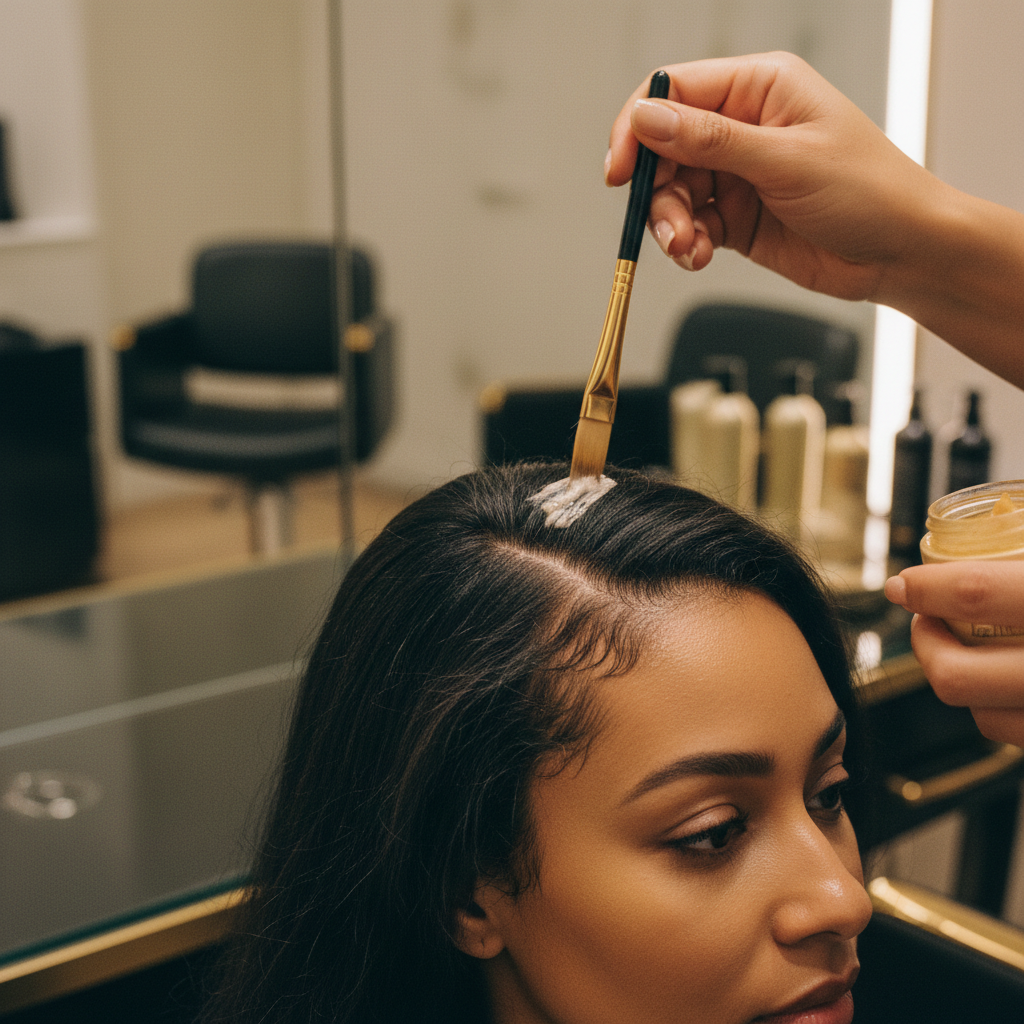
Quick answer: A successful chemical burn recovery hairline protocol depends entirely on the depth of the initial tissue damage. When chemical relaxers, bleaches, or dyes cause superficial, first-degree chemical burns, follicles remain intact, allowing regrowth within 3 to 6 months. However, deep second- or third-degree burns cause permanent scarring (cicatricial alopecia), destroying hair follicle stem cells. Immediate neutralisation, gentle dermatological wound care, and avoiding traction or further chemical processing represent your baseline for protecting surviving hair roots along the frontal border.
Key takeaways
- The hairline is uniquely vulnerable to chemical burns because frontal skin is thin and subject to high product pooling.
- Superficial burns usually resolve without permanent loss, with regrowth appearing as fine vellus fibres within 12 to 24 weeks.
- Deep dermal burns destroy the follicular stem cells in the bulge area, resulting in permanent cicatricial (scarring) alopecia.
- Immediate care requires copious irrigation with cool water rather than applying heavy home remedies or oils to broken skin.
- Traction hairstyles, heat styling, and chemical re-application must be suspended completely during the entire healing window.
Chemical Burn Recovery Hairline: what the evidence shows
Navigating a chemical burn recovery hairline requires understanding how chemical trauma affects follicular anatomy. The skin along your hairline, temples, and forehead margin measures roughly 0.5 to 1.0 mm in epidermal and dermal thickness. This makes it far thinner and more sensitive than the crown or occipital scalp. Alkaline agents like sodium hydroxide (found in hair relaxers with a pH of 12 to 14) cause liquefactive necrosis. This process dissolves keratin, hydrolyses proteins, and saponifies dermal fats, allowing the chemical to penetrate deep into living tissue rapidly. Acidic agents, such as concentrated peroxides or persulphates in lighteners, cause coagulative necrosis, which forms a thick eschar that typically limits deeper penetration but still severely damages superficial dermal structures.

Clinical studies in dermatological wound healing show that follicular regrowth is only possible if the hair follicle stem cells remain viable. These critical stem cells reside in the outer root sheath at the follicular bulge, located near the insertion of the arrector pili muscle, approximately 1.0 to 1.5 mm beneath the skin surface. When a chemical burn remains superficial (first degree or shallow partial-thickness), the bulge survives. Fibroblasts migrate to repair the skin, and normal anagen (growth) cycling resumes once inflammation subsides.
If the burn penetrates into the lower reticular dermis (deep partial-thickness or full-thickness), the stem cell reservoir is permanently obliterated. Granulation tissue replaces the follicle, leaving smooth, shiny scar tissue devoid of follicular openings (ostia). At that stage, cosmetic and surgical interventions, rather than topical regrowth treatments, become the only path to restoring density.
Recognising the signs: superficial irritation versus deep burn
Distinguishing between mild irritant contact dermatitis and a structural chemical burn helps you determine whether your hair will return naturally or if you face permanent scarring.
| Sign / Symptom | Superficial Irritation (First Degree) | Partial-Thickness Burn (Second Degree) | Full-Thickness Burn (Third Degree) |
|---|---|---|---|
| Visual Appearance | Erythema (redness), minor flaking | Blistering, weeping, open crusts, raw pink skin | Leathery white, grey, or charred black skin; completely smooth |
| Pain Level | Mild burning, itching, tenderness | Moderate to intense stinging and throbbing | Minimal to no pain due to destroyed local nerve endings |
| Follicular Ostia | Intact and visible | Temporarily obscured by crusting or exudate | Completely obliterated; pores disappear permanently |
| Hair Shaft Impact | Chemical breakage near the root | Shearing, chemical breakage, and early shedding | Shedding with permanent root destruction |
| Regrowth Timeline | 8 to 16 weeks | 12 to 26 weeks (if stem cells survive) | No natural biological regrowth (scar tissue) |
Immediate wound care: what you can do
The initial 72 hours after chemical contact dictate the ultimate severity of the injury and the survival rate of adjacent follicles.
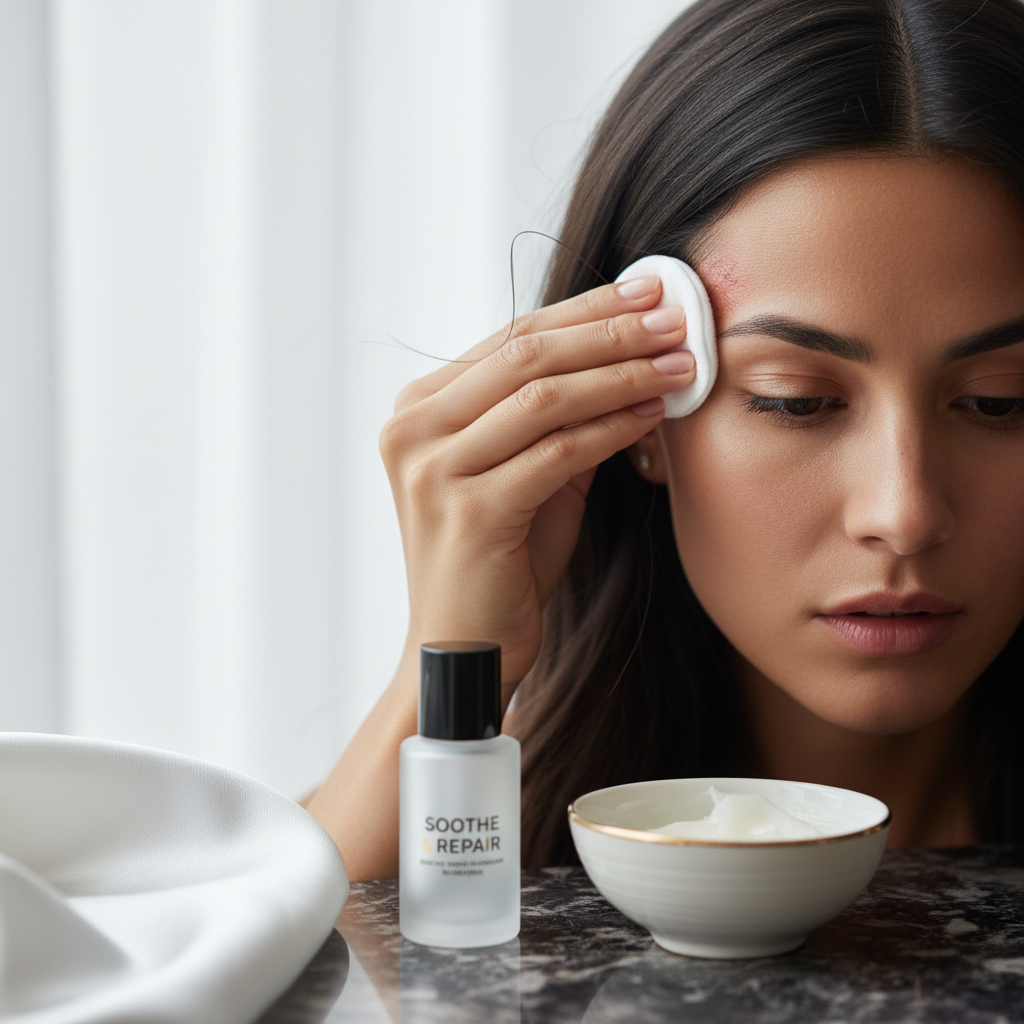
- Rinse thoroughly: Flush the hairline continuously with tepid running water for at least 15 to 20 minutes to dilute and eliminate residual chemicals. Avoid hot water, which increases peripheral vasodilation and exacerbates local inflammation.
- Leave blisters intact: If blisters form along your hairline, do not pop them. The blister roof acts as a sterile biological dressing that shields fragile underlying dermal cells from secondary bacterial infection.
- Use medical barrier ointments: Apply pure medical-grade petroleum jelly or prescribed topical antibiotics (such as polymyxin or bacitracin) to keep the wound moist. Moist wound environments accelerate epithelial migration by up to 50 percent compared to dry scabs.
- Avoid irritants: Keep essential oils, citrus rinses, DIY vinegar concoctions, and heavy styling butters away from damaged skin. These substances induce severe secondary contact dermatitis on compromised tissue.
- Manage swelling: If facial or forehead swelling occurs, apply a cool, clean compress wrapped in a sterile cloth above the brows without applying direct pressure to raw tissue.
Supporting the hairline during intermediate recovery
Once acute weeping stops and re-epithelialisation begins (usually days 7 to 21), your focus moves from wound closure to preserving fragile new hair shafts.
New hairs emerging after chemical trauma start as unpigmented, delicate vellus-like strands before maturing into intermediate and terminal hairs. During this phase:
- Eliminate mechanical tension: Avoid tight ponytails, braids, lace wig adhesives, edge-control brushes, and bonnets with tight elastic bands across the forehead. Mechanical stress can dislodge weakly anchored anagen roots.
- Maintain a balanced scalp microbiome: Cleanse the scalp gently using lukewarm water and mild, sulphate-free cleansers formulated at a physiological pH (4.5 to 5.5). This preserves the natural acid mantle without stripping healing lipid layers.
- Avoid thermal heat: Do not use blow dryers, flat irons, or hot combs anywhere near the frontal hairline. Keratin proteins in compromised hair denature at much lower temperatures than healthy hair.
When the cause may be something else
Hairline thinning following chemical services is not always a direct chemical burn. It is common to confuse chemical burns with other conditions, which requires careful differentiation:
- Severe hair breakage: Caused by chemical over-processing (leaving bleach or relaxer on too long). The hair shaft snaps flush with the scalp, but the skin underneath remains healthy and non-erythematous. The follicle is completely fine.
- Traction alopecia: Often co-exists in individuals who use chemical relaxers alongside tight protective styles. Traction places continuous mechanical pull on the follicle, causing inflammation and gradual follicular drop-out.
- Allergic contact dermatitis: A type IV hypersensitivity reaction to ingredients like paraphenylenediamine (PPD) in hair dyes. It leads to intense itching, weeping eczema, and puffiness across the hairline, ears, and eyelids without necessarily causing caustic tissue necrosis.
- Frontal fibrosing alopecia (FFA): An autoimmune condition causing progressive, scarring recession of the frontal hairline, often seen in post-menopausal women. It can be coincidentally noticed after a salon visit.
When to seek specialist medical advice
You should consult a GP, dermatologist, or qualified trichologist immediately if you notice any of the following red flags:
- Persistent or increasing purulent discharge (yellow or green pus) accompanied by foul odour, fever, or expanding redness.
- Severe pain that does not subside after 48 hours.
- Completely smooth, shiny patches of hairline where follicular pores are no longer visible after the skin heals.
- Spreading hair loss that continues several weeks after the chemical incident has resolved.
A dermatologist can perform a dermoscopic evaluation to assess follicular viability or prescribe short courses of topical corticosteroids or antimicrobials to safeguard remaining roots.
Supporting overall hair health: the Watermans approach
Once the skin along your hairline has completely closed, healed, and shows zero signs of raw skin or inflammation, you can transition toward general topical nourishment to support your cosmetic recovery.
Watermans Grow Me Shampoo offers a gentle, nutrient-rich option formulated with ingredients like caffeine, biotin, rosemary extract, and niacinamide. These cosmetic ingredients work together to invigorate the scalp surface, maintain optimal hygiene, and keep existing hair feeling thick, resilient, and conditioned. Remember, cosmetic products are designed to optimise the appearance and condition of normal, healed hair and intact scalps; they are never a treatment for open chemical wounds or scarring alopecia.
Frequently asked questions about Chemical Burn Recovery Hairline
How long does chemical burn recovery hairline regrowth take?
If the chemical burn was superficial and left the follicular bulge undamaged, initial hair regrowth typically begins within 8 to 12 weeks. Full visual density can take 6 to 12 months, as human hair grows at an average rate of 1 to 1.25 cm per month. If full-thickness scarring occurred, the follicles cannot regrow naturally.
Will my hairline grow back after a relaxer burn?
Hairline regrowth after a relaxer burn depends on burn depth. Mild burns that cause redness and slight scabbing usually recover fully because the follicle stays alive. If the relaxer caused deep, ulcerated chemical burns with permanent scarring, those specific follicular units are lost and will not return without surgical restoration.
Can I put oils on a chemical burn recovery hairline?
You should never apply raw plant oils or essential oils to an open or freshly blistering chemical burn recovery hairline. Oils can trap heat, seal in microbes, and trigger severe allergic contact dermatitis on compromised skin. Stick strictly to sterile, bland emollients like pure petroleum jelly until the skin barrier fully heals.
How do I know if my hairline burn has scarred permanently?
Examine your healed hairline closely under bright light using magnification. If the skin appears flat, shiny, and pale, and you cannot see tiny follicular openings or pores, the tissue has scarred. A dermatologist using a trichoscope can confirm whether follicular openings remain intact.
Summary
Achieving a healthy chemical burn recovery hairline requires swift, measured action: immediate flushing, sterile barrier protection, and absolute patience while the underlying tissue repairs itself. Avoid the temptation to apply harsh regrowth stimulants or heavy oils to active wounds. Once the skin heals, treating the delicate new hair with minimal tension and gentle haircare habits gives your frontal border the best possible environment to flourish.
Sources and references
- British Association of Dermatologists. Guidelines for the management of contact dermatitis. Clinical and Experimental Dermatology, 2017.
- National Health Service (NHS). Burns and scalds: Treatment and recovery. Nhs.uk, 2023.
- American Academy of Dermatology. Chemical burns: First aid and wound care principles. Aad.org, 2022.
- Whiting, D. A. Cicatricial alopecia: Clinico-pathological findings and treatment. Dermatologic Clinics, 2001.
- Gavazzoni Dias, M. F. Hair cosmetics: An overview. International Journal of Trichology, 2015.
Find these ingredients in Watermans products
- Niacinamide: you will find this ingredient in our Hair Mask.