Bleach Damage Hair Repair: The Complete Scientific Guide
8 min read ·
Understand the science behind bleach damage hair repair. Learn how to rebuild broken bonds, restore lipids, and prevent snapped fibres after chemical lightening.
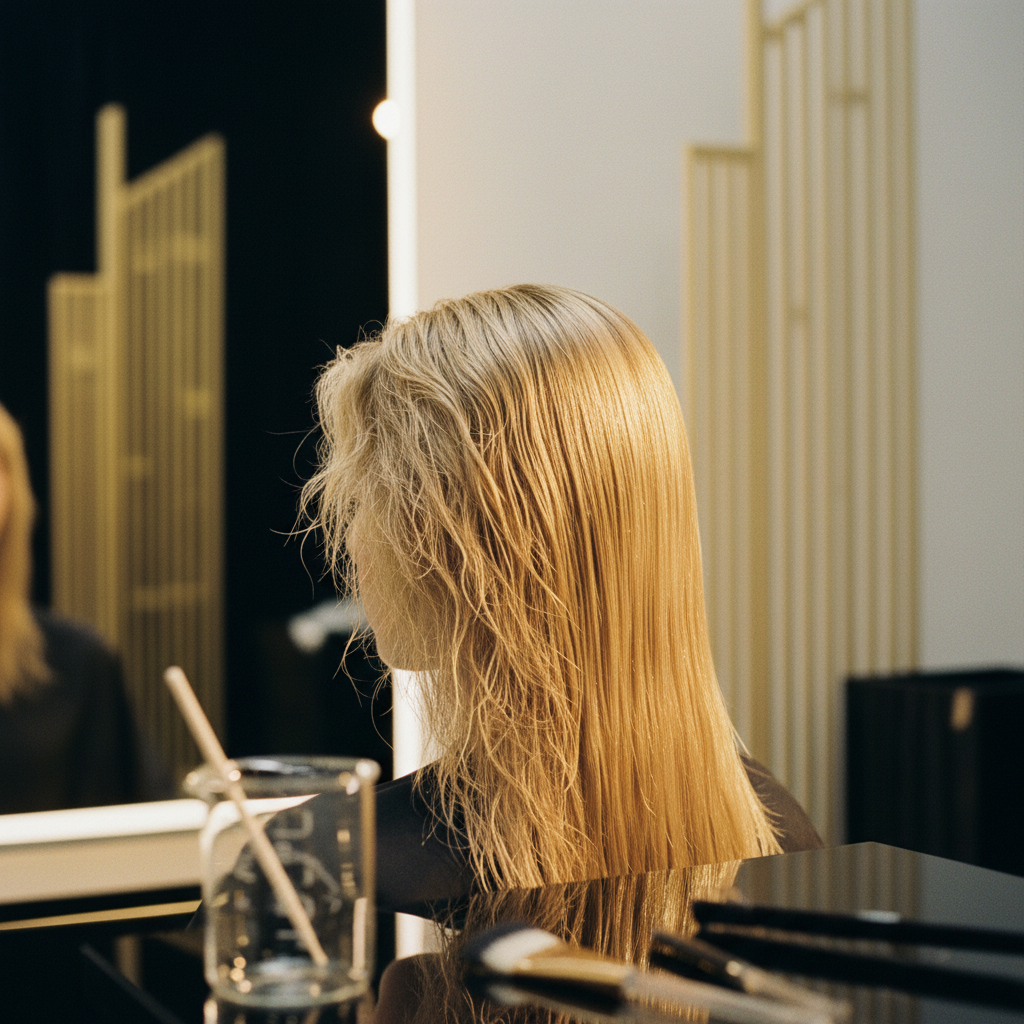
Quick answer: True Bleach Damage Hair Repair cannot biologically regenerate dead keratin fibre, but strategic cosmetic rehabilitation can rebuild structural integrity, minimise snapping, and seal elevated cuticles. Bleaching dissolves the protective F-layer and oxidises structural disulphide bonds, leaving the cortex porous and vulnerable. While severed disulphide bonds cannot naturally regrow, targeted bond builders, hydrolysed proteins, fatty acid replenishment, and pH-balancing conditioners can re-cement damaged fibres, reduce mechanical breakage, and restore manageability until healthy new hair emerges from the follicle.
Key takeaways
- Bleaching permanently alters the hair fibre by dissolving the protective lipid envelope (18-MEA) and oxidising internal disulphide cystine bonds into cysteic acid.
- Cosmetic repair focuses on patching structural voids with hydrolysed proteins, rebuilding cross-links with organic acids, and smoothing the lifted cuticle.
- Breakage along the shaft is distinct from follicular hair loss; severe chemical burns at the scalp, however, require professional dermatological assessment.
- High porosity from lightening causes rapid moisture uptake followed by immediate dehydration, requiring lipid-rich occlusives to trap hydration.
- The only true permanent cure for severely oxidised, gummy ends is trimming; maintenance strategies preserve the remaining length.
Bleach Damage Hair Repair: what the evidence shows
Scientific research confirms that lightening hair oxidises both the outer protective sheath and inner protein core. Hair bleach typically pairs an alkaline agent (such as ammonium hydroxide, raising the pH to 9.0 to 11.0) with an oxidiser (hydrogen peroxide) and persulphate accelerators. This chemical cocktail swells the cuticle scales, allowing peroxide to penetrate the cortex and dissolve natural melanin pigments.
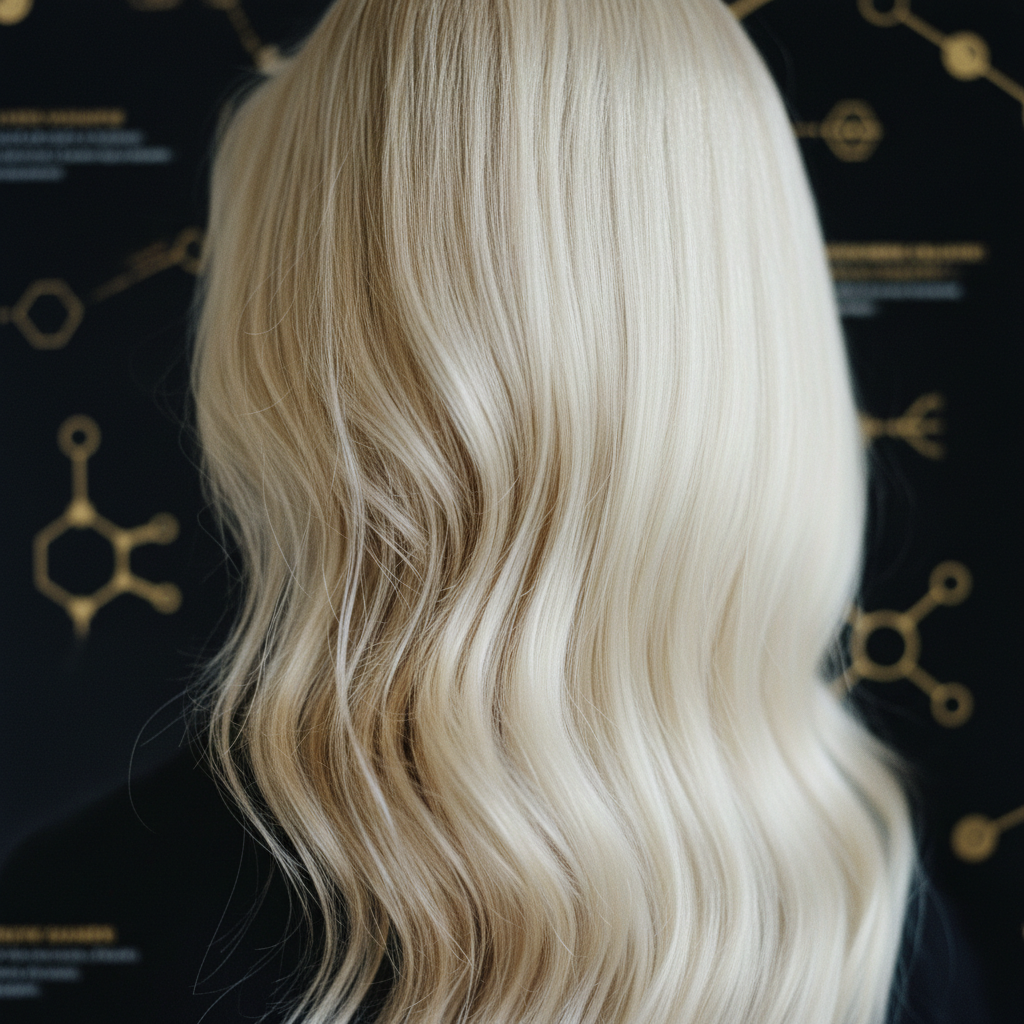
During this oxidation process, collateral damage occurs. The alkaline environment strips away the 18-methyleicosanoic acid (18-MEA) monolayer, an essential lipid layer that renders virgin hair hydrophobic. Once this fatty acid layer is gone, the hair becomes hydrophilic, absorbing excessive water, tangling easily, and losing its natural lubricity.
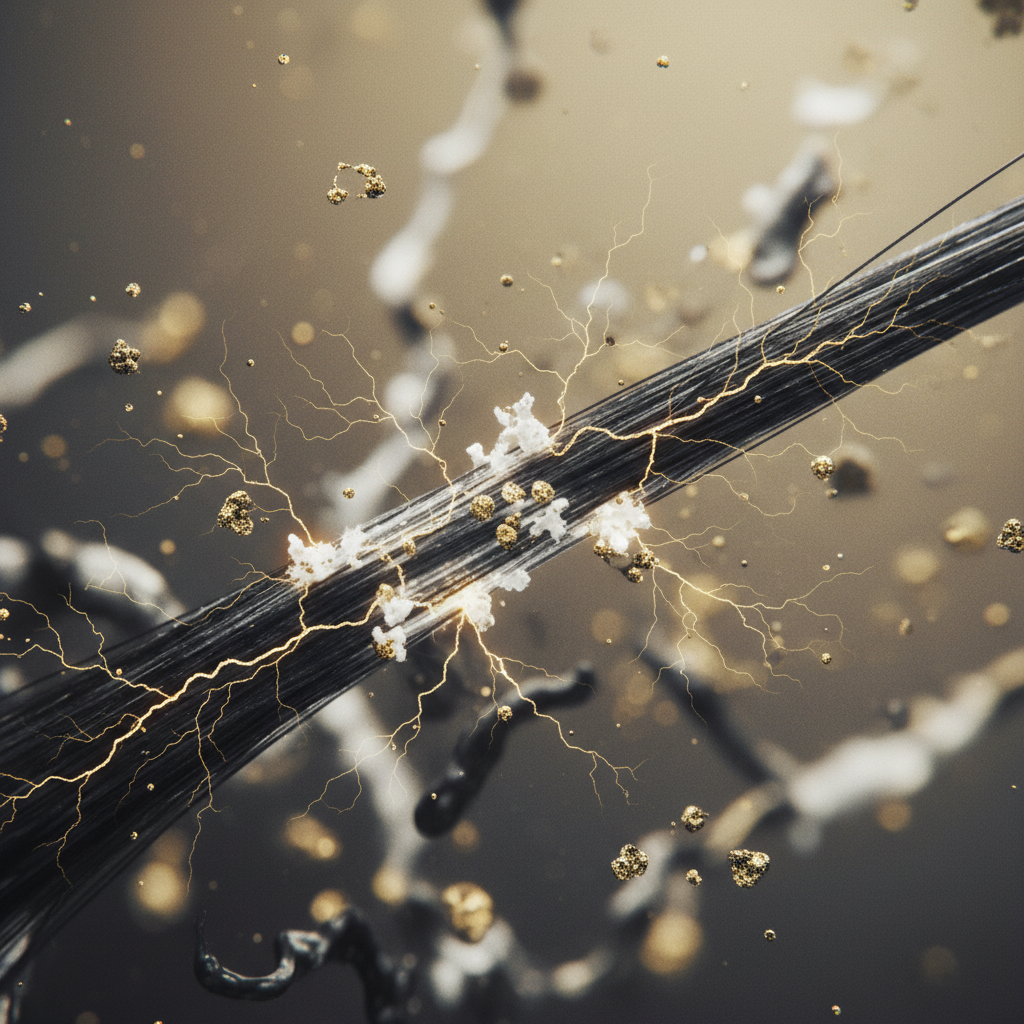
Simultaneously, oxidation breaks the disulphide bonds (cystine) that give keratin its mechanical strength, converting them into cysteic acid. Studies in cosmetic chemistry demonstrate that repeated bleaching can reduce tensile strength by up to 30 to 50 percent, making fibres prone to snapping under everyday brushing or tension.
Consequently, Bleach Damage Hair Repair relies on topical interventions that mimic the hair's natural architecture. Synthetic cross-linking agents (such as bis-aminopropyl diglycol dimaleate or maleic acid complexes) form artificial bridges between broken protein fragments. Meanwhile, low-molecular-weight hydrolysed proteins (such as wheat, keratin, or silk proteins under 1,000 Daltons) penetrate the porous cortex to reinforce structural voids, while heavier conditioning agents smooth the damaged cuticle surface.
Signs of bleach-damaged hair
Lightened hair exhibits clear physical symptoms that signal structural breakdown:
- Extreme porosity and water retention: Hair feels spongy or gummy when wet, taking an unusually long time to dry because water enters freely through cracked cuticles.
- Loss of elasticity: When stretched gently while damp, damaged strands snap immediately without bouncing back, or they stretch like chewing gum and fail to return to their original length.
- Chronic tangling and friction: The absence of the 18-MEA lipid layer causes cuticles to remain open and rough, catching against adjacent fibres and creating stubborn knots.
- Dullness and brittleness: The hair reflects light poorly due to an uneven, jagged surface, feeling coarse, dry, and straw-like to the touch.
- Split ends and white dots: Tiny white fractures (trichorrhexis nodosa) appear along the shaft, indicating spots where the cortex has collapsed and snapped.
The biological mechanism of lightening damage
| Structural Component | Virgin Hair State | Bleached Hair State | Restorative Strategy |
|---|---|---|---|
| Cuticle (F-Layer) | Hydrophobic 18-MEA lipid layer repels water and provides natural slip. | Lipids completely dissolved; hydrophilic surface leads to friction and tangling. | Apply biomimetic fatty acids, ceramides, and cationic conditioning agents. |
| Cuticle Scales | Compact, tightly shingled at an acidic resting pH of 4.5 to 5.5. | Blown open, lifted, and chipped by high-alkalinity bleach (pH 9.0 to 11.0). | Use acidic sealers (pH 3.5 to 4.5) to contract scales and flatten the surface. |
| Cortex (Keratin) | High concentration of strong, cross-linked disulphide bonds. | Disulphide bonds cleaved into weak cysteic acid residues. | Introduce active bond-building complexes and micro-hydrolysed proteins. |
| Moisture Balance | Regulated internal hydration bound within dense keratin bundles. | Moisture escapes rapidly through micro-voids; hair dries out instantly. | Layer humectants (panthenol, glycerin) followed by occlusive plant oils. |
Practical steps for repairing bleached hair
Rehabilitating over-processed hair requires a disciplined regimen focused on reinforcing fibre strength, sealing the cuticle, and minimising further mechanical stress.
1. Rebuild internal architecture with bond builders and proteins
Incorporate bond-multiplying treatments that physically cross-link weakened protein chains. Follow these with targeted protein treatments containing hydrolysed keratin or amino acids. Keep protein applications balanced: over-saturating bleached hair with rigid proteins without sufficient conditioning can leave strands stiff and prone to snap fractures.
2. Acidify your wash routine
Healthy hair thrives in an acidic environment between pH 4.5 and 5.5. Bleaching forces the hair shaft open with high alkalinity. Using pH-balanced or mildly acidic shampoos and leave-in rinses (around pH 4.0) helps contract the cuticle scales, locking in conditioning agents and boosting light reflection.
3. Replace missing surface lipids
Because bleaching strips the hair's natural fatty acid barrier, you must supply synthetic or botanical replacements. Look for formulations rich in ceramides, behentrimonium methosulfate, and plant oils such as argan, jojoba, or squalane. These create an artificial shield, reducing inter-fibre friction and keeping moisture from evaporating.
4. Minimise thermal and mechanical strain
Wet bleached hair is in its most fragile state. Avoid aggressive towel-drying; instead, gently press excess water out with a microfibre towel. Always apply a silicone- or oil-based heat protectant before using blow-dryers, keep styling irons below 160 degrees Celsius, and sleep on a silk or satin pillowcase to reduce nocturnal friction.
5. Schedule regular micro-trims
Cosmetic treatments can temporarily glue damaged ends together, but they cannot repair longitudinal splits. Regular dusting or trimming of the bottom half-centimetre prevents microscopic splits from travelling upwards into healthier sections of the hair shaft.
When the issue is not just breakage
It is critical to distinguish between chemical hair breakage and physiological hair loss.
Chemical breakage involves the physical snapping of the dead fibre anywhere along the shaft. You will notice short, uneven pieces without bulbs landing on your shoulders, in your sink, or in your brush.
In contrast, true hair shedding (such as telogen effluvium) or patterned hair loss (androgenetic alopecia) originates within the living follicle under the scalp. In these cases, shed hairs will display a small white keratin bulb at one end.
However, improper bleach application can cause follicular injury. If high-volume bleach is applied directly to the scalp without a barrier, left on too long, or heated under a hood, it can cause severe chemical burns. Chemical trauma can trigger reactive shedding or, in extreme cases of deep ulceration, cicatricial (scarring) alopecia where follicles are permanently destroyed. If you experience scalp blistering, weeping sores, severe burning, or distinct bald patches at the root, consult a trichologist or dermatologist immediately.
Supporting distressed hair with Watermans
When recovering from severe lightening, a calm, nourished scalp environment supports new growth while you manage brittle mid-lengths. Watermans offers non-abrasive, salon-grade solutions designed to care for stressed hair regimes.
Watermans GrowMe Shampoo delivers a sulphate-free cleanse that avoids stripping already parched fibres, infusing the scalp with rosemary, biotin, niacinamide, and lupin protein. Pairing it with Watermans ConditionMe Conditioner provides an intensive hit of cholesterol, caffeine, and hydrolysed lupin protein that coats roughened cuticles, dramatically reducing comb-drag and mechanical breakage. For targeted scalp care during bleach recovery, Watermans GrowMore Elixir delivers leave-in nutrients directly to the root area without weighing down bleached strands.
Frequently asked questions about Bleach Damage Hair Repair
Can split ends from bleach be permanently glued back together?
No cosmetic formulation can permanently fuse split ends. Certain polyelectrolyte complexes and polymer films can temporarily glue split fibres together through electrostatic attraction, surviving one or two washes. However, mechanical friction and water exposure will inevitably dissolve these temporary bonds. The only permanent solution for split ends is cutting them off with sharp professional shears.
How does Bleach Damage Hair Repair differ from standard conditioning?
Standard deep conditioners coat the cuticle with silicones and fatty alcohols to provide temporary slip and cosmetic softness. In contrast, effective Bleach Damage Hair Repair targets the interior cortex. It uses reactive chemical cross-linkers to form new artificial bonds, alongside low-molecular-weight proteins that fill hollow structural gaps caused by melanin and lipid oxidation.
How often should I apply protein treatments to bleached hair?
Damaged hair requires protein, but frequency depends on porosity and stiffness. For moderate to severe damage, apply a hydrolysed protein treatment every two to three weeks. Always follow with an intensive lipid-based, moisture-rich mask. If your hair begins feeling stiff, hard, or dry, you may be experiencing protein overload; pause protein treatments and focus purely on hydrating and softening conditioners.
Is olaplex-style bond building permanent?
Bond-building treatments form covalent or ionic cross-links across damaged keratin structures, and these artificial cross-links do not simply wash out with water. However, daily weathering, UV exposure, brushing, and subsequent heat styling will gradually break down these newly formed bridges over time. Regular maintenance treatments are necessary to preserve structural stability in lightened hair.
Can bleaching cause permanent baldness?
Bleaching generally causes shaft breakage, not baldness. However, if strong bleach contacts the scalp and causes severe chemical burns or blistering, the underlying follicles can become scarred. Scarring alopecia destroys the follicle permanently, preventing hair from growing back in that spot. Professional application and prompt rinsing at any sign of intense burning prevent this outcome.
Restoring strength to lightened hair
Navigating successful Bleach Damage Hair Repair requires patience and an understanding of hair anatomy. Once hair fibres are bleached, the biological integrity of the keratin network is fundamentally altered. By adopting an evidence-based routine rich in internal bond builders, external lipid replenishers, and gentle handling, you can preserve fibre elasticity, prevent widespread breakage, and keep your lightened hair looking resilient until healthy roots grow out.
Sources and references
- Chemical and Physical Behavior of Human Hair (Clarence R. Robbins, 5th Edition, Springer, 2012).
- International Journal of Cosmetic Science: "The impact of oxidative bleaching on the physical and chemical properties of human hair fibres" (2018).
- Journal of Cosmetic Science: "Effects of bleaching on hair protein and lipid structure" (2015).
- British Association of Dermatologists: "Hair breakage versus alopecia: diagnostic criteria and structural analysis" (2020).
- National Health Service (NHS): "Chemical burns: assessment and scalp trauma management" (2022).