Dexpanthenol in Haircare: The Science of Provitamin B5 for Hair and Scalp
9 min read ·
Explore the science of Dexpanthenol in Haircare: learn how provitamin B5 hydrates the hair cortex, reinforces strand elasticity, and calms dry scalp irritation.
Quick answer: Dexpanthenol in Haircare acts as a potent provitamin humectant (provitamin B5) that penetrates the hair cuticle and scalp to improve moisture retention, elasticity, and surface smoothness. Upon application, enzymes convert it into pantothenic acid, an essential component for cellular metabolism. While Dexpanthenol in Haircare excels at reducing mechanical breakage, soothing dry scalp inflammation, and increasing the apparent diameter of individual strands, cosmetic formulations cannot cure follicular hair loss or genetic androgenetic alopecia.
Key takeaways
- Provitamin conversion: Dexpanthenol is the biologically active alcohol analogue of pantothenic acid (vitamin B5). Skin and hair enzymes rapidly oxidise it into pantothenic acid.
- Deep hydration: Unlike high-molecular-weight surface conditioners, dexpanthenol's small molecular size allows it to penetrate the hair shaft cortex, binding internal moisture and increasing strand pliability.
- Mechanical reinforcement: Clinical and cosmetic trials demonstrate that regular use increases hair fibre elasticity and tensile strength, visibly reducing breakage from brushing and heat styling.
- Follicle versus fibre distinction: Dexpanthenol reduces hair fall caused by physical breakage and calms scalp irritation. However, it does not alter hormonal pathways or reverse medical conditions such as androgenetic alopecia.
- Formulation stability: It performs reliably across a broad physiological pH range (pH 4.0 to 7.0) at concentrations between 0.5% and 5.0% in shampoos, conditioners, and leave-in scalp serums.
Dexpanthenol in Haircare: what the evidence shows
Research into Dexpanthenol in Haircare demonstrates substantial benefits for both the physical structure of the hair fibre and the biological environment of the scalp. Panthenol exists as two enantiomers: D-panthenol (dexpanthenol) and L-panthenol. Only dexpanthenol is biologically active and enzymatically converted into pantothenic acid within living human tissue.

In hair shaft biomechanics, dexpanthenol acts as a low-molecular-weight humectant. Traditional conditioning agents, such as heavy silicones or long-chain quaternary ammonium compounds, coat the outside of the hair cuticle. In contrast, dexpanthenol penetrates through the porous gaps in the cuticle layer and enters the cortex. Once inside the cortex, its hygroscopic properties attract and hold water molecules within the keratin matrix. Independent hair fibre research shows that this internal hydration swells the hair diameter by roughly 2% to 10%, giving fine hair noticeable body while directly improving strand flexibility.
On the scalp, dexpanthenol plays an established dermatological role. Published studies in wound healing and barrier restoration confirm that topical dexpanthenol stimulates fibroblast proliferation, accelerates epidermal re-epithelialisation, and reduces transepidermal water loss (TEWL). When formulated in scalp products at concentrations of 1.0% to 5.0%, it helps restore a compromised scalp barrier, alleviates pruritus (itching), and reduces the flaky scalp symptoms associated with frequent washing or chemical treatments.
What the evidence does not show
It is vital to distinguish between cosmetic resilience and clinical treatments for hair loss. The beauty industry frequently overstates the capabilities of vitamin B derivatives, leading to misconceptions regarding hair regrowth:
- It does not block dihydrotestosterone (DHT): Dexpanthenol does not inhibit the 5-alpha reductase enzyme responsible for converting testosterone into DHT. It cannot halt the miniaturisation of follicles seen in male or female pattern hair loss.
- It cannot revive dormant follicles: Hair follicles lost to scarring alopecia, advanced miniaturisation, or autoimmune destruction (such as alopecia areata) will not reactivate through topical dexpanthenol application.
- It does not instantly seal split ends permanently: While dexpanthenol smooths lifted cuticle scales and temporarily binds micro-fractures, split ends (trichoptilosis) represent irreversible structural cleavage. Trimming remains the only definitive remedy.
- Breakage is not shedding: Dexpanthenol markedly reduces breakage (hair snapping mid-shaft due to brittleness). It does not prevent telogen effluvium, where hairs shed naturally from the follicle root due to systemic stress, illness, or nutritional deficits.
Mechanisms of action on hair and scalp
Dexpanthenol operates through distinct physical and biochemical pathways depending on where it lands.
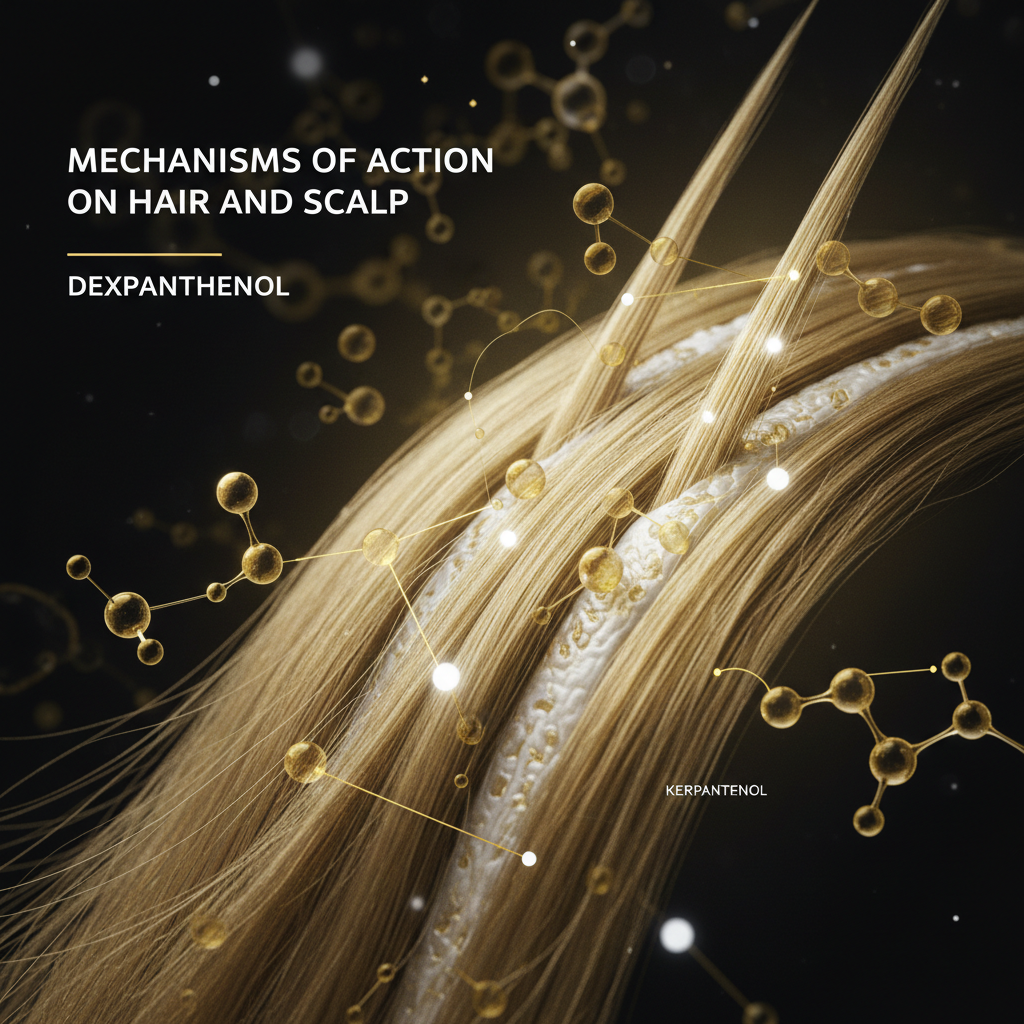
Topical Application
 │
 ├── Cuticle Penetration ──> Enters Cortex ──> Binds Water (Swelling + Elasticity)
 │
 └── Scalp Absorption ──> Enzymatic Oxidation ──> Pantothenic Acid ──> Coenzyme A (Cellular Repair)
1. Cortex hydration and plasticisation
Hair keratin is rigid when dehydrated. When dexpanthenol enters the cortex, it functions as a plasticiser. By situating itself between adjacent keratin peptide chains, it disrupts rigid inter-chain hydrogen bonds and forms flexible hydrogen bonds with water molecules. This process allows the hair shaft to bend under mechanical stress, such as vigorous brushing or wind resistance, without fracturing.
2. Cuticle smoothing and light refraction
Damaged cuticles exhibit raised, chipped scales that scatter light and snag neighbouring fibres. Dexpanthenol deposits a lightweight, non-greasy film over microscopic fissures along the hair shaft. This film smooths the surface profile, aligning the cuticles. As a result, the hair fibre reflects light more uniformly (increasing shine) and experiences lower inter-fibre friction, which minimises tangling.
3. Cellular synthesis via Coenzyme A
On the scalp, living epidermal cells absorb dexpanthenol and convert it into pantothenic acid. Pantothenic acid is an indispensable precursor to Coenzyme A (CoA), an essential cofactor in the citric acid cycle, lipid synthesis, and cellular respiration. Higher local CoA availability supports lipid synthesis in the stratum corneum, reinforcing the scalp's moisture barrier and reducing inflammation around the follicle opening.
Comparison: Dexpanthenol versus other common humectants
| Humectant Ingredient | Molecular Weight (g/mol) | Fibre Penetration Ability | Primary Haircare Function | Scalp Barrier Benefits |
|---|---|---|---|---|
| Dexpanthenol (Provitamin B5) | ~205 | High (enters cortex) | Elasticity, tensile strength, long-term hydration | High (stimulates lipid synthesis and cellular repair) |
| Glycerin | ~92 | High (enters cortex) | Immediate moisture drawing | Moderate (effective humectant, lacks provitamin activity) |
| Hyaluronic Acid (High MW) | >1,000,000 | Nil (surface only) | Surface moisture barrier, silky slip | Moderate (hydration without direct cellular uptake) |
| Hydrolysed Wheat Protein | 500 to 2,000 | Low to Moderate | Surface cuticle repair, temporary tensile boost | Minimal |
| Propylene Glycol | ~76 | High | Solvent, carrier, mild hydration | Low (can cause contact dermatitis in sensitive individuals) |
Practical tips: incorporating dexpanthenol into your routine
To maximise the benefits of dexpanthenol, match the formulation type to your primary haircare objective:
- For fine, limp, or brittle hair: Opt for leave-in sprays or lightweight serums containing between 1.0% and 2.0% dexpanthenol. Leave-in products provide the necessary contact time for the molecule to absorb through the cuticle rather than washing down the drain.
- For chemical damage and bleached hair: Use deep conditioning masks combining dexpanthenol with fatty alcohols (such as cetyl or cetearyl alcohol) and hydrolysed proteins. The proteins patch surface gaps while the dexpanthenol restores internal water-binding capacity.
- For dry, irritated, or itchy scalps: Seek water-based scalp tonics or gentle shampoos with dexpanthenol formulated between pH 4.5 and 5.5. A slightly acidic pH supports the scalp's natural acid mantle and keeps cuticle layers flat.
- Check the ingredient declaration: Look for Panthenol or Dexpanthenol in the top half of the ingredient list (INCI). If it appears after phenoxyethanol or parfum, the concentration is likely below 1.0%, which may deliver surface slip but limited internal hydration.
When the cause of poor hair condition may be something else
If your hair remains fragile, thin, or excessively sheds despite regular use of dexpanthenol, the root problem is rarely a simple lack of topical moisture:
- Ferritin and iron deficiency: Low iron stores impair hair matrix cell division, causing chronic diffuse shedding (telogen effluvium) that cannot be corrected topically.
- Thyroid dysfunction: Both hypothyroidism and hyperthyroidism disrupt the hair growth cycle, leaving hair dry, coarse, and prone to thinning.
- Protein-calorie malnutrition: Hair is 85% to 90% keratin. Severe caloric restriction or insufficient protein intake starves the follicle, making hair brittle at the root.
- Hard water build-up: High concentrations of calcium and magnesium carbonate bind to the hair shaft, creating a chalky film that prevents humectants like dexpanthenol from penetrating. In this scenario, a chelating shampoo is required first.
When to seek professional advice
Consult a GP, dermatologist, or qualified trichologist if you notice any of the following symptoms:
- Sudden, patchy, or coin-shaped areas of hair loss (potential alopecia areata).
- Progressive widening of your central parting or recession at the temples.
- Scalp symptoms involving intense burning, redness, pustules, or severe scaling (which may indicate scalp psoriasis, seborrhoeic dermatitis, or lichen planopilaris).
- Clumps of hair shedding on your pillow, in the shower, or while gently brushing (telogen effluvium signs).
Supporting strand resilience: Watermans formulations
When formulating for overall hair vitality, modern cosmetic science pairs humectants with bioactive botanical extracts to support the hair and scalp environment together. Watermans integrates provitamin B5 (panthenol) across its primary range, including GrowMe Shampoo and ConditionMe Conditioner.
Within these balanced formulations, dexpanthenol operates in synergy with ingredients like biotin, rosemary extract, niacinamide, and caffeine. While dexpanthenol penetrates the cortex to reinforce mechanical tensile strength and hydrate the scalp surface, the surrounding bio-active matrix works to invigorate the scalp environment, keep follicles clear of sebum congestion, and protect vulnerable strands from routine styling breakage.
Frequently asked questions about Dexpanthenol in Haircare
Can Dexpanthenol in Haircare make fine hair feel weighed down or greasy?
No. Unlike heavy vegetable oils, waxes, or non-volatile silicones, dexpanthenol is a lightweight, water-soluble alcohol that absorbs into the hair cortex rather than coating the exterior in a greasy residue. When formulated correctly in concentrations under 3.0%, it adds body and natural movement to fine hair by gently swelling the diameter of the strand through bound hydration.
Is Dexpanthenol safe for colour-treated and chemically processed hair?
Yes, it is especially beneficial for colour-treated hair. The chemical bleaching and colouring process strips internal 18-methyleicosanoic acid (18-MEA) lipids from the cuticle, leaving the cortex porous and dry. Dexpanthenol penetrates these microscopic voids, restoring lost moisture and sealing cuticles down to prevent premature colour washout and oxidative brittleness.
How long does it take to see results from topical dexpanthenol?
Surface conditioning, improved combability, and enhanced shine appear immediately after the first use. Structural improvements, such as reduced hair breakage and increased tensile elasticity, typically become noticeable within three to four weeks of consistent application, especially when using leave-in conditioners or serums that maintain prolonged contact with the hair fibre.
Does dexpanthenol stimulate new hair follicles to grow?
Dexpanthenol does not create new hair follicles or alter genetic hair loss. It improves the cellular environment of the scalp by supporting the epidermal barrier and cellular metabolism through pantothenic acid conversion. This keeps existing follicles in a clean, calm, and hydrated environment while preventing the strand from breaking off prematurely as it grows.
Conclusion
Understanding the distinct biological and structural role of Dexpanthenol in Haircare allows you to set realistic expectations for your haircare regimen. By operating as both an internal cortex humectant and a soothing epidermal provitamin, dexpanthenol delivers measurable improvements in hair elasticity, shine, and scalp barrier integrity. It serves as an essential foundation for defending hair against daily mechanical wear, styling heat, and environmental dehydration.
Sources and references
- Cosmetic Ingredient Review (CIR): Safety Assessment of Panthenol and Pantothenic Acid as Used in Cosmetics, International Journal of Toxicology, 2018.
- Journal of Dermatological Treatment: Pro-vitamin B5 (dexpanthenol) in dermatology and skin care: a review of the mechanisms and clinical evidence, 2002.
- International Journal of Cosmetic Science: The physical and mechanical properties of hair treated with panthenol formulations, 2011.
- British Association of Dermatologists (BAD): Telogen Effluvium and Hair Loss Clinical Guidelines, 2021.
- Skin Pharmacology and Physiology: Topical use of dexpanthenol in skin disorders and barrier restoration, 2017.
Find these ingredients in Watermans products
- Niacinamide: you will find this ingredient in our Hair Mask.
- Panthenol (Provitamin B5): you will find this ingredient in our Heat Protection Spray.