Effects of Heat Styling on Hair Structure: The Complete Science Guide
9 min read ·
Explore the physical effects of heat styling on hair structure, from cuticle lipid loss to keratin denaturation, and discover how to prevent irreversible damage.
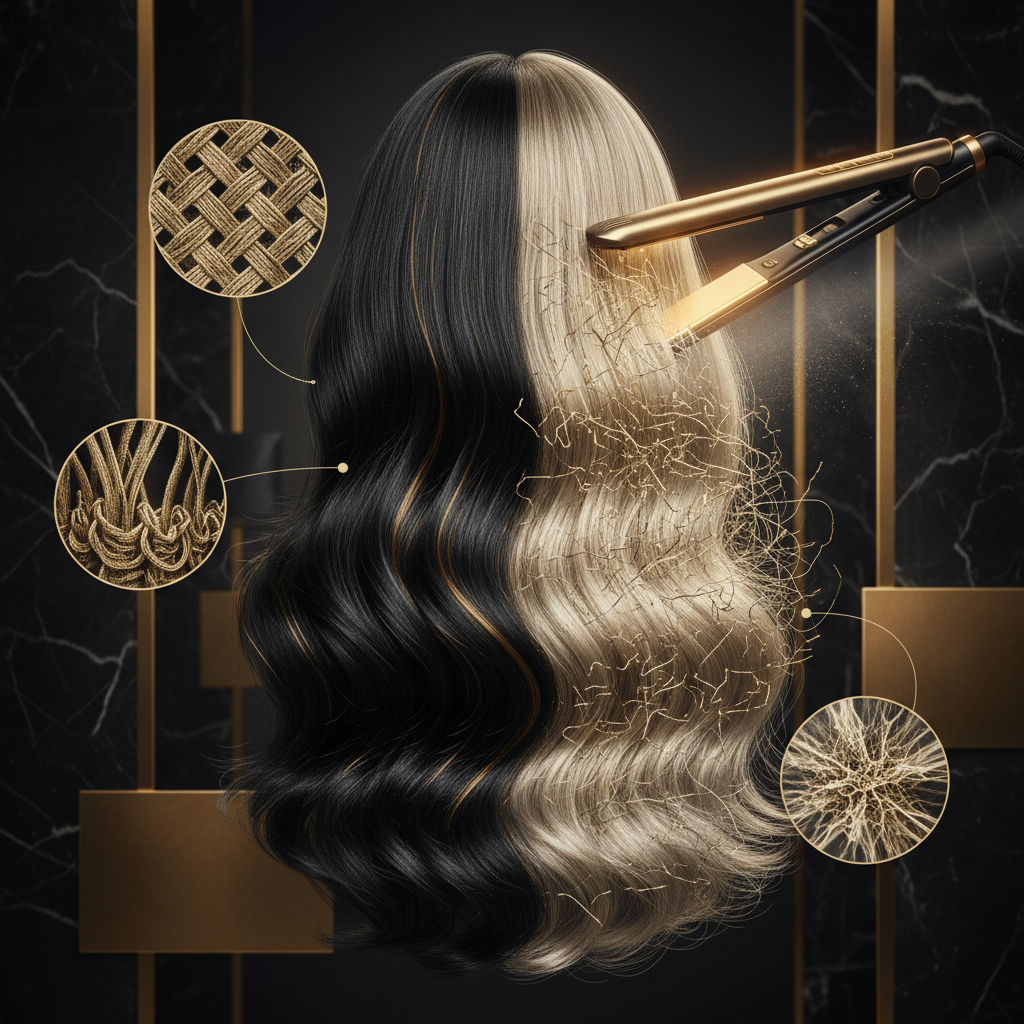
Quick answer: The effects of heat styling on hair structure involve progressive, irreversible degradation of the hair fibre's physical and chemical architecture. Thermal tools operating between 130°C and 230°C strip protective surface lipids, lift and crack the outer cuticle, and denature internal alpha-keratin proteins into disordered beta-sheet structures. While thermal protectants and controlled temperatures significantly reduce surface erosion and moisture loss, they cannot completely prevent structural damage once heat alters the cortex.
Key takeaways
- Heat breaks temporary hydrogen bonds to reshape hair, but excessive heat permanently alters alpha-keratin proteins in the cortex.
- The 18-methyleicosanoic acid (18-MEA) lipid layer melts and erodes at temperatures above 100°C, leaving hair porous and hydrophobic.
- Temperatures above 150°C cause structural changes, while temperatures above 200°C can melt keratin and trigger thermal decomposition.
- Styling damp or wet hair causes rapid internal water vaporisation, leading to bubble hair deformity and severe mechanical breakage.
- Thermal damage represents fibre breakage along the shaft; it does not directly cause follicular hair loss or shedding from the scalp.
Effects of heat styling on hair structure: what the evidence shows
Research shows that the effects of heat styling on hair structure are cumulative, progressive, and physically irreversible. Hair is primarily composed of keratin proteins (around 65 to 95 percent by weight), water, lipids, and trace melanin pigments. When you apply direct thermal energy through flat irons, curling wands, or high-heat blow dryers, this composite structure degrades across three distinct morphological layers:
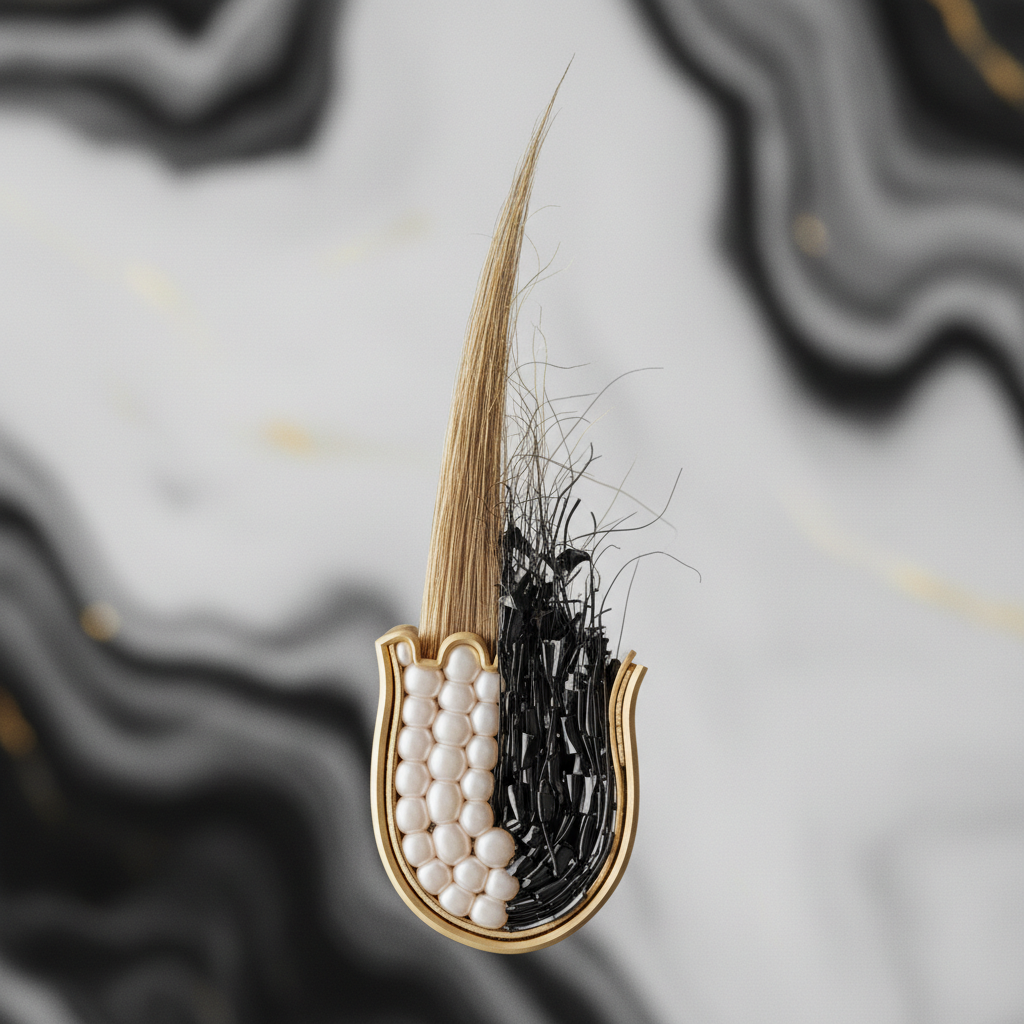
- The Cuticle (Outer Envelope): The cuticle consists of overlapping, scale-like cells coated by the F-layer, a mono-molecular layer of 18-methyleicosanoic acid (18-MEA). Studies using scanning electron microscopy demonstrate that heat strips this lipid shield. Without it, cuticle edges lift, buckle, and chip away, exposing the fragile inner cortex to friction and moisture fluctuation.
- The Cell Membrane Complex (CMC): Running between cuticle and cortical cells, the CMC acts as biological intercellular glue. Thermal tools desiccate and crack the CMC lipid bilayers, weakening the intercellular adhesion that gives hair its flexibility.
- The Cortex (Core Structural Engine): The cortex contains intermediate filaments made of crystalline alpha-keratin coils embedded in an amorphous, sulphur-rich matrix. Heat disrupts the delicate balance of disulphide bonds, breaks hydrogen bonds irreversibly, and oxidises cystine amino acids into cysteic acid.
Thermal degradation occurs across specific temperature thresholds:
| Temperature Range | Structural Phenomenon | Observable Consequence |
|---|---|---|
| Below 100°C | Temporary hydrogen bond breakage; free water evaporates | Gentle styling hold; minimal long-term structural harm |
| 100°C to 140°C | 18-MEA lipid layer melts; loss of bound moisture | Increased porosity, loss of natural shine, rough texture |
| 140°C to 160°C | Alpha-keratin begins reversible denaturation; CMC weakens | Reduced fibre elasticity, increased susceptibility to split ends |
| 160°C to 190°C | Irreversible transition from alpha-keratin to beta-keratin | Fibre weakening, permanent structural rigidity, brittle snaps |
| Above 200°C | Keratin protein melting, cystine decomposition, melanin degradation | Cuticle blistering, severe mid-shaft breakage, colour fading |
Mechanisms of thermal damage: what happens inside the fibre
Understanding the biological mechanisms explains why heat styling leaves hair feeling fundamentally altered.
Alpha-to-beta keratin phase transition
Within the cortex, keratin normally exists as a spring-like alpha-helix. When you stretch hair and apply temperatures above 155°C, these helical proteins unravel into flattened, pleated beta-sheets. While this change allows you to straighten curls or set waves temporarily, repeated exposure locks portions of the protein into this uncoiled state. The hair loses its natural mechanical elasticity, meaning it can no longer stretch and return to its original shape without snapping.
Oxidation of disulphide bonds
The strength of human hair relies heavily on covalent disulphide cross-links formed by the amino acid cystine. Exposure to dry heat above 160°C induces thermal oxidation. Cystine breaks down into cysteic acid residues. This chemical breakdown permanently lowers the tensile strength of the fibre, making wet combing and brushing far more damaging.
Bubble hair and steam expansion
Water within hair exists in two forms: free water (which evaporates easily) and bound water (physically attached to keratin). When you apply a flat iron (often reaching 180°C to 230°C) to damp or improperly dried hair, free water instantly boils. The trapped steam expands faster than it can escape through the cuticle pores, producing micro-cavities or "gas bubbles" within the cortex. This condition, known clinically as bubble hair deformity, makes the hair shaft brittle and causes it to break off cleanly under minimal tension.
What the evidence does not show
It is critical to separate fibre breakage from true biological hair loss:
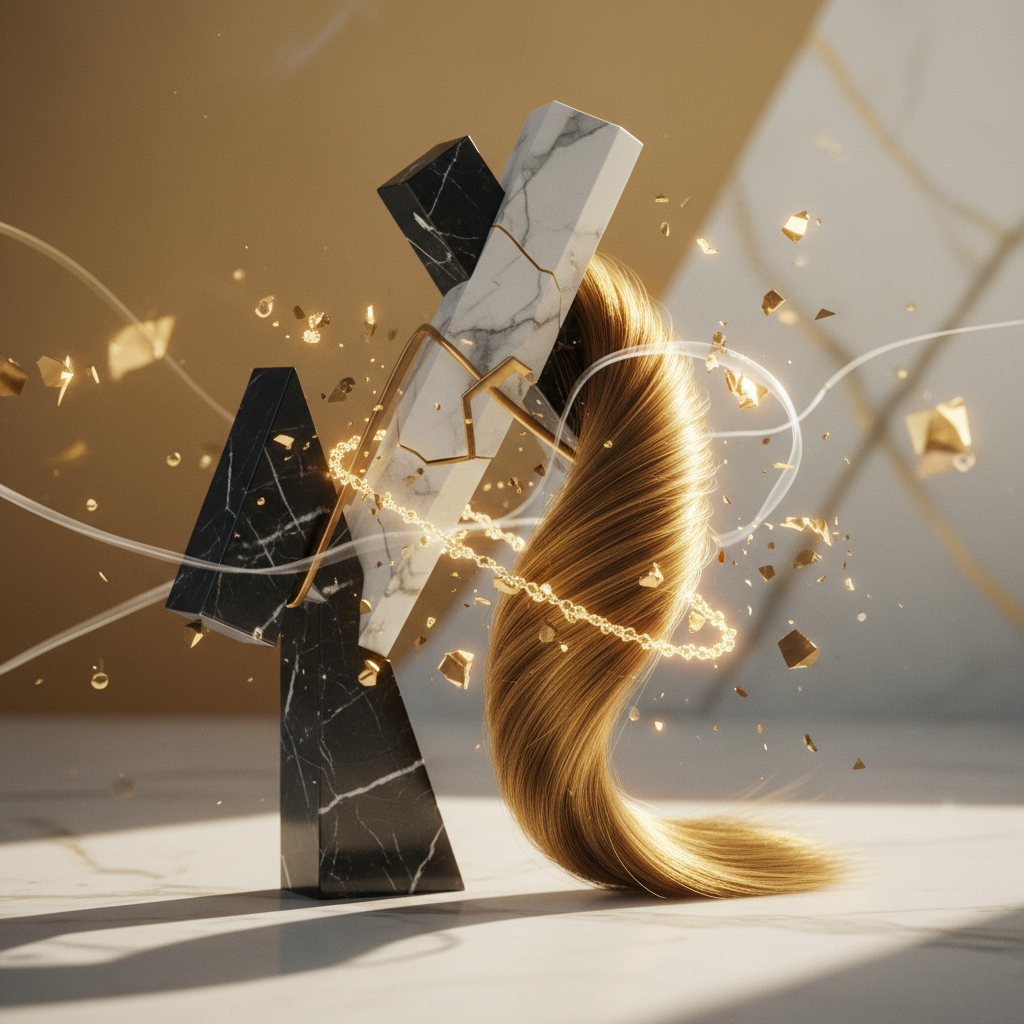
- Heat styling does not cause follicular shedding: Heat styling damages the non-living hair fibre above the skin. It does not disrupt the follicular cycle in the dermis, nor does it cause telogen effluvium or androgenetic alopecia. If hair snaps mid-shaft, it is breakage, not root-level shedding.
- Heat protectants do not offer 100 percent immunity: Cosmetic formulations containing silicones (such as dimethicone) and polyquaterniums slow heat transfer and reduce friction. However, clinical testing confirms they merely buffer the thermal shock; they cannot stop high heat from reaching and denaturing internal cortical proteins.
- Heat damage cannot be "healed": Because hair is biologically dead tissue once it emerges from the scalp, damaged keratin cannot regenerate. Cosmetic conditioning agents can temporarily coat, smooth, and fill cracks, but they cannot restore original chemical bonds.
Warning signs of heat-compromised hair
Detecting structural degradation early prevents widespread breakage. Look for these hallmark signs:
- Loss of natural curl or wave pattern: When hair refuses to bounce back after washing, alpha-keratin denaturation has altered cortical memory.
- High porosity and rapid drying: Damaged cuticles allow water to flood into the cortex and evaporate just as quickly, leaving hair perpetually dry.
- Rough, catching texture: Chipped cuticle tiles cause individual strands to snag against one another, creating chronic tangles and fairy knots (trichonodosis).
- White bulbs or split ends (trichoptilosis): Longitudinal splits develop when the internal cortex is completely stripped of protective cuticles.
- Mid-shaft snapping: Small fragments of hair falling out during styling (without the white keratin bulb of the root attached) indicate advanced thermal brittleness.
How to minimise structural degradation from heat
You can significantly limit structural damage by altering physical styling techniques:
- Never use direct heat on wet hair: Ensure hair is 100 percent dry before introducing flat irons or curling tongs to prevent rapid steam expansion and bubble hair.
- Cap your tool temperatures: Keep styling irons below 180°C whenever possible. Fine, chemically treated, or bleached hair should be styled between 130°C and 150°C.
- Use single-pass styling: Moving a hot plate steadily down the hair section once causes less cumulative thermal decay than repeatedly gliding over the same strand at lower speeds.
- Apply functional heat protectants: Choose products featuring film-forming polymers, dimethicone, or hydrolysed wheat and pea proteins. These ingredients distribute heat evenly across the surface and slow heat conduction into the cortex.
- Incorporate structural conditioning: Use restorative treatments rich in low-molecular-weight amino acids and lipids to lubricate the hair surface and replace lost 18-MEA barrier properties.
Supporting hair health: the Watermans approach
While heat tools degrade the mature hair shaft, maintaining optimal hair resilience begins at the scalp and the newly emerging fibre. The Watermans collection focuses on fortifying hair appearance and scalp balance without relying on harsh, stripping additives.
Using gentle, sulphate-free cleansers like Watermans GrowMe Shampoo helps preserve the hair fibre's existing moisture balance during washing, while conditioners containing natural oils and hydrolysed proteins replenish surface lubrication. For styling enthusiasts, maintaining a conditioned, supple fibre means hair offers better mechanical resistance against daily thermal stress.
When the cause may be something else
If you observe hair thinning rather than snapping, the root cause may not be thermal:
- Diffuse thinning across the scalp: This suggests systemic telogen effluvium, often caused by nutritional deficiencies (such as ferritin or vitamin D), thyroid irregularities, or severe physiological stress.
- Gradual widening of the parting: Pattern hair loss (androgenetic alopecia) is mediated by genetics and dihydrotestosterone (DHT), not thermal tools.
- Hair snapping at the scalp level: Chemical over-processing (from bleaching, relaxers, or permanent waves) combined with tight mechanical tension causes proximal breakage that mimics shedding.
If you notice patches of scalp inflammation, burning, scaling, or true hair loss where fibres shed with an attached white bulb, consult a registered trichologist or dermatologist for clinical assessment.
Frequently asked questions about effects of heat styling on hair structure
What are the earliest effects of heat styling on hair structure?
The earliest physical effect is the stripping of the 18-MEA lipid layer from the cuticle surface. This reduces hair's natural water-repellency, making it feel rough, dull, and prone to static. Microscopic cuticle lifting follows rapidly, which allows ambient humidity to penetrate and disrupt temporary hydrogen bonds, causing chronic frizz.
Can cold water or protein masks reverse thermal damage?
No cosmetic product or cold water rinse can reverse the structural effects of heat styling on hair structure. Once alpha-keratin proteins denature into beta-sheets and disulphide bonds oxidise into cysteic acid, the chemical transformation is permanent. Treatments can temporarily fill gaps and smooth the cuticle, but the original fibre integrity cannot be regenerated.
At what exact temperature does hair suffer permanent damage?
Permanent structural damage begins at approximately 155°C to 160°C, where alpha-keratin begins irreversible denaturation into disordered beta-keratin. At temperatures above 200°C, the hair cuticle undergoes severe thermal decomposition, leading to blistering, melting of structural proteins, and immediate mid-shaft breakage.
Does blow drying cause the same damage as a flat iron?
Blow drying generally causes less cortical degradation than flat irons because the tool does not make direct, clamped contact with the hair, and air temperatures disperse rapidly. However, using a nozzle directly against the hair or drying damp hair on high heat can still dehydrate the cell membrane complex and cause significant cuticle cracking.
Summary
Understanding the true effects of heat styling on hair structure allows you to protect the physical integrity of your hair. Heat reshaping relies on breaking temporary hydrogen bonds, but excessive or unprotected exposure permanently degrades the protective cuticle, strips vital surface lipids, and transforms cortical alpha-keratin into brittle, weak structures. By keeping styling temperatures below 180°C, always using a proven thermal protectant, styling only bone-dry hair, and nourishing emerging strands, you can achieve your desired aesthetic while keeping the hair fibre strong, flexible, and resilient.
Sources and references
- Journal of Cosmetic Science, "Thermal degradation of hair keratin", 2004.
- International Journal of Cosmetic Science, "The effect of heat on hair chemical and physical properties", 2011.
- Journal of Investigative Dermatology, "Bubble hair: an in vitro model of thermal injury", 1994.
- Society of Cosmetic Chemists, "Chemical and Physical Behavior of Human Hair", Clarence R. Robbins, 5th Edition, 2012.
Find these ingredients in Watermans products
- Vitamin D: you will find this ingredient in our Hair Vitamins.