Dermal Papilla Cells and Follicle Health: Biology, Function, and Hair Growth
9 min read ·
Explore the science of Dermal Papilla Cells and Follicle Health, from signalling pathways and hair cycling to miniaturisation causes and scalp care realities.

Quick answer: The relationship between Dermal Papilla Cells and Follicle Health forms the foundation of hair biology, as these specialised mesenchymal cells govern follicle regeneration, hair shaft diameter, and cycling transitions. Located at the base of the hair bulb, dermal papilla cells produce instructional signals such as Wnt and FGF that instruct epithelial matrix cells to divide. However, topical cosmetic products cannot alter dermal papilla genetics or directly reverse androgenetic miniaturisation without medical intervention.
Key takeaways
- Dermal papilla cells act as the central control room of the hair follicle, orchestrating growth phases and shaft dimensions.
- The physical number of dermal papilla cells directly dictates the thickness and volume of the hair shaft produced.
- In androgenetic alopecia, dihydrotestosterone (DHT) alters signalling within these cells, causing progressive follicular miniaturisation.
- Cosmetic products and scalp care improve the microenvironment and reduce fibre breakage, but they cannot genetically reprogram dermal papilla behaviour.
- Distinguishing between temporary telogen shedding and permanent follicular miniaturisation is essential for proper management.
Dermal Papilla Cells and Follicle Health: what the evidence shows
Research shows that dermal papilla cells control the cyclical life of the hair follicle. Nestled within the base of the hair bulb, these mesenchymal cells communicate continuously with surrounding epithelial cells via paracrine signalling pathways. During anagen (the active growth phase), dermal papilla cells secrete signalling proteins, notably from the Wnt/beta-catenin, Fibroblast Growth Factor (FGF), and Noggin families. These chemical messages instruct neighbouring epithelial stem cells and matrix cells to proliferate and differentiate into the distinct layers of the hair shaft and the inner root sheath.
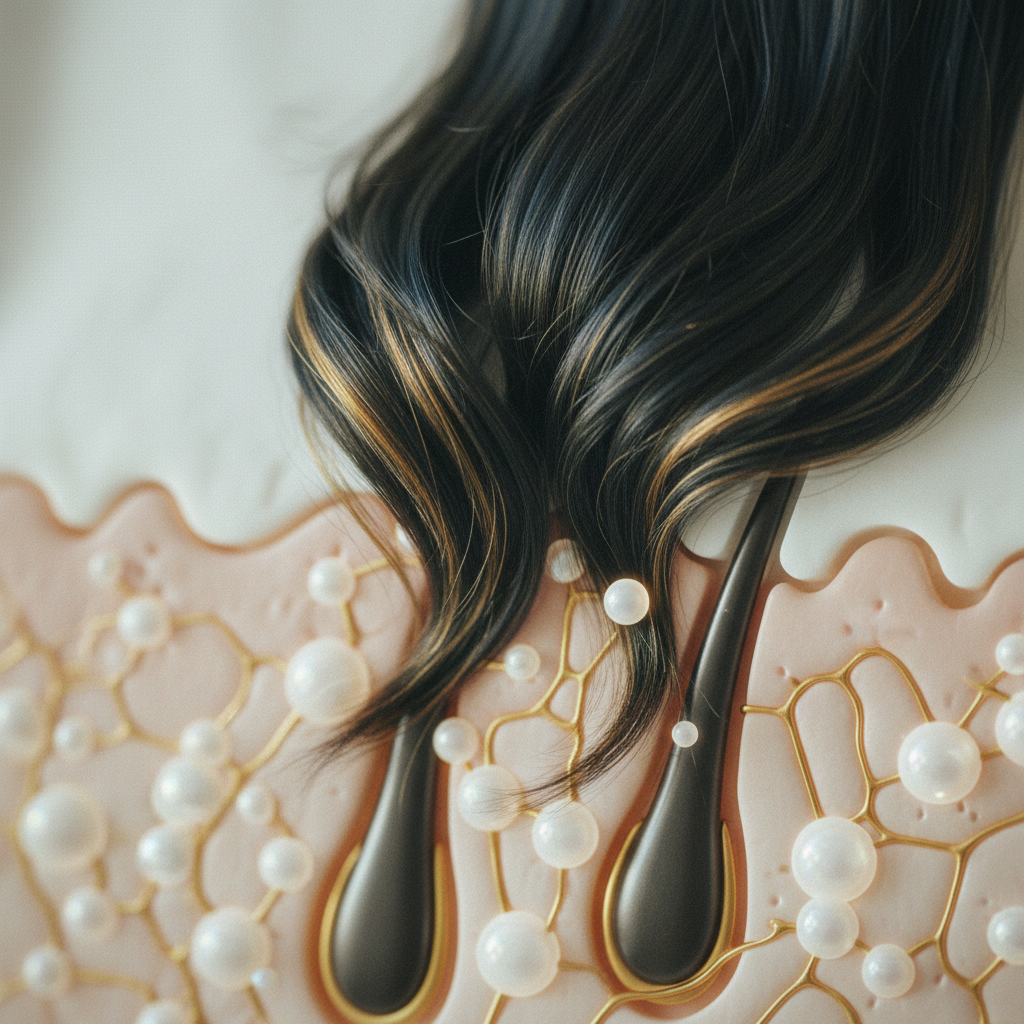
The direct link between Dermal Papilla Cells and Follicle Health is also quantitative. Landmark morphometric studies by researchers like Dr Colin Jahoda have demonstrated that hair shaft diameter correlates with the absolute number of dermal papilla cells residing in the bulb. A higher cell population yields a larger dermal papilla volume, which supports a broader matrix and produces a thicker terminal hair. Conversely, when the dermal papilla loses cells, the resulting hair fibre emerges progressively finer.
Furthermore, dermal papilla cells act as an environmental sensor and vascular hub. They sit immediately adjacent to an intricate capillary loop that delivers micronutrients, oxygen, and systemic hormones. When the follicle transitions into catagen (the regression phase), the dermal papilla condenses and migrates upward toward the hair follicle bulge stem cell niche, preserving the blueprint required to fire up the next anagen cycle.
What the evidence does not show
While dermal papilla cells are biologically powerful, commercial haircare claims frequently misinterpret their clinical realities.
- Cosmetics cannot revive fully lost follicles: Once a follicle undergoes complete fibrosis and loses its dermal papilla structure, topical shampoos, oils, and botanical serums cannot regenerate a new dermal papilla from scratch.
- Topical penetration is strictly limited: The dermal papilla sits 3 to 5 millimetres deep in the reticular dermis of human scalp tissue. Most cosmetic molecules cannot penetrate through the stratum corneum, down the follicular infundibulum, and across the dermal sheath at pharmacological concentrations.
- Nutritional supplements cannot overpower genetic sensitivity: Consuming high doses of biotin, collagen, or zinc will not prevent DHT from binding to androgen receptors on dermal papilla cells in genetically susceptible individuals. Systemic nutrition supports cellular metabolism only when a true clinical deficiency exists.
The biological mechanism of follicle miniaturisation
To understand follicular decline, one must examine how dermal papilla cells respond to systemic and local signals. In genetically predisposed individuals, androgenetic alopecia develops because dermal papilla cells in the frontal and vertex scalp express high levels of androgen receptors and 5-alpha reductase enzymes.
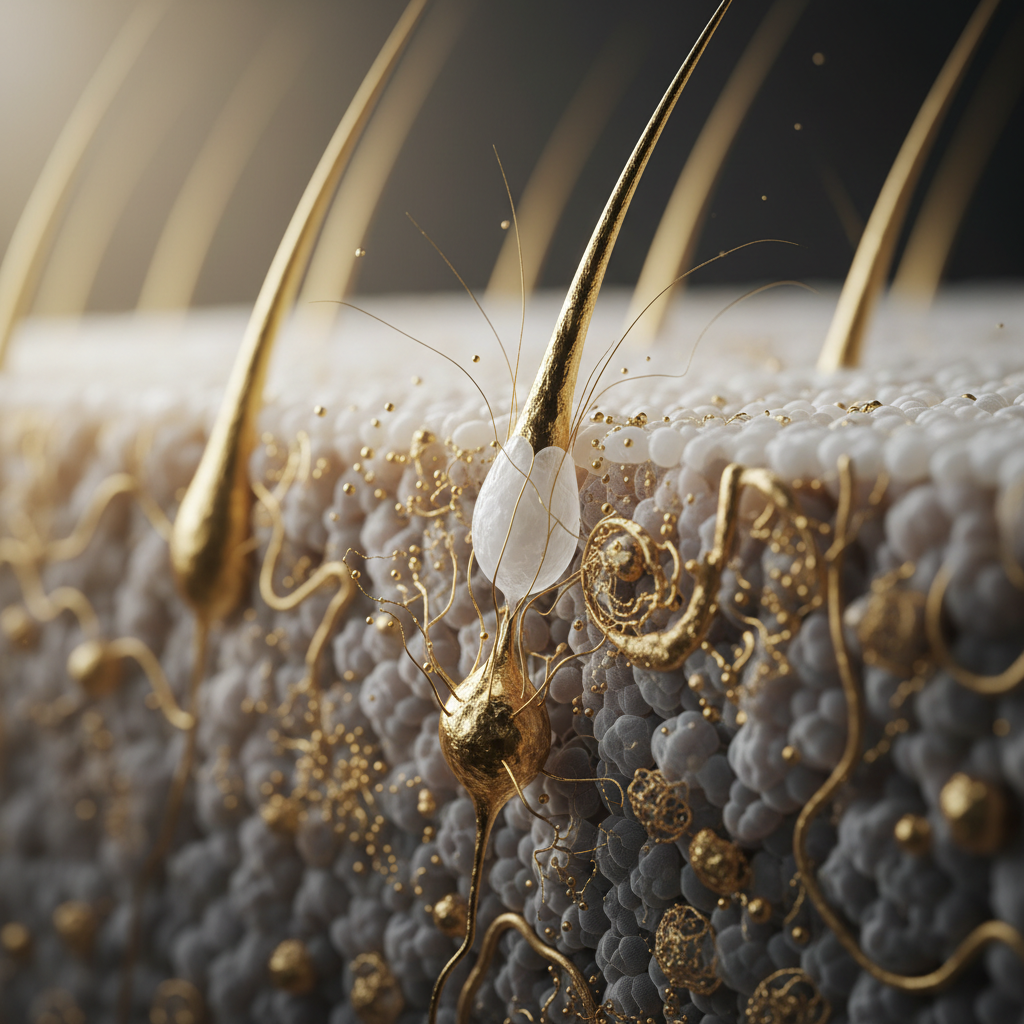
When circulating testosterone encounters intracellular 5-alpha reductase, it converts into dihydrotestosterone (DHT), a far more potent androgen. The binding of DHT to the androgen receptor in dermal papilla cells triggers a transcriptional cascade that releases inhibitory cytokines, most notably Transforming Growth Factor beta 1 (TGF-beta 1) and Dickkopf-1 (DKK-1).
TGF-beta 1 halts epithelial matrix proliferation and precipitates premature catagen entry. DKK-1 acts as an antagonist against canonical Wnt signalling, essentially switching off the growth signal that maintains anagen. With every successive hair cycle, the anagen phase shortens, the telogen (resting) phase lengthens, and a subset of dermal papilla cells is shed into the connective tissue sheath. Over several cycles, robust terminal hairs transform into wispy, unpigmented vellus-like hairs.
Comparing hair follicle structures and their functions
The hair follicle is a composite mini-organ where different cellular compartments perform distinct duties. Understanding their roles clarifies why targeting the dermal papilla is so complex.
| Structure | Cell type | Primary biological role | Response to topical cosmetic care |
|---|---|---|---|
| Dermal papilla | Mesenchymal cells | Instructs hair cycling, controls fibre diameter, releases Wnt signals | Indirect only; deeply seated in the dermis |
| Hair matrix | Epithelial cells | Rapidly divides to form the physical keratinised shaft | Sensitive to vascular supply and nutritional status |
| Follicle bulge | Epithelial stem cells | Acts as a reservoir for regenerating the lower follicle | Protected niche; responsive to wound-healing cascades |
| Dermal sheath | Mesenchymal fibroblasts | Replenishes dermal papilla cells, maintains structural elasticity | Provides mechanical support across the follicle life cycle |
| Cuticle (shaft) | Keratinised dead cells | Shields cortex from UV radiation, heat, friction, and moisture loss | Direct recipient of conditioning agents, surfactants, and polymers |
Signs of dermal papilla dysfunction vs superficial hair problems
Stylists and individuals often confuse superficial hair shaft damage with genuine dermal papilla dysfunction. Learning to identify the physical signs prevents misdirected care.
Follicular miniaturisation (dermal papilla driven)
- Variable shaft diameters: Examining a parted scalp shows fine, thin strands growing alongside thick terminal hairs (known as follicular diameter diversity).
- Gradual pattern thinning: Hair density visibly decreases at the crown, temples, or central part over years, without massive daily shedding clumps.
- Shorter terminal length: Strands fall out at shorter maximum lengths because the anagen growth window has shortened from years to months.
Telogen shedding (cycling reset)
- Diffuse daily loss: More than 100 to 150 hairs shed per day, characterised by white keratin bulbs at the root.
- Consistent strand calibre: The shed hairs maintain uniform thickness from root to tip rather than showing progressive thinning.
- Acute trigger: Shedding typically begins 2 to 4 months after high fever, surgery, extreme psychological shock, or hormonal crashes.
Fibre breakage (cosmetic and mechanical)
- Absence of a bulb: Snapped hairs have blunt, fractured ends without a white bulb.
- Variable lengths: Broken fragments are much shorter than your typical hair length.
- Rough, porous texture: Strands feel straw-like, tangle easily, and snap under mild tensile tension.
What you can do to support follicle health
Supporting the scalp environment helps maintain optimal conditions for natural hair cycling, even if cosmetic care cannot rewrite genetic programming.
- Manage scalp micro-inflammation: Microbial overgrowth from Malassezia yeasts produces free fatty acids that provoke follicular micro-inflammation. Keep the scalp microbiome balanced by cleansing regularly with balanced, sulphate-conscious formulations at a skin-compatible pH of 5.0 to 5.5.
- Support microcirculation through gentle mechanical stimulation: Scalp massage creates mild shear stress that laboratory models suggest can transiently upregulate mechanical signalling proteins in dermal papilla cells, while aiding local blood flow.
- Protect against external oxidative stress: Environmental pollutants, particulate matter, and UV exposure generate reactive oxygen species on the scalp surface that degrade sebum and irritate follicle ostia. Antioxidant rinses and protective serums neutralise surface free radicals.
- Reduce physical tension on follicles: Avoid chronic traction styles, excessively heavy extensions, or tight ponytails. Protracted physical pull induces traction-induced inflammation, which eventually triggers dermal papilla destruction and scarring.
Watermans approaches to scalp conditioning
For those seeking to maintain a healthy scalp microenvironment, cosmetic scalp care plays an everyday supportive role. Watermans formulates products like Grow Me Shampoo and Condition Me Conditioner with ingredients such as caffeine, biotin, rosemary extract, and niacinamide.
In cosmetic formulations, caffeine and botanical extracts offer surface-level antioxidant support and condition the scalp perimeter. While Watermans cosmetics are formulated to optimise the feeling of hair density, support moisture retention, and curb fibre breakage, they operate within the realm of cosmetic hair health. They are not intended to replace pharmaceutical therapies or treat systemic medical causes of hair loss.
When to seek clinical evaluation
If thinning appears rapidly, presents with patchy focal bald spots, or is accompanied by pain, burning, or redness, professional advice is essential. Trichologists and dermatologists can perform dermoscopy (trichoscopy) to view follicular ostia, assess peri-pilar signs of scarring alopecias, and order comprehensive blood panels (checking serum ferritin, thyroid-stimulating hormone, and free androgens). Early medical intervention is critical for protecting dermal papilla structures before irreversible miniaturisation or scarring takes place.
Frequently asked questions about Dermal Papilla Cells and Follicle Health
Can lifestyle changes increase the number of dermal papilla cells?
Lifestyle adjustments cannot multiply the baseline number of dermal papilla cells. While eating a balanced diet, sleeping adequately, and managing stress maintain cellular energy production, they do not trigger mesenchymal cell proliferation in adults. The number of dermal papilla cells is largely established embryonically and fluctuates naturally within hair cycles.
How does mechanical scalp massage influence Dermal Papilla Cells and Follicle Health?
Controlled studies have observed that mechanical force applied to scalp tissue transmits mechanical tension through extracellular matrix proteins to dermal papilla cells. This mechanical stretch can trigger signalling pathways, such as stretching mechanosensitive ion channels and promoting the expression of growth-related genes. However, mechanical massage alone will not overcome genetic androgen sensitivity.
What is the difference between matrix cells and dermal papilla cells?
Matrix cells are fast-dividing epithelial cells that physically construct the hair shaft and root sheath. In contrast, dermal papilla cells are non-dividing mesenchymal cells that direct the matrix cells. The dermal papilla serves as the architect, sending chemical instructions that direct how fast, how wide, and how long the matrix workers build the hair strand.
Can damaged dermal papilla cells regenerate after chemical burns?
If a chemical burn or severe thermal injury penetrates through the dermis to destroy the dermal papilla and surrounding stem cell pools, the follicle cannot regenerate. The damaged zone heals via fibrous scar tissue, leading to cicatricial (scarring) alopecia. Mild surface chemical irritation that spares the deep dermis, however, allows follicles to recover once inflammation settles.
Supporting lifelong follicle vitality
Understanding the biological balance between Dermal Papilla Cells and Follicle Health allows both salon professionals and consumers to separate genuine follicle biology from commercial marketing myths. By recognising that dermal papilla cells serve as the signalling nerve centre of the follicle, individuals can make informed decisions: seeking clinical dermatological help for genetic miniaturisation while using high-performance scalp care and gentle styling techniques to maintain hair fibre resilience and a balanced scalp environment.
Sources and references
- Jahoda, C. A., Horne, K. A., & Oliver, R. F. (1984). Induction of hair growth by implantation of cultured dermal papilla cells. Nature, 311(5986), 560-562.
- Stenn, K. S., & Paus, R. (2001). Controls of hair follicle cycling. Physiological Reviews, 81(1), 449-494.
- Inui, S., Fukuzato, Y., Nakajima, T., Yoshikawa, K., & Itami, S. (2002). Androgen-inducible TGF-beta1 from balding dermal papilla cells inhibits epithelial cell growth: a clue to understanding paradoxical effects of androgen on human hair. FASEB Journal, 16(14), 1967-1969.
- Kwack, M. H., Sung, Y. K., Chung, E. J., Im, S. U., Han, C. A., Guo, H. L.... & Kim, J. C. (2008). Dihydrotestosterone-inducible dickkopf 1 from balding dermal papilla cells causes apoptosis in follicular keratinocytes. Journal of Investigative Dermatology, 128(2), 262-269.
- British Association of Dermatologists. (2021). Androgenetic Alopecia Clinical Guidelines.
Find these ingredients in Watermans products
- Niacinamide: you will find this ingredient in our Hair Mask.