Androgenetic Alopecia Mechanisms: The Science of Pattern Hair Loss
9 min read ·
Understand the science behind Androgenetic Alopecia Mechanisms, from DHT and 5-alpha reductase to follicular miniaturisation and proven hair retention strategies.

Quick answer: The core Androgenetic Alopecia Mechanisms involve a genetically determined sensitivity of hair follicles to dihydrotestosterone (DHT). Circulating testosterone is converted to DHT in follicular dermal papilla cells by the enzyme 5-alpha reductase type II. DHT binds to androgen receptors, triggering signalling cascades that progressively shorten the anagen (growth) phase and shrink follicular volume. Over successive cycles, terminal hairs transform into fine, unpigmented vellus hairs. However, current therapies can slow or partially reverse this process, but they cannot alter your underlying genetic sensitivity.
Key takeaways
- Enzymatic conversion: The enzyme 5-alpha reductase converts circulating testosterone into dihydrotestosterone (DHT) within target tissue.
- Follicular miniaturisation: DHT binding triggers molecular pathways that progressively shrink terminal follicles into tiny vellus structures.
- Shortened growth cycles: The anagen (growth) phase shortens from years to months, while the telogen (resting) phase lengthens.
- Polygenic architecture: Genetic susceptibility involves variations on the androgen receptor gene (X chromosome) and multiple autosomal loci.
- Cosmetics vs medical therapies: Cosmetic shampoos cannot alter systemic hormone levels or genetically governed receptor sensitivity, though they support scalp health.
Androgenetic Alopecia Mechanisms: what the evidence shows
Understanding Androgenetic Alopecia Mechanisms requires looking deep inside the dermal papilla at the base of the hair follicle. Androgenetic alopecia is the most common form of progressive hair loss in humans, affecting up to 80 percent of men and 50 percent of women over their lifetimes. It is not caused by excessive hair falling out all at once, but by a structural biological alteration in how hair regenerates.
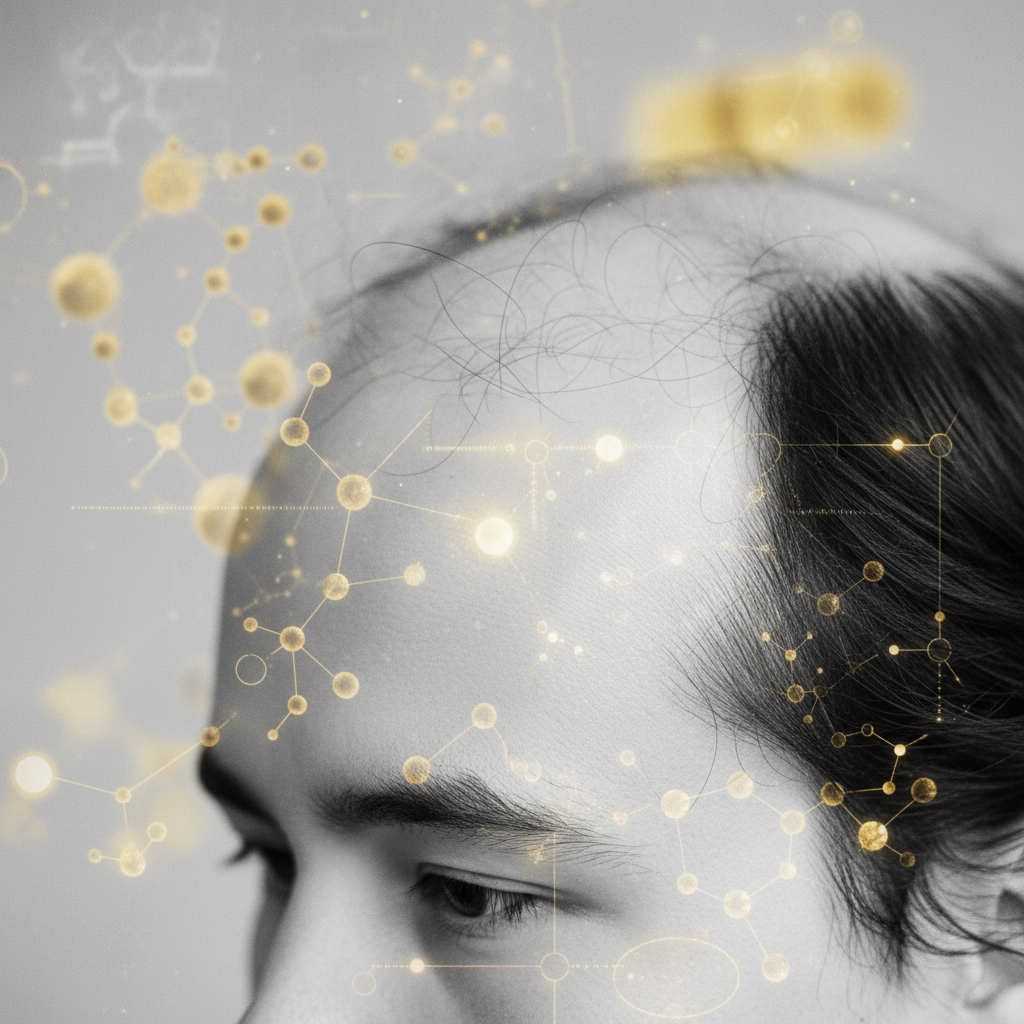
Under standard physiological conditions, scalp hair cycles continuously through three primary phases: anagen (active growth lasting 2 to 7 years), catagen (a regression phase lasting 2 to 3 weeks), and telogen (a resting phase lasting around 3 months). In individuals with the genetic trait, specific androgenetic alopecia mechanisms disrupt this balance.
The process begins when systemic testosterone enters the cells of the dermal papilla. Here, the intracellular enzyme 5-alpha reductase (specifically the type II isoform, encoded by the SRD5A2 gene) converts testosterone into dihydrotestosterone (DHT). DHT possesses an affinity for the intracellular androgen receptor that is roughly five times greater than testosterone itself, and it dissociates from the receptor at a much slower rate.
Once DHT binds to the androgen receptor, the complex dimerises and translocates into the cell nucleus. Inside the nucleus, it acts as a transcription factor, binding to hormone response elements on DNA. This activation alters gene expression, leading to the upregulation of inhibitory growth factors, most notably Transforming Growth Factor-beta 1 and 2 (TGF-β1 and TGF-β2), alongside Dickkopf-related protein 1 (DKK-1).
DKK-1 directly inhibits the Wnt/β-catenin signalling pathway, which is essential for maintaining follicular stem cell activity and sustaining the anagen phase. Deprived of normal pro-survival signals, the follicle terminates anagen prematurely and enters catagen. With each shortened cycle, the dermal papilla shrinks in volume. The resulting hair fibre emerges progressively thinner, shorter, and less pigmented.
| Feature | Healthy Terminal Hair | Miniaturised Follicle (Androgenetic Alopecia) |
|---|---|---|
| Anagen Duration | 2 to 7 years | Weeks to a few months |
| Shaft Diameter | Greater than 60 micrometres | Less than 30 micrometres |
| Follicle Depth | Deep dermis / subcutaneous fat | Superficial dermis |
| Pigmentation | Fully pigmented | Hypopigmented or unpigmented |
| Sebaceous Gland Size | Proportional to follicle | Unchanged or hypertrophied relative to follicle |
| Telogen Ratio | 10 to 15 percent of scalp hair | 20 percent or higher of scalp hair |
What the evidence does not show
Research does not show that androgenetic alopecia is caused by poor blood circulation to the scalp. The idea that tight hats, scalp tension, or poor blood flow strangle hair roots lacks clinical substantiation. While microvascular networks around miniaturised follicles do regress, dermatological consensus confirms this is a consequence of follicular shrinkage, not the initial trigger.
The evidence also does not show that individuals with pattern hair loss have abnormally high serum testosterone levels. Most men and women experiencing pattern hair loss possess circulating androgen levels well within standard clinical reference ranges. The primary driver is local tissue hypersensitivity, determined by androgen receptor density and intracellular 5-alpha reductase activity, rather than excessive systemic hormones.
Finally, controlled studies do not support the claim that everyday hygiene, excessive shampooing, or cosmetic styling products cause follicular miniaturisation. These factors can influence hair breakage along the fibre or induce superficial contact dermatitis, but they do not penetrate to dermal papilla cells to alter genetic hormonal pathways.
The physical signs to look for
Recognising pattern loss early is vital because dormant, heavily miniaturised follicles become increasingly difficult to revitalise over time.
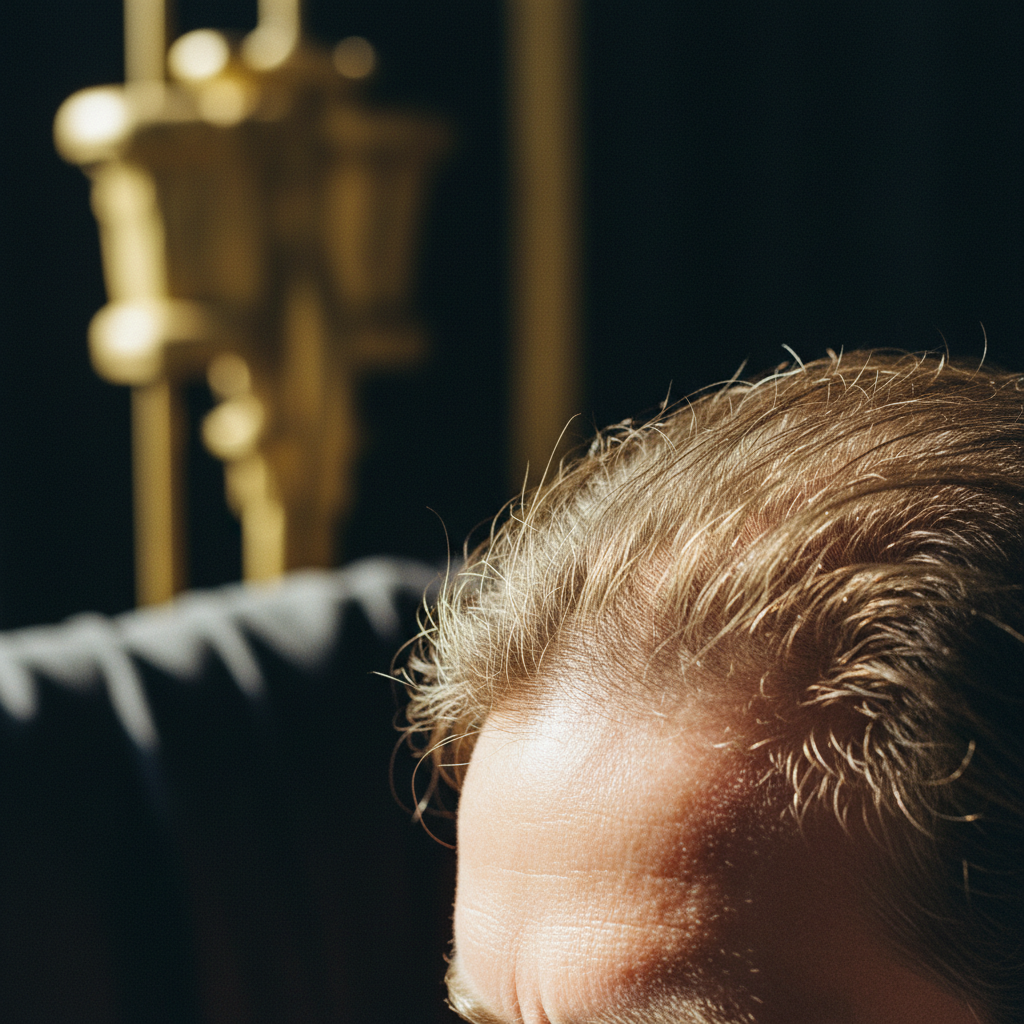
In men, androgenetic alopecia typically follows the Hamilton-Norwood scale:
- Symmetrical recession at the frontal hairline and temples (bitemporal recession), creating an 'M' shape.
- Gradual thinning at the vertex (the crown of the head).
- Eventual confluence of the thinning frontal and vertex areas, leaving a horseshoe-shaped fringe of permanent hair around the sides and back, where occipital follicles lack DHT sensitivity.
In women, female pattern hair loss typically follows the Ludwig or Sinclair scales:
- Diffuse thinning across the mid-frontal scalp and crown with preservation of the frontal hairline.
- A widening of the central parting line, often described as a 'Christmas tree' pattern.
- Miniaturisation across broader scalp zones without developing total bald patches.
A simple visual check can help distinguish miniaturisation from general shedding: inspect shed hairs under good light. If shed hairs display wide variations in diameter, with many fine, short, wispy strands mixed with thick hairs, this points toward follicular miniaturisation rather than standard telogen effluvium.
What you can do: clinical and supportive approaches
Because the biological drivers are genetic and hormonal, management requires realistic strategies targeted at biological pathways.
Medical therapies
Licensed medical treatments target the endocrine and cellular pathways directly:
- 5-Alpha Reductase Inhibitors: Oral medications such as finasteride block the type II 5-alpha reductase enzyme, reducing serum and scalp DHT levels by roughly 60 to 70 percent. This directly halts the primary chemical signal driving miniaturisation.
- Topical Vasodilators and Potassium Channel Openers: Topical minoxidil (available in 2 percent and 5 percent solutions or foams) shortens telogen and extends anagen by opening potassium channels and stimulating microcirculation around surviving dermal papillae. It does not alter DHT levels, making it a complementary mechanism.
Scalp care and cosmetic management
Cosmetic products cannot alter systemic hormone synthesis or reverse genetic expression. However, maintaining an optimal scalp environment supports the cosmetic appearance of thinning hair.
Using gentle, sulphate-free cleansers removes excess sebum, environmental particulates, and styling residues that can irritate the follicular infundibulum. Scalp treatments containing caffeine, niacinamide, rosemary oil, and biotin are popular for supporting a healthy-feeling scalp. Evidence indicates caffeine can penetrate the hair follicle sheath and provide topical antioxidant support, though it should be viewed as an adjunct to licensed care rather than a hormonal cure.
When the cause may be something else
Not all thinning is driven by androgenic mechanisms. You must distinguish androgenetic alopecia from other common hair disorders:
- Telogen Effluvium: Characterised by abrupt, widespread shedding across the entire scalp, usually occurring 2 to 3 months after a physiological stressor (such as severe illness, surgery, rapid weight loss, or childbirth). The hair fibres shed are uniform terminal hairs with intact white bulbs, not miniaturised wisps.
- Alopecia Areata: An autoimmune condition causing distinct, round, smooth patches of hair loss that appear suddenly.
- Traction Alopecia: Hair loss caused by mechanical pulling from tight hairstyles, typically appearing along the hairline without hormonal involvement.
- Scarring (Cicatricial) Alopecia: Conditions like lichen planopilaris or frontal fibrosing alopecia destroy the follicle permanently, replacing follicular openings with smooth, shiny scar tissue, often accompanied by burning, redness, or scaling.
When to get professional advice
You should consult a GP, dermatologist, or qualified trichologist if you notice:
- Rapid or sudden shedding over a period of weeks rather than months.
- Patchy hair loss, redness, pain, itching, or scaling on your scalp.
- Significant thinning accompanied by systemic symptoms, such as irregular periods, cystic acne, unexplained weight shifts, or excess facial hair in women (which may indicate polycystic ovary syndrome).
- Shedding that does not stabilise after six months.
A professional can perform a trichoscopy (dermoscopy of the hair and scalp), examine the follicular units for miniaturisation ratios (a hallmark sign is more than 20 percent diversity in hair shaft diameter), and run targeted blood panels covering ferritin, thyroid-stimulating hormone (TSH), vitamin D, and androgen levels.
The Watermans perspective
While biological treatments address internal hormonal triggers, day-to-day hair care determines how resilient your existing hair fibre remains against mechanical breakage. Watermans approaches hair wellness by focusing on the external health of the scalp and the cosmetic density of the hair shaft.
Watermans Grow Me Shampoo combines ingredients such as caffeine, biotin, rosemary extract, argan oil, and allantoin. Formulated at a scalp-friendly pH between 5.5 and 6.0, it cleanses the scalp of daily sebum build-up without stripping the natural lipid barrier. While a topical shampoo cannot alter your internal genetics or stop systemic DHT conversion, keeping the follicular environment clean, balanced, and free from inflammatory debris helps your existing hair look thicker, stronger, and fuller.
Summary of Androgenetic Alopecia Mechanisms
The core Androgenetic Alopecia Mechanisms reflect an interplay between polygenic sensitivity and local hormone metabolism. When 5-alpha reductase synthesises DHT in the dermal papilla, it triggers inhibitory pathways that steadily miniaturise the hair follicle across successive life cycles. Cosmetic products cannot rewrite this genetic programming, but understanding the cellular process allows you to separate real biological therapies from marketing myths, protecting the hair you have through informed, evidence-based choices.
Frequently asked questions about Androgenetic Alopecia Mechanisms
Do high testosterone levels always trigger androgenetic alopecia?
No. Research shows that most individuals with pattern hair loss have normal circulating testosterone levels. The critical factor in Androgenetic Alopecia Mechanisms is not how much testosterone is in your blood, but how sensitive your hair follicles are to dihydrotestosterone (DHT) due to androgen receptor density and local 5-alpha reductase activity.
Can blocked scalp pores cause follicular miniaturisation?
No. Blocked pores, sebum build-up, and product residues sit on the surface of the scalp and within the upper infundibulum of the follicle. Miniaturisation occurs deep in the dermis at the dermal papilla, regulated by genetic and hormonal factors. Poor hygiene can cause superficial irritation or folliculitis, but it cannot trigger pattern loss.
Can miniaturised hair follicles be restored to normal size?
Partially, if treated early. If a follicle has only recently begun miniaturising, medical interventions like finasteride or minoxidil can prolong anagen and encourage thicker shaft production. However, once a follicle undergoes complete miniaturisation and dormant atrophy over many years, it generally cannot regenerate a terminal hair fibre.
Does female pattern hair loss share the exact same mechanisms as male loss?
While both involve miniaturisation and genetic susceptibility, the mechanisms in women are more complex. The role of androgens in female pattern hair loss is less absolute; many women with the condition show no signs of hyperandrogenism and do not respond as reliably to 5-alpha reductase inhibitors, suggesting additional aromatase and microvascular pathways are at play.
Sources and references
- British Association of Dermatologists: Male and Female Pattern Hair Loss Guidelines, 2021.
- National Institute for Health and Care Excellence (NICE): Alopecia androgenetica - Clinical Knowledge Summary, 2023.
- Journal of Investigative Dermatology: Involvement of DKK-1 in Dihydrotestosterone-Driven Hair Follicle Miniaturisation, 2008.
- Endocrine Reviews: The Role of Androgens in Hair Growth and Androgenetic Alopecia, 2012.
- Dermatology and Therapy: Practical Management of Androgenetic Alopecia, 2020.
Find these ingredients in Watermans products
- Vitamin D: you will find this ingredient in our Hair Vitamins.
- Niacinamide: you will find this ingredient in our Hair Mask.