The Hair Growth Cycle Phases: A Complete Guide to Anagen, Catagen, and Telogen
8 min read ·
Learn how the Hair Growth Cycle Phases work, from anagen growth to telogen shedding, and discover how to identify normal shedding versus breakage.
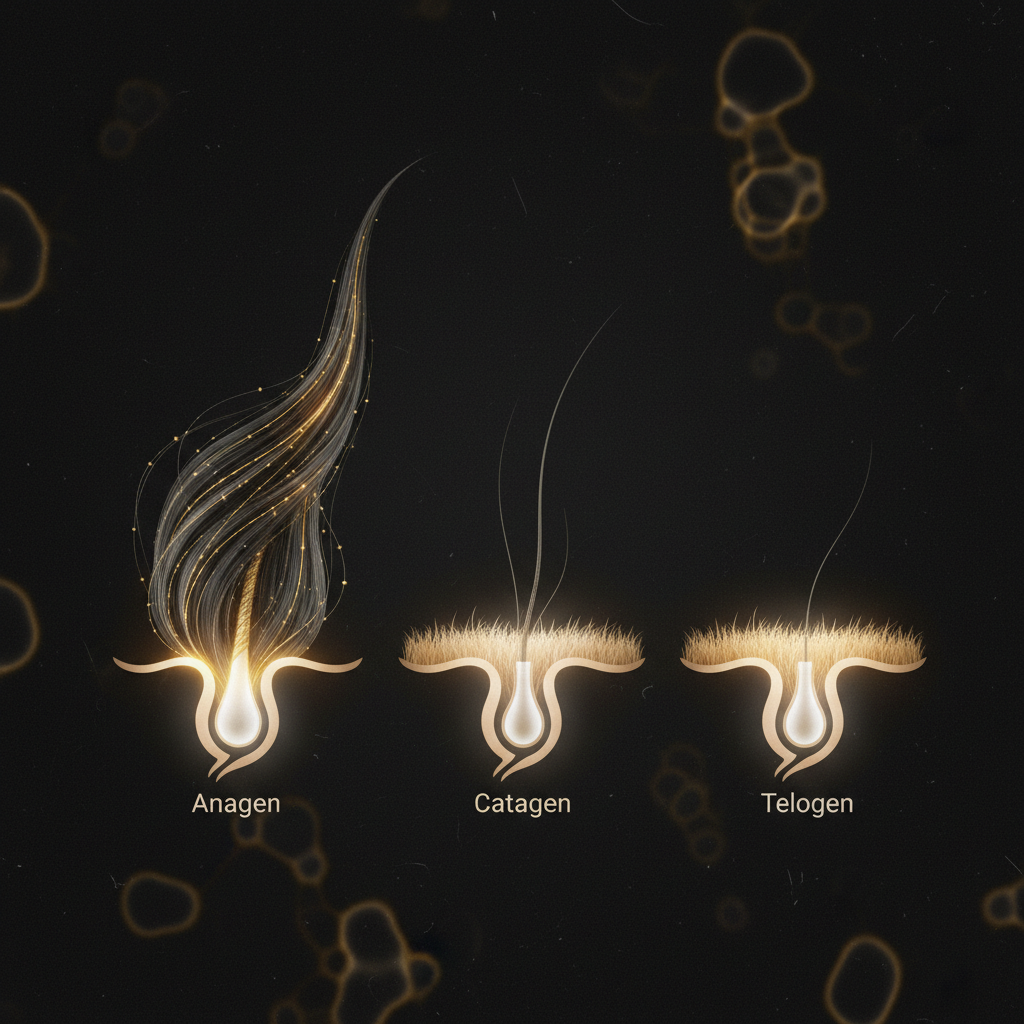
Quick answer: The Hair Growth Cycle Phases govern how every follicle on your scalp produces, maintains, and sheds hair. This biological process consists of four distinct stages: anagen (active growth lasting 2 to 7 years), catagen (a brief transition of 2 to 3 weeks), telogen (a resting phase of around 3 months), and exogen (active shedding of 50 to 100 hairs daily). While cosmetics and healthy habits support the follicle environment, they cannot override underlying genetic disorders or hormonal follicular miniaturisation without targeted clinical intervention.
Key takeaways
- Human scalp hair operates asynchronously, meaning each follicle cycles independently through its own growth timeline.
- Around 85% to 90% of scalp follicles reside in the active anagen phase at any given point under healthy conditions.
- Shedding 50 to 100 hairs per day is physiologically normal and represents the exogen phase, not progressive follicular loss.
- Physical or psychological trauma can push up to 30% or more of growing follicles prematurely into telogen, causing diffuse shedding known as telogen effluvium.
- Distinguishing between hair shedding (telogen/exogen cycling), hair breakage (shaft snapping), and hair loss (follicular miniaturisation or scarring) is essential for correct management.
Hair Growth Cycle Phases: what the evidence shows
Understanding the Hair Growth Cycle Phases requires examining the biological clock within each dermal papilla. Scalp follicles follow a continuous, dynamic rhythm designed to renew the hair fibre throughout adult life.
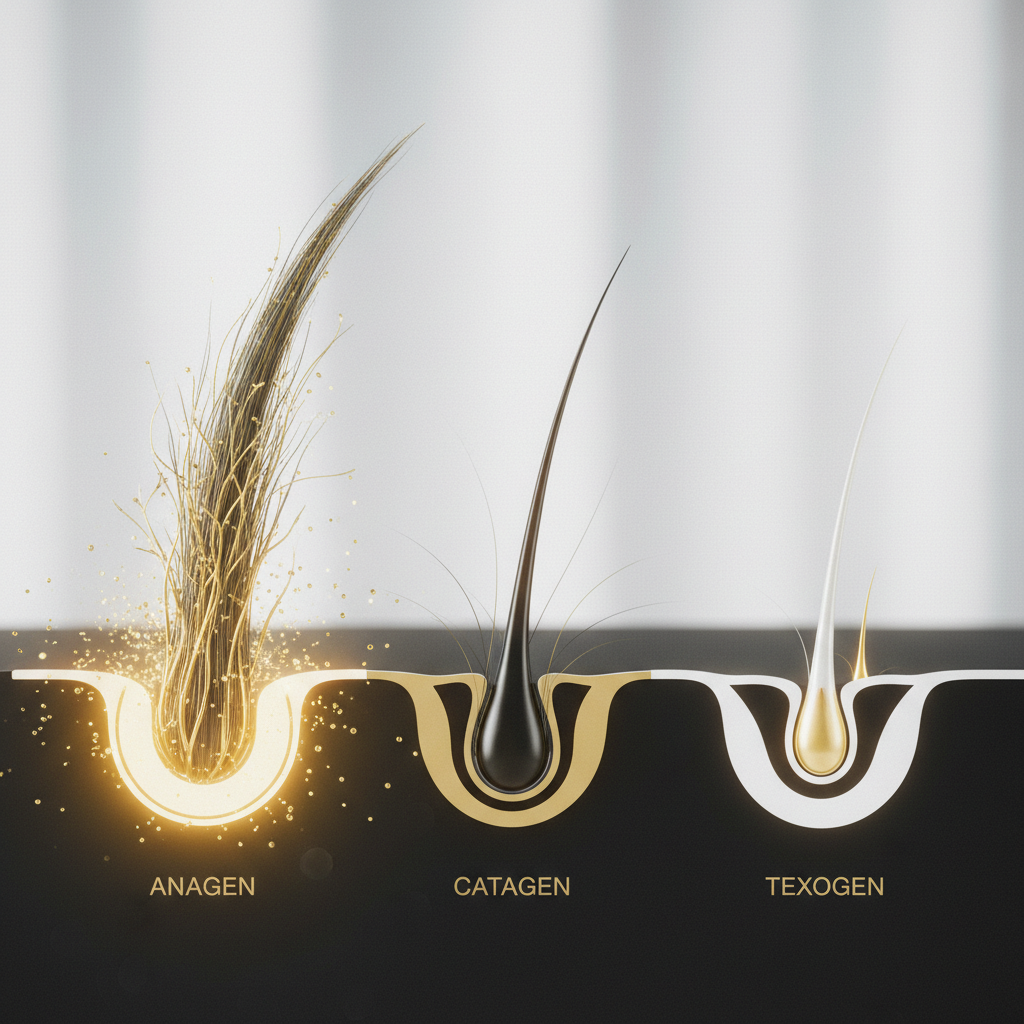
+-------------------------------------------------------------+
| THE HAIR GROWTH CYCLE PHASES |
| |
| [ Anagen: Growth ] --------> [ Catagen: Regression ] |
| (2 to 7 years) (2 to 3 weeks) |
| ^ | |
| | v |
| [ Exogen: Shedding ] <------- [ Telogen: Resting ] |
| (Daily release) (2 to 4 months) |
+-------------------------------------------------------------+
1. The Anagen Phase (Active Growth)
Anagen is the proliferative stage. Cells in the hair bulb divide rapidly, pushing older cells upward where they keratinise to form the visible hair shaft.
On a healthy human scalp, roughly 85% to 90% of hairs are in anagen at any given time. This stage lasts anywhere from 2 to 7 years, dictated primarily by genetics, age, and vascular support. Because hair grows at an average rate of 1 to 1.25 centimetres per month, the duration of anagen sets your maximum potential hair length.
2. The Catagen Phase (Regression and Involution)
Catagen is a brief, highly regulated transitional window lasting approximately 2 to 3 weeks. Less than 1% to 2% of scalp follicles are in catagen simultaneously.
During this phase, cell division in the bulb stops entirely. The follicle contracts, shrinking to roughly one-sixth of its original diameter. The lower portion of the follicle degrades, and the base of the hair fibre keratinises into a rounded structure called a "club hair". The dermal papilla detaches and rests slightly below the ascending hair shaft.
3. The Telogen Phase (Resting)
Telogen represents the quiescent period for the follicle, lasting between 2 and 4 months (roughly 100 days). Around 9% to 15% of all scalp hairs sit in this stage concurrently.
While the hair is dormant, the follicle is biochemically active beneath the surface, preparing signals to trigger the next anagen phase. The club hair remains firmly anchored in the upper follicle pore until stimulated to release.
4. The Exogen Phase (Active Shedding)
Many dermatologists classify exogen as a distinct fourth phase, while others view it as the terminal sub-phase of telogen. During exogen, proteolytic enzymes break down the cellular bridges anchoring the club hair base inside the follicle neck.
The old shaft falls away naturally during washing, brushing, or friction. Daily shedding of 50 to 100 telogen hairs is completely standard. As the old fibre departs, a new anagen shaft emerges from the re-activated bulb beneath it.
| Phase | Primary Biological Activity | Typical Duration | Approximate % of Scalp Follicles |
|---|---|---|---|
| Anagen | Active cellular division, keratinisation, and length creation | 2 to 7 years | 85% to 90% |
| Catagen | Bulb regression, shrinkage, and club hair formation | 2 to 3 weeks | 1% to 2% |
| Telogen | Follicular rest and biochemical resetting | 2 to 4 months | 9% to 15% |
| Exogen | Enzymatic detachment and physical release of the club fibre | A few days | Variable (50 to 100 hairs/day) |
What the evidence does not show
There is no scientific evidence that topical shampoos, oils, or botanical serums can permanently extend the genetically determined limits of anagen into a 15-year cycle. Products cannot create new follicles where none exist.
Controlled dermatological research also disproves the common belief that regular haircuts accelerate follicle cycling. Trimming removes split ends along the shaft, preventing breakage, but the hair bulb situated 4 millimetres beneath the scalp surface remains entirely unaffected by scissors.
Similarly, cosmetic treatments cannot halt autoimmune follicular destruction (such as alopecia areata) or reverse cicatricial (scarring) alopecias. Claims that natural remedies provide an instant cure for patterned hair miniaturisation ignore peer-reviewed endocrinology.
Shedding, breakage, and loss: learning the difference
Managing hair concerns starts with diagnosing the exact physical issue. Stylists and consumers frequently confuse shedding with breakage or permanent hair loss, leading to ineffective interventions.
Hair Shedding (Telogen Effluvium)
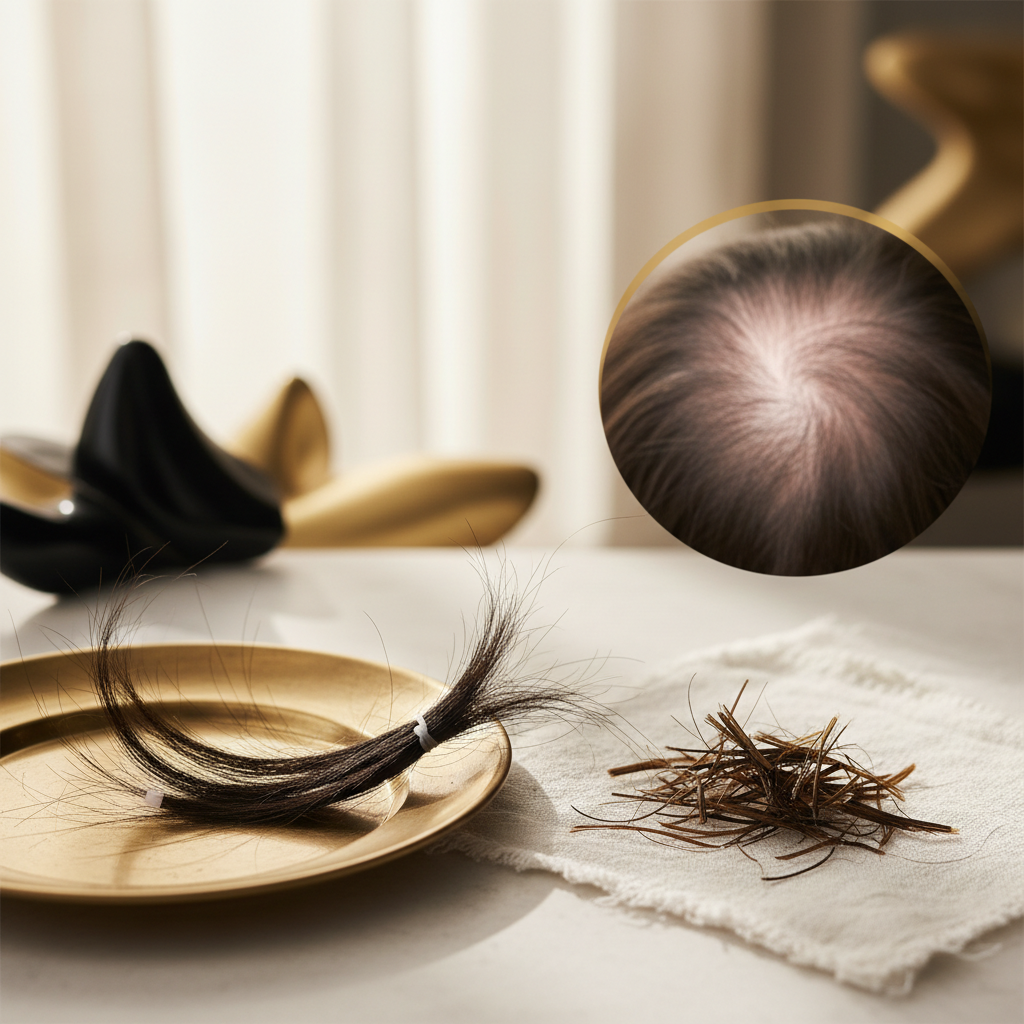
Shedding is an increase in hairs exiting the follicle via exogen. If you inspect a shed hair and see a small, white, keratinised bulb at the root end, it is an exogen club hair. When systemic stressors (such as high fever, sudden weight loss, childbirth, or severe illness) push up to 30% to 50% of anagen hairs prematurely into telogen, shedding increases noticeably 2 to 3 months later. This is usually temporary and self-correcting.
Hair Breakage (Fibre Snapping)
Breakage occurs along the hair shaft rather than from the root. Broken hairs do not possess a white bulb at the end; instead, they have frayed, blunt, or uneven ends. Breakage results from mechanical stress, heat styling without protection, chemical processing, or severe moisture depletion. Breakage requires cuticle-smoothing and protein-fortifying conditioning, not follicle-stimulating treatments.
Hair Loss (Follicular Miniaturisation)
True hair loss involves progressive follicular atrophy. In androgenetic alopecia, sensitivity to dihydrotestosterone (DHT) causes the anagen phase to shorten progressively with every cycle, while the telogen phase lengthens. Over successive cycles, the hair shaft becomes finer, shorter, and less pigmented until the follicle produces only microscopic vellus hairs or becomes completely dormant.
Practical steps to support your follicular cycle
While genetics govern your base cycle, physiological health directly influences whether your follicles complete their full anagen lifespan.
- Optimise scalp microcirculation and hygiene: Keep the scalp clean and free from excess sebum, dead skin cells, and product residue. Regular scalp cleansing maintains a balanced microbiome and prevents follicular occlusion.
- Maintain adequate nutritional stores: Keratinocytes require significant metabolic energy. Deficiencies in ferritin (iron storage), zinc, vitamin D, and essential amino acids are clinically linked to premature telogen transition.
- Minimise systemic oxidative stress: High cortisol levels from chronic stress disrupt dermal papilla signalling, driving premature catagen entry.
- Protect the mechanical fibre: Reducing friction and heat protects the emerging anagen hair, ensuring it reaches its maximum genetic length without breaking prematurely.
Supporting scalp vitality: the Watermans approach
For individuals looking to optimise their daily grooming routine, supporting the external scalp environment is a practical foundation. Watermans products are formulated to enhance cosmetic hair density, improve fibre resilience, and invigorate the scalp surface.
Topical scalp products cannot treat clinical medical disorders, cure hormonal pattern baldness, or alter internal hormonal pathways. However, ingredients such as caffeine, biotin, rosemary, and niacinamide help condition the scalp, clear follicular debris, and provide a nourished environment that supports stronger-feeling, fuller-looking hair as it cycles naturally through its growth stages.
When to seek professional clinical advice
Occasional fluctuations in daily shedding are normal, especially during seasonal shifts in autumn and spring. However, consult a GP, dermatologist, or registered trichologist if you notice any of the following symptoms:
- Sudden, diffuse shedding exceeding several hundred hairs per day lasting longer than 6 months.
- Distinct, smooth, coin-sized circular patches of complete hairlessness, which may indicate alopecia areata.
- Scalp tenderness, burning, erythema, pustules, or visible scarring around follicular openings.
- Gradual widening of the central parting or recession at the temples that fails to stabilise.
A medical professional can perform blood panels (checking thyroid function, ferritin, vitamin D, and hormone profiles) or scalp biopsies to uncover underlying internal triggers.
Frequently asked questions about Hair Growth Cycle Phases
Can you extend the Hair Growth Cycle Phases naturally?
You cannot extend your anagen phase beyond your genetic baseline. However, you can prevent it from being artificially shortened. Addressing nutritional deficiencies, managing chronic stress, treating scalp dermatitis, and avoiding harsh chemical treatments ensure each follicle completes its full genetic growth potential without prematurely entering the catagen and telogen resting phases.
Why do the Hair Growth Cycle Phases cause seasonal hair shedding?
Many people notice increased shedding in late autumn and early spring. Dermatological surveys indicate that a slightly higher percentage of scalp follicles enter telogen in late summer, leading to elevated exogen shedding roughly 2 to 3 months later. This minor fluctuation is a natural, temporary mammalian shedding response that resolves on its own.
How does pregnancy affect the Hair Growth Cycle Phases?
During pregnancy, elevated levels of oestrogen and progesterone prolong the anagen phase, preventing hairs from transitioning into catagen and telogen. This makes hair feel noticeably thicker. Following childbirth, hormone levels drop rapidly, triggering a large cohort of follicles to enter telogen simultaneously, leading to postpartum telogen effluvium roughly 3 months later.
What is the difference between catagen and telogen?
Catagen is an active, rapid involution phase lasting 2 to 3 weeks where cell division ceases and the follicle shrinks to create a club hair. Telogen is a stable resting period lasting 2 to 4 months where the follicle rests, holding the club hair in place while biochemically preparing for the next anagen cycle.
Supporting your hair through every cycle
The Hair Growth Cycle Phases showcase the remarkable regenerative capacity of human biology. From the rapid cellular production of anagen to the necessary reset of catagen and telogen, healthy hair requires a coordinated sequence of signals. By separating mechanical breakage from true physiological shedding, nourishing the scalp environment, and seeking medical guidance when systemic imbalances arise, you can give your hair the best foundation to thrive through every phase.
Sources and references
- British Association of Dermatologists. "Telogen Effluvium: An Information Leaflet." 2021.
- Paus, R., & Cotsarelis, G. "The biology of hair follicles." New England Journal of Medicine, 341(7), 491-497. 1999.
- Alonso, L., & Fuchs, E. "The hair cycle." Journal of Cell Science, 119(3), 391-393. 2006.
- Stenn, K. S., & Paus, R. "Controls of hair follicle cycling." Physiological Reviews, 81(1), 449-494. 2001.
- National Institute for Health and Care Excellence (NICE). "Alopecia androgenetica: Clinical Knowledge Summaries." 2022.
Find these ingredients in Watermans products
- Biotin: you will find this ingredient in our Hair Growth Shampoo.
- Zinc: you will find this ingredient in our Hair Vitamins.
- Niacinamide: you will find this ingredient in our Hair Mask.