Dandruff and Flaking Scalp: Causes, Symptoms, and Effective Management
9 min read ·
Dandruff and Flaking Scalp are common scalp conditions, but understanding their distinct causes is crucial for effective treatment and relief.
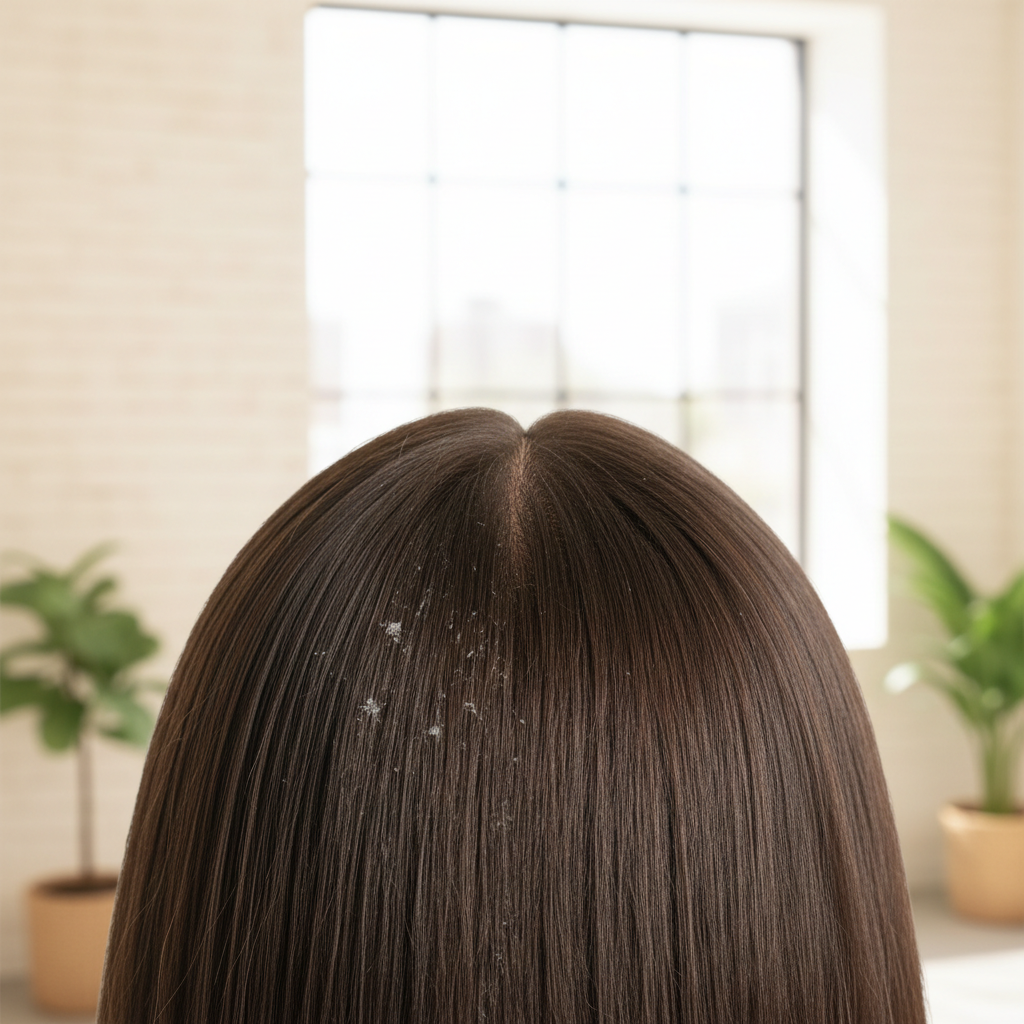
Quick answer: Dandruff and Flaking Scalp both involve shedding visible skin cells, but they are not always the same condition. True dandruff is primarily caused by an overgrowth of a naturally occurring yeast on the scalp, often leading to oily, yellowish flakes. In contrast, other forms of flaking scalp can be due to dryness, product buildup, or irritation, typically resulting in smaller, drier white flakes. Identifying the specific cause is key to successful management, as treatments differ significantly.
Key takeaways
- Dandruff is largely linked to the Malassezia globosa yeast and excess sebum, leading to larger, often yellowish, oily flakes.
- Flaking scalp can be a broader term, encompassing dandruff, but also includes flaking from dry skin, product buildup, or contact dermatitis, typically showing smaller, drier, white flakes.
- Symptoms like itching and irritation are common to both, but true dandruff often presents with more inflammation.
- Effective management depends on accurately identifying the underlying cause, guiding the choice between antifungal treatments or moisturising and clarifying routines.
- Persistent or severe symptoms warrant professional advice to rule out other scalp conditions.
Dandruff and Flaking Scalp: what the evidence shows
Dandruff, clinically known as Pityriasis capitis, is a common, non-contagious scalp condition characterised by excessive shedding of dead skin cells. While often grouped with general flaking, true dandruff is primarily driven by an immune response to the overgrowth of Malassezia globosa, a yeast-like fungus naturally present on the scalp. This overgrowth is particularly common in areas rich in sebaceous glands, which produce sebum, the scalp's natural oil.
When Malassezia populations increase significantly, it triggers an accelerated turnover of epidermal cells on the scalp. Instead of individual cells shedding unnoticed, they clump together with sebum, forming the visible, often yellowish or white flakes associated with dandruff. Studies indicate that up to 50% of the adult population experiences dandruff at some point, with peak incidence often occurring in young to middle adulthood.
Flaking scalp, however, is a broader description. It refers to any condition where visible skin cells shed from the scalp. This can include true dandruff, but it also encompasses other causes like dry scalp, product buildup, or contact dermatitis. Understanding the distinction is vital because the treatment approach varies based on the underlying reason for the flaking.
The mechanism behind dandruff
The human scalp is a complex ecosystem. Malassezia globosa consumes triglycerides (fats) in sebum, releasing oleic acid as a byproduct. For individuals sensitive to oleic acid, this irritant penetrates the skin's barrier, causing an inflammatory response. This inflammation leads to an increased rate of skin cell production and shedding, resulting in the characteristic flakes, itching, and sometimes redness. Hormonal fluctuations, stress, infrequent hair washing, and certain neurological conditions can influence sebum production and the scalp's immune response, potentially exacerbating dandruff.
Signs and symptoms to look for
Recognising the specific signs can help distinguish between true dandruff and other forms of flaking scalp:
- Visible Flakes: With dandruff, flakes tend to be larger, oilier, and often yellowish, frequently sticking to hair strands and the scalp. Flakes from a dry scalp are usually smaller, white, and powdery, falling off easily.
- Itching: Itching is a hallmark of both, but with dandruff, it can be intense and persistent, often accompanied by a burning sensation.
- Scalp Sensation: Dandruff might make the scalp feel oily or greasy, sometimes with red, inflamed patches. A dry flaking scalp typically feels tight, dry, and sometimes a little irritated, but rarely red or inflamed.
- Hair Appearance: Hair associated with dandruff may appear greasy or dull. Hair with a dry flaking scalp often looks dry, dull, and can feel brittle.
What the evidence does not clearly show
While stress and diet are often cited as contributors to dandruff, direct, controlled research conclusively linking specific dietary interventions or stress reduction techniques to a complete cure for dandruff is mixed. Stress can indirectly impact scalp health by influencing hormonal balance and immune responses, potentially worsening existing dandruff, but it's not a direct cause. Similarly, while a healthy diet supports overall skin health, there is currently insufficient evidence to conclude that specific foods directly cause or cure dandruff.
Dandruff vs. Flaking Scalp: Key Differences
Understanding these distinctions is crucial for selecting the correct management strategy.
| Feature | Dandruff (Pityriasis capitis) | Flaking Scalp (Dry Scalp, Product Buildup) |
|---|---|---|
| Primary Cause | Overgrowth of Malassezia globosa yeast; excess sebum | Lack of moisture; environmental factors (cold, dry air); product irritation/buildup |
| Flake Appearance | Oily, yellowish-white, larger flakes; often stick to hair/scalp | Dry, white, small, powdery flakes; easily fall off hair/scalp |
| Scalp Sensation | Itchy, sometimes oily, may have redness/irritation | Itchy, tight, dry; rarely accompanied by redness |
| Hair Appearance | Hair may appear greasy or dull | Hair may appear dry and brittle |
| Response to Antifungals | Typically improves significantly | No improvement, may worsen if drying ingredients are used |
What you can do to manage Dandruff and Flaking Scalp
Effective management for Dandruff and Flaking Scalp relies on addressing the root cause.
For Dandruff (Malassezia-related flaking)
Antifungal ingredients are key. Shampoos containing zinc pyrithione or selenium sulfide help to reduce Malassezia populations. Ketoconazole is another effective broad-spectrum antifungal. Salicylic acid can help soften and shed existing scales. Use these shampoos as directed, typically 2 to 3 times a week initially, and then less frequently for maintenance. Regular and thorough washing is important to prevent sebum and dead skin cell buildup, which can feed the yeast.
For Flaking Scalp (dryness or product buildup related)
If dryness is the primary cause, focus on hydration. Choose moisturising shampoos and conditioners, avoiding very hot water which can strip natural oils. Ingredients like hyaluronic acid or glycerine can help attract and retain moisture. For product buildup, a clarifying wash can be very effective. This involves using a shampoo specifically designed to remove residues, often containing chelating agents for mineral buildup (see: How to Do a Clarifying Wash: A Guide to Deep Hair Cleansing). After clarifying, ensure thorough rinsing.
For both conditions, gentle scalp massage during washing can help lift flakes and stimulate circulation without irritating the scalp. Avoid harsh scrubbing, which can exacerbate irritation. Consider exploring Scalp Exfoliation: Uncovering the Evidence for a Healthier Scalp for guidance on safe exfoliation practices.
When the cause may be something else
Sometimes, what appears to be common Dandruff and Flaking Scalp can be a symptom of a more complex scalp condition. Other possibilities include:
- Seborrheic Dermatitis: A more severe inflammatory skin condition that causes red, greasy patches covered with yellow or white scales, often extending beyond the scalp to the face or chest. This is related to Malassezia overgrowth but is a distinct, more intense form.
- Psoriasis: An autoimmune condition causing thick, silvery scales on red patches. Scalp psoriasis can be very itchy and sometimes painful, and the scales are typically well-defined and thicker than dandruff flakes.
- Eczema (Atopic Dermatitis): Can affect the scalp, causing dry, itchy, inflamed skin. The flaking is usually less greasy and more generalised than dandruff.
- Contact Dermatitis: An allergic reaction or irritation to a product ingredient, leading to redness, itching, and flaking. This often resolves once the irritating product is identified and avoided.
When to get professional advice
If your symptoms of Dandruff and Flaking Scalp are severe, persistent despite trying appropriate over-the-counter treatments, or if you experience significant redness, pain, or hair loss, it's advisable to consult a doctor or dermatologist. They can accurately diagnose the underlying condition, rule out other skin disorders, and recommend prescription-strength treatments if necessary. Early diagnosis can prevent discomfort and potential complications.
Frequently asked questions about Dandruff and Flaking Scalp
Can stress cause Dandruff and Flaking Scalp?
While stress doesn't directly cause dandruff, it can certainly exacerbate it. High stress levels can affect your immune system and hormone balance, potentially leading to increased sebum production and a more pronounced inflammatory response to Malassezia. Managing stress through relaxation techniques or regular exercise may help improve overall scalp health and reduce the severity of existing Dandruff and Flaking Scalp.
Is it possible to have both an oily and a dry flaking scalp?
Yes, it is possible. You might have an oily scalp due to overactive sebaceous glands, which can contribute to Malassezia overgrowth and dandruff. Simultaneously, the ends of your hair or other parts of your body could be dry. Additionally, harsh shampoos or over-washing to combat oiliness can strip the scalp's moisture barrier, leading to dryness and flaking even on an otherwise oily scalp. Careful product selection is key.
How often should I wash my hair if I have Dandruff and Flaking Scalp?
For dandruff, regular washing with an appropriate antifungal shampoo is often recommended, typically 2 to 3 times per week initially, then less often for maintenance. Infrequent washing can allow sebum and Malassezia to build up. For a dry, flaking scalp, washing less frequently (every 2 to 3 days) with a gentle, moisturising shampoo can help preserve natural oils. Always rinse thoroughly to prevent product buildup.
Do hair products make Dandruff and Flaking Scalp worse?
Yes, some hair products can worsen Dandruff and Flaking Scalp. Heavy styling products can lead to product buildup, irritating the scalp and creating a favourable environment for Malassezia. Ingredients like alcohol or strong fragrances can also dry out or irritate sensitive scalps, leading to flaking or contact dermatitis. Always check ingredient lists and consider patch testing new products if you have a sensitive scalp.
Can hard water contribute to a flaking scalp?
Hard water can indeed contribute to a flaking scalp, particularly if the flaking is due to dryness or product buildup. The minerals in hard water, like calcium and magnesium, can accumulate on the scalp and hair. This residue can make the scalp feel dry, tight, and itchy, and can also interfere with proper cleansing, leaving behind shampoo or conditioner residue that irritates the scalp, leading to flaking. See Hard Water and Hair Damage: Understanding the Impact on Your Hair.
Finding support for Dandruff and Flaking Scalp
Living with Dandruff and Flaking Scalp can be uncomfortable, but with a clear understanding of its causes and appropriate management, relief is often achievable. By distinguishing between true dandruff and other forms of flaking, you can choose targeted treatments that address the specific needs of your scalp. Remember, consistent care and, when necessary, professional guidance are your best tools for maintaining a healthy, flake-free scalp environment.
Find these ingredients in Watermans products
Watermans products are formulated with ingredients that support a healthy scalp environment. For example, some Watermans products contain zinc pyrithione, an active ingredient recognised for its antifungal properties, which can be beneficial in managing Malassezia-related Dandruff and Flaking Scalp. You will also find ingredients that help to cleanse the scalp effectively and support moisture balance, which can be helpful for general scalp flaking. Check individual product descriptions for specific ingredients tailored to your scalp's needs.
Sources and references
- American Academy of Dermatology Association. Dandruff: Diagnosis and Treatment. AAD.org.
- Dermatology Times. A practical guide to the diagnosis and treatment of dandruff and seborrheic dermatitis. 2015.
- NHS. Dandruff. NHS.uk.
- Piérard-Franchimont, C., et al. Nizoral shampoo: a review of its use in the treatment of dandruff. International Journal of Cosmetic Science, 2005.
- Reid, A., et al. Dandruff: The latest in pathophysiology and management. British Journal of Dermatology, 2017.
Find these ingredients in Watermans products
- Zinc: you will find this ingredient in our Hair Vitamins.
- Oleic Acid: you will find this ingredient in our Camellia & Black Castor Hair & Body Oil.