Hair Washing Best Practices
3 min read ·
Mastering proper hair washing techniques is crucial for maintaining scalp health, preventing damage, and optimising the effectiveness of hair care products.
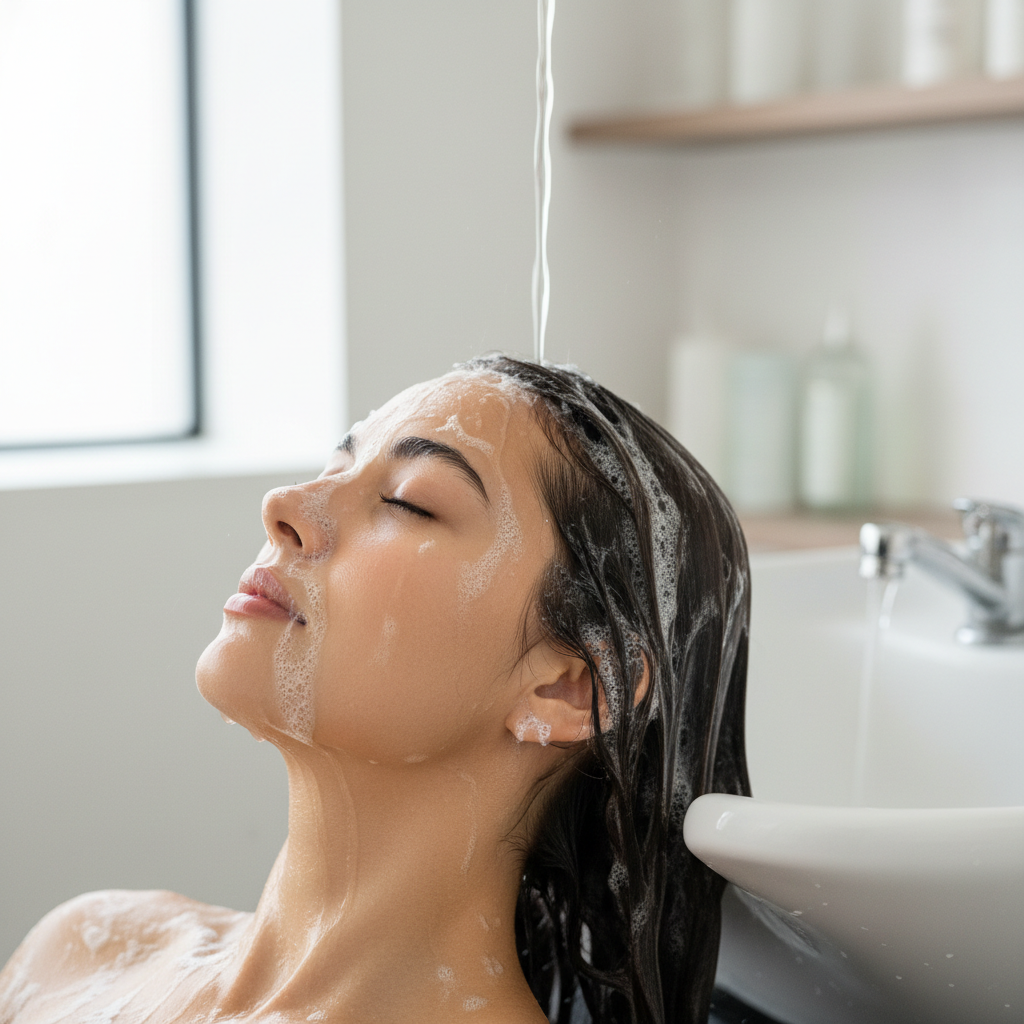
Understanding Your Hair and Scalp Type
The foundation of effective hair washing lies in understanding your unique hair and scalp. These two elements can have different needs. For example, you might have an oily scalp but dry hair ends.
Scalp Types
- Oily Scalp: Characterised by excess sebum production, leading to hair that looks greasy quickly. This often requires more frequent washing.
- Dry Scalp: May feel tight, itchy, and flaky due to insufficient sebum or moisture. Requires gentle washing and hydrating products.
- Normal Scalp: Well-balanced, with no excessive oiliness or dryness. Allows for more flexibility in washing frequency.
- Sensitive Scalp: Prone to irritation, redness, or itching from certain ingredients. Requires hypoallergenic and mild formulations.
Hair Types
- Fine Hair: Has a small diameter, prone to oiliness and lacking volume. Can be easily weighed down by heavy products.
- Medium Hair: The most common type, versatile and generally holds styles well.
- Thick Hair: Has a large diameter, often prone to dryness and can take longer to dry.
- Oily Hair: Appears greasy quickly, often due to an oily scalp. Requires clarifying and balancing shampoos.
- Dry Hair: Lacks moisture, appears dull, brittle, and is prone to breakage.
- Combination Hair: Oily at the roots, dry at the ends. Requires careful product selection to address both concerns.
Pre-Washing Preparations
Before wetting your hair, a few steps can enhance the washing process and its results.
Detangling
Thoroughly detangle dry hair using a wide-tooth comb or a detangling brush, starting from the ends and working your way up to the roots. Wet hair is more fragile and prone to breakage, so detangling beforehand minimises stress during washing.
Warm Water Rinse
Rinse your hair with lukewarm water for 1-2 minutes before applying shampoo. This helps to open the hair's cuticle, allowing for better penetration of the shampoo and easier removal of dirt and product build-up.
The Shampooing Process
Shampoo is designed to cleanse the scalp and hair, removing sebum, sweat, dead skin cells, and product residue.
Product Selection
Choose a shampoo formulated for your specific scalp and hair type. For example, a volumising shampoo for fine hair or a hydrating shampoo for dry hair. If you have scalp concerns, select a targeted treatment shampoo.
Application Technique
- Amount: Use a coin-sized amount of shampoo for short to medium hair, adjusting for longer or thicker hair. Too much shampoo can strip natural oils excessively.
- Lathering: Apply shampoo primarily to the scalp. Gently massage with your fingertips in circular motions for 30-60 seconds. Focus on cleansing the scalp, as this is where most oil and product build-up occurs. Avoid scrubbing vigorously, which can stimulate oil glands or irritate the scalp.
- Hair Lengths: Allow the shampoo to run down the lengths of your hair as you rinse. There's generally no need to vigorously scrub the hair strands themselves, as this can cause friction and damage, especially for long or fragile hair.
Rinsing Thoroughly
Rinse your hair and scalp thoroughly with lukewarm water until all traces of shampoo are gone. Residual shampoo can lead to dullness, scalp irritation, and product build-up. A good test is to run your fingers through your hair; it should feel