Damaged Hair Repair: The Complete Evidence-Based Guide
10 min read ·
Understand the science of Damaged Hair Repair: explore structural hair breakage, bond building, cuticle smoothing, and realistic methods to restore hair strength.
Quick answer: True Damaged Hair Repair is biologically impossible because hair fibre consists of non-living, keratinised cells that lack cellular machinery to regenerate. However, cosmetic and chemical repair is achievable: you can patch the cuticle, replenish lost lipids, and temporarily reconnect fractured chemical bonds within the cortex. Treatments containing hydrolysed proteins, bond multipliers, and conditioning lipids smooth the surface, restore tensile strength, and reduce breakage, but they require ongoing maintenance as daily weathering and washing wash them away.
Key takeaways
- Hair is dead tissue; once the fibre emerges past the scalp surface, it cannot biologically heal or regenerate itself.
- Chemical bleaching, alkaline relaxers, heat styling above 185°C, and mechanical friction cause distinct physical changes in the cuticle and cortex.
- Cosmetic bond builders and hydrolysed proteins temporarily cross-link or fill structural gaps, significantly reducing hair breakage.
- Porosity increases as cuticle scales lift or break off, causing hair to absorb water rapidly but lose moisture just as fast.
- The only permanent fix for severe structural weathering, such as split ends (trichoptilosis), is mechanical trimming.
Damaged Hair Repair: what the evidence shows
When cosmetic scientists evaluate Damaged Hair Repair, they measure changes in tensile strength, surface hydrophobicity, cuticular cohesion, and moisture retention. The hair shaft consists of an outer protective cuticle, a structural cortex rich in fibrous keratin and cross-linking disulphide bonds, and occasionally a central medulla.
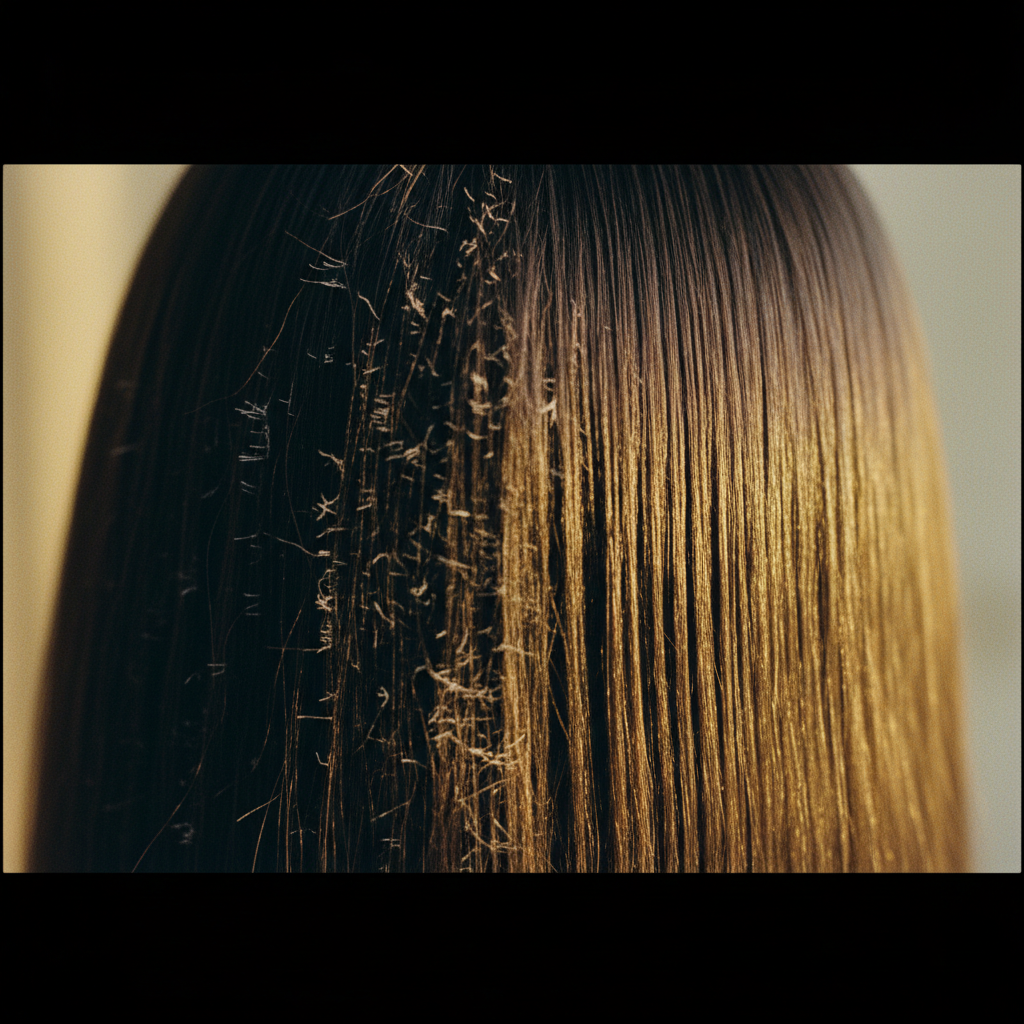
Cosmetic formulations cannot bring hair back to life, but peer-reviewed trichological literature shows they can alter its physical performance:
- Restoring the lipid barrier: Virgin hair possesses an integral outer lipid layer composed largely of 18-methyleicosanoic acid (18-MEA), which renders the cuticle hydrophobic (water-repelling). Alkaline chemical processes strip 18-MEA, leaving hair hydrophilic (water-absorbing), porous, and prone to friction. Cationic conditioning agents like behentrimonium chloride deposit electrostatically onto negatively charged damaged sites, temporarily restoring lubricity.
- Bond-building chemistry: True chemical damage involves the cleavage of disulphide (cystine) bonds into cysteic acid residues. Specific low-molecular-weight active ingredients penetrate into the cortex to bridge broken bonds or create ionic artificial cross-links, improving wet combability and raising the force required to break the fibre.
- Protein patching: Hydrolysed keratin, wheat, and silk proteins (with molecular weights between 500 and 2,000 Daltons) penetrate slightly beneath loose cuticle scales, filling microscopic voids and coating the shaft to redistribute mechanical stress.
What the evidence does not show
Marketing claims frequently overstate what hair products can accomplish. The scientific record is clear about several distinct limitations:
- No permanent cellular regeneration: No serum, oil, or salon mask can permanently reverse severe structural fragmentation. Hair has no vascular supply or cellular DNA to direct tissue healing.
- Split ends cannot be permanently mended: Products marketed as split-end menders use synthetic polymers or polyelectrolyte complexes to glue split strands together. These bonds break down quickly under mechanical combing or subsequent washing.
- Nutritional supplements do not mend existing lengths: Taking biotin, zinc, or collagen supplements will not repair hair that has already emerged from the scalp. Nutrition influences only newly forming fibres inside the active hair follicle.
- Breakage is not follicular hair loss: Snapping of brittle strands along the shaft is structural failure (breakage). It must not be confused with alopecia or follicular shedding (telogen effluvium), which originate inside the scalp tissue.
| Type of Hair Damage | Primary Cause | Structural Impact | Effective Corrective Approach |
|---|---|---|---|
| Chemical | Bleaching, permanent dye, chemical relaxers | Cleaved disulphide bonds, oxidized 18-MEA lipid layer, high porosity | Bond-repairing complexes, acidic pH balancers, protein masks |
| Thermal | Flat irons and curling wands above 185°C | Denatured keratin proteins, localized cuticle melting, moisture voids | Heat protectants (silicones/polymers), lower tool heat, leave-in conditioners |
| Mechanical | Aggressive brushing, tight elastics, backcombing | Lifted, chipped, or missing cuticle scales, trichoptilosis (split ends) | Micro-trims, wide-tooth combs, slip-enhancing detanglers |
| Environmental | UV radiation, chlorine, hard mineral deposits | Tryptophan photo-oxidation, colour fading, brittle copper/calcium crusts | Chelating shampoos, UV filters, antioxidant leave-ins |
The mechanisms of hair fibre breakdown
Hair damage progresses from the outside in. In healthy virgin hair, the cuticle consists of 6 to 10 overlapping cellular layers resembling roof shingles. Each cuticle cell is coated with the hydrophobic 18-MEA lipid envelope, followed by the highly cross-linked epicuticle, exocuticle, and endocuticle.
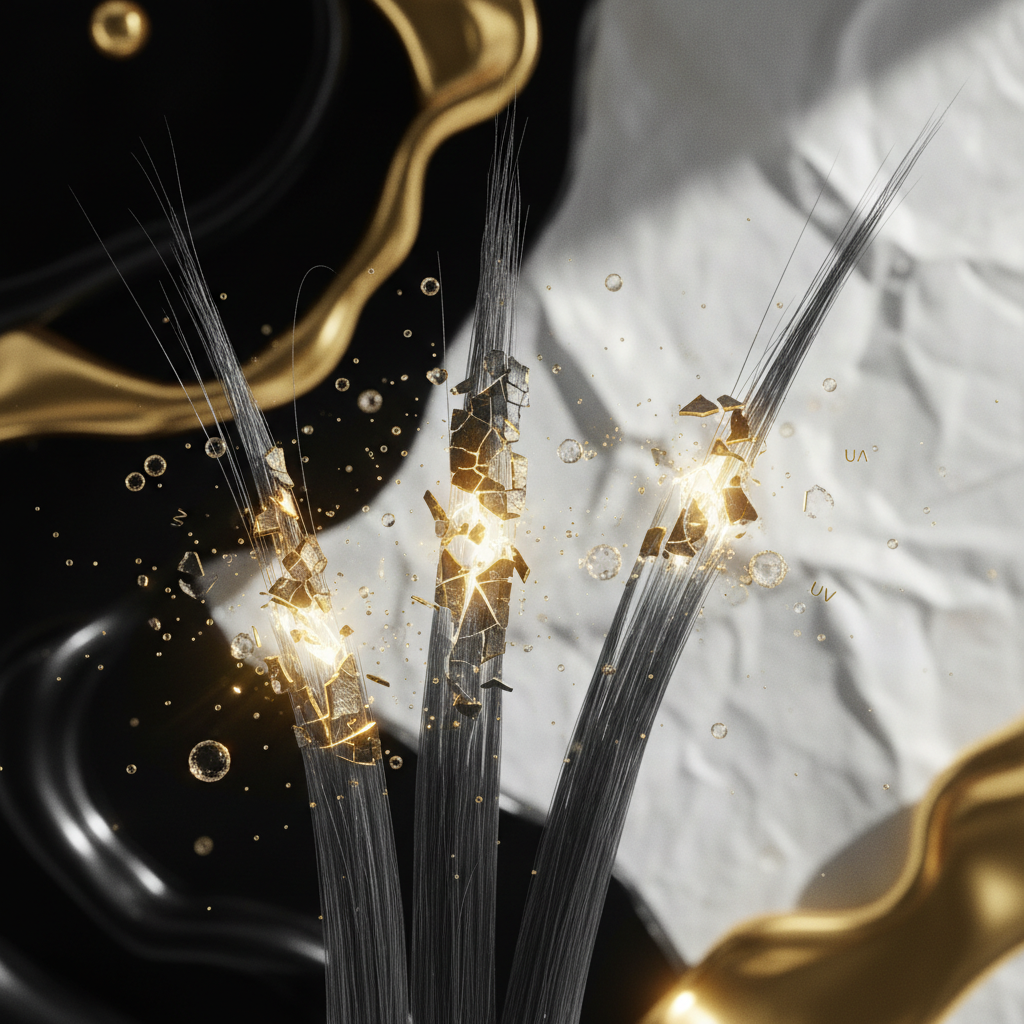
When exposed to alkaline chemical processes like bleaching (often at pH 9.0 to 11.0), the cuticle swells and opens. Hydrogen peroxide oxidises natural melanin while simultaneously cleaving the critical disulphide bonds that join neighbouring keratin chains. This leaves behind high levels of cysteic acid, generating negative electrostatic charges along the fibre.
Thermal tools present a different physical insult. Heat above 185°C alters the helical structure of alpha-keratin, denaturing it into disordered beta-keratin. If water trapped inside the cortex boils rapidly, it creates microscopic steam cavities (bubble hair), causing instantaneous brittleness and snapping.
Signs that your hair fibre is compromised
Detecting the exact nature of hair damage helps you select the correct corrective strategy:
- Loss of elasticity: Healthy wet hair stretches roughly 30% of its original length before returning without breaking. Highly damaged fibre snaps almost immediately under slight tension or stretches out like chewing gum without bouncing back.
- Excessive wet tangling: When the cuticle lifts and loses its 18-MEA lipid shield, wet hair fibres produce severe friction when they touch, creating dense, bird's-nest tangles.
- Rapid drying and water absorption: Damaged hair gets soaked immediately when wet because it lacks a water-repellent coating, yet dries unusually fast because its exposed cortex cannot regulate internal moisture.
- Mid-shaft snapping: Small fragments of hair on your shoulders, pillowcase, or bathroom sink that lack a white follicular bulb at the end indicate breakage rather than shedding.
- Dull, matte appearance: Light reflects evenly off smooth, flat cuticle scales. When cuticles are chipped, lifted, or missing, light scatters randomly, causing a dull appearance.
Practical steps for repairing damaged hair fibres
While you cannot resurrect dead protein, you can dramatically improve the strength, tactile feel, and manageability of damaged lengths by adopting a targeted routine.
1. Rebalance hair pH
Hair naturally thrives at an acidic isoelectric point of roughly pH 3.67, while the scalp sits between pH 4.5 and 5.5. Alkaline shampoos expand the cuticle, increasing friction. Switching to an acidic shampoo (pH 4.5 to 5.5) helps contract the cuticle scales, keeping the cortex sealed against environmental stressors.
2. Alternate protein and moisture
Overloading brittle hair with pure protein treatments can make it feel stiff, whereas overloading it with heavy butters without structural support leads to limp, fragile strands. Use hydrolysed protein products once every 2 to 4 washes, complemented by emollient condition treatments containing fatty alcohols (cetyl and stearyl alcohol) to restore suppleness.
3. Mitigate thermal stress
Thermal protectants containing dimethicone, amodimethicone, or copolymer films reduce thermal conductivity and slow the rate of internal water boiling. Keep hot styling tools under 185°C, and ensure hair is 100% dry before using flat or curling irons to prevent steam-induced fibre fracturing.
4. Reduce wet mechanical manipulation
Hair is at its weakest when saturated with water, as temporary hydrogen bonds are disrupted. Never aggressively scrub hair with a terrycloth towel; instead, gently squeeze water out using a microfibre wrap or soft cotton shirt. Detangle with a wide-tooth comb or flexible wet brush, starting from the ends and moving gradually up toward the roots.
5. Schedule regular micro-trims
Once trichoptilosis (a split end) begins, mechanical friction will continue tearing the hair shaft upward like a split seam in fabric. Removing 6 to 12 millimetres of the ends every 8 to 12 weeks stops the split before it compromises sound lengths higher up the shaft.
The Watermans approach to hair maintenance
Taking care of the hair fibre requires balance: the hair shaft demands structural protection, while the scalp requires an optimal environment for growing healthy new fibres. The Watermans collection addresses both sides of this equation.
Formulated with hydrolysed lupin protein, biotin, rosemary, and caffeine, Watermans GrowMe Shampoo and ConditionMe Conditioner deliver vital cosmetic conditioning directly to stressed strands while maintaining an optimal pH balance. ConditionMe incorporates cholesterol and conditioning agents that smooth lifted cuticles, reducing the combing resistance that causes everyday breakage. By keeping your current lengths conditioned and resilient, you give newly emerging hair the foundation it needs to reach its natural potential.
When the cause may be something else
It is vital to differentiate fibre breakage from actual scalp shedding or medical hair loss:
- Telogen effluvium: If you notice hundreds of hairs shedding daily with a distinct white bulb on the root, the issue is follicular shedding triggered by systemic factors (such as illness, hormonal shifts, nutritional deficiencies, or high stress), not mechanical or chemical fibre damage.
- Pattern hair loss (androgenetic alopecia): Thinning characterized by a receding hairline, widening parting, or thinning at the crown involves follicular miniaturisation driven by genetics and dihydrotestosterone (DHT). Cosmetic hair repair products will not reverse pattern thinning.
- Traction alopecia: Hair breakage along the front hairline from tight ponytails, braids, or extensions can look like chemical damage, but it is caused by constant physical tension on the follicle.
If you observe patchy bald spots, scalp inflammation, redness, intense itching, or rapid loss of volume, seek evaluation from a board-certified dermatologist or qualified trichologist.
Frequently asked questions about Damaged Hair Repair
Can split ends be permanently sealed back together?
No. Split ends cannot be permanently repaired. Certain products use charged polymers to glue the split together temporarily, which smooths the hair until your next wash. However, the structural integrity of the fibre is gone, and the only permanent resolution is to trim away the split.
How long does Damaged Hair Repair take to show results?
Cosmetic Damaged Hair Repair yields visible improvements immediately. Conditioners, silicone films, and bond-building treatments smooth the cuticle and reduce friction on the first application. However, permanent physical recovery of your hair as a whole depends on fresh growth from the scalp, which typically emerges at roughly 1 to 1.25 centimetres per month.
Is hair breakage the same as hair loss?
No. Hair breakage happens when the dead hair shaft snaps mid-way along its length due to chemical, thermal, or mechanical damage. Hair loss or shedding occurs at the follicle level inside the scalp, where the root releases the entire strand, usually identifiable by a tiny white bulb on the end.
Can coconut oil or olive oil repair severe chemical damage?
Natural oils cannot rebuild the internal disulphide bonds broken during bleaching or relaxing. Coconut oil can penetrate the hair fibre to reduce protein loss during washing because of its low molecular weight and straight-chain fatty acids, but it acts as a protective emollient, not a bond-building or structural repair agent.
Does cutting your hair make it grow back thicker?
No. Trimming hair has no biological impact on the follicle beneath the scalp, which controls the diameter and growth rate of the hair. Micro-trims simply remove split and frayed ends, which stops breakage and allows the hair to preserve its natural density as it grows longer.
A realistic perspective on Damaged Hair Repair
True, long-term Damaged Hair Repair is about strategic preservation rather than magical reversal. Because your hair fibre cannot heal itself, every chemical, thermal, and mechanical action extracts a physical toll on its structural matrix. By protecting existing bonds, lubricating the outer cuticle with lipid-mimicking conditioners, minimising high heat, and regularly trimming compromised tips, you can restore strength and manageability to damaged hair while letting healthy, resilient growth take its place.
Sources and references
- Robbins, C. R. (2012). Chemical and Physical Behavior of Human Hair (5th ed.). Springer-Verlag.
- Swift, J. A. (1999). The mechanics of fracture of human hair. International Journal of Cosmetic Science, 21(4), 227-239.
- Sinclair, R. D. (2007). Healthy hair: what is it? Journal of Investigative Dermatology Symposium Proceedings, 12(2), 2-5.
- Cruz, C. F., Fernandes, M. M., Gomes, A. C., & Cavaco-Paulo, A. (2016). Keratins and hair damage: A review. International Journal of Molecular Sciences, 17(12), 2068.
- Dawber, R. (1996). Hair: its structure and response to cosmetic preparations. Clinics in Dermatology, 14(1), 105-112.