Cuticle Porosity and Hair Health: The Definitive Trichological Guide
9 min read ·
Discover the science of cuticle porosity and hair health. Learn how cuticle architecture affects moisture, breakage, and elasticity, with practical care routines.
Quick answer: Understanding cuticle porosity and hair health allows you to manage moisture balance, prevent structural breakage, and select appropriate cosmetic formulations. Porosity refers to how easily water, lipids, and chemicals pass through the outer cuticle layer into the inner cortex. While low porosity resists moisture absorption, high porosity absorbs quickly but loses it just as fast. The main limitation is that hair is non-living keratin; you cannot permanently repair raised or missing cuticles, only temporarily patch them using targeted conditioning agents.
Key takeaways
- Cuticle porosity measures how readily the outer scale-like layers of keratin allow moisture and chemicals to enter and exit the hair shaft.
- Low-porosity hair features tightly overlapping, flat cuticle scales that resist water penetration and product absorption.
- High-porosity hair has lifted, chipped, or missing cuticles, causing rapid moisture uptake accompanied by equally rapid moisture loss and mechanical fragility.
- High porosity is often acquired through chemical processing (bleaching, relaxing), thermal styling, and ultraviolet radiation, though genetic curl patterns also affect baseline porosity.
- Cosmetic treatments cannot regenerate dead keratin; instead, they utilise hydrolysed proteins, film-forming humectants, and lipids to seal the cuticle temporarily.
- Differentiating between high-porosity breakage and follicular hair loss is critical for selecting the correct clinical or cosmetic intervention.
Cuticle Porosity and Hair Health: what the evidence shows
Scientific research into cuticle porosity and hair health shows that the condition of the outermost protective layer dictates the physical integrity of the entire fibre. Human hair consists of an inner cortex protected by an outer cuticle composed of 5 to 10 overlapping layers of flattened, keratinised cells. In healthy, virgin hair, these scales lie flat, secured by the cell membrane complex (CMC) and a lipid layer rich in 18-methyleicosanoic acid (18-MEA).
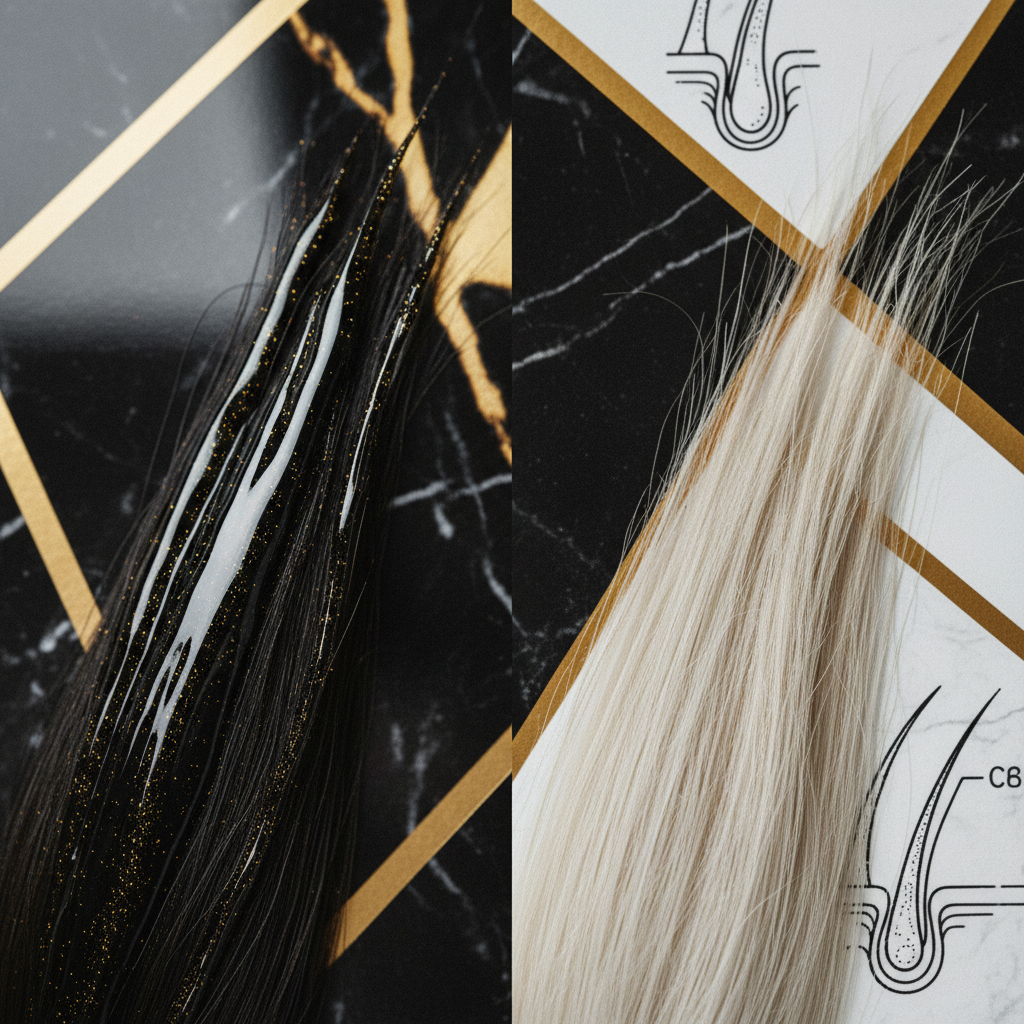
When this lipid barrier remains intact, hair exhibits normal to low porosity. It repels excess water while retaining vital internal hydration. However, scanning electron microscopy (SEM) studies demonstrate that physical friction, heat tools above 185°C, and alkaline chemical services (such as bleaching or permanent waving at pH 9.0 to 11.0) strip the 18-MEA layer. This process lifts and erodes the cuticle scales. As porosity increases, the cortex becomes vulnerable to environmental stressors, leading to protein loss, loss of tensile strength, and fibre breakage.
The scientific consensus clarifies that porosity exists on a spectrum. While genetics partially dictate the baseline alignment of your cuticle layers, daily care routines directly determine how quickly that porosity changes over time.
What the evidence does not show
The evidence does not show that cuticle porosity controls follicular activity or natural growth cycles. A common misconception conflates porous, snapping hair with medical hair loss conditions such as androgenetic alopecia or telogen effluvium. Porosity strictly governs hair fibre integrity along the shaft; it does not alter the dermal papilla or halt the biological production of new hair fibres beneath the scalp.
Furthermore, no clinical evidence supports the claim that cosmetic oils or deep-conditioning masks can permanently "heal" or rebuild damaged cuticle architecture. Hair fibre is biologically dead tissue. While certain small-chain hydrolysed proteins (with molecular weights between 500 and 2,000 Daltons) can temporarily penetrate the cortex and fill structural voids, these bonds wash away over time. Claims that a single serum can permanently reverse high porosity contradict fundamental trichological science.
The biological mechanism of hair porosity
Hair porosity operates according to the biochemical architecture of the cuticle envelope:
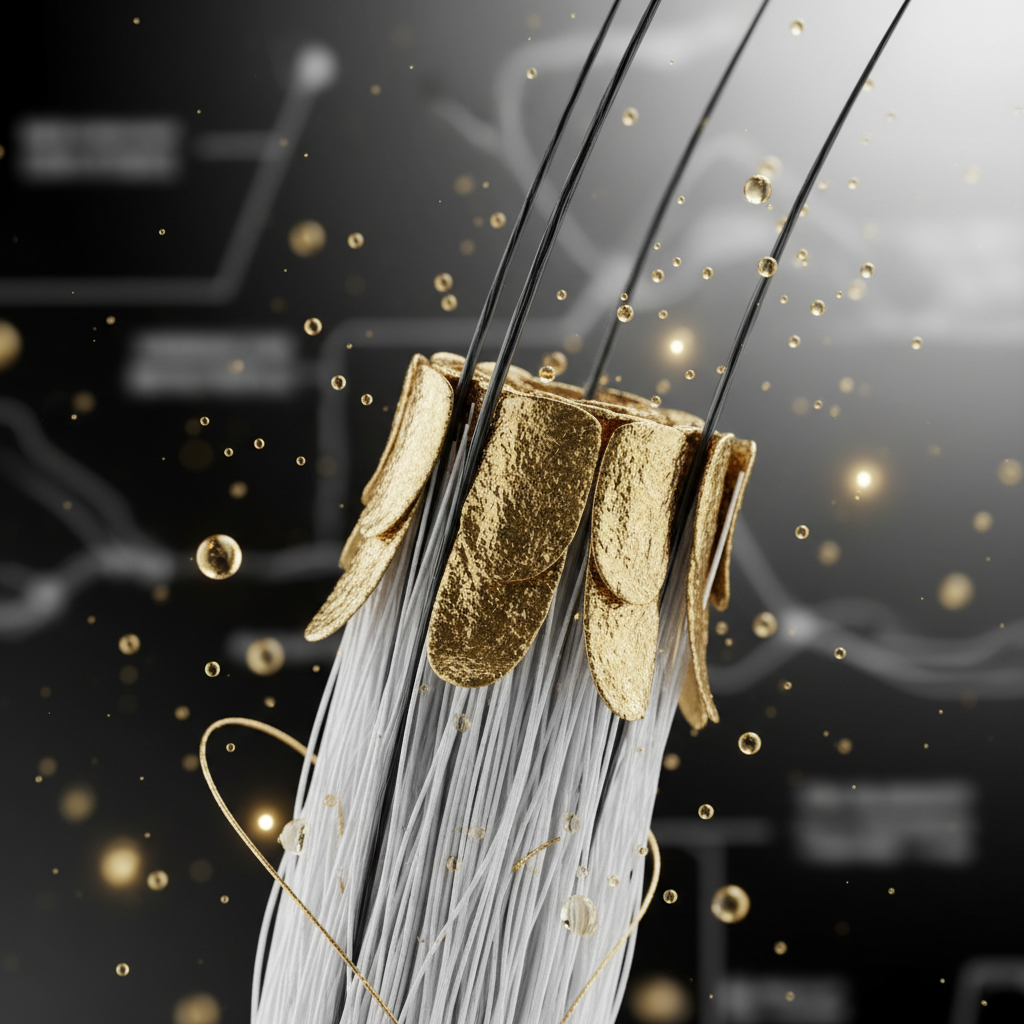
[ Outer Epicuticle + 18-MEA Lipid Layer ] -> Hydrophobic barrier
 ↓
[ Exocuticle ] -> High cystine content, cross-linked keratin
 ↓
[ Endocuticle ] -> Low cystine content, highly swellable in water
 ↓
[ Cell Membrane Complex (CMC) ] -> Intercellular cement
When you submerge hair in water, the endocuticle swells. In low-porosity hair, the tightly sealed exocuticle limits this expansion, keeping the fibre mechanically stable. In high-porosity hair, damaged or missing outer scales allow excessive water to flood the cortex rapidly, a state known as hygral fatigue. Repeated swelling and contracting weakens the internal keratin chains, eventually causing the shaft to snap under minimal tension.
Comparing hair porosity levels
The following table outlines how cuticle structure dictates daily fibre behaviour across different porosity categories:
| Feature | Low Porosity | Medium (Normal) Porosity | High Porosity |
|---|---|---|---|
| Cuticle Architecture | Tightly bound, flat, intact 18-MEA layer | Uniform, slightly raised edges | Lifted, fractured, or missing scales |
| Water Absorption Rate | Very slow; water beads on surface | Moderate; absorbs evenly | Very fast; absorbs water instantly |
| Drying Time | Extended; water remains trapped | Moderate, predictable drying | Dries rapidly or stays damp due to damaged core |
| Tangling & Friction | Low surface friction, smooth glide | Normal manageability | High friction, matte texture, snags easily |
| Product Tolerance | Prone to heavy product build-up | Balances oils and water-based lotions | Demands richer butters, lipids, and proteins |
| Breakage Risk | Low; high natural elasticity | Low; structurally sound | High; snaps easily when wet or brushed |
Signs of altered cuticle porosity to look for
Identifying where your hair falls on the porosity spectrum helps you diagnose whether your routine needs adjusting:
- Signs of low porosity: Products sit on top of the hair shaft rather than sinking in; washing takes a long time because water initially beads off; clearing clarifying shampoo is difficult; the hair feels stiff if overloaded with protein treatments.
- Signs of high porosity: Hair feels rough, dry, and velcro-like when you slide your fingers upwards from tip to root; wet hair stretches excessively before snapping without bouncing back; colour treatments fade rapidly within a few washes; frizzy halos form immediately in humid environments.
Stylists often talk about the "glass of water test", where a shed strand is placed in a bowl of water to see if it floats or sinks. Trichologists consider this test unreliable because surface tension, sebum residue, and product build-up can keep even damaged strands afloat. Direct tactile assessment, wet elasticity checks, and observing real absorption times provide far more accurate insights.
Practical steps to manage your porosity
Managing your cuticle architecture requires a routine tailored to whether your scales need opening or sealing:
Caring for low-porosity hair
- Incorporate mild heat during conditioning: Use a warm towel or steamer for 10 to 15 minutes. Mild heat gently lifts the resistant cuticle layers, allowing humectants to reach the cortex.
- Choose lightweight humectants: Opt for formulations containing glycerin, aloe vera, and panthenol over heavy plant butters.
- Clarify regularly: Use an amphoteric or anionic clarifying shampoo every 2 to 3 weeks to strip away residue that accumulates on the closed cuticle.
Caring for high-porosity hair
- Restore the acid mantle: Rinse with slightly acidic formulations (pH 4.5 to 5.5). Mild acidity contracts the keratin scales, helping them lie flatter against the shaft.
- Introduce hydrolysed proteins: Formulations with hydrolysed wheat, silk, or keratin fill in micro-cracks along the damaged fibre, temporarily reinforcing tensile strength.
- Seal with emollient lipids: Layer heavier plant oils or ceramides over leave-in conditioners to mimic the lost 18-MEA layer and slow down moisture evaporation.
- Minimise heat exposure: Keep thermal tools below 150°C and always apply heat protectants containing silicones or modern thermal polymers to reduce further cuticle loss.
When the cause may be something else
If you notice excessive shedding where hair drops out from the root (characterised by a visible white bulb at the end), your issue is not cuticle porosity. High porosity causes mid-shaft breakage, split ends, and thinning at the extremities of the hair, not follicular shedding.
Conditions such as iron deficiency anaemia, thyroid dysfunction, severe physiological stress, or hormonal changes trigger telogen effluvium, where follicles prematurely enter the resting phase. Similarly, patchy or patterned thinning indicates medical conditions requiring scalp-specific evaluation rather than cosmetic fibre management.
When to seek professional advice
Consult a registered trichologist or a dermatologist if you experience unexplained hair shedding, scalp soreness, persistent burning, scaling, or round patches of hair loss. These symptoms indicate physiological scalp disorders rather than cosmetic cuticle damage. If your hair breaks despite gentle handling and you have not used chemical treatments, a trichologist can carry out polarised light microscopy to rule out rare genetic structural defects like trichorrhexis nodosa.
Supporting fibre integrity with Watermans
Cosmetic maintenance plays an important role in preserving outer hair health. While it cannot alter genetic hair shape or reverse extreme chemical erosion, keeping the scalp balanced and supplying modern conditioning agents helps protect vulnerable fibres. Watermans designs formulations such as GrowMe Shampoo and ConditionMe Conditioner with a focus on overall hair and scalp wellness. ConditionMe contains hydrolysed lupin protein, cholesterol, and natural oils that coat the hair shaft, smoothing down roughened cuticles, reducing combing friction, and supporting fragile, high-porosity hair against daily mechanical wear.
Frequently asked questions about Cuticle Porosity and Hair Health
What is the primary connection between cuticle porosity and hair health?
The connection between cuticle porosity and hair health lies in the physical state of the cuticle scales. When the cuticle is smooth and intact, it retains moisture, resists environmental damage, and preserves tensile strength. Damaged, highly porous cuticles leave the cortex exposed, causing rapid dehydration, hygral fatigue, and widespread breakage.
Can you permanently change your hair's porosity?
No, you cannot permanently change hair porosity. The cuticle is non-living tissue, so lost or broken scales cannot regrow. You can chemically open low-porosity hair through alkaline processes, or temporarily smooth high-porosity hair using acidic rinses, hydrolysed proteins, and sealing emollients, but new growth will always emerge with your genetically determined baseline porosity.
Does high-porosity hair cause hair loss?
High-porosity hair causes hair breakage, not follicular hair loss. Breakage occurs along the hair shaft when fragile keratin fractures under tension. Hair loss happens within the follicle under the scalp surface due to genetics, hormones, or systemic health issues. While high porosity makes hair look thinner due to broken ends, it does not stop follicles from growing hair.
How often should high-porosity hair receive protein treatments?
High-porosity hair generally benefits from protein treatments every 2 to 4 weeks, depending on the extent of chemical or thermal damage. Hydrolysed proteins patch structural gaps in the cuticle. However, excessive use without balancing humectants and softening lipids can make the fibre rigid, leading to brittle breakage.
Does cold water close the hair cuticle?
The belief that cold water closes the cuticle is largely a myth. Cuticle scales respond to pH and physical chemistry rather than water temperature. Acidic products with a pH of 4.5 to 5.5 compact the cuticle layers, whereas alkaline water swells them. Cold water may reduce surface friction slightly, but it cannot mechanically force raised cuticles flat.
Healthy cuticles, resilient hair
Gaining a scientific understanding of cuticle porosity and hair health transforms how you approach your daily routine. Rather than fighting natural textures or wasting money on products that sit uselessly on the surface, identifying your porosity level lets you work with your hair's actual physical structure. Protecting your cuticles from excess heat, managing chemical exposure, and using balanced conditioning agents preserves the hair fibre, keeping it resilient, flexible, and strong.
Sources and references
- Journal of Cosmetic Science: "The effect of chemical treatments on the hair cuticle and inner structure", 2008.
- International Journal of Trichology: "Hair cosmetics: An overview", 2015.
- Robbins, C. R.: Chemical and Physical Behavior of Human Hair, 5th Edition, Springer, 2012.
- Dermatology Practical & Conceptual: "Diet and hair loss: effects of nutrient deficiency and supplement use", 2017.
- Society of Cosmetic Scientists (SCS): Cosmetic Science Educational Series: "Hair Structure and Care", 2020.
Find these ingredients in Watermans products
- Panthenol (Provitamin B5): you will find this ingredient in our Heat Protection Spray.
- Aloe Vera: you will find this ingredient in our Curly Hair Conditioner.