The Role of Cuticle Health in Hair Elasticity
8 min read ·
Learn how cuticle health directly governs hair elasticity. Discover the structural mechanisms behind fibre breakage and how to preserve natural stretch.
Quick answer: The Role of Cuticle Health in Hair Elasticity is primarily protective and regulatory rather than tensile. While the inner cortex generates hair's stretch and tensile strength through keratin protofibrils, an intact cuticle layer (composed of 5 to 10 overlapping scales) shields the cortex from environmental degradation, chemical erosion, and moisture fluctuations. If the cuticle degrades, the cortex loses internal hydration and structural integrity, causing elasticity to plummet and hair to snap.
Key takeaways
- The cortex provides the mechanical engine for stretching, but the cuticle acts as the vital protective barrier that preserves cortical moisture and architecture.
- Healthy, virgin hair can stretch by roughly 20 to 30 percent of its original length when dry, and up to 50 percent when wet, before snapping.
- Cuticle erosion strips away the 18-methyleicosanoic acid (18-MEA) lipid layer, raising the fibre's porosity and triggering rapid moisture loss.
- Swelling caused by alkaline water or high-pH chemicals lifts cuticle scales, making fibres prone to friction, micro-tears, and sudden breakage.
- Elasticity loss reflects mechanical or chemical shaft fatigue, which is entirely distinct from follicle-driven hair shedding or alopecia.
The Role of Cuticle Health in Hair Elasticity: what the evidence shows
Textile and cosmetic scientists have long documented how outer surface integrity governs interior fibre mechanics. Understanding The Role of Cuticle Health in Hair Elasticity requires looking at how the hair shaft distributes stress.
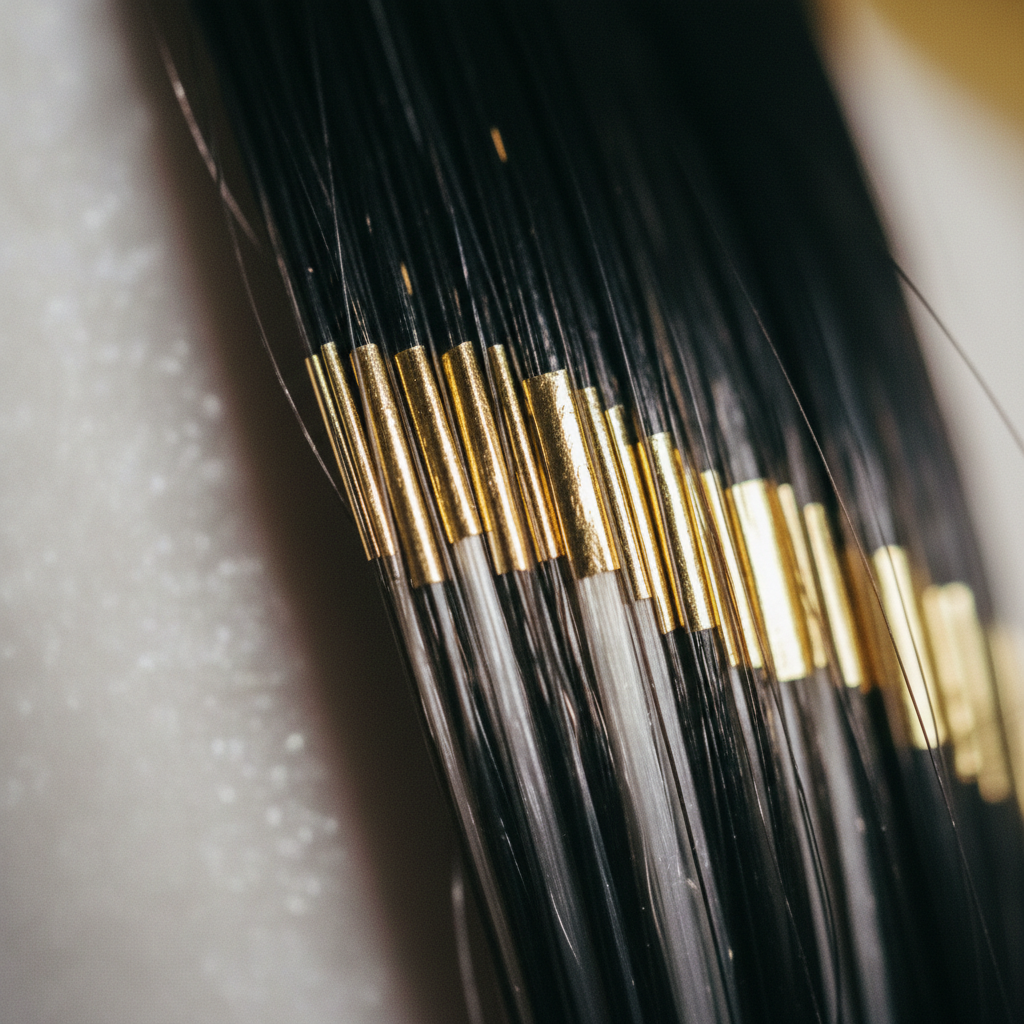
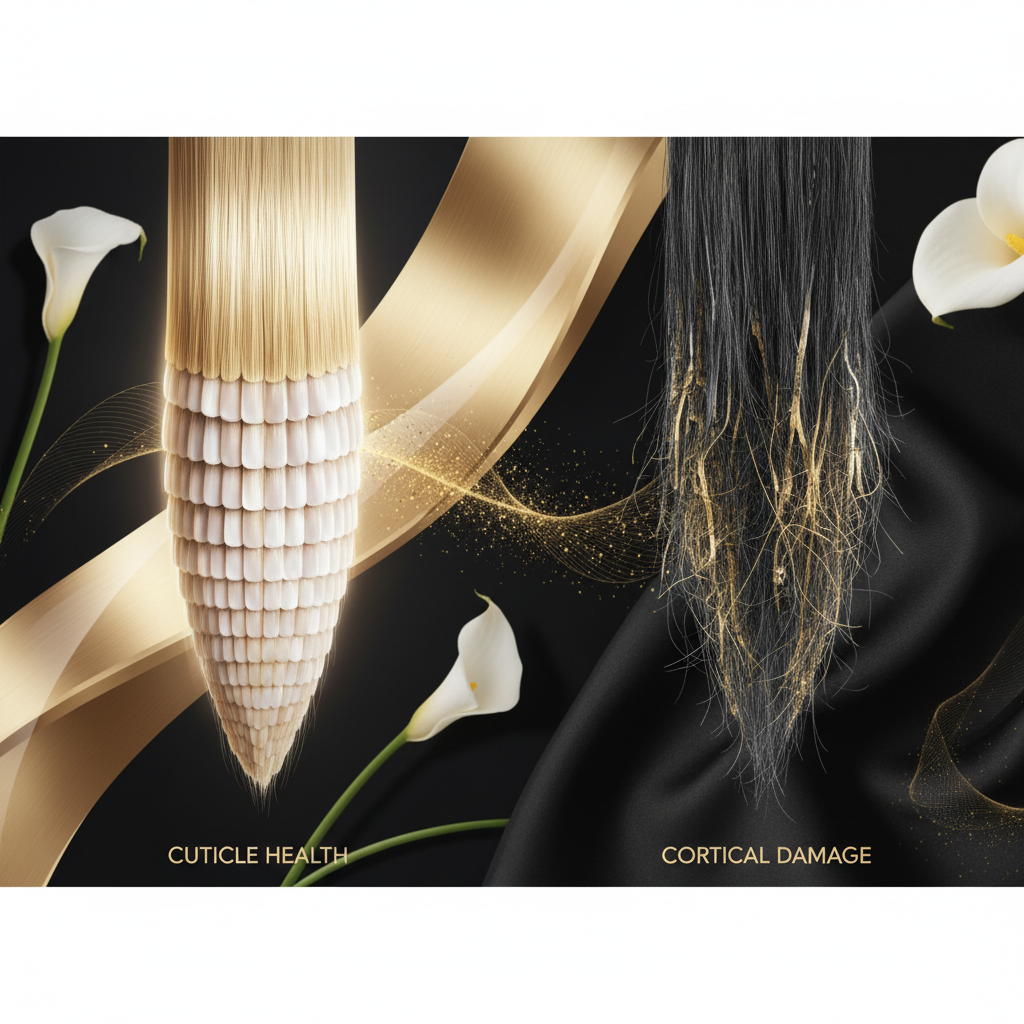
The cuticle consists of flattened, keratinised cells arranged like roof tiles, wrapping around the cortex in 5 to 10 layers. The cortex contains long chains of alpha-keratin coils linked by disulphide, salt, and hydrogen bonds. When you pull a single hair fibre, those cortical coils uncoil and stretch. However, clinical microscopy reveals that without a smooth, well-cemented cuticle, this stretching process quickly fails.
When cuticle scales are worn down by brushing, heat, or bleaching, micro-cracks form on the shaft. These cracks create stress concentration points. When tension is applied, force concentrates at the damaged surface rather than dispersing evenly along the cortex, snapping the strand prematurely. Thus, an intact cuticle ensures that pulling forces spread uniformly along the entire length of the hair fibre.
How the cuticle supports cortical mechanics
The cuticle protects internal elasticity through three primary mechanisms: moisture moderation, friction reduction, and chemical shielding.
1. Water regulation and moisture buffering
Hair elasticity relies heavily on transient hydrogen bonds within the cortex, which are profoundly influenced by water content. Normal hair retains roughly 10 to 15 percent water weight under temperate room conditions.
The outermost surface of the cuticle is coated with a naturally occurring fatty acid known as 18-methyleicosanoic acid (18-MEA). This creates an intensely hydrophobic (water-repelling) barrier. When this layer remains intact, the fibre absorbs atmospheric water slowly and evenly. When 18-MEA is lost, hair becomes hydrophilic. It absorbs water too rapidly in high humidity, swelling the shaft, buckling the cuticle, and destabilising the cortical hydrogen bonds necessary for elastic rebound.
2. Friction reduction along the fibre
Each healthy cuticle scale points downwards toward the hair tip. This orientation creates low friction during movement, detangling, and styling. When cuticle margins chip or lift, the surface friction coefficient rises dramatically. As strands brush against one another, lifted scales catch and drag. This external friction imposes sudden shear stress onto the inner core, forcing the cortex past its elastic yield point and causing severe breakage.
3. Preserving the cell membrane complex
Between each individual cuticle cell lies the cell membrane complex (CMC), a lipid-protein mortar containing ceramides and sterols. The CMC allows cuticle cells to slide slightly against one another when the hair bends. If severe heat or alkaline processing dissolves this intercellular lipid cement, the cuticle layers become brittle. Instead of flexing smoothly under tension, the hair shaft suffers transverse fractures that penetrate deep into the cortex.
Cuticle health versus cortical damage: a comparison
| Feature | Intact, healthy cuticle | Degraded or stripped cuticle |
|---|---|---|
| Surface charge | Predominantly neutral/hydrophobic | Highly negative/hydrophilic |
| Dry stretch capacity | 20 to 30 percent before fracture | Below 10 to 15 percent before snapping |
| Wet stretch behaviour | Stretches up to 50%, returns to baseline | Stretches irregularly, snaps easily |
| Surface friction | Low; fibres glide without snagging | High; severe tangling and mechanical drag |
| Porosity status | Low to medium; controlled water uptake | High; rapid swelling and water loss |
| Common causes of state | Low heat, gentle cleansing, pH-balanced care | Bleaching, relaxers, excessive heat, hard water |
What the evidence does not show
It is critical not to confuse fibre breakage with biological hair loss. A loss of elasticity caused by cuticle erosion will cause mid-shaft breakage, split ends, and thinning hair ends, but it does not cause the hair follicle to stop producing fibre. Cuticle erosion does not cause androgenetic alopecia, alopecia areata, or telogen effluvium.
Furthermore, evidence does not show that topical treatments can permanently re-fuse stripped cuticle cells back onto the shaft. Once a cuticle cell breaks off completely, that section of the cortex remains permanently exposed. Cosmetic treatments can deposit conditioning agents, seal lifted scales, and reduce surface friction, but they cannot truly regrow or biologically regenerate dead cuticle tissue.
Signs that cuticle erosion is compromising elasticity
You can identify declining cuticle integrity and elastic fatigue by observing several physical characteristics:
- The snap test failure: Taking a single damp hair and gently stretching it results in an immediate, brittle snap with zero spring-back, rather than a gradual 20 to 30 percent extension.
- Rough, raspy texture: Sliding your fingers from the hair tip upwards toward the root feels abrasive, catching against raised scale margins.
- Hyper-reactivity to humidity: Hair balloons in volume or instantly falls flat when stepping outdoors, indicating that the hydrophobic 18-MEA barrier is absent.
- Persistent fairy knots: Single-strand knots form frequently because chipped, lifted cuticles hook onto neighbouring strands during everyday motion.
- Dull, matte appearance: Light scatters irregularly off jagged, eroded scales instead of reflecting cleanly, robbing hair of shine.
Practical steps to protect cuticles and preserve elasticity
To maintain optimal elasticity, you must preserve the existing cuticle layers from mechanical and environmental wear.
- Respect the isoelectric point: Hair is most structurally resilient at a slightly acidic pH between 4.5 and 5.5. Cleansers and conditioners in this pH range neutralise negative surface charges, compact the cuticle scales, and reduce shaft swelling.
- Limit high-heat exposure: Blow dryers, straighteners, and curling wands operating above 180 degrees Celsius degrade cuticle lipids and evaporate structural moisture. Always apply thermal protectants, which use silicones, polyquaterniums, or plant oils to buffer heat transfer.
- Minimise wet mechanical strain: Hair cortex fibres are weakest when saturated with water, as cortical hydrogen bonds temporarily yield to water molecules. Detangle hair only when coated with a slippery conditioner, using a wide-tooth comb or flexible-bristle brush.
- Address water hardness: Water with high concentrations of dissolved calcium and magnesium (above 180 mg/L) deposits mineral salts on the cuticle, creating a stiff, abrasive layer that magnifies tensile friction. Using chelating treatments removes these mineral residues.
Supportive care with Watermans
When managing daily cuticle stress, product formulation matters. Watermans offers targeted, pH-balanced formulations that support the physical appearance and resilience of stressed hair shafts. Incorporating gentle, hydrolysed proteins and botanical extracts into your routine helps coat vulnerable cuticle gaps, reducing friction during styling and detangling. By safeguarding the external fibre from unnecessary abrasion, you minimise mechanical snap and help hair retain its natural bounce, body, and flexibility over time.
Frequently asked questions about The Role of Cuticle Health in Hair Elasticity
How does wet hair change The Role of Cuticle Health in Hair Elasticity?
Water disrupts hydrogen bonds inside the hair cortex, naturally allowing wet hair to stretch up to 50 percent of its length. However, water also forces the hair shaft to swell, pushing cuticle scales outward. If the cuticle is already damaged, this swelling exposes the fragile cortex directly to friction and tension, making wet hair exceptionally vulnerable to snapping during brushing or styling.
Can deep conditioning treatments rebuild a missing cuticle?
No. Once cuticle scales chip or break away, they cannot biologically regenerate or grow back. Deep conditioners, proteins, and silicones coat the exposed cortex, smooth down remaining loose edges, and artificially restore surface lubrication. This temporary cosmetic layer mimics an intact cuticle, reducing friction and preserving residual elasticity until washed away.
Does high porosity hair always suffer from low elasticity?
High porosity is almost always driven by raised, missing, or compromised cuticles. Because high-porosity hair cannot control water movement, it swings rapidly between swelling and extreme dryness. This instability exhausts the cortical keratin chains, leaving high-porosity hair noticeably prone to reduced elasticity, brittle snapping, and chronic mid-shaft breakage.
Is hair breakage from poor cuticle health the same as shedding?
No. Breakage occurs along the hair shaft when cuticle erosion leaves the cortex vulnerable to mechanical fracture. Shedding occurs at the scalp, where the follicle releases an entire hair bulb during the normal telogen cycle. Breakage shows short, ragged pieces without a white bulb, while shed hair has an intact root bulb.
Final perspectives on cuticle integrity
Understanding The Role of Cuticle Health in Hair Elasticity clarifies why outer fibre maintenance is essential for long-term hair retention. The internal cortex will always supply the raw tensile spring of hair, but the cuticle determines whether that internal strength survives daily handling. By shielding the fibre from harsh chemicals, avoiding high-pH cleansers, and minimising heat and mechanical friction, you safeguard the cuticle layer. In doing so, you keep hair supple, elastic, and resistant to breakage.
Sources and references
- Robbins, C. R. (2012). Chemical and Physical Behavior of Human Hair (5th ed.). Springer-Verlag.
- Swift, J. A. (1999). The mechanics of human hair: a review. International Journal of Cosmetic Science, 21(4), 227-239.
- Cruz, C. F., Costa, C., Gomes, A. C., & Cavaco-Paulo, A. (2016). Human hair characteristics and methods to evaluate hair physical and mechanical properties. Cosmetics, 3(4), 37.
- Dawber, R. (1996). Hair: Its structure and response to cosmetic preparations. Clinics in Dermatology, 14(1), 105-112.
- Gavazzoni Dias, M. F. (2015). Hair cosmetics: An overview. International Journal of Trichology, 7(1), 2-15.