Cuticle Care and Preservation: The Definitive Guide to Hair Shaft Protection
9 min read ·
Discover the science of Cuticle Care and Preservation. Learn how the outer hair layer works, how to prevent irreversible damage, and how to maintain smooth, resilient fibres.
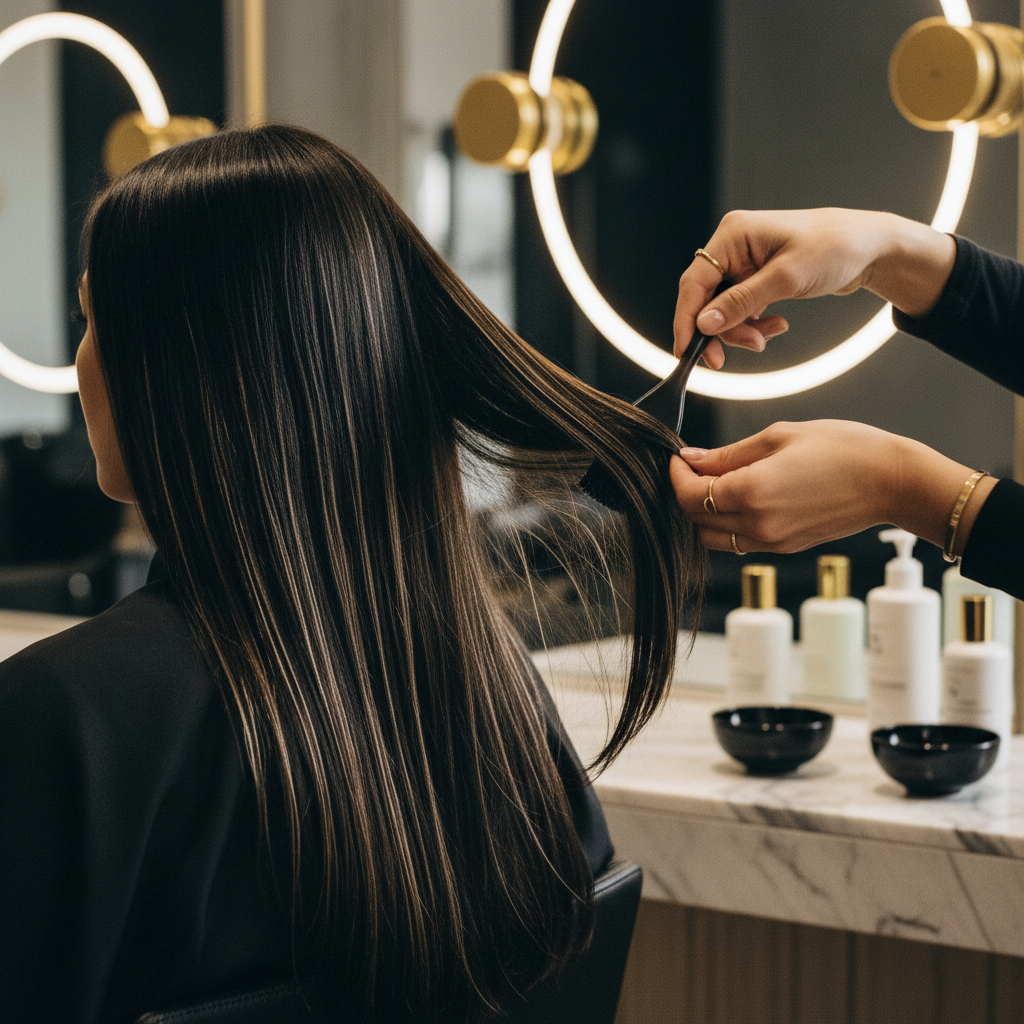
Quick answer: Effective cuticle care and preservation relies on protecting the outermost shingle-like layers of dead keratinocytes that shield the hair cortex from mechanical, chemical, and thermal damage. Because hair cuticles are biologically non-living tissue, they cannot heal or regenerate once chipped, cracked, or stripped away. Successful cuticle care and preservation therefore focuses strictly on preventative maintenance, minimising friction, keeping hair slightly acidic between pH 4.5 and 5.5, and smoothing lifted scales with conditioning agents to prevent fibre breakage.
Key takeaways
- The hair cuticle consists of 5 to 10 overlapping cellular layers that protect the inner cortex and dictate hair shine, texture, and porosity.
- Human hair fibres are non-living; once a cuticle scale breaks off or dissolves via chemical processing, it cannot biologically repair itself.
- Maintaining an acidic formulation environment (pH 4.5 to 5.5) keeps the cuticle scales tightly compacted and reduces friction.
- Mechanical stress from aggressive brushing and high heat above 180°C are the primary non-chemical causes of cuticle erosion.
- Cuticle damage leads directly to structural breakage along the fibre, which is entirely distinct from follicular hair loss or shedding.
Cuticle care and preservation: what the evidence shows
Cuticle care and preservation is the foundation of cosmetic hair strength, moisture retention, and shine. Scientifically, the cuticle is the hair shaft's outermost barrier, composed of flat, dead cells that overlap like shingles on a roof. In healthy human hair, these scales point downwards toward the root tip and lie flat against the shaft.
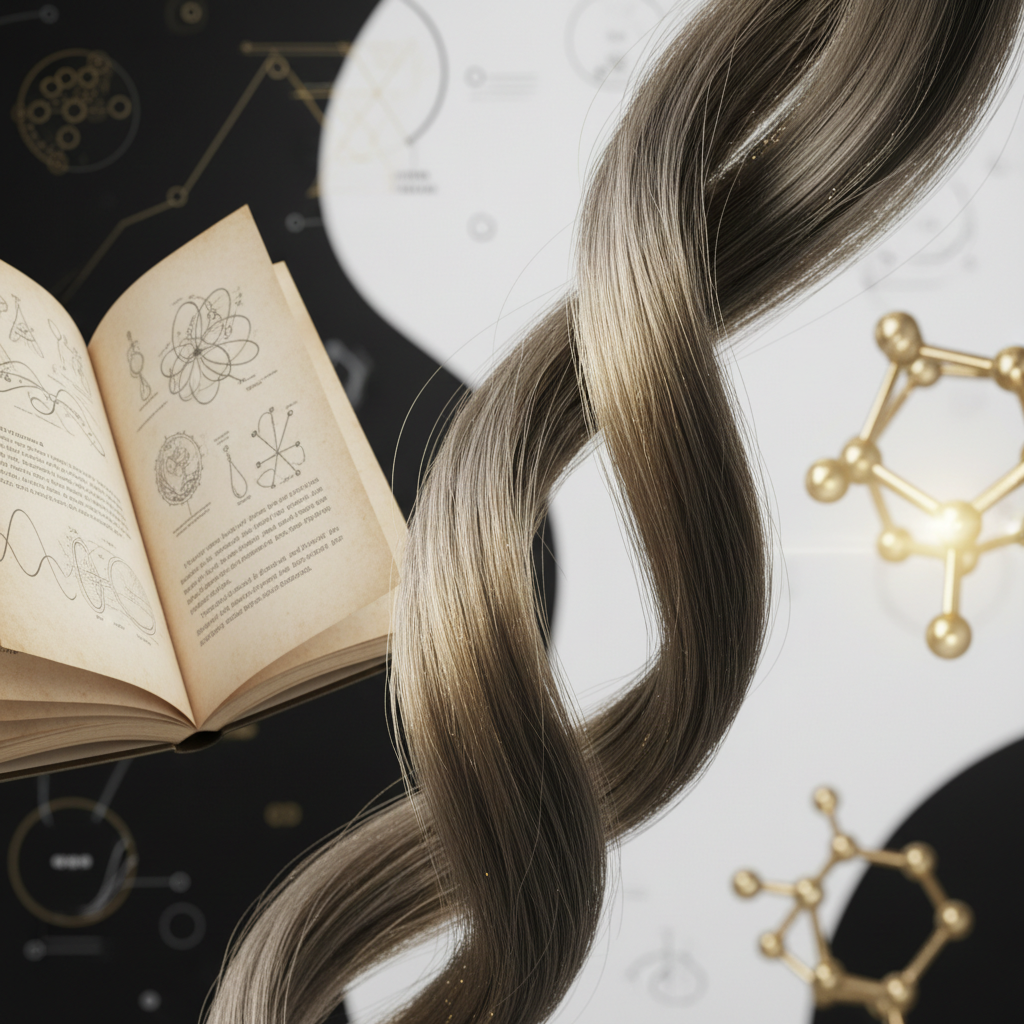
Research into fibre architecture demonstrates that each cuticle cell is coated with a microscopic lipid layer known as the 18-methyleicosanoic acid (18-MEA) layer. This lipid coat gives healthy hair its hydrophobic (water-repelling) character, creating a smooth gliding surface that resists tangling and environmental weathering. When the cuticle remains intact, light reflects evenly off the hair surface, producing natural shine.
Preserving this structure is vital because the interior cortex contains the structural keratin bundles and melanin granules responsible for the hair's mechanical strength and natural colour. When cuticle integrity fails, the inner cortex becomes exposed to atmospheric moisture, ultraviolet radiation, and friction, leading quickly to split ends and mid-shaft fibre breakage.
The biological mechanism of cuticle breakdown
The cuticle does not wear down uniformly; it degrades through specific chemical, thermal, and mechanical mechanisms.
Healthy, flat cuticle (Lipid 18-MEA intact)
 │
 ▼ (Alkaline pH, Heat > 180°C, UV)
Swelling & lifted scales (Loss of 18-MEA layer)
 │
 ▼ (Friction, Brushing, Bleaching)
Cracked, chipped scales & exposed cortex
 │
 ▼
Fibre split and breakage
- Alkaline swelling: When hair contacts water or products with a pH above 7.0, the negative electrical charge on the hair surface increases. This causes the hair fibre to swell radially, forcing the cuticle edges to lift.
- Lipid stripping: Chemical services such as permanent waving, alkaline hair dyes, and bleaching strip away the bound 18-MEA lipid layer. Without this layer, hair switches from hydrophobic to hydrophilic, absorbing ambient humidity, swelling unevenly, and becoming coarse.
- Thermal degradation: High heat from styling tools above 180°C causes water trapped inside the hair cortex to vaporise rapidly, occasionally causing structural bubbling ("bubble hair") while scorching the edges of the cuticle scales.
- Mechanical attrition: When scales are raised, daily combing and brushing create immense shear force. The comb catches on the open edges, snapping the brittle keratin scales away from the cortex.
Signs of cuticle erosion to watch for
You can identify the stage of cuticle weathering by paying attention to tactile and visual cues:
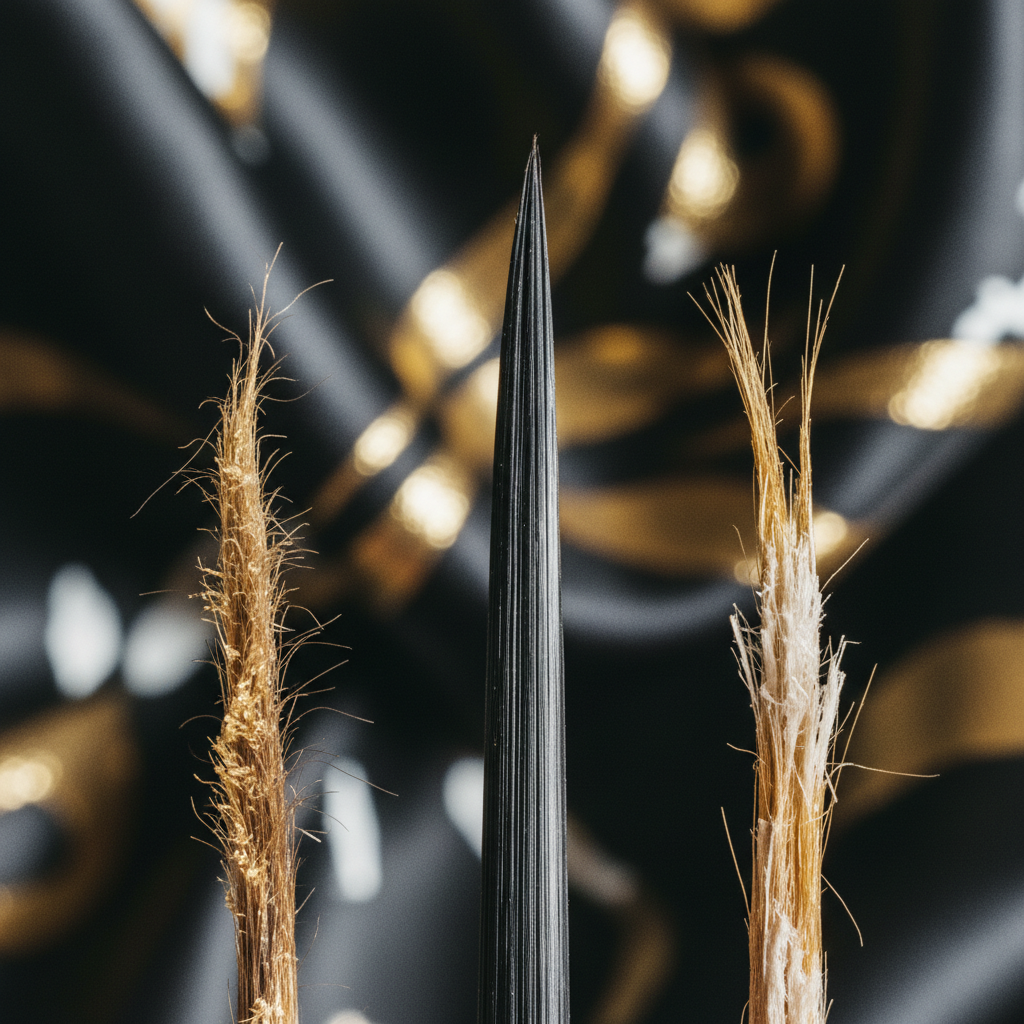
- High wet friction: The hair feels gummy, grabby, or felt-like when wet, catching on your fingers during washing.
- Loss of natural lustre: The hair looks dull or matte, as disrupted scales scatter light rather than reflecting it.
- Hyper-reactivity to humidity: Hair instantly frizzes or expands when entering a humid room due to unchecked moisture penetration through open cuticle gaps.
- Tangle frequency: Dry hair knots continuously at the ends, even shortly after thorough detangling.
- Visible fraying and split ends: Trichoptilosis (split ends) and trichorrhexis nodosa (node-like swellings where the cuticle has completely worn away) become visible along the hair shaft.
Practical strategies for cuticle preservation
Because hair cannot produce new cells to replace eroded cuticles, practical routines must focus on prevention and cosmetic coating.
Manage chemical pH levels
Hair fibres naturally rest at an isoelectric point around pH 3.67, with products formulated between pH 4.5 and 5.5 considered neutral to the hair shaft. Wash products that sit within this slightly acidic range prevent the cuticle from excessive swelling during cleansing.
Minimise wet mechanical friction
Hair swells by roughly 15 to 20 percent when saturated with water, weakening internal hydrogen bonds and leaving the cuticle vulnerable. Never aggressively towel-dry hair with rough cotton terry cloth. Instead, gently press excess water out using a smooth microfibre cloth or an old cotton T-shirt, and use wide-toothed combs or detangling brushes designed with flexible bristles.
Apply film-forming agents and emollients
Conditioners, leave-in serums, and light vegetable oils do not permanently heal broken cuticles, but they deposit microscopic protective films. These films mimic the missing 18-MEA layer, lubricating the exterior surface and reducing combing forces by up to 50 percent in laboratory tests.
Regulate heat styling tools
Keep flat irons and curling wands at or below 180°C (350°F). Always apply a heat protectant containing silicones, polyquaterniums, or hydrolysed proteins before heat styling; these ingredients reduce the rate of heat transfer into the cortex and cushion the cuticle.
Healthy versus weathered cuticles: a structural comparison
| Feature | Intact, Healthy Cuticle | Damaged, Weathered Cuticle |
|---|---|---|
| Surface Layer | Smooth, continuous 18-MEA lipid layer | Stripped 18-MEA; exposed polar cortex |
| Porosity | Low to medium; absorbs water gradually | High; absorbs and loses water rapidly |
| Reaction to Water | Hydrophobic (repels water droplets) | Hydrophilic (readily absorbs water) |
| Optical Shine | High; uniform specular reflection | Dull; diffuse light scattering |
| Optimal pH Range | 4.5 to 5.5 | 4.5 to 5.5 (critical to close lifted edges) |
| Friction Level | Low; fibres slide smoothly past each other | High; prone to micro-snags and tangles |
| Breakage Risk | Low; cortex is shielded from strain | High; cortex is vulnerable to snapping |
What the evidence does not show
Cuticle care and preservation is frequently clouded by cosmetic marketing myths that contradict scientific fact:
- Cuticles cannot be permanently repaired: Products claiming to "repair split ends permanently" or "restore the cuticle to virgin condition" are inaccurate. Cosmetic products can temporarily bond or coat damaged cuticles with polymers and lipids, but these effects wash away with future cleansing.
- Cuticles do not open and close like living pores: Cuticle scales do not have muscles or active pores. Their movement is a passive physical reaction: alkaline solutions and warm water cause the fibre to swell and scales to tilt outward, while acidic solutions reduce surface charge and allow them to contract flatter against the cortex.
- Damaged cuticles do not cause follicular hair loss: Cuticle degradation causes fibre breakage, split ends, and mid-shaft snapping. It has no effect on the hair follicle beneath the scalp, and it does not trigger androgenetic alopecia, telogen effluvium, or alopecia areata.
When breakage is caused by something else
If hair fibres snap despite meticulous cuticle preservation routines, the underlying cause may reside inside the cortex or stem from internal physiological changes:
- Nutritional deficiencies: Inadequate dietary protein, severe calorie restriction, or low iron stores (ferritin) can disrupt the production of keratin during anagen (the active growth phase), resulting in a structurally weak fibre before it ever emerges from the scalp.
- Inherited structural anomalies: Conditions such as monilethrix (beaded hair) or trichothiodystrophy cause native weaknesses in the hair cortex that mimic severe environmental cuticle breakdown.
- Internal follicular shedding: If hair is shedding directly from the root with a white bulb attached, this is physiological shedding (telogen effluvium) or patterned hair thinning, not shaft breakage.
When to seek professional advice
Consult a registered trichologist or a consultant dermatologist if you notice sudden patches of scalp thinning, excessive shedding of intact root bulbs (more than 100 to 150 hairs daily for several weeks), or scalp redness and burning.
For severe mechanical or chemical cuticle wear, an experienced professional hair stylist can assess porosity, adjust your chemical service frequency, and prune split ends before the fractures travel up the shaft.
Supporting fibre integrity with Watermans
Preserving the exterior surface of the hair shaft requires a dual approach: avoiding surface abrasion while maintaining a balanced scalp environment. Watermans products are formulated to support fibre resilience and manageability without relying on harsh surfactants that disrupt the hair's natural barrier.
Integrating gentle, targeted cleansers and deeply nourishing conditioners into your regimen helps smooth the appearance of the fibre surface. By reducing inter-fibre friction and maintaining natural moisture balance, structured care helps keep the hair feeling supple, manageable, and visibly vibrant over time.
Frequently asked questions about Cuticle Care and Preservation
Can cold water physically close the hair cuticle?
Cold water does not mechanically close the hair cuticle. While ice-cold rinses can cause minor physical contraction, cuticle alignment is governed primarily by pH and moisture, not temperature alone. Applying a slightly acidic conditioner (pH 4.5 to 5.5) does far more to flatten cuticle scales than rinsing with cold water.
What is the most effective approach to Cuticle Care and Preservation?
The most effective approach to cuticle care and preservation combines preventative mechanical care with pH-balanced formulas. This involves limiting thermal styling tools to below 180°C, washing with acidic shampoos, minimising aggressive wet brushing, and applying conditioning emollients that lubricate the fibre surface to reduce friction and breakage.
How do I know if my cuticle is damaged or if I am losing hair from the root?
Examine the shed hairs under good lighting. If the fallen hair strand has a small, visible white bulb at one end, it has naturally shed from the follicle. If the hair strand is short, lacks a bulb, and shows jagged or split ends, it is a snapped fibre caused by cuticle wear and mechanical stress.
Does bleaching completely destroy the hair cuticle?
Bleaching uses alkaline agents (typically ammonium hydroxide) and oxidisers (hydrogen peroxide) to penetrate deep into the cortex and break down melanin. In doing so, it strips the outer 18-MEA lipid layer and permanently lifts, dissolves, or chips some of the cuticle scales, increasing the fibre's porosity and long-term fragility.
Preserving your hair's protective shield
Long-term hair length, shine, and structural strength depend entirely on consistent cuticle care and preservation. Because the cuticle is composed of dead, non-regenerative cellular layers, every chemical process, thermal pass, and mechanical stroke leaves an indelible mark on the hair shaft. By adopting gentle washing techniques, respecting the hair's acidic pH balance, and shielding the fibre with protective leave-in conditioners, you can maintain your cuticle layer and keep hair looking smooth, vibrant, and resilient.
Sources and references
- Robbins, C. R. (2012). Chemical and Physical Behavior of Human Hair. 5th ed. Springer-Verlag New York.
- Gavazzoni Dias, M. F. (2015). Hair cosmetics: An overview. International Journal of Trichology, 7(1), 2-15.
- Swift, J. A. (1999). Human hair cuticle: biologically conspired to the owner's benefit. Journal of Cosmetic Science, 50(4), 241-247.
- Marsh, J. M., Davis, M. G., & Flagler, M. J. (2015). Preserving hair integrity: the science behind cuticle and cortex protection. Cosmetics & Toiletries, 130(2), 24-33.
- D'Souza, P., & Rathi, S. K. (2015). Shampoo and Conditioners: What a Dermatologist Should Know? Indian Journal of Dermatology, 60(3), 248-254.